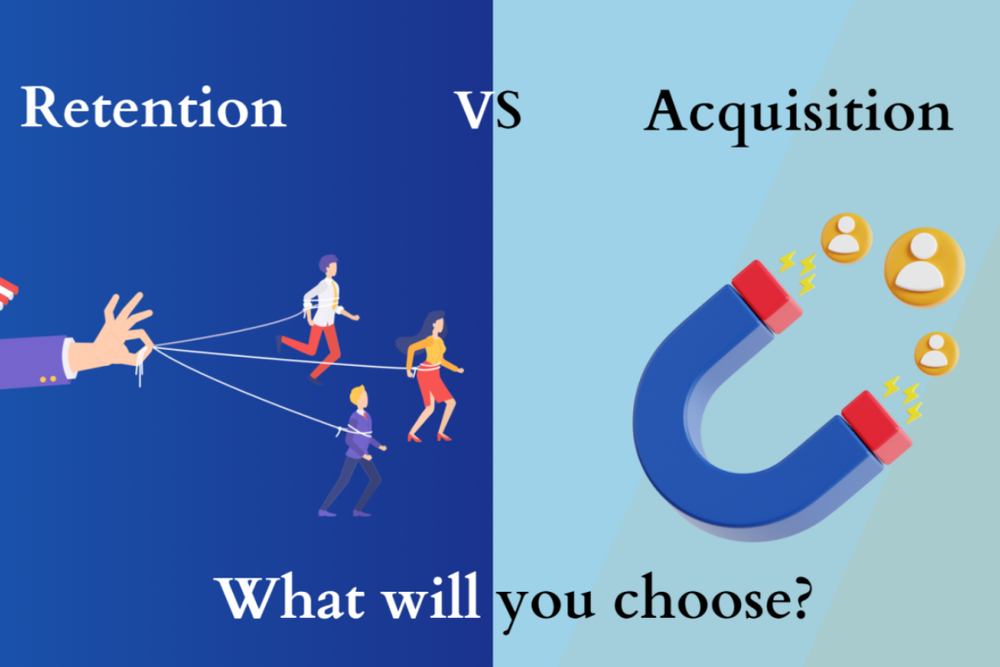
Every business faces the same question sooner or later: should more money go into winning new customers or into keeping the ones who already buy from you? It may sound like a simple choice, but in practice, it shapes long-term growth, profitability, and even survival.
Customer acquisition has always been seen as the fuel for expansion. Without new customers, how can a business grow its reach or scale into new markets? But retention, on the other hand, ensures that the effort and money spent on bringing people in doesn’t go to waste. Isn’t it smarter to hold on to the customers you’ve already worked so hard to win?
Here’s the reality: acquiring new customers is getting more expensive year after year. Advertising costs are climbing, competition is fiercer than ever, and consumer expectations keep rising. So the question becomes—if every dirham matters, where should businesses really invest to get the best return?
In the discussion ahead, we’ll break down the cost and value of both strategies, explore when each one makes sense, and help you understand how to strike the right balance.
Defining the Two Sides
At the core of this debate are two very different approaches: client acquisition and client retention. While both sound straightforward, the way they shape your business outcomes couldn’t be more different.
Client acquisition is all about attracting new customers to your brand. It involves strategies like digital advertising, search engine campaigns, influencer partnerships, and seasonal promotions. Every click, every ad impression, every collaboration is designed to bring fresh faces through the door. But ask yourself—how much effort and money does it really take to convince someone who has never heard of you before?
Client retention, on the other hand, focuses on nurturing the people who already trust your brand. This can mean loyalty programs, personalized offers, after-sales support, or even something as simple as remembering customer preferences. Retention is about turning one-time buyers into repeat customers and, eventually, into brand advocates. Isn’t it easier to delight someone who already believes in your product than to persuade someone starting from zero?
The difference between the two is not just in tactics, but in cost and impact. Acquisition builds reach and awareness, while retention builds loyalty and long-term profitability. The real challenge for businesses lies in deciding which lever to pull more strongly at any given time.
The Numbers That Tell the Story
Winning a new customer sounds exciting, but it comes at a steep price. On average, bringing someone new into the fold can cost five to seven times more than keeping an existing client. Think about it—how much do you spend on ads, promotions, or partnerships just to get attention, compared to the effort it takes to keep someone who already trusts your brand?
Retention, by contrast, has a ripple effect that’s hard to ignore. Even a small improvement—say, reducing customer loss by just 5%—can boost profits by as much as 25% to 85%. It’s not magic; it’s simply the power of loyalty. When customers stay longer, they buy more often, spend more per transaction, and refer others. Doesn’t that sound like compounding growth at its best?
This is especially true in the UAE, where consumer behavior shows a strong appetite for loyalty and personalization. Digital advertising costs continue to rise, making acquisition more expensive year after year. Meanwhile, loyalty programs are gaining ground, with customers showing they’re more likely to stick with brands that recognize them, reward them, and offer tailored experiences. The question then becomes: Is your business investing enough in keeping existing clients happy before chasing new ones?
The numbers paint a simple picture—acquisition grows reach, but retention multiplies value. And in markets where competition is stiff and costs are climbing, the smarter choice often leans toward keeping the customers you already have.
When to Focus on Retention
How do you know when it's smarter to pivot your focus from hunting for new customers to nurturing the ones already in your court? It often comes down to two key indicators: high churn and low repeat purchase rates. If you’re noticing customers dropping off after just one purchase or leaving altogether, that’s a clear signal: retention needs attention.
On the other hand, if your business already boasts a solid, steady customer base, you have real assets to nurture—why let them slip through the cracks? For many mature brands, the smartest move isn’t chasing new names in the database; it’s deepening engagement with the ones already on board.
So what retention strategies should you prioritize? Start with getting onboarding right. First impressions matter—clear communication, easy setup, and a friendly welcome go a long way. Once trust is built, introducing loyalty rewards becomes much more effective—whether it’s a points system, exclusive perks, or simple recognition, these gestures reinforce goodwill and inspire repeat business.
But it’s the personalized touch that really deepens loyalty. Think tailored emails or messages that speak directly to your customer’s needs—whether it’s reminders about items they’ve browsed, restock alerts for favorites, or birthday offers. Personalized communication doesn't just boost sales; it builds relationships. Can you imagine how much more powerful “Hi Sara, here’s a deal on your favorite latte” feels compared to a generic “Enjoy 10% off”?
In short, if your churn is creeping up or repeat buys are dropping, or if you already have a strong base of customers, it’s time to lean into retention. Thoughtful onboarding, meaningful loyalty rewards, and truly personalized outreach—they’re not just nice to have; they’re foundational.
When to Focus on Acquisition
There are moments when chasing new customers is not just important, but essential. The most obvious case is when a business is brand new. Without acquisition, there’s no customer base to retain in the first place. Similarly, if you’re launching a new product line, you need to create awareness from scratch—no one can buy what they don’t know exists.
Another time to lean into acquisition is when entering a fresh market. Imagine expanding into a city or region where your brand has little visibility. Building awareness through targeted campaigns, collaborations, or even local partnerships is how you plant the seeds of growth. Isn’t it clear that without visibility, even the best offering risks being overlooked?
So what strategies should businesses prioritize here? Digital advertising is often the first step, especially channels like search and social, where potential customers are actively exploring. Influencer collaborations also carry weight, particularly in markets where trust and relatability matter more than polished campaigns. Local partnerships—think co-hosted events, cross-promotions, or strategic tie-ins—offer another powerful way to break into a new audience.
The key is to treat acquisition as a focused effort rather than a scattershot approach. Test channels, measure results, and double down on what works. Acquisition should feel like opening the door for new relationships, not like shouting into a crowd.
In short, acquisition deserves priority when your business is young, your product is new, or your market presence is weak. It’s about sparking that first connection—because without it, there’s no one to retain later.
Finding the Balance
If you're reading this, you’re probably wondering: how do I actually divide my efforts between acquisition and retention? The sweet spot depends a lot on your business stage—and the numbers tell a compelling story.
For mature businesses, those with a steady and sizable customer base, the smartest allocation often looks like 60–70% to retention and 30–40% to acquisition. These established firms benefit most by deepening loyalty among existing customers—driving repeat purchases, referrals, and long-term value—while still bringing in new customers to fuel growth. Does it make sense to nurture what you already have?
Then there are early-stage businesses and startups, still establishing product-market fit and building awareness. For these, the reverse often holds true: 60–70% of marketing efforts go toward acquisition, while 30–40% focus on basic retention tactics like smooth onboarding and dependable customer support. After all, if nobody knows you exist yet, retention won’t move the needle. Isn’t planting those first seeds essential to growth?
As businesses grow, they tend to shift toward a more balanced 50/50 split, blending acquisition and retention into a harmonious strategy. At this point, you're not just getting people through the door—you’re keeping them coming back and telling their friends.
Context matters too. In fiercely competitive markets—like certain digital verticals or saturated retail environments—you might need to lean more on acquisition even if you're mature. Conversely, in sectors with loyal customer behavior and high switching costs, retention may deserve an even bigger share of your budget.
The real secret isn’t a fixed formula—it’s responsiveness. If your customer churn is rising or repeat purchases are falling behind, your signals tell you it’s time to tilt more toward retention. If growth is stagnating and awareness is low, acquisition takes the front seat until awareness catches up.
Ultimately, the goal is clear: retention fuels steady, efficient growth, while acquisition powers expansion and scale. The best businesses watch their signals and adjust dynamically—letting performance, not habit, guide their investment mix.
Mistakes to Avoid
Focusing on retention or acquisition strategically can drive growth—but there are common pitfalls that can derail even the best-laid plans. Let’s look at a few mistakes that can burn budget, erode trust, or stall momentum—and ask: are any of these already creeping into your strategy?
1. Over-discounting in the name of “loyalty.”
Slashing prices might feel like a quick way to make customers stick around—but it often does more harm than good. Heavy discounts can erode your margins, devalue your brand, and train customers to only buy when there’s a deal. Instead of leaning on discounts, wouldn’t it be more sustainable to reward loyalty through exclusive access, perks that cost little but feel valuable, or recognition that honors their repeat purchases?
2. Chasing new customers without fixing churn.
Imagine filling a bucket with a giant hole in the bottom—no matter how fast you pour in, it never fills. Similarly, acquiring new customers while ignoring churn is a losing game. It's like running on a treadmill; you're expending energy without going anywhere. Before you ramp up spending on ads or partnerships, shouldn’t you plug the leaks by improving onboarding, customer support, or the early experience?
3. Neglecting service quality while spending on ads.
Drawing new customers in means little if the experience they receive causes them to leave—or worse, spreads negative word-of-mouth. Investing heavily in ads while skimping on service delivery or responsiveness is like opening the front door to a café and letting the wait staff collapse behind it. Shouldn’t the experience live up to the promise you’re advertising?
Each of these mistakes is avoidable—and recognizing them quickly can save resources, reputation, and momentum. Instead of falling into these traps, the savviest businesses prioritize long-term loyalty, solve root issues, and invest in the experience—not just the acquisition pipeline.
At the end of the day, acquisition and retention aren’t enemies—they’re partners in growth. Acquisition brings new customers through the door, while retention keeps them coming back, spending more, and spreading the word.
The evidence is clear: retention almost always delivers higher returns in the long run, but no business can grow without some level of acquisition. The real question is not “which one?” but “when and how much?”
The smartest businesses understand the sequence. They start by building loyalty, ensuring that every customer gained is a customer kept. Then, once the foundations are strong, they turn to acquisition to expand into new markets and new opportunities. Isn’t that the kind of growth that feels both sustainable and profitable?
So, if you’re looking for a simple rule: retain first, acquire next. Loyalty creates the base, awareness fuels the expansion—and together, they drive the kind of business success that lasts.
Also read:
 Umema Arsiwala
 Umema Arsiwala
 Shahba Mayyeri
 Umema Arsiwala