Dubai Future Foundation (DFF), in partnership with MIT Senseable City Lab, has launched Re-Leaf, an artificial intelligence project that measures the cooling power of trees to design greener, healthier cities.
Unveiled at the 19th International Architecture Exhibition – La Biennale di Venezia 2025, the initiative highlights Dubai’s growing role in shaping global sustainability solutions.
Developed through Senseable City Dubai, the first MIT Senseable City Lab in the Middle East, Re-Leaf uses computer vision and AI to analyse satellite images, street views, and thermal data from over 2,000 trees. The study compares urban greenery across Dubai, Amsterdam, Los Angeles, and Rome, marking the first dataset of its kind.
Results reveal that trees can be up to 15°C cooler than surrounding surfaces, with native, drought-resistant species such as Neem proving far more effective than palms. The findings could help arid regions like the UAE prioritise tree species that maximise cooling while conserving water.
“Dubai has shown that advanced technologies and strategic partnerships can generate insights that matter well beyond our borders,”
said Khalifa Al Qama, Director of Dubai Future Labs.
“With Re-Leaf, we are treating greenery as essential infrastructure for the cities of tomorrow.”
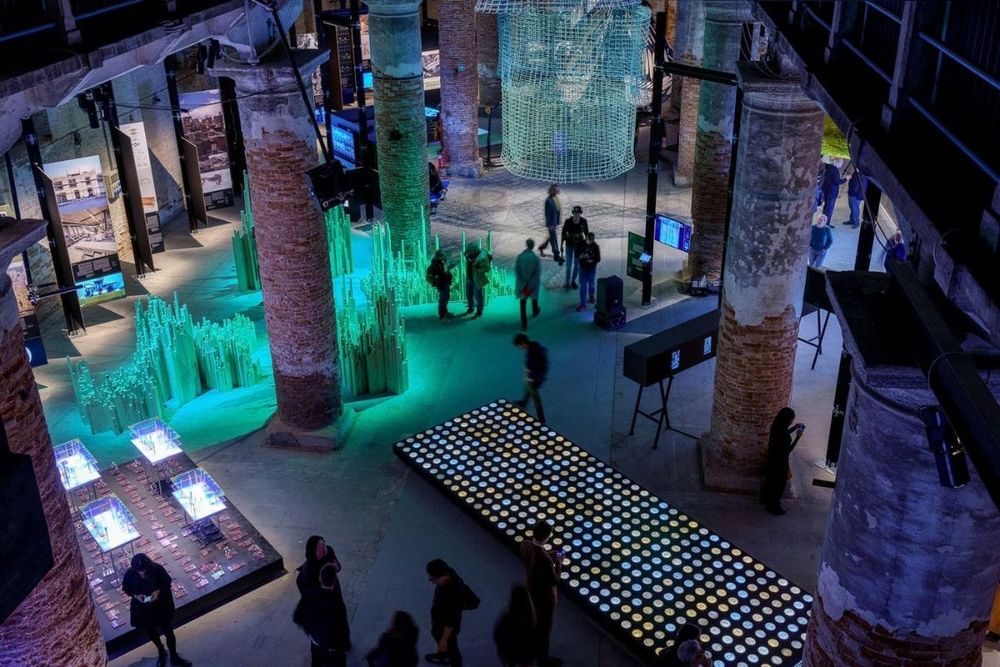
At the Venice Biennale, the Re-Leaf installation features towering structures that visualise greenery levels across cities—the taller the structure, the greener the city. The display underscores the importance of urban forestry in mitigating global warming.
Re-Leaf forms part of DFF’s wider mission to position Dubai as a global hub for innovation and forward-looking collaboration tackling the planet’s most pressing challenges.
News Source: Emirates News Agency