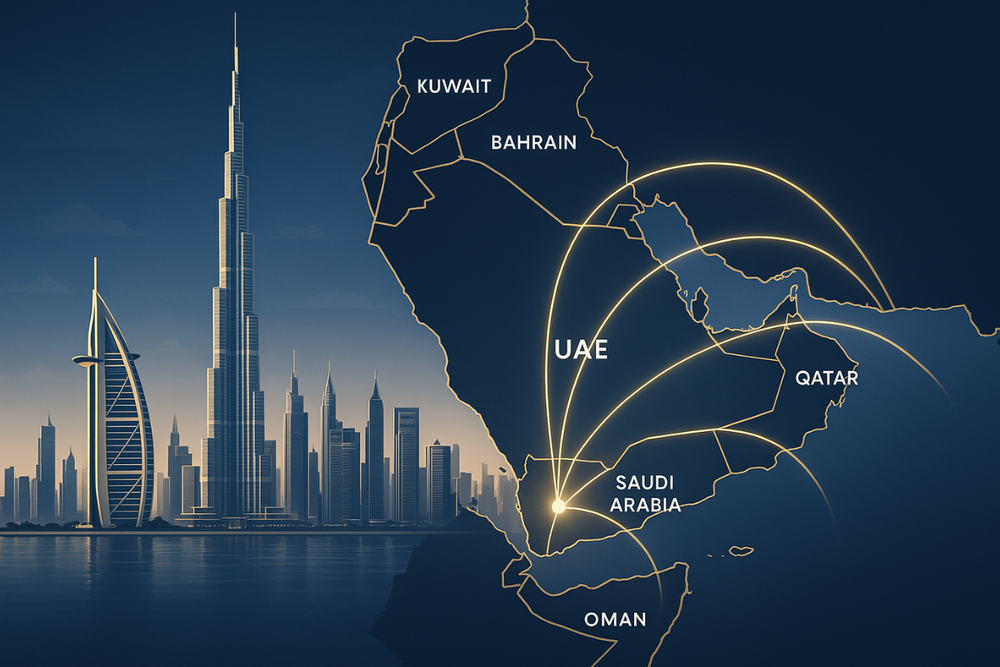
The Gulf Cooperation Council economies are entering 2026 with solid growth prospects. Projections from major institutions indicate an average GDP expansion of 4.4 to 4.5 percent across the region, largely supported by non-oil sectors. The UAE stands out with an expected growth rate of 5 percent, driven by trade, tourism, logistics, and financial services. This environment creates opportunities for UAE businesses to expand within the GCC and internationally.
UAE firms benefit from their home market's infrastructure and regulatory framework, which includes over 40 free zones offering full foreign ownership in most sectors. As non-oil activities now account for more than 70 percent of the UAE's GDP, businesses here are well-positioned to leverage diversification trends across the region. Expansion requires understanding each GCC market's unique drivers, from Saudi Arabia's industrial push to Oman's logistics focus.
Practical steps, such as forming local partnerships and navigating regulations, can help UAE companies build sustainable operations. This article outlines targeted approaches for regional and global scaling, drawing on economic forecasts and business analyses from 2026.
Regional GCC Scaling
UAE businesses looking to expand regionally can start by assessing each GCC country's economic profile. In 2026, the region benefits from resilient domestic demand and infrastructure investments, but success depends on tailoring strategies to local conditions.
Saudi Arabia

Saudi Arabia's economy is projected to grow by 4.3 percent in 2026, with non-oil sectors contributing significantly under Vision 2030. Key opportunities for UAE firms lie in construction, renewable energy, and advanced manufacturing. For instance, the kingdom's mining sector is expanding, with Ma'aden developing processing zones for battery metals. UAE companies in logistics and technology can participate by supplying expertise or forming joint ventures.
To enter the market, UAE businesses should register with the Ministry of Investment (MISA) and comply with Saudization requirements, which mandate hiring a percentage of Saudi nationals. Practical steps include conducting market research through events like the UAE-Saudi Economic Forum and leveraging bilateral agreements that facilitate cross-border trade.
UAE firms like DP World have already invested in Saudi ports, demonstrating how infrastructure partnerships can drive growth. Non-oil exports from the UAE to Saudi Arabia grew by 17 percent year-to-date in 2025, indicating strong demand.
Qatar

Qatar's GDP is forecast to accelerate in 2026, supported by liquefied natural gas expansions at the North Field. Non-hydrocarbon sectors, including petrochemicals and hydrogen, offer entry points for UAE businesses. QatarEnergy's focus on low-carbon LNG aligns with the UAE's expertise in sustainable energy, creating potential for collaborations in blue ammonia production. Market entry involves registering with the Qatar Financial Centre for financial services or the Ministry of Commerce for other sectors, where 100 percent foreign ownership is allowed in many areas.
UAE companies should prioritize compliance with local content rules, which favor firms using Qatari suppliers. A case in point is the growing UAE-Qatar defense ties, such as the EDGE-Barzan joint venture for advanced technologies. Bilateral non-oil trade reached $940 million in 2024, with services like digital finance showing 22 percent growth in early 2025. UAE firms can start by participating in events like the Doha International Maritime Defence Exhibition to build networks.
Bahrain

Bahrain's economy is expected to expand by 3.3 percent in 2026, with non-oil sectors driving 84 percent of GDP. As a financial hub, it attracts UAE businesses in banking, insurance, and fintech. The Bahrain Economic Vision 2030 emphasizes institutional integration and cross-border infrastructure, making it suitable for UAE firms in logistics and professional services. Entry requires registration with the Ministry of Industry and Commerce, where full foreign ownership is permitted in most sectors.
UAE companies can benefit from Bahrain's low operational costs and skilled workforce, addressing talent needs through local hiring. For example, UAE telecom providers have expanded here, leveraging Bahrain's position as a gateway to the GCC. Mutual investments between the UAE and Bahrain support this, with recent MoUs focusing on public sector efficiency. UAE businesses should conduct feasibility studies via the Bahrain Economic Development Board to identify niches like digital services.
Kuwait
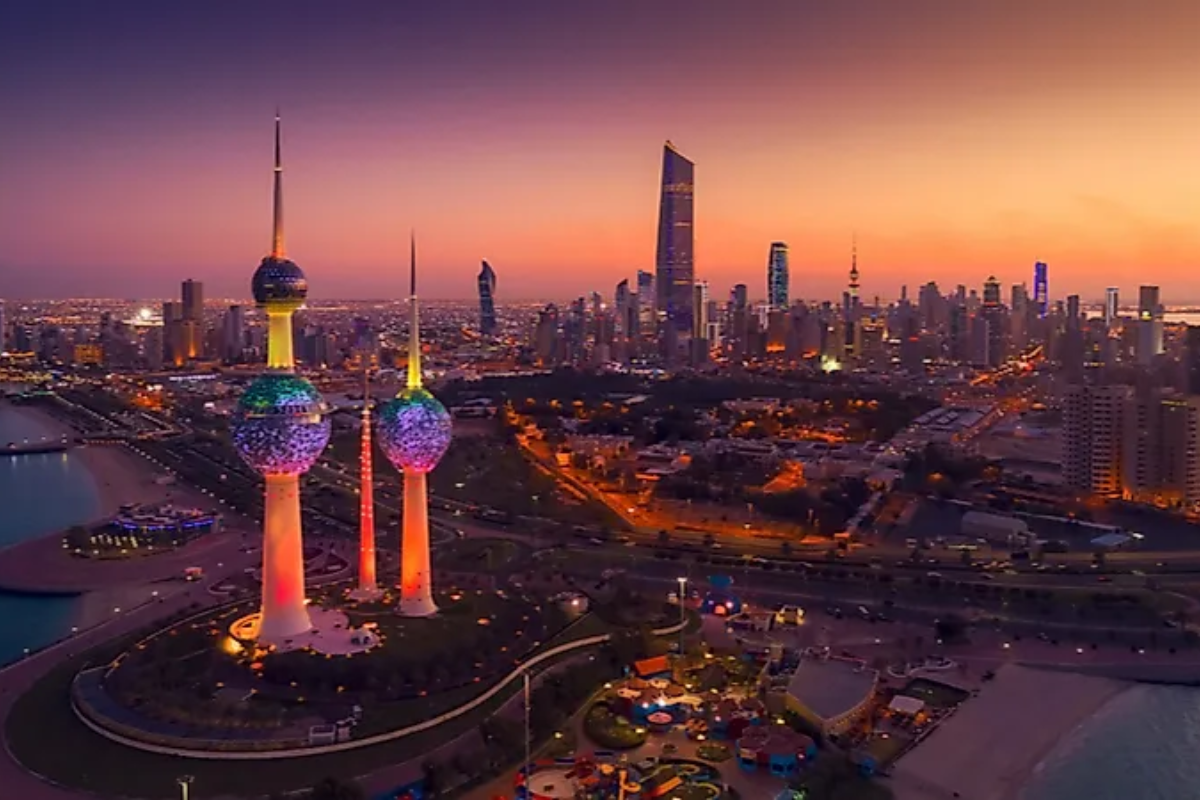
Kuwait's growth is projected at 2.6 to 2.9 percent in 2026, anchored by oil but with diversification under New Kuwait 2035. Opportunities for UAE firms include aviation, ports, and industry, where non-oil trade reached $14.8 billion in 2025. Registration with the Kuwait Direct Investment Promotion Authority allows 100 percent ownership in select sectors.
Challenges like fiscal deficits (9 percent of GDP) require careful financial planning, but UAE companies can mitigate this through partnerships, as seen in Kuwaiti investments in UAE AI projects. Practical steps involve attending forums like the UAE-Kuwait Economic Forum to explore collaborations. UAE firms like Emirates have expanded flights, boosting tourism ties with over 170 weekly connections. Focus on sectors like renewable energy to align with Kuwait's infrastructure goals.
Oman

Oman's Vision 2040 drives 2026 developments in logistics, tourism, and fisheries, with GDP growth at 2.6 to 2.9 percent. UAE businesses can target manufacturing and renewables, especially in the Al Rawdah Special Economic Zone on the UAE-Oman border, a $2 billion project for logistics and light industry. Entry involves the Ministry of Commerce, Industry, and Investment Promotion, with incentives like long-term tax exemptions up to 25 years.
UAE firms like DP World are developing this zone, creating jobs and trade links. Bilateral trade benefits from GCC integration, treating UAE companies similarly to Omani ones. Start with market analysis through Oman's Global Financial Centre, established in 2026, to attract foreign investment.
Strategies for Expansion
UAE businesses expanding in the GCC can adopt structured approaches to ensure success.
Market Entry
Begin with thorough research using tools like the UAE Ministry of Economy's reports. Choose between a mainland setup for local market access or free zones for export focus. In Saudi Arabia, use MISA for licensing; in Qatar, the Qatar Financial Centre simplifies fintech entry. Real-world example: UAE logistics firms enter Oman via joint ventures in special zones.
Regulations
GCC regulations vary, but harmonization under the Common Market aids compliance. UAE firms must adhere to local content rules, like Saudization (hiring quotas). Solutions include partnering with local consultants for audits. Recent tax treaties, like the 2024 UAE-Saudi agreement, reduce double taxation.
Partnerships
Joint ventures mitigate risks. UAE companies can collaborate with GCC sovereign funds, as in Kuwait's AI investments in Abu Dhabi. PwC notes bilateral agreements boosting trade flows, like the UAE's CEPAs with India, aiding GCC access.
Financing
Access funding through GCC banks or UAE institutions like Emirates NBD, offering lower rates for regional projects. Government incentives, such as Oman's tax holidays, support expansion. UAE firms can use federal budgets, up 29 percent in 2026, for infrastructure ties.
Talent Management
Skills gaps affect 45 to 75 percent of GCC employers. UAE businesses should invest in training, aligning with nationalization policies. Use the UAE's diverse talent pool for initial teams, then localize. Programs like Bahrain's workforce initiatives help.
International Scaling Beyond GCC
UAE businesses can extend beyond the GCC using their regional base. Growth is supported by CEPAs with 32 partners, including Nigeria and the Philippines, in 2026. Focus on Asia (India, Indonesia), Africa (Nigeria), and Europe. Logistics firms like DP World expand to Africa, securing trade corridors.
Practical steps:
- Leverage the UAE's airports and ports for supply chains.
- In 2026, the India-Middle East-Europe Corridor positions the UAE as a node. Challenges like trade tensions require diversified partners.
- UAE outward FDI reached AED1.1 trillion in 2025, targeting renewables and tech.
Challenges with Solutions
Problem: Regulatory differences
Each GCC country has its own rules for business setup, hiring quotas (e.g., Saudization, Emiratization equivalents), licensing, taxes, and local content requirements.
Solution:
Hire local legal experts or consultants in the target country to ensure full compliance from day one.
In Saudi Arabia specifically, apply for the Regional Headquarters (RHQ) program through the Ministry of Investment (MISA). It offers foreign companies (including UAE-based ones) major benefits:
- Up to 30-year corporate income tax exemptions on certain activities.
- Easier work visas and residency for key staff.
- Relaxed Saudization (local hiring) requirements for the first 10 years.
- Priority access to government tenders and contracts.
Problem: Skills shortages
Many GCC employers — around 58% in Saudi Arabia, based on 2025–2026 employer surveys — struggle to find qualified talent in specialized fields such as technology, AI, engineering, data science, and advanced manufacturing.
Solution:
- Bring in experienced UAE-based experts initially to set up operations and train staff.
- Then partner with local vocational training centers, universities, or government programs (e.g., Saudi Human Resources Development Fund, Qatar Career Development Center) to recruit and upskill national talent.
- This approach satisfies nationalization quotas, transfers knowledge, and builds a sustainable local workforce over time.
Problem: Intensifying competition
More local, regional, and international companies are entering GCC markets in sectors like logistics, fintech, renewables, retail, and construction, increasing pressure on pricing, speed, and quality.
Solution:
- Differentiate by offering superior value — for example, integrate AI for smarter operations, predictive analytics, personalized customer experiences, faster delivery, or lower long-term costs.
- UAE companies often have an advantage here due to Dubai and Abu Dhabi’s strong tech ecosystems, innovation hubs, and access to advanced tools.
Problem: Fiscal pressures
Some GCC countries (e.g., Bahrain and, periodically, Kuwait or Oman) face budget deficits because of high infrastructure spending and fluctuations in oil revenues, which can lead to tighter government budgets, delayed project payments, or reduced subsidies.
Solution:
Avoid depending solely on local government contracts or funding.
Instead:
- Form joint ventures or strategic partnerships with established GCC companies or sovereign wealth funds to share investment costs and risks.
- Secure financing from UAE-based banks, investors, or export credit agencies, which benefit from the UAE’s strong fiscal position and stable banking sector.
Case Studies of UAE Businesses
Kitopi
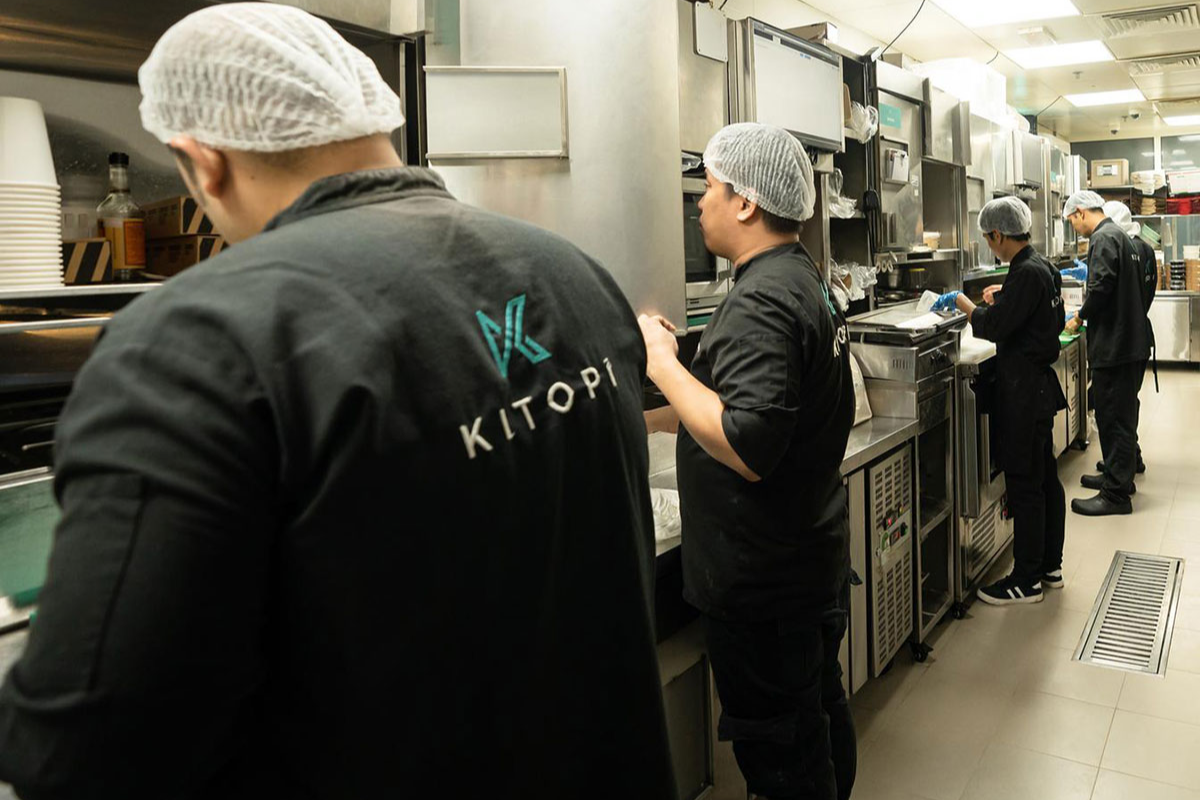
UAE-based cloud kitchen operator Kitopi raised $50 million in 2026 for GCC expansion. Operating over 200 outlets across the UAE, Saudi Arabia, Qatar, Bahrain, and Kuwait, it focuses on delivery and dine-in. The funding supports homegrown brands, addressing demand in high-growth markets. Kitopi's model uses tech for efficiency, overcoming logistics challenges through local partnerships.
DP World
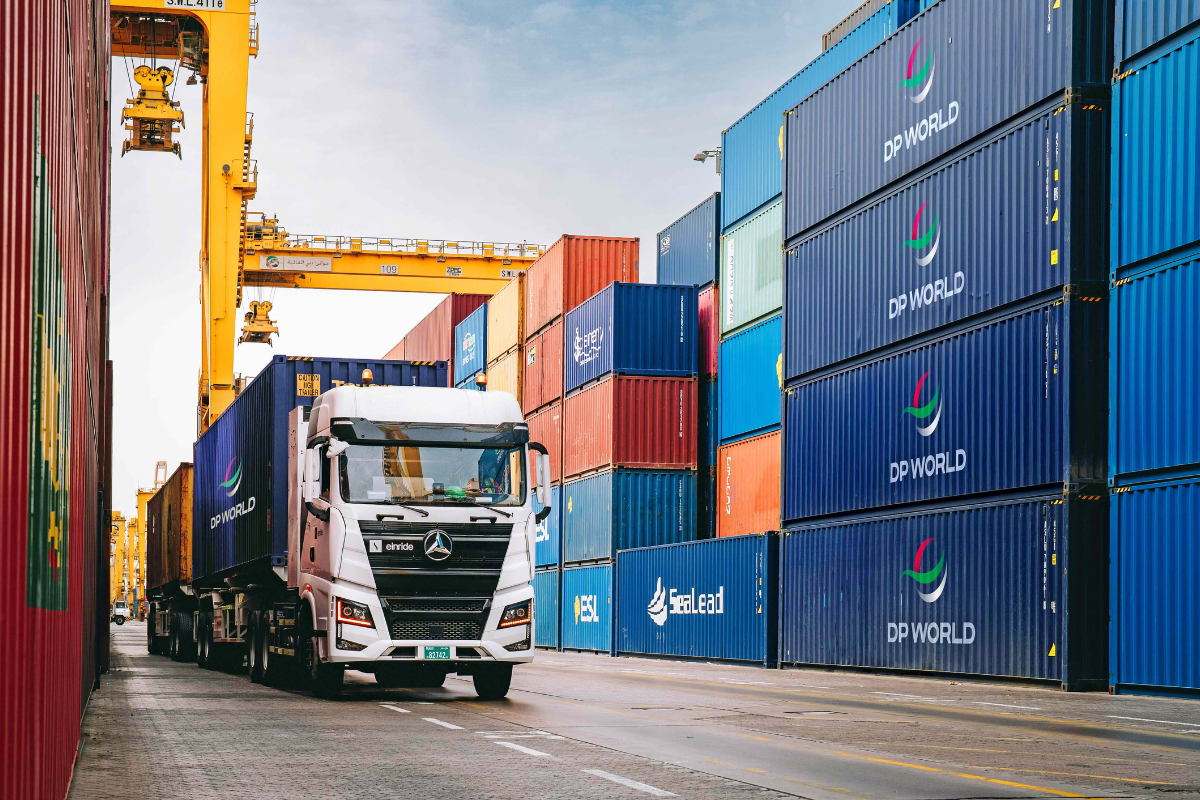
DP World, a UAE logistics giant, is developing the Al Rawdah Special Economic Zone with Oman, a $2 billion project starting in 2026. Spanning 14 square kilometers, it targets logistics and manufacturing, boosting trade. This joint venture creates jobs and integrates supply chains, exemplifying UAE-Oman collaboration.
ADNOC

ADNOC expands Ruwais hub for petrochemicals and hydrogen, attracting UAE and international partners. In 2026, it will integrate carbon capture, aligning with GCC's low-carbon goals. This supports UAE firms in sustainable energy, with investments exceeding $150 billion by 2027.
The GCC's 2026 outlook is positive, with 4.4 percent growth and non-oil sectors leading. For UAE businesses, regional scaling offers immediate gains, while international expansion via CEPAs builds long-term resilience. By addressing challenges through partnerships and compliance, firms can thrive. The region's focus on diversification and infrastructure positions it as a global hub, with the UAE at the forefront. Forecasts suggest sustained momentum into 2027, with UAE GDP at 5.1 percent, encouraging proactive strategies.
Sources:
- Ministry of Economy, UAE – Comprehensive Economic Partnership Agreements (CEPAs) updates, including Nigeria and Philippines agreements signed January 13, 2026
- UAE Ministry of Economy – Official CEPA list and announcements (2025–2026)
- fDi Intelligence – UAE Outward Investment Trends 2025 report (outward FDI flows and stocks)
- Reuters – DP World port investments in Africa (Ndayane, Senegal; Banana, DRC; 2025–2026 updates)
- UAE Government / Ministry of Foreign Affairs – India-Middle East-Europe Economic Corridor (IMEC) strategy and 2026 positioning
- Bloomberg – UAE $1.4 trillion 10-year investment framework announcement (March 2025)
- World Bank – GCC economic outlook and diversification context (2025–2026 projections)
- DP World Official Website – Africa expansion projects (Ndayane Port, Banana Port details)
Also read:
 Ummulkiram Pardawala
 Shahba Mayyeri
 Shahba Mayyeri