Global renewable energy capacity soared to a record 582 gigawatts in 2024, marking a major stride toward achieving the COP28 “UAE Consensus” target of tripling renewables by 2030, according to a new report by the International Renewable Energy Agency (IRENA), the COP30 Brazilian Presidency, and the Global Renewables Alliance. Solar energy contributed the most, adding 452GW. To meet global climate ambitions, the world must now sustain annual additions of 1,122GW through the end of the decade.
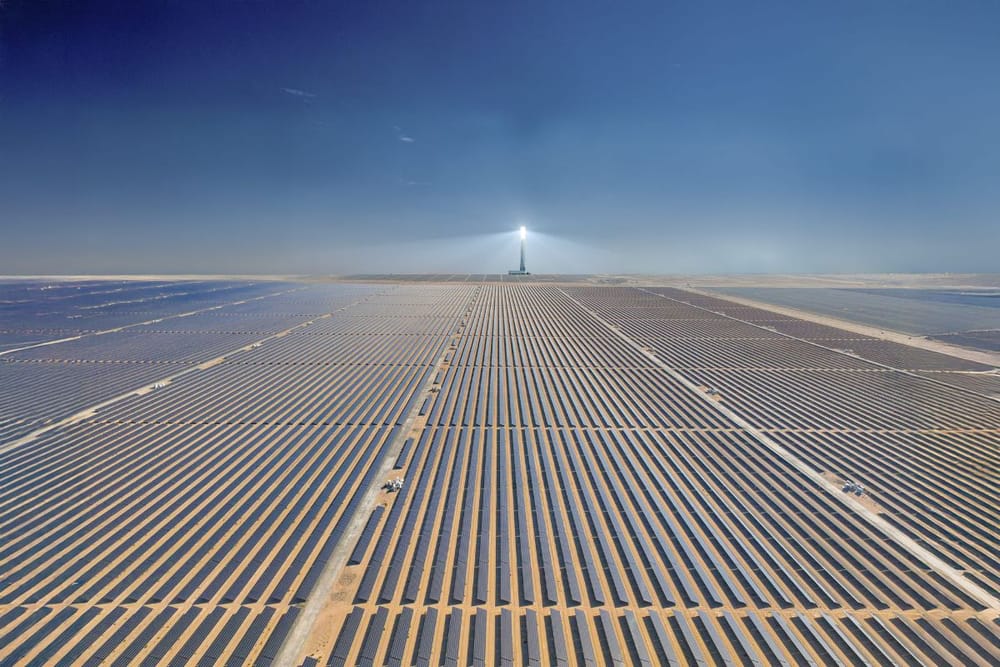
The UAE continues to play a pivotal role in this global transition through landmark projects such as the Mohammed bin Rashid Al Maktoum Solar Park in Dubai, implemented by the Dubai Electricity and Water Authority (DEWA). Launched in 2012, the solar park has reached a total production capacity of 3,860 megawatts and is set to exceed 8,000MW by 2030—60 percent higher than its original plan.
HE Saeed Mohammed Al Tayer, MD and CEO of DEWA, said the project aligns with the vision of the UAE’s leadership and supports the UAE Net Zero by 2050 Strategic Initiative. The solar park now contributes over 21.5 percent of DEWA’s total capacity, expected to rise to 36 percent by 2030, cutting more than 8.5 million tonnes of carbon emissions annually.
DEWA’s independent power producer model has attracted private-sector collaboration and innovation, doubling solar panel efficiency through advanced technologies such as artificial intelligence. With six phases completed or underway and plans for a seventh, the solar park remains one of the world’s largest solar-plus-storage projects, reinforcing Dubai’s position as a global leader in clean energy innovation and sustainability.
News Source: Dubai Media Office