In a marketplace saturated with expensive traditional advertising and high-cost digital campaigns, many small businesses feel locked out of effective marketing. Yet some of the most memorable campaigns in recent years have been built not on massive budgets but on creativity, surprise, and strategic thinking.
Guerrilla marketing offers a powerful alternative. This unconventional approach uses creative, low-cost tactics to capture attention and generate buzz in ways that traditional advertising cannot. Rather than competing on spending power, guerrilla marketing competes on boldness, originality, and emotional resonance.
For entrepreneurs in Dubai and beyond, understanding and executing guerrilla marketing can unlock disproportionate returns on minimal investment.
What Is Guerrilla Marketing?
Guerrilla marketing is a method of driving brand awareness and engagement using unconventional strategies that emphasize creativity and surprise over traditional advertising spend. The term draws its name from guerrilla warfare, where smaller, underfunded groups achieve significant results against larger adversaries through strategy, surprise, and mobility.
Successful guerrilla campaigns rely on three core principles:
Unconventional thinking: Reject standard advertising formulas and do something unexpected in your market.
Surprise and imagination: Place your message in unexpected contexts, catching people off guard in ways traditional ads cannot.
Low-cost, high-impact execution: Achieve traditional marketing goals—awareness, leads, sales—through inexpensive methods that leverage creativity rather than budgets.
Guerrilla marketing works because it creates memorable experiences people voluntarily share. A surprising street installation or clever stunt generates word-of-mouth and social media amplification that paid advertising struggles to achieve. Dropbox's referral program achieved 4,000% growth in just over one year by turning users into brand ambassadors, demonstrating the exponential potential of creative, low-cost campaigns.
Four Core Guerrilla Tactics
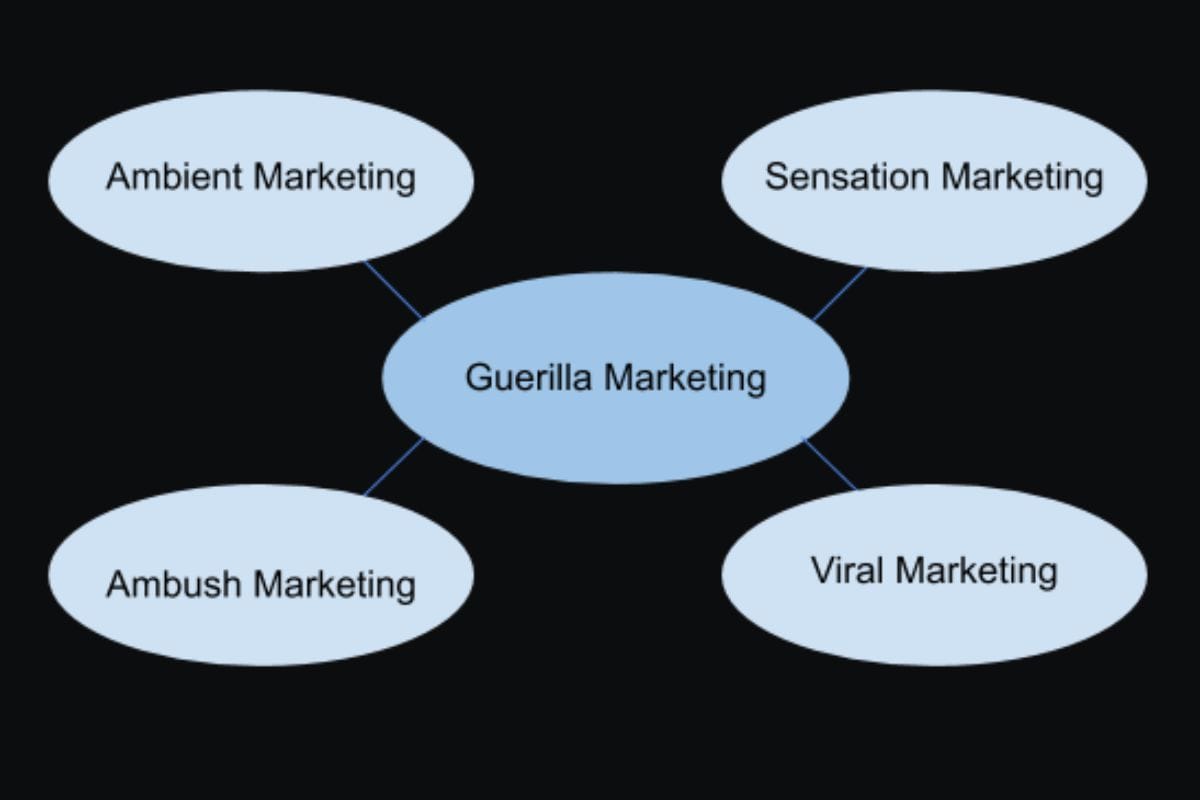
- Street Marketing and Public Installations
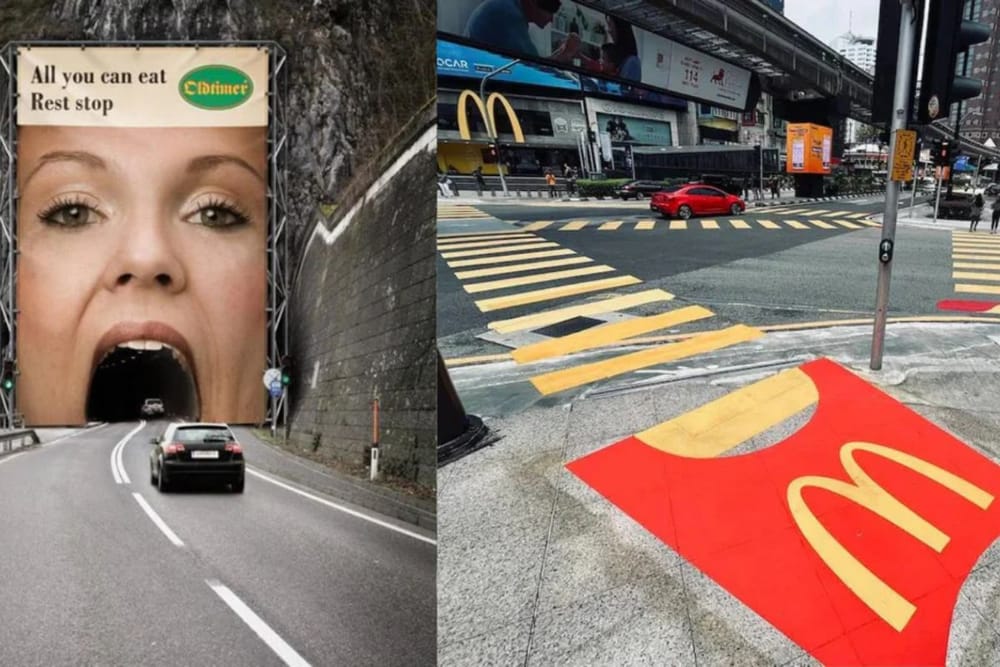
These tactics transform public spaces into brand experiences, placing your message directly in the path of target audiences.
IKEA's slanted billboards (Paris): Rather than flat advertising, IKEA installed slanted billboards creating a visual puzzle that humorously highlighted their free spare parts service. The campaign transformed a common problem into a memorable, shareable visual.
Mous smartphone case drops: The brand bought new iPhones and dropped them from buildings and onto sidewalks in busy city centers. Onlookers gasped as the phones survived, creating a visceral demonstration of product durability. Videos went viral, generating millions of views.
Practical execution: Street marketing requires high-traffic location scouting, simple props or installations, and local authority permission. Budget ranges from AED 500–3,000 (USD 136–820) for small installations.
- Viral and User-Generated Content Campaigns
These leverage social media and encourage audiences to create and share brand-related content. Success relies on making participation easy, fun, and rewarding.
Chipotle's "Lid Flip Challenge": Chipotle employees created a video perfectly flipping bowl lids onto bowls. The TikTok challenge generated over 100,000 videos using the branded hashtag within one week, driving foot traffic and sales.
Apple's #ShotOniPhone: Apple invited users to share photos taken on iPhones. Apple curated and featured the best submissions on websites, billboards, and in-store displays, creating a global community of brand ambassadors with minimal advertising spend.
Practical execution: UGC campaigns require a clear call-to-action, simple participation mechanism, and attractive incentive. Budget is minimal (AED 0–2,000 / USD 0–545) unless offering substantial prizes.
- Experiential and Interactive Activations
These create immersive, in-person experiences that engage multiple senses and build emotional connections.
Pop-up shops: Temporary retail spaces in high-traffic locations create urgency and exclusivity while featuring limited-edition products or interactive experiences.
Interactive brand activations: Branded booths or mobile vehicles invite public participation through games, sampling, photo opportunities, or challenges that create memorable interactions.
Practical execution: Experiential campaigns require secure locations, trained brand ambassadors, engaging activities, and documentation for social amplification. Budget typically ranges from AED 3,000–15,000 (USD 820–4,090).
- Ambient and Digital Marketing
Ambient tactics integrate brand messages into everyday environments in unexpected ways. Digital tactics leverage social media, AR, and gamification.
Reverse graffiti: Using stencils and pressure washers, brands create images by cleaning dirty urban surfaces. This creates long-lasting, technically legal advertising without vandalism.
Interactive digital experiences: Create fun, surprising web experiences, AR filters, or games that encourage sharing and engagement.
Practical execution: Ambient campaigns require minimal materials and focus on creativity. Budget ranges from AED 200–2,000 (USD 55–545). Digital campaigns require creative development and platform selection, costing AED 500–5,000 (USD 136–1,360).
Real-World ROI Examples
Coca-Cola “Hello Happiness” – UAE Labour Camps
Coca-Cola installed special phone booths in UAE labour camps that allowed workers to make three-minute international calls using Coke bottle caps instead of coins. Hidden cameras recorded emotional reactions as workers spoke with families, and the resulting video was shared online.
- The video went viral and received over 6 million views on YouTube, significantly boosting brand visibility and emotional connection in the UAE and wider region.
- This is a strong example of low-media-spend, high-emotional-impact guerrilla activation rooted in local realities.
How to use it in your article:
Position it as a “purpose-driven guerrilla campaign” that combined physical activation (phone booths) with viral content and generated massive earned media.
Forsan Central Mall “Car Shop & Win” Launch – Abu Dhabi
Forsan Central Mall partnered with AgencyHelix for a “Car Shop & Win” promotion, using a popular regional influencer (Bessan Ismail) and social-first creative rather than heavy traditional media buys.
- The campaign generated 1.3 million impressions and 3.3 million views.
- Mall footfall doubled during the campaign period, illustrating how a prize-led, influencer-amplified stunt can drive both awareness and physical traffic with a controlled budget.
How to use it in your article:
Treat this as a practical “retail guerrilla” example: combining a big hook (win a car) with influencer-led content and social buzz to turn a local mall opening into a city-level talking point.
Dubai Digital Campaigns with Guerrilla Elements (Coca-Cola, Emirates, Namshi, Noon)
Several Dubai-focused campaigns blend digital and guerrilla-style creativity, especially around user participation and cultural moments:
- Coca-Cola “Share a Coke” during Ramadan in Dubai
Used emotional storytelling and personalized packaging to encourage sharing and social posting, with campaign videos gaining millions of views and the hashtag trending during Ramadan. - Emirates Airlines social UGC push
Encouraged travellers to share #FlyEmiratesFlyBetter moments, creating a stream of authentic content that boosted engagement and bookings, particularly in premium segments. - Namshi fashion + influencer + contest campaigns
Influencer collaborations and social media contests drove high engagement, increased user-generated content, and translated into significant traffic and sales for the Middle East market, including Dubai. - Noon “Noon Black Friday” in UAE
Used countdowns, urgency tactics, and aggressive offers to dominate attention around Black Friday, leading to surges in engagement, website traffic, and brand recognition in the UAE.
Executing Your Campaign: Five-Step Framework
Successful guerrilla marketing requires strategic planning despite appearing spontaneous.
Step 1: Define Clear Goals
Establish SMART objectives before brainstorming:
- Brand awareness: Increase social media mentions by 50% within 3 months
- Website traffic: Drive 5,000 visitors within 2 weeks
- Lead generation: Collect 500 email sign-ups
- Sales: Generate AED 50,000 in revenue within 1 month
Clear goals enable measurement and ROI calculation.
Step 2: Know Your Audience
Understand your target market's demographics, interests, pain points, daily routines, information consumption habits, and where they congregate physically. This deep knowledge enables precise targeting and resonance.
Step 3: Brainstorm and Select Concepts
Generate 5–10 unconventional concepts aligned with your goals and audience, then filter against these criteria:
- Alignment with goals
- Audience resonance
- Feasibility within budget and timeline
- Brand fit and authenticity
- Legal and safety compliance
- Viral potential
- Risk assessment
Select your top 1–3 concepts for detailed planning.
Step 4: Create a Detailed Execution Plan
Develop comprehensive planning, including:
- Logistics (locations, dates, materials, equipment)
- Staffing and roles
- Budget breakdown
- Timeline and milestones
- Required permits and permissions
- Safety and risk management
- Documentation and amplification strategy
- Backup contingency plans
Step 5: Execute with Precision and Amplify
Implement with attention to detail while documenting everything (photos, videos, reactions):
- Post behind-the-scenes content and user reactions on social media
- Alert your existing customer base and encourage sharing
- Issue press releases or pitch stories to local media
- Tag micro-influencers to cover or participate
- Feature campaign content on your website
- Use targeted social media ads to extend reach
Measuring ROI
Align metrics with your goals:
|
Goal |
Metrics |
|
Brand awareness |
Social media mentions, hashtag usage, and branded
search growth |
|
Website traffic |
Direct visits, referral traffic, conversion
rates |
|
Lead generation |
Email sign-ups, QR code scans, contact forms |
|
Sales |
Transactions, revenue, customer acquisition
cost |
Calculate ROI:
ROI (%) = [(Revenue Generated – Campaign Cost) / Campaign Cost] × 100
Example:
- Campaign cost: AED 5,000
- Revenue generated: AED 35,000
- ROI = [(35,000 – 5,000) / 5,000] × 100 = 600% ROI
Track social media metrics, website analytics, conversions, customer acquisition cost, and customer lifetime value. Use these learnings to refine future campaigns.
Budget Considerations
Your available budget determines which tactics are most feasible:
Ultra-Low (AED 0–2,000): Social media challenges, ambient marketing, flash mobs with employees, partnership campaigns
Low (AED 2,000–8,000): Street marketing installations, micro-influencer partnerships, pop-up events, modest paid social
Moderate (AED 8,000–25,000): Larger experiential activations, multi-location campaigns, influencer partnerships, technology integration
Larger (AED 25,000+): Multi-city campaigns, celebrity partnerships, high-production content, comprehensive media buying
Critical Success Factors and Risks
Successful campaigns share authenticity, deep audience understanding, strategic creativity, integrated execution, and precise implementation. Even brilliant concepts fail with poor execution.
Guerrilla marketing can backfire if audience understanding is poor, legal risks are unassessed, or campaigns disrupt public safety or privacy. Mitigate risks through obtaining all permits, consulting legal experts, conducting audience testing, prioritising public safety, and ensuring transparent, honest messaging.
Guerrilla marketing levels the playing field between well-funded corporations and scrappy startups. The most successful campaigns rely not on big budgets but on big ideas, precise execution, deep audience understanding, and integrated amplification.
Start small, test ideas, measure ruthlessly, and refine based on data. The future of marketing belongs to those bold enough to try unconventional approaches and disciplined enough to measure what works.
Also Read:
 Shahba Mayyeri
 Ummulkiram Pardawala
 Umema Arsiwala
 Umema Arsiwala