In Dubai’s fast-paced business environment, entrepreneurs are often at the center of constant motion — managing teams, chasing growth targets, and adapting to market shifts that demand quick decisions and long hours. Amid this pressure, many experience a silent drain of energy known as entrepreneurial burnout — a state of emotional and mental fatigue that builds up over time through continuous stress and limited recovery.
Research from Harvard Business Review notes that founders and business leaders are more likely to experience burnout because their identity and livelihood are deeply tied to their work. In Dubai, where ambition and competition shape the rhythm of daily life, this exhaustion can easily go unnoticed until it starts affecting how leaders think, communicate, and lead their teams.
When the person guiding the business starts to feel depleted, it affects the environment around them — motivation weakens, communication feels heavier, and decision-making loses its clarity. Team members begin to sense the shift, and soon the overall morale and performance start to decline.
In this article, we explore how entrepreneurial burnout influences team morale and performance, why it’s especially relevant for business owners in Dubai, and how leaders can identify early signs before they affect the entire organization.
What is Entrepreneurial Burnout?
Entrepreneurial burnout is a gradual state of emotional, mental, and physical exhaustion that develops when business owners face prolonged stress without enough time or resources to recover. It’s often described as reaching a point where the mind feels heavy, motivation fades, and even the simplest decisions start to feel overwhelming.
Researchers on ResearchGate and ScienceDirect describe it as a combination of emotional exhaustion, detachment from work, and a reduced sense of personal accomplishment. Entrepreneurs, especially those leading small teams or startups, are more vulnerable because their personal energy directly fuels their company’s growth. When that energy declines, everything slows down — creativity, focus, and decision-making.
But what makes entrepreneurs burn out faster than most professionals? For one, the constant demand to perform. Business owners juggle multiple responsibilities — managing finances, handling clients, motivating teams, and ensuring growth. Add to that the emotional weight of uncertainty, the pressure of risk, and long working hours, and the body and mind start to show signs of fatigue. Over time, this continuous strain chips away at focus, passion, and clarity.
Another key factor is role overload. Many entrepreneurs wear too many hats, often managing every aspect of their business. Without proper delegation or support, the sense of being stretched too thin begins to set in. Have you noticed moments where you’re physically present but mentally distant from your work? That’s often an early indicator of burnout.
To understand this better, psychologists often refer to the Job Demands–Resources (JD-R) Model. It explains how burnout happens when job demands — like workload, stress, or decision pressure — outweigh job resources such as autonomy, team support, or rest. When demands remain high but recovery time stays low, burnout becomes inevitable. The model also shows that strong resources, like having a supportive network or balanced workload, can protect against burnout even when challenges are intense.
For entrepreneurs in Dubai’s fast-paced ecosystem, the JD-R model holds particular relevance. The city’s growth-driven environment rewards ambition, but it can also push leaders to run endlessly without pause. Taking a moment to reflect — are your demands outpacing your resources? — can be the first step in preventing burnout before it begins.
Understanding what burnout looks like and what causes it allows business owners to recognize the early signs and take action before it affects not just themselves, but their entire team.
How Burnout Impacts Team Morale
When a business owner begins to burn out, the impact quietly extends beyond their own wellbeing — it starts to reshape the atmosphere within the team. In many Dubai-based businesses, where leaders often work closely with small, tight-knit teams, even small shifts in energy or focus at the top can quickly ripple through the entire workplace.
When the Leader’s Energy Fades, the Team Feels It
A leader’s mindset often sets the emotional rhythm of a team. When energy is high, people tend to feel motivated, supported, and confident in their work. But when burnout creeps in, enthusiasm fades, patience shortens, and emotional availability drops. Research published in ResearchGate and Frontiers in Psychology shows that leader burnout is directly linked to lower team engagement, as employees subconsciously mirror the emotional tone of their managers.
This means that a tired or overwhelmed entrepreneur may not have to say much for the team to notice. Missed updates, slower decision-making, or a lack of encouragement are small signals that tell employees something’s off. Over time, those signals build up and begin to change how people feel about their work and their leader.
The Subtle Spillover
Teams are deeply observant. They pick up on mood, tone, and behavior long before words are spoken. When a leader starts to withdraw — mentally or emotionally — team members begin to do the same. Conversations become shorter. Initiative decreases. Positivity fades. According to studies on workplace psychology, this “emotional contagion” effect can quickly lead to what experts call a morale dip — a quiet loss of connection and excitement that affects how people show up every day.
What It Looks Like in Practice
A drop in morale rarely happens overnight. It’s gradual, showing up in ways that might seem minor at first:
- Trust starts to waver. Team members may question decisions or feel unsure about the company’s direction.
- Motivation declines. When appreciation and encouragement are missing, people begin doing the bare minimum.
- Tension builds. Small misunderstandings turn into friction, and collaboration feels forced.
- Satisfaction drops. Studies have found that burnout among leaders correlates strongly with lower job satisfaction and commitment within their teams.
Why It Matters for Business Owners
In Dubai’s competitive environment, morale is more than an emotional factor — it’s a performance driver. A disengaged or disheartened team affects client relationships, productivity, and innovation. When leaders are exhausted, they may unintentionally create uncertainty or distance, leaving their teams without clear direction.
It’s worth asking yourself:
- Have my recent moods or energy levels affected how my team interacts with me?
- Do I notice a difference in how openly they share ideas or take initiative?
- Have I been too focused on business outcomes to check in on the people driving them?
Recognizing the early signs of burnout — both in yourself and in your team — allows you to restore balance before motivation and trust begin to fade. Team morale thrives under leaders who stay present, communicate with clarity, and maintain a steady emotional tone — even when times are demanding.
How Burnout Impacts Team Performance
When an entrepreneur burns out, the effects on performance often appear quietly at first — small mistakes, slower responses, missed opportunities. Over time, these signs build up and begin to affect the entire team’s rhythm and results.
1. Drop in Productivity
A leader’s energy directly influences how efficiently a team functions. When that energy fades, deadlines start slipping, communication becomes unclear, and the overall pace slows down. Studies published in ScienceDirect show that emotional exhaustion in leadership leads to reduced output and accuracy, especially in smaller companies where leaders are closely involved in daily operations.
2. Reduced Innovation and Risk-Taking
Burnout limits a leader’s ability to think creatively or take calculated risks. Strategic thinking narrows, and decisions become more reactive than forward-looking. As a result, teams become cautious and stop exploring new ideas — a major setback in Dubai’s innovation-driven market. When leaders are mentally drained, they stop challenging norms, and teams lose the confidence to experiment.
3. Higher Absenteeism and Turnover
Low morale and ongoing fatigue often lead to disengagement. Team members may start taking more sick days or quietly look for other opportunities. Research by Talkspace Business highlights that burnout contributes to both physical absence and “mental absenteeism,” where employees are present but emotionally checked out. For small businesses, where each role matters, even one disengaged team member can affect overall performance.
4. Why SMEs Are More Vulnerable
In small and medium-sized enterprises, teams rely heavily on each other’s consistency. A single dip in motivation or leadership clarity can disrupt entire workflows. Unlike large corporations, SMEs have fewer buffers — meaning burnout at the top can quickly influence productivity, morale, and client satisfaction across the board.
Burnout doesn’t just slow people down; it weakens the creative and operational backbone of a business. Recognizing these patterns early helps prevent long-term damage — because once performance starts slipping, rebuilding momentum takes much more effort than preserving it.
Why Business Owners in Dubai Should Care
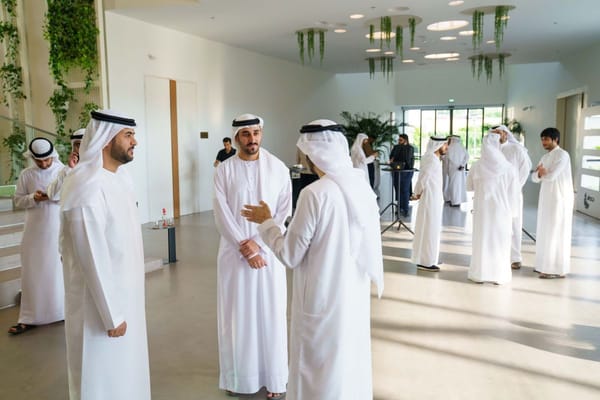
Dubai’s business environment moves at an intense pace. Most of the city’s companies are small and medium-sized enterprises, meaning leaders are deeply involved in daily operations and decision-making. When burnout hits at this level, its impact is felt immediately — in productivity, team dynamics, and overall business stability.
The city’s unique mix of high competition, ambitious growth goals, and a multicultural workforce adds another layer of pressure. Leaders often manage diverse teams spread across different work styles and cultural expectations, making emotional awareness and communication even more important. A leader’s fatigue or frustration can easily ripple through such teams, creating confusion or disengagement.
Hybrid and remote work setups, which are now common across Dubai, also come with hidden challenges. While they offer flexibility, they can increase isolation for business owners who shoulder most of the responsibility alone. Without strong connections or moments to pause, burnout grows quietly in the background.
In a market where talent is mobile and competition for skilled employees is fierce, losing morale or focus can be costly. Even a single disengaged team member or a minor drop in collaboration can affect delivery quality, client satisfaction, and revenue. For smaller teams, where every person plays a crucial role, this cost is even higher.
Signs That Burnout Is Affecting You and Your Team
Burnout rarely appears suddenly — it builds up quietly through exhaustion, frustration, and emotional distance. Recognizing the early signs helps business owners act before it begins to affect the entire team.
For the Owner or Entrepreneur
When you’re leading a business, your wellbeing sets the pace for everyone around you. Here are some key indicators that burnout might be taking hold:
- Persistent fatigue: You feel drained even after rest or time off.
- Loss of motivation: Work that once excited you now feels like an obligation.
- Irritability or detachment: Small challenges trigger frustration, or you feel emotionally disconnected from your goals.
- Slower decision-making: It becomes harder to focus or commit to choices.
- Declining satisfaction: You notice a loss of pride or fulfillment in your work.
Research in Frontiers in Psychology shows that entrepreneurs experiencing chronic stress often report lower creativity, difficulty concentrating, and reduced confidence — all of which quietly affect how they lead.
For the Team
When a leader begins to burn out, the team usually feels the effects soon after. Some signs to look out for include:
- Drop in engagement: Team members stop sharing ideas or volunteering for tasks.
- More errors and missed deadlines: Focus and energy begin to wane.
- Quieter communication: Fewer check-ins, shorter discussions, less collaboration.
- Rising absenteeism or turnover: People take more leave or start seeking other jobs.
- Emotional withdrawal: Conversations feel flat, and enthusiasm disappears from meetings.
Studies have shown that teams working under stressed or disengaged leaders experience up to a 30% drop in morale and productivity. These shifts may seem subtle at first, but they’re early warning signs that the team’s energy is beginning to mirror the leader’s state.
Quick Red Flag Checklist
- You wake up feeling exhausted more days than not.
- You find yourself less patient or more withdrawn with your team.
- Your team’s energy feels lower than usual.
- Mistakes or delays are becoming more frequent.
- Team meetings feel quieter or more routine.
- You sense growing emotional distance — in yourself or in others.
If several of these signs resonate, it’s time to slow down and recalibrate. Burnout can be reversed when caught early, but only if leaders acknowledge it and begin restoring balance — for themselves and their teams.
Strategies to Mitigate the Impact (Owner + Team Focus)
For the Owner or Leader
- Prioritize recovery: Rest and downtime aren’t luxuries—they’re essentials. Schedule breaks, sleep well, and treat personal wellbeing like any other business goal. A rested mind makes sharper decisions.
- Delegate with purpose: Focus on what truly requires your attention and assign the rest. Trusting capable team members not only reduces your load but also strengthens their ownership.
- Set boundaries: Keep work hours aligned with healthy limits. Avoid constant availability and create clear time-off routines that you and your team can depend on.
- Seek support: Surround yourself with peers, mentors, or business networks where you can share challenges and gain perspective. Support systems protect against the isolation that often fuels burnout.
For the Team
- Encourage open communication: Create a culture where people feel comfortable speaking up about stress or workload before it escalates. Regular, short check-ins can go a long way.
- Monitor morale: Simple weekly surveys or one-on-one chats help track energy levels and engagement. Address concerns early to prevent disconnection.
- Invest in wellbeing: Offer flexible working hours where possible, promote lunch breaks, and celebrate small wins to boost team spirit.
- Distribute leadership: Empower team members to lead small projects or decisions. Shared responsibility reduces pressure on the owner and keeps motivation high.
Organizational Actions
- Clarify roles and expectations: Ambiguity increases stress. Ensure every team member knows their role, scope, and responsibilities.
- Provide autonomy and trust: Allow employees to make decisions within their scope. Freedom creates accountability and a sense of control.
- Balance demands and resources: If workload increases, offer extra help, extended timelines, or clear priorities to maintain equilibrium.
- Recognize and reward effort: Acknowledging hard work—publicly or privately—helps people feel valued and connected to the company’s mission.
Cultural Fit in Dubai
- Embrace diversity: With multinational teams, communication styles and expectations vary. Be culturally aware, clear in messaging, and respectful of different working preferences.
- Stay compliant with UAE work regulations: Maintain reasonable working hours, ensure proper overtime policies, and promote rest days to support long-term performance.
- Support hybrid work thoughtfully: Many Dubai-based businesses now operate in hybrid modes. Keep core collaboration hours and maintain consistent communication to ensure no one feels left out.
Entrepreneurial burnout affects more than the person experiencing it—it quietly shapes the way a business functions. When energy and focus begin to fade at the top, morale and performance across the team naturally start to shift.
For business owners in Dubai, awareness is the first step. Taking time to assess your own stress levels, creating space for honest team conversations, and setting sustainable rhythms for work can make all the difference. Protecting your wellbeing is a form of leadership—it keeps decisions clear, teams steady, and growth consistent.
Also read:
 Ummulkiram Pardawala
 Umema Arsiwala
 Umema Arsiwala