
Here's the paradox of entrepreneurship: you start a business to gain freedom, yet you often end up feeling more trapped than ever before. You're working harder, sleeping less, and somehow feeling less fulfilled than when you had a regular job. The dream of being your own boss slowly transforms into a reality where your business owns you.
Entrepreneurial burnout runs deeper than simply working too many hours or feeling physically tired. It's the emotional exhaustion that makes Monday morning feel unbearable. It's the creative numbness where ideas that once excited you now feel like burdens. It's the slow erosion of the very motivation that drove you to start your business in the first place.
This article isn't here to tell you to work less or abandon your ambitions. Instead, it's about learning to work healthier so your drive becomes sustainable rather than self-destructive. Because what good is building a successful business if you're too burnt out to enjoy it?
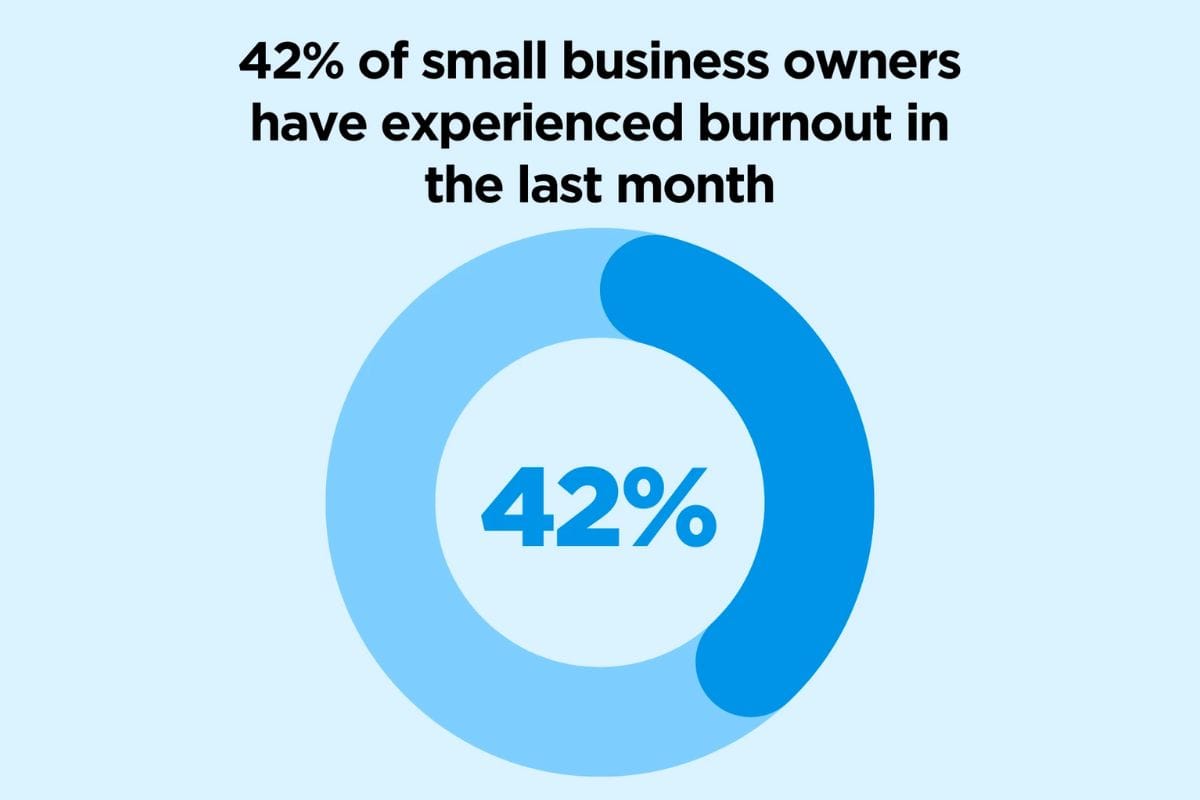
The numbers tell a sobering story: nearly 50% of entrepreneurs report experiencing burnout symptoms, according to research from Harvard Business Review. Yet most don't seek help until they've reached a breaking point. By then, relationships have suffered, health has deteriorated, and the business they worked so hard to build feels more like a prison than a passion project.
The truth is, recognising entrepreneurial burnout early and knowing how to recover from burnout isn't a luxury—it's essential for long-term success.
The Subtle Signs of Entrepreneurial Burnout
The tricky thing about burnout in entrepreneurs is that it disguises itself as dedication. You tell yourself you're just being disciplined, pushing through, staying committed. But there's a critical difference between healthy hustle and harmful exhaustion.
Many entrepreneurs miss the signs of burnout in entrepreneurs because they mistake them for being "busy" or "in grind mode." Here's what to watch for:
Emotional and mental warning signs:
- Constant irritability or cynicism – Small issues trigger disproportionate frustration. You snap at team members over minor mistakes or feel annoyed by client requests that would have excited you months ago.
- Loss of excitement toward new opportunities – Projects that should energize you feel like additional weight. New business opportunities feel exhausting rather than thrilling.
- Emotional flatness after wins – You close a big deal or hit a revenue milestone, but instead of celebration, you feel... nothing. The victories you once chased now leave you empty.
- Decision paralysis – Even simple choices feel overwhelming. What color should the logo be? Which vendor should you choose? These minor decisions drain you completely.
- Detachment from your vision – You can't remember why you started this business in the first place. The mission that once drove you feels distant and abstract.
Physical manifestations:
- Chronic headaches or tension in your neck and shoulders
- Persistent insomnia or disrupted sleep patterns
- Digestive issues and changes in appetite
- Constant fatigue that sleep doesn't fix
- Increased susceptibility to illness
Behavioral changes:
- Neglecting personal relationships – Canceling plans with friends and family becomes routine. You tell yourself "there's no time," but the truth is you're too drained to show up.
- Procrastination on important tasks – Despite knowing what needs to be done, you avoid it. You fill time with busy work instead of tackling strategic priorities.
- Escapist behaviors – Mindlessly scrolling social media for hours, binge-watching shows, or other activities that provide temporary numbness.
The dangerous part? These signs creep in quietly. What starts as "I'm just tired this week" becomes "I've been tired for six months." The line between dedication and depletion blurs until you can't tell the difference anymore.
Why Entrepreneurs Burn Out More Easily Than Others
If you're experiencing entrepreneurial burnout, you're not weak—you're dealing with unique pressures that traditional employees rarely face. Understanding why entrepreneurs burn out differently helps you address the root causes rather than just the symptoms.
The weight of ownership:
When you're an entrepreneur, every success and every failure feels intensely personal. A bad quarter isn't just a company problem—it feels like your personal failure. A client complaint doesn't just affect the business—it feels like a personal attack on your character. You carry this weight home with you, to bed with you, into every conversation. There's no separation between you and your business because, in many ways, you ARE the business.
Decision fatigue:
Most people don't realize how many decisions entrepreneurs make daily. From strategic business pivots to what time to schedule a meeting to which email to answer first—you're making hundreds of micro-decisions every single day. Each decision depletes your cognitive resources. By evening, you're so mentally exhausted that choosing what to eat for dinner feels impossible.
This decision fatigue compounds daily. Unlike employees who can defer to management or follow established protocols, entrepreneurs must constantly choose, evaluate, and decide with limited information and high stakes.
The perfectionism trap:
Many entrepreneurs tie their self-worth directly to business performance. When revenue is up, you feel valuable. When sales dip, you feel worthless. This emotional rollercoaster is exhausting because your sense of identity becomes dependent on external metrics you can't always control.
You set impossibly high standards for yourself and your business. "Good enough" never is. Every product launch must be perfect. Every client interaction must be flawless. Every social media post must be brilliant. This relentless pursuit of perfection drains your energy and sets you up for constant disappointment.
Isolation and loneliness:
Entrepreneurship can be profoundly lonely. Your employees can't fully understand your pressures because they don't carry the same risks. Your friends and family mean well but often don't grasp the complexity of what you're dealing with. Even well-intentioned advice like "just take a vacation" or "hire someone" misses the nuanced reality of your situation.
You lack peers who truly understand the unique combination of excitement and terror that comes with signing payroll, pitching investors, or pivoting your entire business model. This isolation intensifies stress because you process everything internally with no outlet.
Financial pressure and uncertainty:
Unlike salaried employees with predictable income, entrepreneurs face constant financial uncertainty. Will this month's revenue cover expenses? Can you make payroll? Should you take a salary or reinvest everything? Will investors pull out? These questions create persistent background anxiety that never fully disappears.
The financial stakes aren't just professional—they're personal. Your savings might be invested in the business. Your family's security might depend on the company's success. This pressure creates a stress level that's difficult for non-entrepreneurs to comprehend.
When Passion Turns Into Pressure
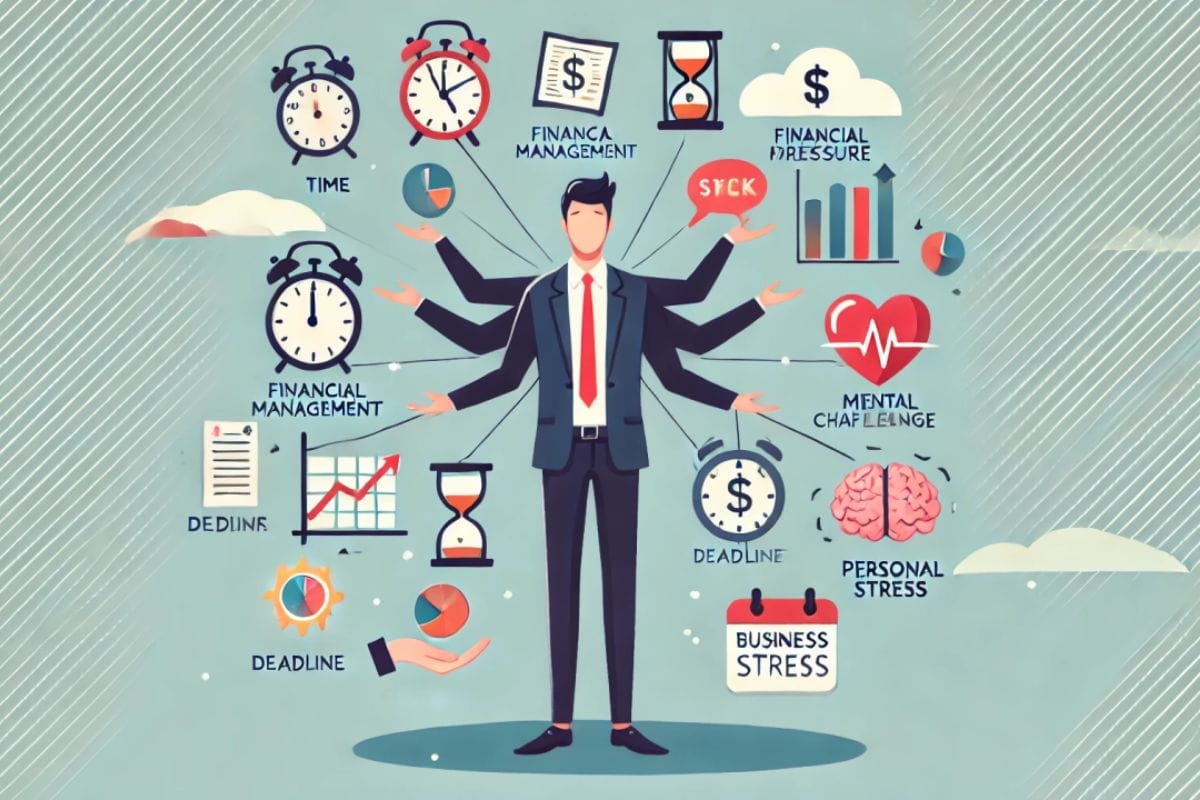
There's a heartbreaking transformation that happens to many entrepreneurs: the thing you once loved begins to feel like a burden you can't escape.
Remember when your business was just an idea? You stayed up late sketching plans not because you had to, but because you were too excited to sleep. You talked about your vision with infectious enthusiasm. Every challenge felt like an adventure.
Now? Opening your laptop feels like lifting weights. Monday mornings bring dread instead of anticipation. The business that was supposed to be your life's work has become the thing draining your life away.
The burnout loop:
This transformation follows a predictable psychological pattern:
- Love what you do – You're passionate, energized, and fully committed
- Overwork begins – Because you love it, you work more hours than sustainable
- Lose balance – Work crowds out everything else—health, relationships, hobbies
- Lose joy – The overwork transforms passion into obligation
- Work more to fix it – You think if you just push harder, the joy will return
- Burn out completely – You end up exhausted, resentful, and emotionally depleted
Real scenarios of passion becoming pressure:
Consider the founder who tells their partner, "I'll come to bed in 30 minutes—I just need to finish this one thing." Three hours later, they're still working, fueled by anxiety rather than ambition.
Or the entrepreneur who misses their child's school play because a client meeting "couldn't be rescheduled." They promise themselves they'll make the next one, but they never do.
Or the business owner who snaps at a loyal team member over a minor mistake, then feels guilty but doesn't apologize because they're too overwhelmed to process emotions.
Commitment versus compulsion:
Here's the critical distinction: Commitment energizes you and aligns with your values. Compulsion depletes you and stems from fear or guilt.
Commitment says: "I'm working late tonight because this project matters to me and I'm energized by it."
Compulsion says: "I have to work late tonight or everything will fall apart."
When passion becomes pressure, you've crossed from commitment to compulsion. You're no longer working from inspiration but from desperation—desperate to prove yourself, desperate to avoid failure, desperate to justify all the sacrifices you've already made.
The Recovery Phase – How to Rebuild Without Burning Out Again
Recovering from entrepreneurial burnout isn't about taking a week off and returning to the same destructive patterns. It requires intentional rebuilding of your relationship with your business, your work habits, and yourself.
Step 1: Pause Intentionally
This isn't about quitting or giving up—it's about stepping back long enough to regain clarity.
What pausing looks like in practice:
- Block out a full day with zero business tasks. No email, no Slack, no "quick checks." Use this time for genuine rest or activities that replenish you.
- Take a long weekend away from your workspace. Physical distance from your environment creates mental distance from your problems.
- If possible, delegate urgent matters for a week while you genuinely disconnect.
Identify your burnout triggers:
During your pause, reflect on what specifically drains you:
- Is it certain types of work (admin tasks, client calls, financial reviews)?
- Is it people-related (demanding clients, underperforming team members)?
- Is it guilt-driven (feeling you should work more, do better, achieve faster)?
- Is it boundary-related (inability to say no, overcommitting, constant availability)?
Understanding your triggers helps you address root causes rather than just symptoms.
Step 2: Reconnect with Purpose
Burnout often happens when you lose sight of why you started. You become so focused on the how—the tactics, metrics, and daily operations—that you forget the why.
Reflect on your origins:
- What problem were you passionate about solving?
- What impact did you hope to create?
- What freedom were you seeking?
- What legacy did you imagine building?
Rewrite your definition of success:
Most entrepreneurs measure success through revenue, growth rates, or investor valuations. But these external metrics often fuel burnout because they're never enough. There's always a higher number to chase.
Instead, define success through criteria like:
- Impact: How many people did I help today?
- Learning: What did I discover or improve?
- Balance: Did I protect time for relationships and health?
- Fulfillment: Do I feel energized by my work?
- Alignment: Are my daily actions reflecting my core values?
When you redefine success beyond profit metrics, you create space for sustainable satisfaction rather than endless striving.
Step 3: Delegate and Detach
One of the hardest transitions for entrepreneurs is moving from "doing everything" to "leading effectively." But this shift is essential for recovery.
Learning to trust others:
Start small. Delegate one task you've been holding onto because "no one can do it as well as you." Maybe it's managing social media, handling customer service inquiries, or processing invoices.
Yes, others will do it differently. Sometimes they'll do it less perfectly. But perfection isn't the goal—sustainable workload is.
What to delegate first:
- Repetitive tasks: Anything you do more than once a week
- Administrative work: Scheduling, email management, data entry
- Technical tasks: Website updates, graphic design, basic bookkeeping
- Lower-stakes decisions: Choices that won't significantly impact the business
Detaching emotionally:
This is the harder part. Delegation isn't just about giving tasks away—it's about releasing the need to control every outcome.
Practice this mindset: "I am not my business. My business is a separate entity that can function without my constant involvement."
This doesn't mean you stop caring. It means you stop carrying every burden personally.
Step 4: Rewire Daily Habits
Recovery requires building new systems that prevent future burnout. You can't return to the same habits that depleted you in the first place.
Introduce sustainable structure:
- Time blocking: Assign specific hours for specific types of work. For example, mornings for creative work, afternoons for meetings, evenings completely off-limits.
- Task batching: Group similar tasks together (all calls in one block, all content creation in another) to reduce context-switching fatigue.
- Energy management: Schedule demanding tasks during your peak energy hours and lighter tasks when you're naturally lower energy.
Prioritize physical recovery:
Your body absorbs stress even when your mind ignores it. Rebuild physical resilience through:
- Movement: Even 20 minutes of walking daily reduces stress hormones and improves decision-making
- Sleep hygiene: Consistent sleep and wake times, no screens before bed, cool dark room
- Nutrition: Regular meals with actual nutrients, not just coffee and convenient snacks
Set technology boundaries:
Create hard stops for work communication:
- No Slack or work email after 8 pm
- Turn off all work notifications on weekends
- Establish "do not disturb" hours that the team and clients respect
- Remove work apps from your phone or use separate devices
Build in mindfulness practices:
You don't need to become a meditation expert, but some form of mindfulness helps:
- Five minutes of breathing exercises when stress peaks
- Morning journaling to process thoughts before diving into work
- Weekly reflection on what's working and what's draining you
Step 5: Seek Support
Entrepreneurs often believe they must figure everything out alone. This mindset accelerates burnout.
Find your community:
- Peer groups: Join entrepreneur meetups or mastermind groups where others understand your specific challenges
- Mentorship: Connect with someone who's been through burnout and recovered successfully
- Professional support: Consider working with a coach or therapist who specialises in entrepreneurial stress
- Honest conversations: Share your struggles with trusted friends or family instead of pretending everything is fine
Normalise the recovery process:
Talking about burnout isn't weakness—it's leadership. When you're honest about your struggles, you give others permission to address theirs. You build a culture where mental health matters as much as business metrics.
Preventing Burnout Before It Begins
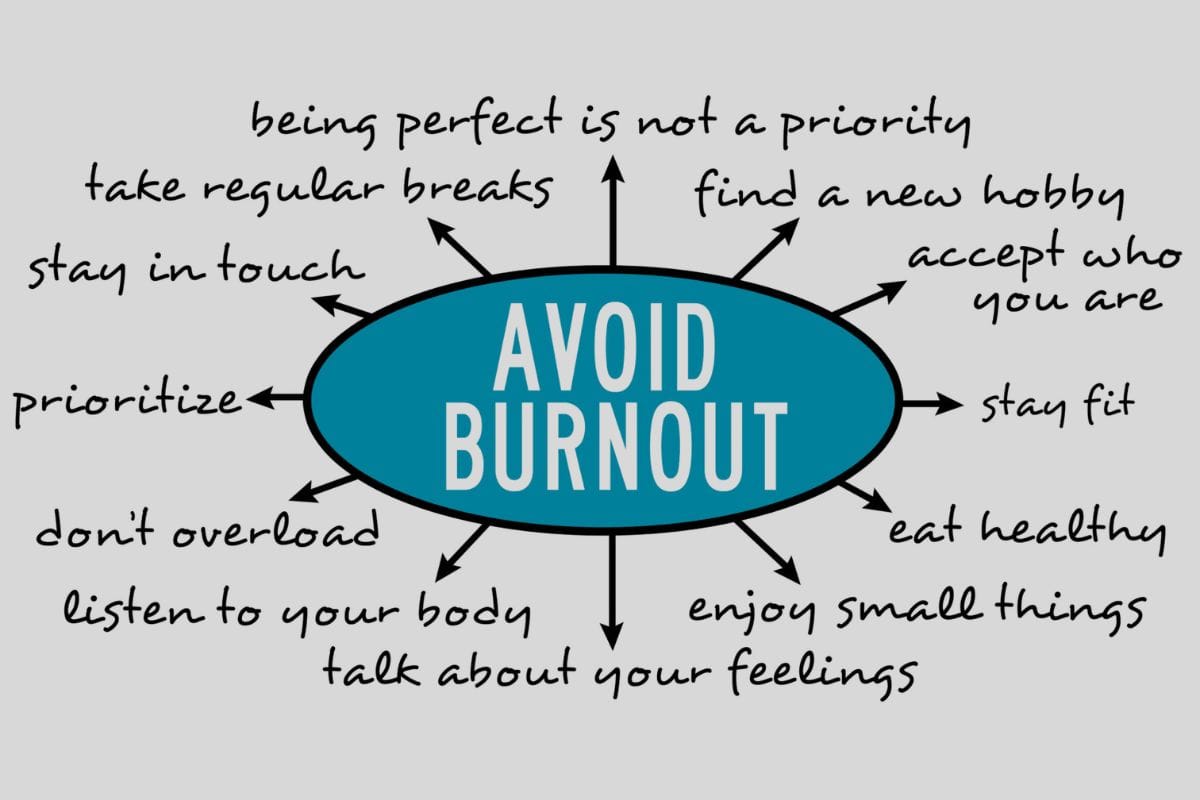
The best approach to entrepreneurial burnout is preventing it from taking hold in the first place. Once you've recovered, implement these systems to maintain long-term sustainability.
Create systems, not chaos:
- Document processes: Even simple standard operating procedures reduce decision fatigue
- Automate repetitive tasks: Use tools for scheduling, invoicing, email responses, and social media posting
- Build in redundancy: Ensure you're not the single point of failure for critical business functions
- Delegate early: Don't wait until you're drowning to hire help
Set emotional boundaries:
Practice separating your identity from your business outcomes:
- You are not defined by your revenue numbers
- A bad quarter doesn't make you a bad person
- Client feedback is about the product, not your worth
- Business failures are learning opportunities, not personal deficiencies
Plan rest like meetings:
Downtime isn't something that happens if you have leftover energy. It's a strategic requirement that you schedule with the same discipline as client calls.
- Block personal time on your calendar and treat it as non-negotiable
- Schedule regular date nights, family time, or friend hangouts
- Plan quarterly breaks where you completely disconnect
- Build in daily rituals that signal work is over (changing clothes, taking a walk, specific shutdown routine)
Regular self-audits:
Monthly, ask yourself:
- Motivation check: Am I excited about my work or just going through motions?
- Stress assessment: What's my stress level on a scale of 1-10? Has it increased?
- Workload evaluation: Am I taking on too much? What can I delegate or eliminate?
- Life balance review: Am I neglecting health, relationships, or personal growth?
- Purpose alignment: Does my daily work reflect my core values and goals?
Celebrate progress, not just milestones:
Burnout often stems from constantly chasing the next big thing without acknowledging how far you've come.
Celebrate small wins:
- You showed up and did your best today
- You handled a difficult conversation professionally
- You solved a problem that would have overwhelmed you last year
- Your team accomplished something meaningful
- You protected your boundaries when you were tempted to overwork
Progress isn't always about dramatic growth. Sometimes it's about consistency, learning, and maintaining your well-being while building something meaningful.
Reigniting the Spark
Once you've stabilised and implemented recovery practices, focus on rediscovering the joy in entrepreneurship. This isn't about forcing positivity—it's about creating conditions where genuine enthusiasm can return.
Explore new creative avenues:
- Learn something completely unrelated to your business—pottery, language, cooking—to stimulate different parts of your brain
- Experiment with a small passion project with zero pressure or expectations
- Attend conferences or workshops to expose yourself to fresh perspectives
- Collaborate with other entrepreneurs on side projects that energise you
Embrace strategic pivots:
Sometimes, reigniting passion requires changing direction. This might mean:
- Shifting your business model to focus on aspects you enjoy most
- Niching down to serve clients who truly energise you
- Expanding into complementary services that excite you
- Bringing in a partner or co-founder to share responsibilities
Rediscover stillness:
Many breakthrough ideas emerge after periods of rest, not during intense grinding. When you create space for stillness, creativity flows naturally.
Some of the most successful pivots, innovations, and solutions come from entrepreneurs who stepped back, rested, and allowed their minds to wander. The ideas were always there—they just needed room to surface.
Reframe entrepreneurship:
True entrepreneurship isn't about how much you can endure. It's about how long you can sustain meaningful impact.
The entrepreneurs who build lasting legacies aren't the ones who work the hardest—they're the ones who work healthiest. They understand that their well-being isn't separate from their business success; it's fundamental to it.
Entrepreneurial burnout isn't a badge of honour—it's a warning sign that your current approach isn't sustainable. Recognising the signs of burnout in entrepreneurs and knowing how to recover from burnout transforms your relationship with your business from exhausting to energising.
Building something meaningful requires endurance, yes, but also wisdom about your limits, courage to set boundaries, and commitment to your own well-being. Your business needs you at your best, and your best self requires rest, support, and intentional recovery. True entrepreneurial success isn't measured by how hard you push but by how well you sustain the journey.
Also Read:
 Umema Arsiwala
 Ummulkiram Pardawala
 Umema Arsiwala
 Ummulkiram Pardawala