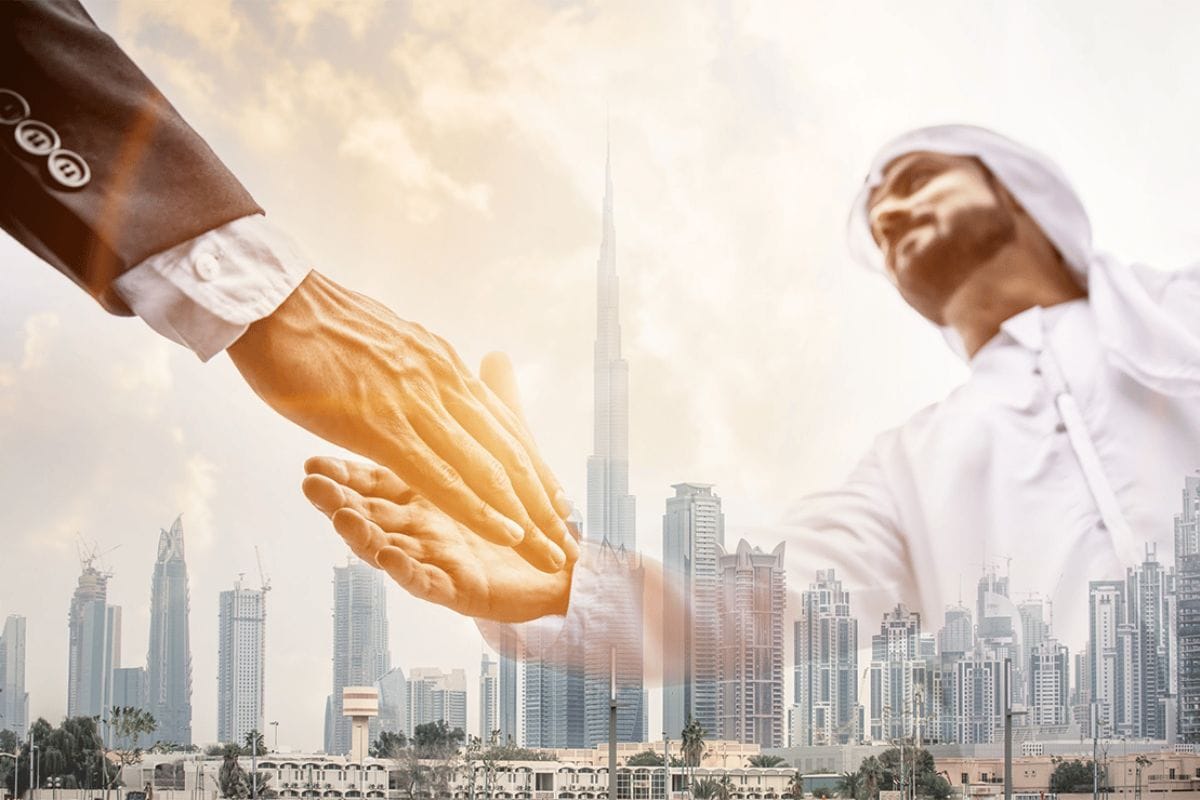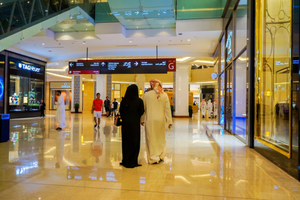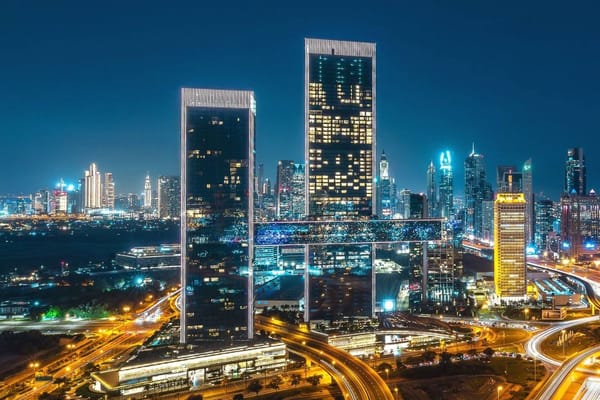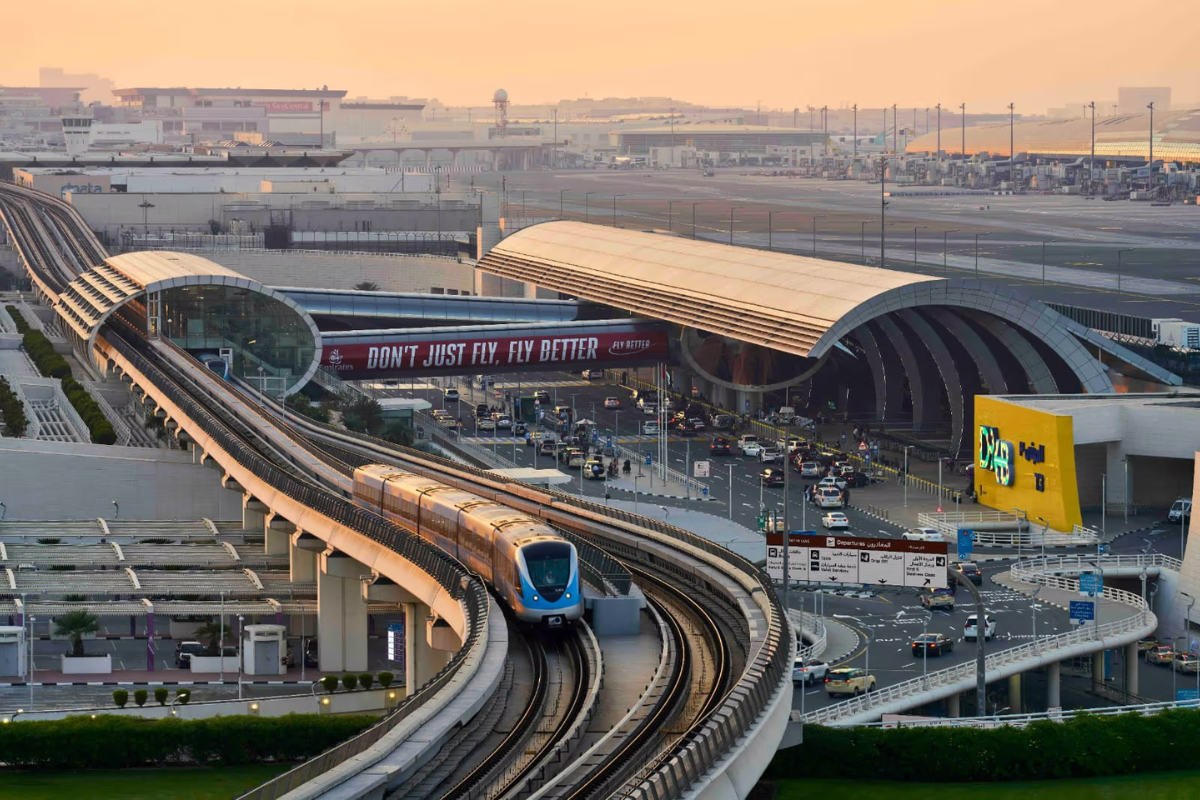
Every city has its heartbeat — and in Dubai, that rhythm flows through its metro stations and airport terminals. These spaces see millions of people every day, creating a steady stream of potential customers in moments when attention is naturally focused.
In 2024, Dubai’s public transport network recorded 747 million journeys, averaging over 2 million trips daily, with the metro accounting for more than a third. Dubai International Airport welcomed 92.3 million passengers the same year, with over 46 million in the first half of 2025 alone. Few advertising environments offer this kind of guaranteed, sustained exposure.
Beyond the numbers lies the real opportunity: commuters and travelers are often waiting, moving, or in decision-making mode. Airports host high-intent audiences, while metro stations offer daily, repetitive visibility. Together, they give brands a unique blend of mass reach and precise targeting, turning ordinary transit moments into powerful marketing touchpoints.
In this article, we’ll explore how businesses can strategically leverage these transit hubs to boost visibility, engagement, and measurable impact.
Understanding the Commuter Audience
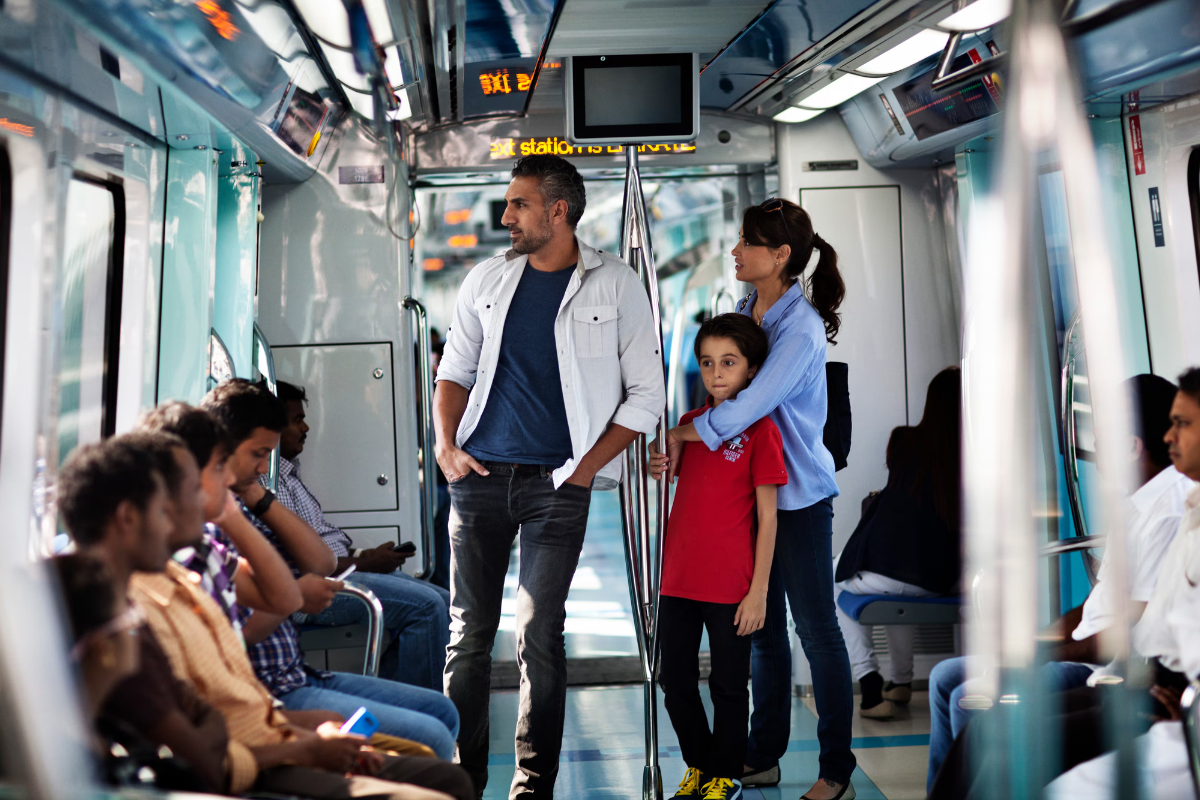
When your campaign lives in transit hubs, your “audience” isn’t a monolith — it’s a mix of traveler types, each bringing their own mindset, motion patterns, and openness to messaging. To land meaningfully, brands must tailor to these nuances. Below is a breakdown of the major commuter groups and what their behavior offers marketers.
1. Daily Metro Users
Who they are
This group includes residents commuting to work or school, service employees, and regular users of public transport. The metro system is a backbone of daily mobility in Dubai.
State of mind & behavior
- Routine & repetition: many take the metro at fixed times, often passing through the same stations daily.
- Dwell moments: walking through concourses, waiting on platforms, entering/exiting.
- Cognitive load: moderate — they’re attentive enough to notice visuals but not too distracted.
- Mobile-ready: more likely to have phones ready to scan, click, or respond to calls-to-action.
Opportunity window
- Use high frequency media (wraps, digital screens) to reinforce brand recall.
- Place QR codes or short calls to action around exits or platform edges.
- Time campaigns around rush-hour peaks (morning outbound, evening inbound).
2. Office/Business Commuters
Who they are
Professionals and executives traveling between home, business districts, and meetings— many via metro or integrated feeder transport.
State of mind & behavior
- Time-sensitive mindset: they’re tuned to efficiency, meaning messages must be crisp and immediately valuable.
- Focus on utility: offers, tools, services that save time, money, or enhance productivity resonate more.
- Selectivity: less patient with noise — more receptive to clear, relevant, concise messaging.
Opportunity window
- Use contextual creative: “Get to your meeting in style,” “Upgrade your workday,” etc.
- Emphasize premium / time-saving propositions (services, apps, banking).
- Prioritize placement near business-district stations.
3. Tourists & Occasional Metro Visitors
Who they are
First-time or infrequent users of the metro often navigate between attractions, hotels, malls, or transit points.
State of mind & behavior
- Exploratory mood: open to discovery and offers because they’re out of their routine.
- Higher dwell time in interchanges, in maps areas, information kiosks, and concourses.
- Receptive to wayfinding support, local experiences, deals, and recommendations.
Opportunity window
- Use orientational creative (e.g., “top things to see,” “local deals”).
- Promote city passes, experiences, food, and transport apps.
- Leverage media near maps, kiosks, and tourist info points.
4. Airport Travelers (Arrivals, Departures & Transit Passengers)
Who they are
A mix of business travelers, tourists, transit/connecting passengers, and local residents flying domestically or internationally.
State of mind & behavior
- Elevated dwell times: check-in, security, immigration, lounges, boarding gates — many waiting periods.
- Decision mode: travelers often make purchases (duty-free, food, services) while moving through terminals.
- Receptivity to cross-selling: supplemental services (SIM cards, currency exchange, local telecom, hotel bookings) are highly relevant.
Opportunity window
- Use large-format digital media in pre-security, duty-free, boarding zones.
- Target arrival halls for onward mobility services (rides, local SIMs, tours).
- Use sequential messaging: “Welcome to Dubai → Best things to do → Where to buy SIM / local deals.”
Metro Stations: Everyday Brand Exposure
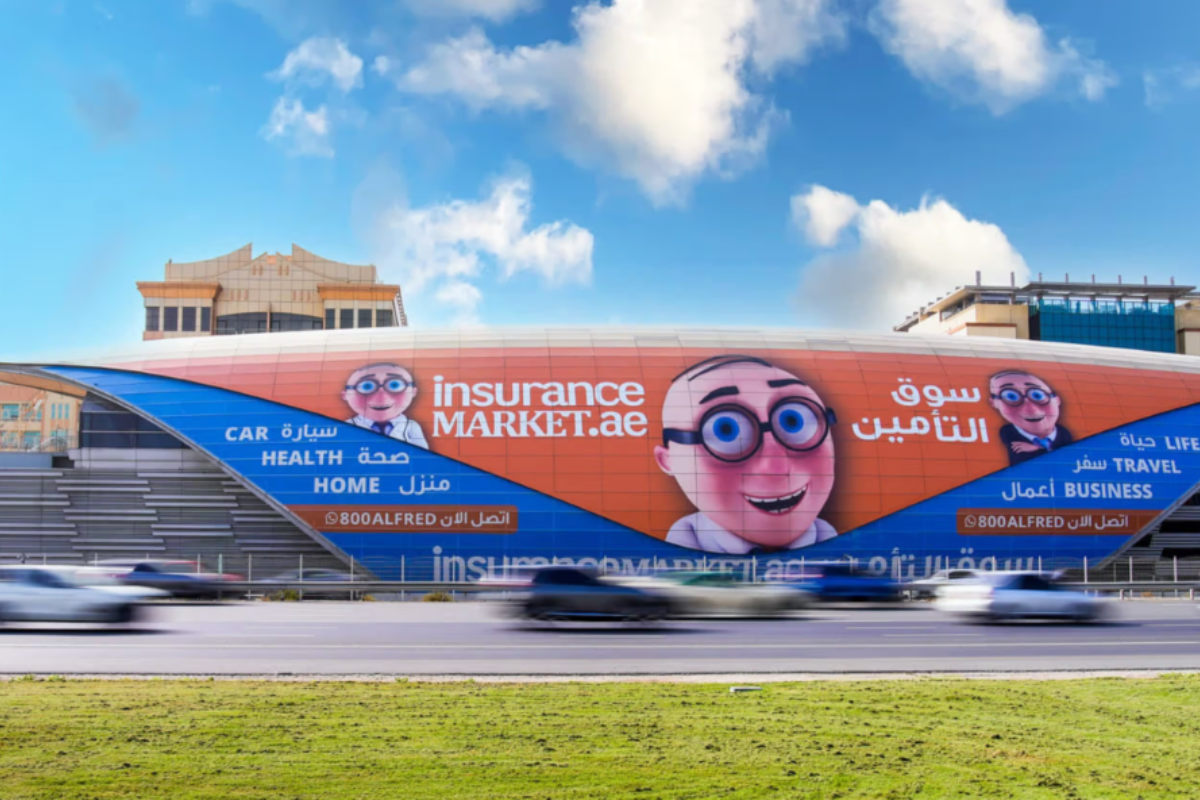
Metro stations are more than transit points — they’re daily pathways that shape how people move through the city. For brands, this means regular, predictable exposure to hundreds of thousands of commuters, all within a structured environment designed for visibility.
One of the most powerful opportunities lies in station naming rights. When a company takes over a station name, it becomes woven into everyday conversation. Commuters hear it in announcements, see it on maps, and use it as a reference point for directions. Deals like Life Pharmacy’s 10-year naming of the UAE Exchange station or National Paints’ sponsorship of Jebel Ali demonstrate how brands can secure long-term visibility that goes far beyond traditional advertising.
Within the stations themselves, digital screens and LED panels light up concourses and corridors. These dynamic displays allow brands to run animated content or time-specific messages, keeping campaigns fresh and engaging throughout the day. Wall panels, escalator sides, and concourse placements work in tandem, catching attention as people pass through high-traffic zones like ticket halls and main walkways.
On the trains, full or partial wraps transform carriages into moving billboards, extending reach beyond station walls. Inside, branding on doors, overhead panels, and seatbacks keeps the message present during the ride itself, when commuters are often more relaxed and observant.
Even the ground and structural elements play a role. Floor graphics guide footsteps with promotional cues, while branded pillars and platform-edge panels create an immersive environment that blends with the commuter’s journey.
For brands, metro advertising works best for building broad awareness, launching new products, or driving footfall to nearby retail locations. It’s a format that thrives on repetition and scale, making it ideal for campaigns that need to stay top of mind day after day.
Dubai Metro reaches more than 255 million riders annually, supported by a network of roughly 1,500 digital screens across 75 kilometres of track. That means every station offers not just visibility, but consistency — a daily rhythm your brand can seamlessly fit into.
Airports: Premium, High-Intent Advertising
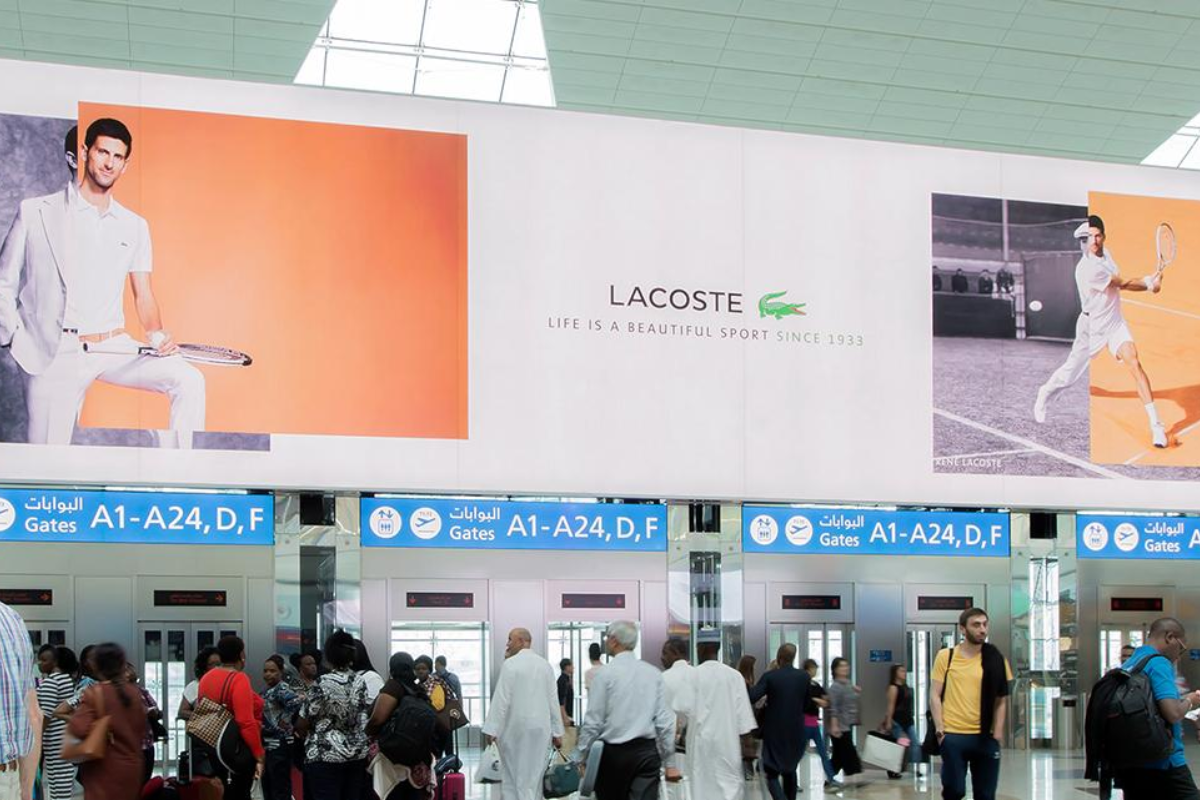
Airports offer a completely different kind of marketing environment — one that blends high dwell time with a mindset that’s naturally more receptive to spending and discovery. Unlike metro stations, where movement is constant and repetitive, airports are structured around longer, more deliberate pauses. From check-in to boarding, travelers move through multiple touchpoints, giving brands space to create layered, memorable experiences.
Strategic Advertising Formats
Large-Format Digital Displays dominate key zones like departure halls, security areas, and boarding gates. These high-impact screens are designed for bold visuals that stand out in spacious terminals. Because travelers often wait in these areas for extended periods, brands have the rare advantage of prolonged exposure, allowing messages to sink in without feeling rushed.
Experiential Installations are increasingly common at Dubai International Airport, transforming ordinary spaces into interactive brand showcases. Whether it’s a pop-up lounge, immersive booth, or themed display near duty-free zones, these setups encourage travelers to pause, engage, and share the experience on social media — a powerful amplification beyond the terminal itself.
Duty-Free and Retail Proximity Placements tap into the airport’s unique commercial ecosystem. Advertising near retail corridors, luxury boutiques, and high-traffic walkways connects brands directly to travelers in a buying state of mind. Strategic positioning near store entrances or along shopping paths helps guide purchase decisions at the perfect moment.
Arrival Halls and Baggage Claim Areas offer another underused opportunity. Here, passengers are often waiting for luggage with little to distract them. Branding in these spaces is ideal for services targeting newcomers — from telecom providers offering SIM cards to ride services, real estate companies, or attractions aiming to capture attention as soon as people land.
Why Airports Work for Certain Campaigns
Airports are particularly suited to premium launches, tourism promotions, and high-value services. Travelers are often in a decision-making mode, planning their next move or making last-minute purchases before boarding. The diversity of passengers — from high-net-worth individuals and business travelers to tourists with spending budgets — gives brands access to audiences they might not reach through everyday city media.
Moreover, airport campaigns benefit from a controlled, high-quality environment. Every placement is curated, uncluttered, and strategically positioned, ensuring messages stand out. The combination of audience diversity, dwell time, and polished presentation makes airports one of the most effective spaces for brands that want to create lasting impressions.
Creative That Works on the Move
When you’re trying to reach people in transit hubs, your creative must be nimble, contextual, and instantly compelling. Here are approaches and recent innovations that are proving effective in Dubai’s metro and airport ecosystems.
1. Dynamic & Contextual Messaging
- Real-time triggers: At DXB, brands are now activating ads based on live flight information. For instance, telecom provider E& launched a roaming offer only when flights to Saudi Arabia were being called—ensuring relevancy right when passengers needed it.
- Programmatic DOOH: Dubai Airports’ partner JCDecuax introduced “Play+,” a programmatic digital out-of-home platform that allows brands to adjust creatives on the fly based on time, footfall, and even external triggers.
- Daypart and situational creatives: Adjust visuals for morning commuters versus evening flows; soft tones during off-peak, bold during rush hours.
2. Immersive & Experiential Engagements
- Experiential pods & activation zones: Brands now secure mini pop-up zones inside terminals (e.g., in duty-free or lounges) that invite tactile interaction—demos, VR, sampling.
- Wi-Fi & digital moments: Since every traveler logs onto airport Wi-Fi, brands can own that digital landing page (via Wi-Fi sponsorship) and present mobile-first creative, welcome messages, or promos before browsers open.
- Trolley & mobile media sponsorships: Ads attached to luggage trolleys or mobile devices that move with passengers, increasing dwell and frequency of exposure in high-footfall zones like baggage claim or walkways.
3. Minimalism with Max Recall
- Ultra-succinct copy: Headlines limited to 3–5 words with instant meaning are critical. Passengers don’t linger; the creative must deliver in a glance.
- Bold visual anchors: Use a strong single visual cue (logo, hero image, brand color) that stands out against the environment.
- Contrast & clarity: High contrast between text and background is nonnegotiable — especially under varying lighting in stations or terminals.
- Arabic + English harmony: Creatives often balance bilingual copy, but keep the visual hierarchy simple so both languages can be processed fast.
4. Seamless Offline-to-Online Integration
- QR codes / NFC tags: Embed short, scannable codes linked to offer pages, maps, and coupon redemptions.
- Short URLs or vanity domains: For contexts where scanning isn’t possible, drive people to concise, memorable links.
- Follow-through interactive journey: A commuter sees the message in metro, taps it, receives a coupon, and redeems it near the station or airport retail.
- Sequential storytelling: Use multiple ad placements in a commuter’s path (entry → platform → exit) to tell a mini narrative, building curiosity and culminating in action.
5. Innovation & Differentiation
- 3D or lenticular effects: Depth illusions that shift as people move give extra visual punch.
- Motion in “static + motion” combos: Use static boards adjacent to LED strips to draw attention to the static part via movement.
- Sound or motion sensors (where allowed): Subtle audio cues or light activation as people pass by — must be compliant with station rules.
- Localized tie-ins: For airport ads, reflect arrival city (e.g., “Welcome to Dubai”) and then connect to your offer; for metro, tie into local landmarks or events.
How Brands Can Get In
Getting your brand into metro stations or airports isn’t just about booking a space — it’s about understanding who controls the inventory, how approvals work, and when to make your move. Here’s a clear roadmap for both channels.
Metro: Through RTA and Hypermedia
All metro advertising in Dubai is managed through a partnership between the Roads and Transport Authority (RTA) and Hypermedia, which holds the exclusive rights to station media, train wraps, digital screens, and naming rights.
If you’re looking to secure station naming rights, Hypermedia runs a dedicated program where brands can sign long-term agreements to rename select stations. Deals like those signed by Life Pharmacy and National Paints are good examples of how naming can create enduring visibility woven into daily commuter life.
For campaign-based media, brands must apply for advertising permits and No Objection Certificates (NOCs) through RTA’s corporate services. This step ensures all signage and activations comply with safety and placement regulations. Many brands also work with concessionaires such as Mada Media, who act as intermediaries to simplify approvals and logistics.
Because metro campaigns often involve structural installations and coordination with station systems, lead times typically range from 6 to 12 weeks. Naming rights, in particular, require additional time for updates across maps, announcements, and station signage.
Airports: Through JCDecaux
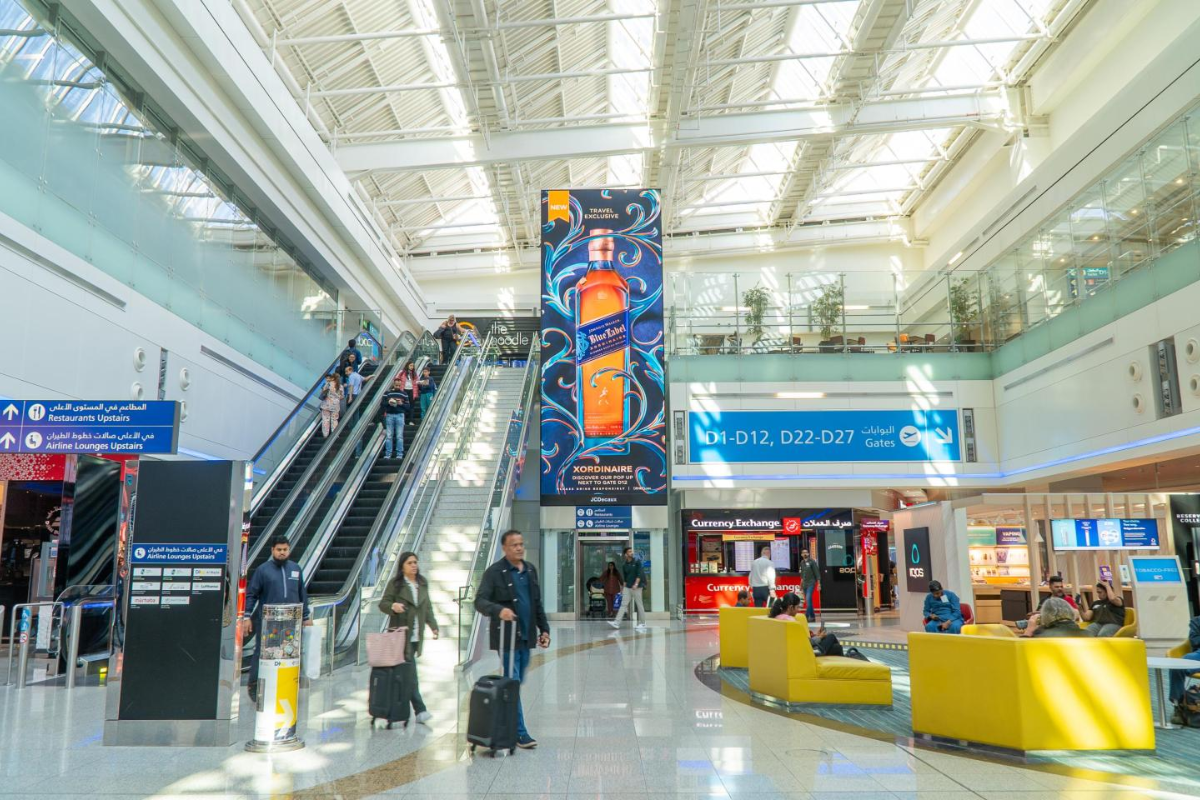
At Dubai’s airports (DXB and DWC), JCDecaux is the exclusive advertising partner. All campaigns — from large-format digital screens to experiential activations — are booked directly through their airport media division.
JCDecaux offers advanced programmatic options through its Play+ platform, which allows brands to tailor campaigns in real time based on flight schedules, audience segments, or time of day. This flexibility is especially useful for brands targeting specific traveler groups or seasonal peaks.
The company also provides data and insights on passenger profiles and movement patterns, helping advertisers choose the most effective placements. Because airports operate in highly regulated environments, creative and structural proposals undergo multiple approval rounds, including security and passenger flow reviews. Planning campaigns well in advance is crucial, especially during busy travel periods or when terminals undergo upgrades.
Measuring Impact Simply
Transit advertising can feel vast and complex, but measuring its effectiveness doesn’t have to be. The key is to focus on clear, practical metrics that match the campaign’s objectives. In Dubai, both metro and airport advertising networks offer structured ways to track performance and prove value.
Reach and Impressions
Dubai Metro reaches more than 255 million riders annually, and daily ridership continues to grow year on year. For campaigns on trains, station panels, or digital screens, estimated reach is calculated using ridership data, station footfall, and dwell time. Media concessionaires like Hypermedia provide detailed audience forecasts based on station type (e.g., interchange vs. neighborhood station), line traffic, and time of day. This gives brands a reliable baseline for impressions — similar to how outdoor billboards are measured, but with more predictable flows.
At the airport, JCDecaux uses passenger traffic data from Dubai Airports to calculate impressions. With DXB handling over 92 million passengers in 2024, brands can target specific terminals or concourses and receive clear estimates of how many travelers will pass their placements during the campaign period. Programmatic campaigns using Play+ also provide live impression counts, giving advertisers near real-time visibility.
Footfall Uplift and Conversions
For retail-driven campaigns, tracking uplift around metro exits or airport retail zones is one of the most direct ways to gauge impact. Many brands use unique offer codes, short URLs, or QR-linked landing pages to track how many people visited a store or made a purchase after seeing an ad. For example, a café near a busy interchange station can run a campaign on concourse panels and then measure changes in footfall during the campaign versus a control period. Similarly, brands welcoming tourists at arrivals can track how many new SIM activations or ride bookings came from airport QR codes.
Digital Interactions: QR Codes, NFC, and Wi-Fi
Dubai’s metro and airports are increasingly equipped for offline-to-online tracking. QR codes are now commonly used on station panels and airport digital screens, often leading to campaign microsites, app downloads, or discount pages. At airports, Wi-Fi landing pages are also popular — brands sponsoring the free Wi-Fi can track impressions and click-throughs when travelers log in. These interactions provide a clear, measurable bridge between physical media and digital outcomes.
Brand Recall and Awareness Studies
For campaigns focused on visibility rather than direct conversions, brand lift studies and recall surveys are often used. Media partners like Hypermedia and JCDecaux regularly collaborate with third-party research firms to measure unaided and aided recall before and after campaigns. Metrics such as recognition rates, message clarity, and intent to purchase give brands a tangible sense of how well their creative resonated with commuters and travelers.
Dubai’s metro stations and airports offer a rare combination of scale, frequency, and high-intent audiences, making them powerful spaces for brands that want to stay visible and relevant.
The metro excels at consistent, city-wide exposure, building everyday familiarity through repeated interactions. Airports, on the other hand, deliver premium, high-value moments where travelers are more open to discovery, purchase, and engagement. Together, they create a marketing ecosystem that touches both residents and visitors, morning commuters and global travelers.
Success comes down to smart execution: understanding the audience, choosing the right formats, planning approvals early, and tracking impact with clear metrics. Brands that approach these spaces strategically can turn daily commutes and travel pauses into meaningful touchpoints — moments that drive awareness, action, and long-term loyalty.
Also read:
 Umema Arsiwala
 Shahba Mayyeri
 Ummulkiram Pardawala