For small business owners in Dubai, the workspace decision has evolved beyond a simple overhead calculation to become a strategic choice affecting regulatory compliance, tax optimization, and growth capacity. With Dubai's commercial real estate market experiencing a flight to quality, characterized by rental increases up to 43.5% in some districts and projected 15% growth in office values, the rent, buy, or co-share question requires careful analysis of your business timeline, team size, and capital position.
This guide examines each option through the lens of practical business needs, regulatory requirements, and financial implications in Dubai's 2026 market.
Understanding the Current Market Context
Dubai's commercial property landscape in 2026 is defined by strong demand for quality office space, particularly in central business districts. The total office stock is projected to reach 9.7 million square meters, with approximately 230,000 square meters of new supply entering the market this year.
Key market indicators shape workspace decisions:
- Mean rental value: AED 145 per square foot
- Mean sale price: AED 1,550 per square foot
- Commercial property yields: 6-10%
- Ready office units dominate 92% of transactions
This supply-constrained environment gives landlords significant negotiating leverage in prime districts, making proactive workspace strategy essential for small businesses.
Option 1: Co-Sharing and Coworking Spaces
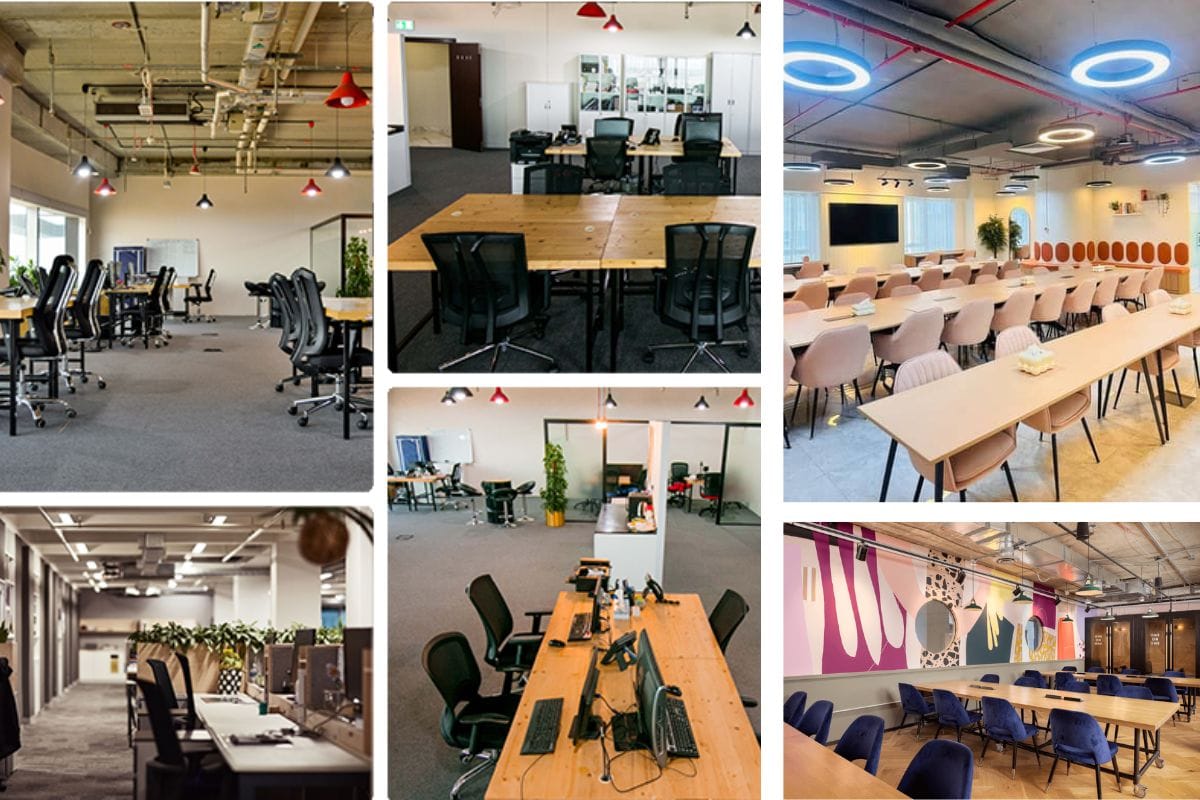
Co-sharing has evolved from a freelancer solution to a strategic entry point for small businesses. Dubai now hosts over 250 coworking spaces serving more than 75,000 professionals.
Economic Advantages
Coworking eliminates the heavy upfront costs of traditional leases. Instead of multiple post-dated checks, substantial security deposits, and fit-out investments, businesses pay a single monthly fee for fully equipped environments including furniture, internet, meeting rooms, and reception services.
Cost savings are substantial, typically 40-60% less than traditional leases in prime locations like Business Bay or DIFC. This preserves liquidity for core business activities rather than non-performing real estate assets.
Typical coworking pricing (2026):
- Hot desk: AED 800-1,200 monthly
- Dedicated desk: AED 1,200-1,800 monthly
- Private office (1-3 people): AED 2,500-5,000 monthly
- Private office (4-8 people): AED 5,000-15,000 monthly
Beyond cost, approximately 68% of coworking members report finding new clients or partners within their workspace community—a significant secondary benefit.
The Visa Quota Limitation
Despite financial advantages, co-sharing introduces critical regulatory constraints. In Dubai, residency visas are linked to physical workspace size. A standard flexi-desk or shared desk membership typically allows only 1-3 visas.
If your 2026 growth plan involves hiring five or more employees, the co-sharing model becomes a bottleneck. Expanding beyond this cap usually requires transitioning to a private office suite or traditional lease where visa quota is calculated based on the 100-square-foot rule (one visa per 100 square feet of leased space).
When Co-Sharing Makes Sense
- Your timeline is short-term (under 2 years) or uncertain
- Team size is 1-3 people
- Capital is limited and you prioritize operational expenditure over investment
- You're testing a new business model or entering the market for the first time
- You primarily operate remotely but need a legal registered office
Option 2: Traditional and Serviced Leasing
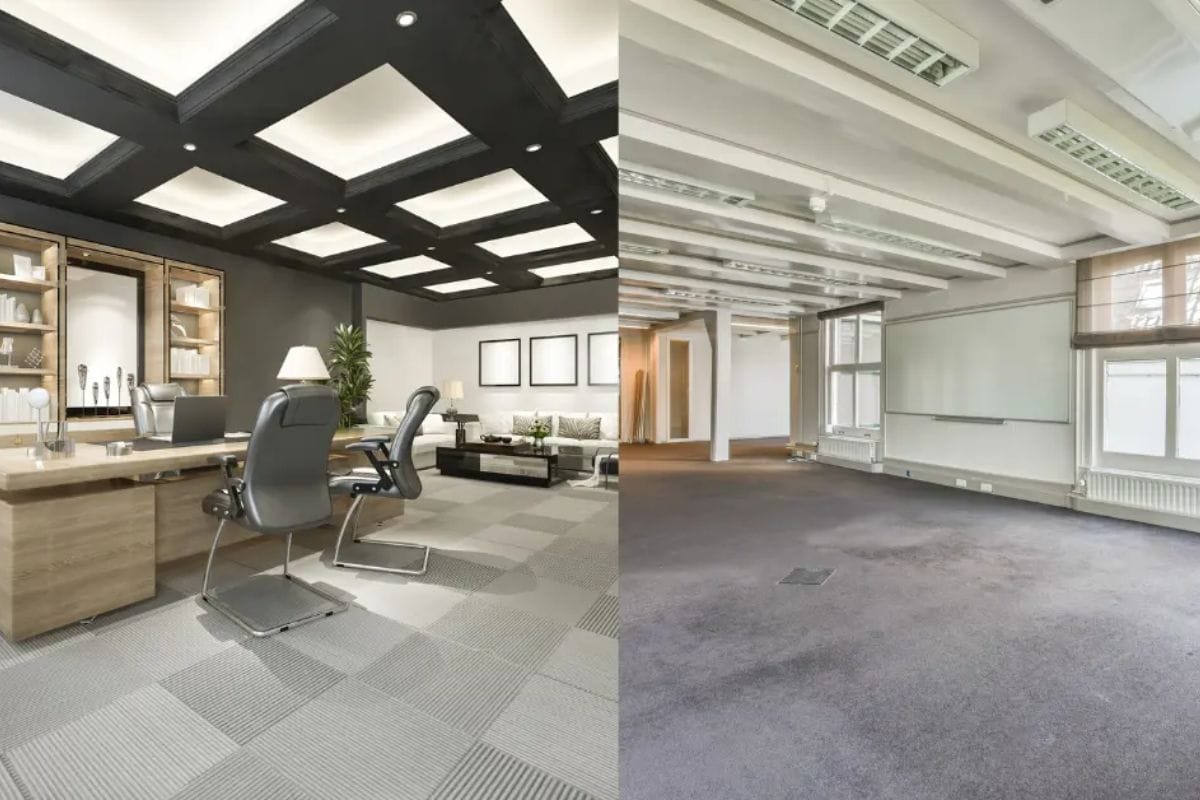
As businesses mature, the need for dedicated, branded environments often necessitates moving toward leasing. The 2026 market is highly stratified by grade, with Grade A towers offering ESG certifications, smart infrastructure, and prime locations.
Serviced Offices: The Transitional Hybrid
Serviced offices bridge coworking and traditional leases. They provide private, lockable units within buildings managed by third-party providers handling utilities, cleaning, and administrative support.
This model is particularly attractive to scaling SMEs because it allows immediate setup without the 10-16 week delay typical of custom fit-out projects. Serviced office packages typically include higher visa allocation than coworking (3-6 visas depending on plan and office size), with monthly billing cycles providing agility that annual leases cannot match.
Traditional Leases: Understanding the Options
Traditional leases present a clear budgetary divide between "Shell & Core" and "Fitted" spaces:
Shell & Core: Essentially a concrete box requiring the tenant to invest in flooring, ceilings, partitions, and MEP (Mechanical, Electrical, Plumbing) systems. Fit-out costs: AED 350-700 per square foot over 12-20 weeks.
CAT A (Basic): Moderate fit-out required. Costs: AED 80-160 per square foot over 4-8 weeks.
Fitted Office: Move-in ready with minimal customization needed. Lowest initial capital expenditure beyond security deposits.
Hidden Costs Beyond Base Rent
Traditional leases involve expenses beyond monthly rent:
- Ejari registration: Mandatory for mainland licenses
- Service and maintenance fees: Typically AED 10-20 per square foot annually
- Security deposits: 5-10% of annual rent
- Fit-out costs: If not fitted
In districts like Business Bay, these additional costs can increase the effective annual budget by 15-20%.
The Corporate Tax Substance Requirement
The introduction of UAE Corporate Tax has created new considerations. Free Zone companies can potentially benefit from 0% corporate tax on "Qualifying Income" if classified as a Qualifying Free Zone Person (QFZP).
A central condition for QFZP status is maintaining "adequate substance" in the UAE, including an adequate physical office. Businesses relying on virtual offices or flexi-desks risk losing QFZP status, potentially facing the full 9% tax rate.
This has driven significant market shifts, with SMEs upgrading from virtual desks to small, dedicated physical offices to ensure tax compliance.
When Leasing Makes Sense
- Your timeline is mid-term (2-5 years) with clear growth trajectory
- Team size is 5-20 people, requiring customized environment and larger visa quota
- Capital is sufficient for deposits and basic fit-outs while preserving funds for scaling
- You need to establish professional brand identity
- You must comply with Corporate Tax "substance" requirements
Option 3: Purchasing Commercial Property
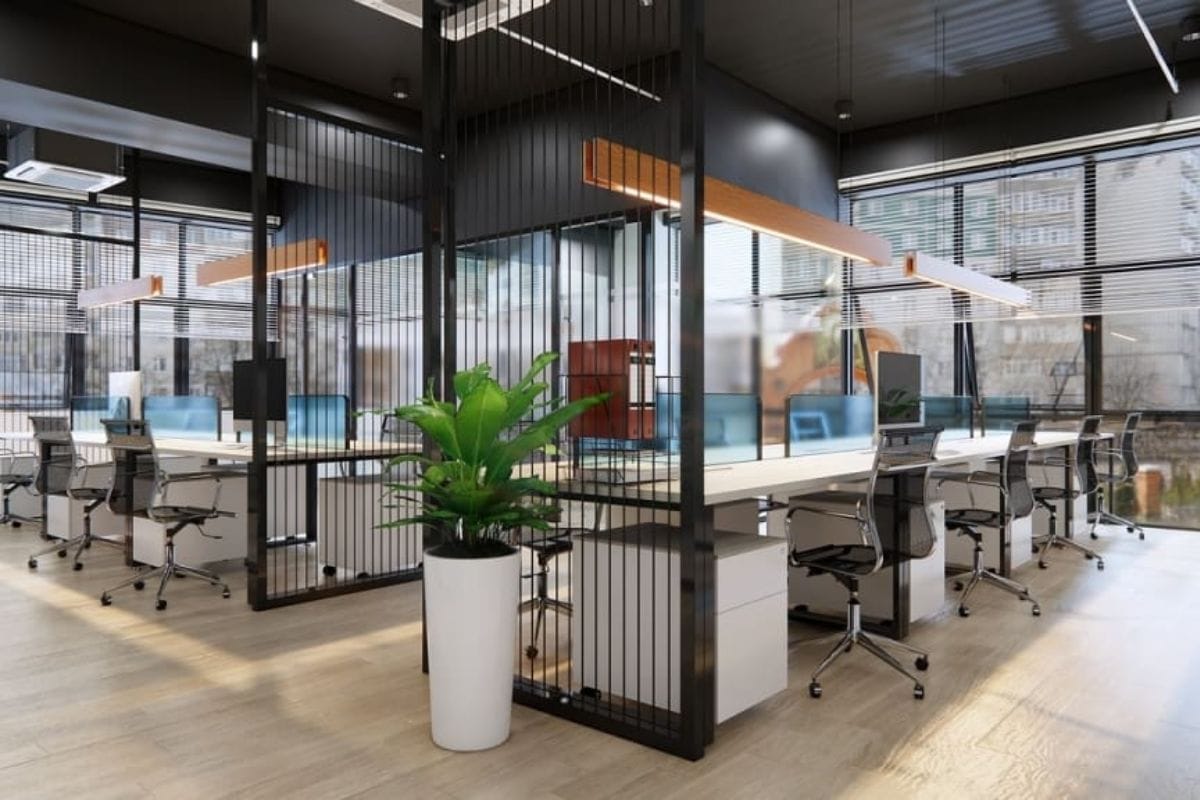
A defining trend in 2026 is small businesses shifting from tenants to landlords. With office capital values outperforming residential gains and commercial yields ranging from 6-10%, purchasing workspace is increasingly viewed as both operational asset and capital appreciation strategy.
The Price-to-Rent Ratio Framework
The Price-to-Rent Ratio (Property Price ÷ Annual Market Rent) serves as a reliable decision filter:
- Ratio ≤ 15: Strongly favors purchasing
- Ratio 15-20: Case-by-case analysis required
- Ratio ≥ 20: Favors renting
Example: A 1-bedroom office-grade unit in Business Bay priced at AED 1.5 million with annual rent of AED 100,000 yields a ratio of 15, making it a "buy-lean" prospect. For businesses planning to stay in Dubai 5+ years, buying typically overtakes renting in total wealth preservation by the fourth year.
Understanding Ownership Costs
Purchasing commercial property involves significant upfront closing costs that cannot be financed as part of a mortgage:
- DLD Transfer Fee: 4% of property value
- Agency Commission: 2% + 5% VAT
- Trustee Fee: AED 4,200
- Mortgage Registration: 0.25% of loan amount (if financing)
- Title Deed Issuance: AED 580
- VAT: 5% on commercial property
Beyond purchase costs, ongoing service charges range from AED 13 per square foot in JLT to AED 72 per square foot in premium towers like Burj Khalifa. However, recent market adjustments have seen 10-15% drops in service charges in mid-market communities.
Financing Options
Commercial mortgages are accessible to small business owners with rigorous documentation. Banks typically provide financing for 60-70% of market value for expatriates, with tenures up to 15 years.
Requirements include:
- Two years of audited financials
- Valid trade license
- Proof of income
Interest rates in 2026 range from 3.5-5.25% per annum, often structured as hybrid models with fixed rates for 3-5 years followed by variable rates based on EIBOR.
The Long-Term Hedge
For businesses with 7-10 year horizons, ownership acts as a hedge against volatile rental hikes. Some prime districts like DIFC saw 35% rent increases in a single year—volatility that ownership eliminates while building equity.
When Buying Makes Sense
- Your timeline is long-term (5+ years)
- Team size is stable or growing with commitment to fixed location
- Capital reserves are strong enough for 30% down payment and 7-10% closing costs without stressing operations
- You want to hedge against rent inflation
- Building an asset yielding 8-10% gross while appreciating in capital value aligns with business strategy
Geographic Considerations
District selection in 2026 reflects both industry alignment and financial strategy. The market has matured into specialized hubs with distinct pricing:
DIFC and Downtown: Most prestigious addresses hosting major banks and law firms. DIFC offers 100% foreign ownership and English Common Law legal system. Average Downtown rent: AED 367 per square foot.
Business Bay: Most active district for commercial transactions with mix of high-end and affordable options. Average rent: AED 151 per square foot. Provides central Sheikh Zayed Road access.
Jumeirah Lake Towers (JLT): Favored hub for DMCC companies with strong metro connectivity. Average rent: AED 128 per square foot with investment yields of 7-9%.
Dubai South: Growth engine benefiting from Al Maktoum International Airport proximity. Most competitive rents at AED 90 per square foot, ideal for logistics and tech startups prioritizing scalability over prestige.
Dubai Silicon Oasis: Technology and innovation hub with rents as low as AED 79 per square foot.
The Visa Quota Reality
Both mainland and free zone authorities apply the 100-square-foot rule: one visa per 100 square feet (9-10 square meters) of physical office space.
This creates a "step-function" cost model where every new hire might trigger need for a more expensive real estate footprint. For small businesses, this rule is critical when projecting growth:
- 3 employees: Minimum 300 square feet required
- 5 employees: Minimum 500 square feet required
- 10 employees: Minimum 1,000 square feet required
Planning workspace around anticipated hiring needs prevents costly mid-lease relocations.
Sustainability Considerations
In 2026, sustainability has evolved from marketing preference to financial imperative. Buildings with LEED or WELL certifications reduce energy costs by up to 30%, significant savings where cooling is the primary utility expense.
Green buildings command rental premiums of 33% and have 40% higher occupancy rates, ensuring asset value retention. For businesses doing their own fit-out, MEP works now include smart building management systems and energy monitoring, adding AED 80-200 per square foot but future-proofing against stricter environmental regulations and rising energy prices.
The workspace decision should align with your business lifecycle, growth projections, and capital position:
Start with co-sharing if you're testing the market, have limited capital, or need flexibility while building traction.
Transition to leasing when you need dedicated space, larger visa quotas, brand presence, or corporate tax substance compliance.
Consider buying when you have long-term commitment, strong capital reserves, and want to hedge rent volatility while building equity.
The most successful small businesses treat workspace as a dynamic asset, evolving from coworking desk to leased office to owned unit as they grow. By aligning real estate strategy with Dubai's regulatory frameworks—particularly the visa quota rules and corporate tax substance requirements, SMEs can transform their office from a cost center into a competitive advantage.
Also Read:
 Umema Arsiwala
 Ummulkiram Pardawala
 Umema Arsiwala
 Ummulkiram Pardawala