Running a business in Dubai's 2026 environment presents a unique set of challenges. The city's rapid economic growth under the D33 agenda, combined with global market connectivity and evolving regulatory requirements, creates opportunities for ambitious entrepreneurs.
However, these same factors also generate sustained pressure on business owners who must maintain high-level decision-making across multiple time zones, manage diverse teams, and adapt to technological changes while ensuring operational compliance.
Research consistently shows that founder mental health directly impacts business performance. Decision-making quality deteriorates under chronic stress, strategic thinking becomes reactive, and leadership effectiveness declines when cognitive resources are depleted.
Despite this evidence, many founders continue to treat mental resilience as separate from business operations rather than recognizing it as fundamental infrastructure.
This guide examines the specific pressures facing Dubai-based founders in 2026 and provides evidence-based strategies for building sustainable mental capacity.
Why 2026 Feels Different
Running a business in Dubai has always been demanding, but the nature of that demand has evolved significantly. Today's founders face layers of complexity that didn't exist even five years ago.
Global connectivity with local presence:
You're no longer competing just within the UAE. Your business operates in a globally connected ecosystem where supply chain issues in Asia impact your afternoon, and client expectations in North America shape your evening. Meanwhile, you're managing a multicultural team in a city with substantial operational costs.
Technology acceleration:
While digital tools promised to simplify operations, they've often just accelerated the pace. There's constant pressure to adopt the latest AI solutions, integrate new platforms, and stay ahead of competitors who are doing the same. This creates ongoing decision fatigue.
Regulatory maturity:
The UAE's business environment has become more sophisticated, with corporate tax implementation, enhanced compliance requirements, and evolving governance standards. These developments are positive for the economy but add significant cognitive load to founders already managing multiple responsibilities.
Talent market intensity:
Competition for skilled employees is fierce. Retaining good people requires thoughtful leadership, not just competitive salaries. This adds another dimension to the founder's role.
The result isn't simple tiredness—it's a deeper depletion that affects judgment, creativity, and the very qualities that made you successful in the first place.
Reframing Mental Health as Business Infrastructure
The most significant shift successful founders are making in 2026 is treating mental resilience not as a personal wellness luxury, but as critical business infrastructure.
Think of mental capacity like a financial account. Every high-stakes decision, every stressful client interaction, every sleepless night is a withdrawal. Without intentional deposits—recovery time, clear boundaries, strategic rest—the account depletes. Eventually, you're operating in deficit, making decisions from exhaustion rather than clarity.
The most effective leaders in Dubai aren't necessarily working the longest hours. They're making better decisions per hour worked. A depleted mind can only react; a rested mind can strategize.
This isn't about working less—it's about working more sustainably so you can perform at a higher level for longer periods.
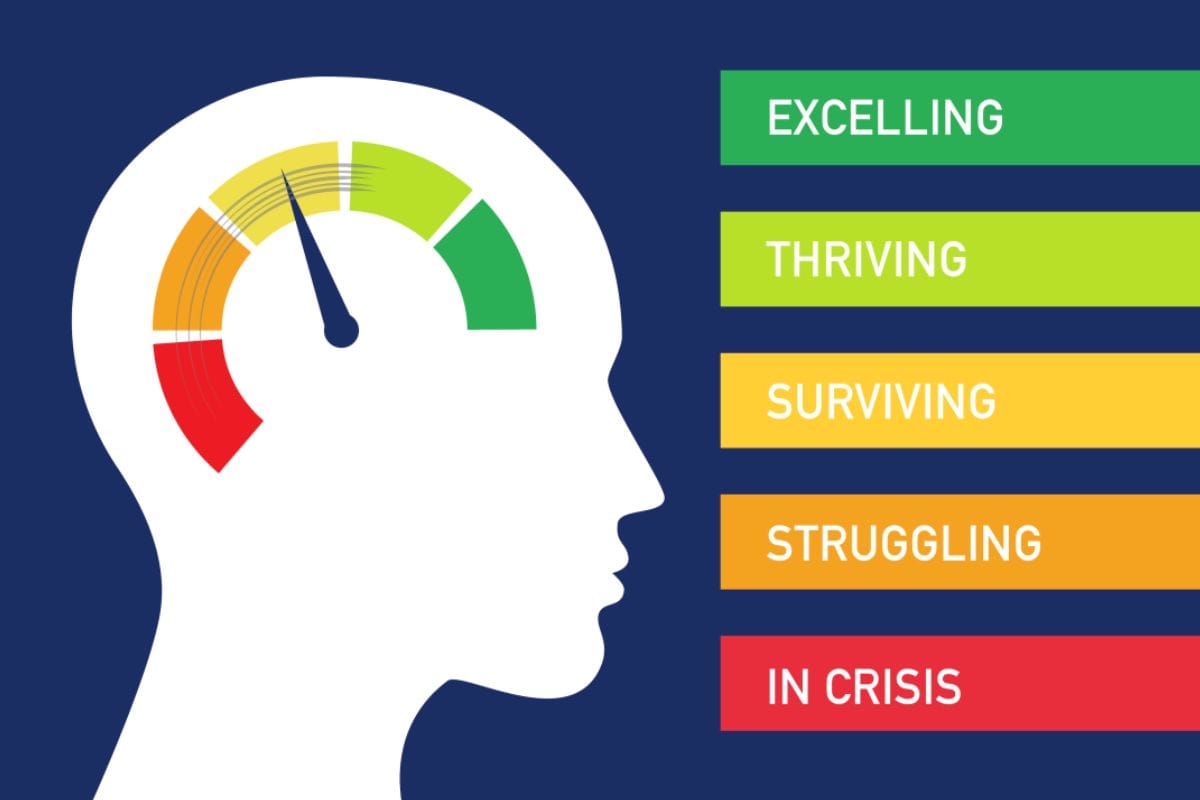
Three Practical Pillars for Building Mental Resilience
Pillar 1: Intelligent Delegation and Systems
The greatest drain on founder mental energy is low-value decision fatigue. Every minor administrative choice, every password you need to remember, every routine task you personally handle consumes cognitive resources better allocated to strategic thinking.
Create a "second brain": Use project management tools (Notion, Asana, Monday.com) as your company's single source of truth. Document processes, decisions, and information systematically. If something exists only in your memory, it's vulnerable and creates unnecessary mental load.
Automate ruthlessly: We have access to remarkable automation tools in 2026. Meeting scheduling, standard document reviews, invoice reminders, basic customer inquiries—these can be automated or delegated. Reserve your personal attention for decisions that genuinely require your unique judgment.
Define decision-making levels: Clearly establish which decisions require your approval and which can be made by team members. Many founders create bottlenecks by involving themselves in choices their teams are perfectly capable of making independently.
Practical implementation: Spend one week tracking how you actually spend your time. Identify the top five tasks that consume hours but don't require your specific expertise. These are your first automation or delegation targets.
Pillar 2: Strategic Recovery Practices
Recovery isn't just about sleeping—it's about intentionally shifting your mental and physical state to restore cognitive capacity.
The "third space" concept: Burnout intensifies when life alternates only between office stress and home responsibilities. You need a distinct third environment dedicated to active recovery.
Dubai offers remarkable infrastructure for this, if used intentionally:
- Morning rituals before the city wakes: A 6:00 AM walk on Kite Beach, before the crowds and heat, provides mental clarity impossible to achieve in an office
- Nature immersion: A two-hour desert drive, deliberately leaving your phone's cellular connection behind, creates genuine disconnection that weekend emails never allow
- Green spaces: The new corridors in Expo City, Creek Harbour, and Al Qudra Cycle Path offer environments that shift your nervous system out of work mode
Active versus passive recovery: Collapsing on the sofa and scrolling social media provides minimal actual restoration. Active recovery—movement, nature exposure, deliberate social connection outside work contexts—genuinely replenishes cognitive resources.
Practical implementation: Block two hours weekly in your calendar for non-negotiable active recovery. Treat these blocks with the same respect you'd give an important client meeting. The ROI on this time is higher than you expect.
Pillar 3: The Discipline of Selective Commitment
Dubai's business culture is relationship-driven. The pressure to attend networking events, accept every coffee invitation, and maintain presence across multiple forums is intense. This "fear of missing opportunity" is one of the primary drivers of founder burnout.
Deep work protection: The highest-value work—strategic planning, creative problem-solving, important writing—requires uninterrupted focus. The most productive founders protect morning blocks (typically 7:00-11:00 AM) where they're completely disconnected from email, WhatsApp, and Slack.
Define "enough" for this quarter: Unrestrained growth sounds appealing but often destroys businesses. What would successful completion of Q1 look like? If you achieve those goals, resist the urge to immediately set more aggressive targets at the expense of sustainability.
The strategic "no": Every "yes" to a networking event, coffee meeting, or committee position is a "no" to something else—often to strategic work or recovery time. Practice evaluating invitations against your actual quarterly priorities rather than theoretical future benefits.
Practical implementation: Before accepting any new commitment, ask: "If this meeting/event were tomorrow, would I still say yes?" If not, it's probably not truly valuable enough to deserve space in your calendar.
The Cultural Impact of Founder Wellbeing
Your mental state doesn't just affect your personal performance—it shapes your entire organization's culture.
As the founder, you set the emotional tone. If you're perpetually frantic, reactive, and exhausted, your team absorbs and mirrors that energy. You cannot build a high-performing, innovative organization on a foundation of chronic stress.
In Dubai's competitive 2026 talent market, this matters commercially. The skilled professionals essential for navigating the AI economy and future growth won't tolerate burnout-driven cultures. They seek leaders who model sustainable success. By prioritizing your own mental resilience, you give your team permission to do the same—creating a culture that can weather market challenges while retaining top talent.
Practical Weekly Framework
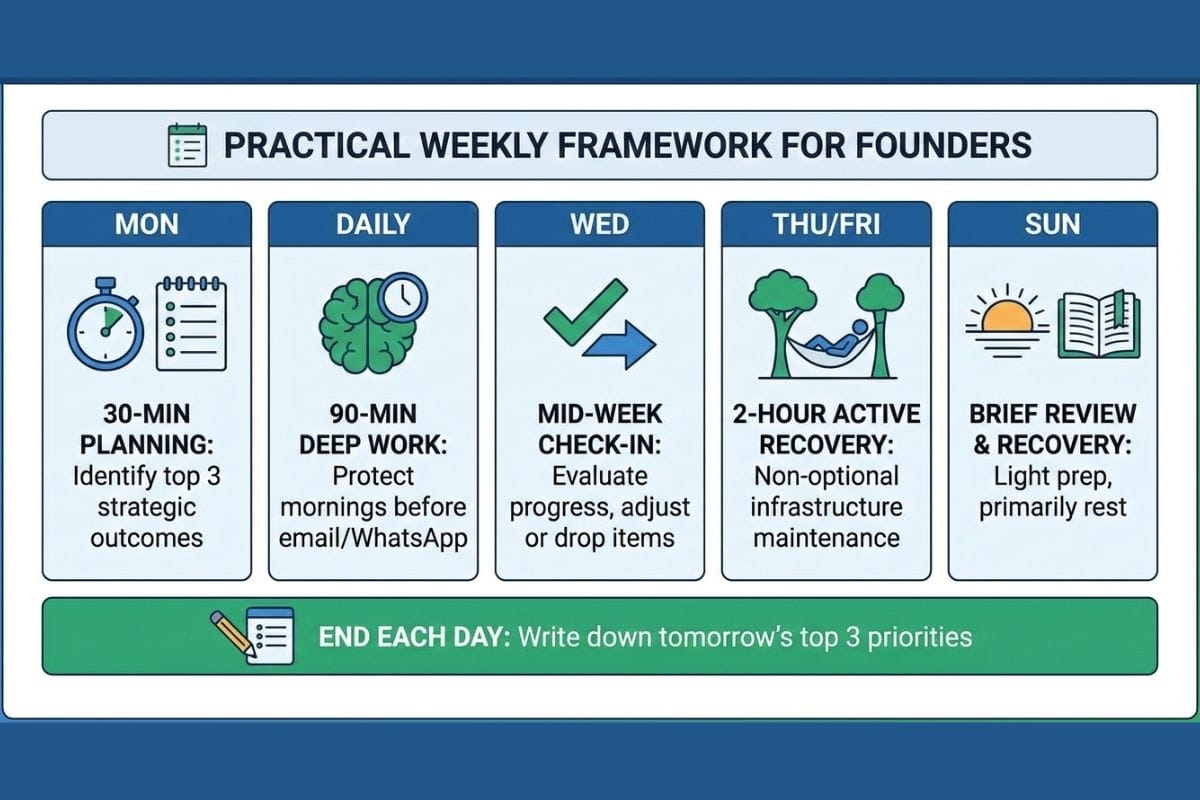
To make this actionable, here's a realistic weekly framework for founders managing demanding businesses:
Monday: Start with a 30-minute planning session reviewing the week's genuine priorities (not just urgent items). Identify your top three strategic outcomes for the week.
Daily morning routine: Protect the first 90 minutes after arriving at work for deep, strategic work—before opening email or WhatsApp. This is when your cognitive capacity is highest.
Wednesday check-in: Mid-week evaluation—are you on track for your three outcomes? What needs adjustment? What can be dropped entirely?
Thursday or Friday: Schedule your two-hour active recovery block. This isn't optional; it's infrastructure maintenance.
Sunday evening: Brief review of the past week and light preparation for Monday, but resist the urge to "work ahead" extensively. Sunday should primarily be recovery.
Throughout the week: End each workday by writing down tomorrow's top three priorities. This prevents the Sunday evening anxiety spiral about everything you need to remember.
Special Consideration: Ramadan as Strategic Reset
With Ramadan approaching, the month offers a culturally and operationally appropriate moment for recalibration. The six-hour workdays mandated by law create natural boundaries that force efficiency improvements.
Use this period to experiment with the frameworks outlined above. The compressed working hours eliminate low-value activities by necessity. Many founders discover they accomplish as much in six focused hours as they previously did in eight distracted ones—a lesson worth carrying forward.
Measuring What Matters
Track simple indicators of your mental resilience alongside business metrics:
- Decision quality: Are you making thoughtful, strategic choices or constantly reacting?
- Sleep consistency: Are you maintaining regular sleep patterns or constantly catching up?
- Recovery time: How quickly do you bounce back from setbacks or intense periods?
- Team feedback: Does your team describe the work environment as energizing or draining?
These qualitative measures often predict business performance more accurately than revenue spreadsheets.
The quality of your leadership will never exceed the quality of your mental state. When you're operating from depletion, every decision is harder, every challenge feels larger, every opportunity appears as another burden. When you're operating from resilience, you see possibilities clearly, make decisions confidently, and inspire your team effectively.
In Dubai's extraordinary 2026 business environment, the opportunities are real and substantial. The question isn't whether they exist, it's whether you'll have the mental clarity and energy to capitalize on them when they arrive.
Invest in your mental resilience with the same intentionality you invest in your business development. The returns compound similarly, but with one crucial difference: this is an asset that benefits every other aspect of your life and work simultaneously.
Also Read:
 Ummulkiram Pardawala
 Umema Arsiwala
 Ummulkiram Pardawala
 Ummulkiram Pardawala