
The alarm sounds. In those first moments of consciousness, you face a choice that will shape your entire day. Will you reach for your phone and dive into the chaos of emails and notifications? Or will you intentionally craft the first hours of your day to set yourself up for success?
For entrepreneurs navigating Dubai's dynamic business landscape and professionals managing demanding careers, how you spend your morning hours isn't just a personal preference—it's a strategic advantage. The first few hours after waking represent your most valuable mental real estate, a time when your mind is fresh, your willpower is strongest, and your ability to focus is at its peak.
Highly successful individuals across industries recognize this truth. They don't leave their mornings to chance. Instead, they deliberately design routines that prepare them mentally, physically, and emotionally for the challenges ahead. These aren't elaborate rituals requiring hours of time—they're strategic habits that create disproportionate returns on a modest investment of morning minutes.
A well-designed morning routine establishes consistency in an unpredictable world, supports mental clarity when you need it most, and enables the kind of focused work that moves businesses forward and careers upward. For professionals in Dubai's competitive environment, starting each day with intention isn't luxury—it's necessity.
The Science Behind Morning Routines
The power of morning routines isn't just anecdotal wisdom—it's grounded in how our brains actually function throughout the day.
Cognitive performance peaks in the morning
Research in chronobiology reveals that most people experience peak cognitive performance during morning hours. Your brain's executive functions—responsible for decision-making, strategic thinking, and complex problem-solving—operate most efficiently in the hours following sleep. This cognitive peak gradually declines as the day progresses.
Decision fatigue depletes mental resources
Every decision you make throughout the day depletes your mental resources. By the time you've made dozens of choices about what to wear, what to eat, and which emails to answer first, your capacity for high-quality decision-making diminishes.
This explains why many successful leaders wear similar clothing daily or eat the same breakfast—they're preserving mental energy for decisions that actually matter. A structured morning routine eliminates dozens of small decisions, conserving your cognitive resources for strategic choices that drive your business or career forward.
Willpower is strongest after sleep
Willpower and self-control function like muscles—they fatigue with use but recover with rest. After a night's sleep, your willpower is fully recharged. A morning routine leverages this renewed willpower to establish positive momentum, making difficult tasks and important decisions more manageable than they would be later in the day.
Habit formation through consistency
Neuroscience research shows that habits form through repetition in consistent contexts. Morning routines provide ideal conditions for habit formation because they occur at the same time in the same sequence daily. This consistency strengthens neural pathways, eventually making behaviors automatic rather than effortful.
Key Elements of an Effective Morning Routine
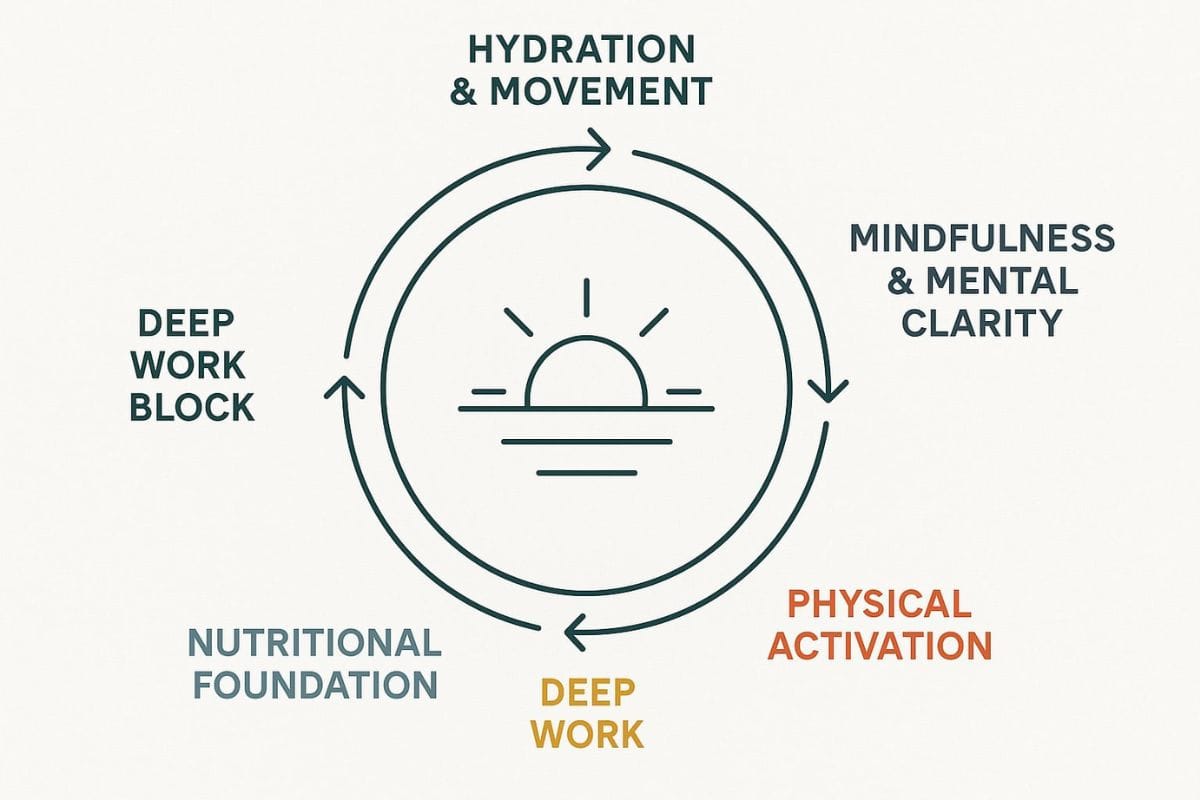
While individual routines should be customised to personal needs, certain elements consistently appear in the morning practices of productive professionals.
Waking Up Early and Consistently
Early rising isn't about suffering through pre-dawn darkness—it's about claiming uninterrupted time before the world makes demands on your attention. Consistency matters more than the specific wake time. Your body operates on circadian rhythms that function best with regular sleep-wake patterns. Waking at the same time daily, even on weekends, maintains this rhythm and makes early rising progressively easier.
Hydration and Nutrition
After six to eight hours without water, your body is mildly dehydrated upon waking. This dehydration affects cognitive function, energy levels, and physical performance. Starting your morning with water—many people aim for 500ml to 1 liter—rehydrates your system and kickstarts your metabolism.
Regarding breakfast, the optimal approach varies by individual. The key is understanding what fuels your specific body and brain for peak performance. What's universally true: the quality of your morning nutrition matters. Processed foods high in sugar create energy spikes followed by crashes. Protein-rich foods with complex carbohydrates provide more stable energy.
Exercise or Movement
Physical activity in the morning offers multiple benefits beyond fitness. Exercise increases blood flow to your brain, enhancing alertness and cognitive function. It triggers endorphin release, improving mood and reducing stress. It also provides a sense of accomplishment that creates positive momentum for your day.
This doesn't require hour-long gym sessions. Even 15-20 minutes of movement—brisk walking, yoga, bodyweight exercises, or stretching—delivers significant benefits. Dubai's climate makes outdoor morning exercise particularly appealing during cooler months, though summer heat requires indoor alternatives.
Mindfulness Practices
In Dubai's fast-paced business environment, mental clarity and emotional regulation provide competitive advantages. Mindfulness practices cultivate both.
Meditation involves focusing attention to develop present-moment awareness and mental calm. Even five to ten minutes of morning meditation can reduce stress, improve focus, and enhance emotional regulation throughout your day.
Journaling serves multiple purposes: gratitude practice to cultivate positive mindset, processing thoughts and emotions on paper, or planning by writing out intentions and priorities for the day ahead.
Gratitude practices involve identifying things you're thankful for. This simple practice has been linked to improved mood, better sleep, and increased resilience to stress. For entrepreneurs facing constant challenges, starting the day by acknowledging what's working provides valuable perspective.
Goal Setting and Planning
Using morning time to review goals and plan your day aligns your activities with your objectives. This might involve reviewing long-term goals, identifying the three most important tasks for the day, time-blocking your calendar, or visualizing successful outcomes for important meetings.
This planning doesn't need to be elaborate. Even five minutes spent intentionally organizing your day creates more focused, productive work than diving immediately into reactive mode.
Avoiding Digital Distractions
Perhaps the most challenging element: delaying digital engagement. When you start your day responding to others' priorities—emails requiring responses, news triggering concerns, social media pulling attention—you lose control of your morning's direction.
Consider implementing a digital boundary: no phone or email until after completing your morning routine. This might mean 30 minutes, 60 minutes, or even two hours of protecting your morning for intentional activities. Most "urgent" emails aren't actually urgent and can wait an hour.
Morning Routines of Highly Productive People
Examining how successful people structure their mornings provides inspiration and ideas worth testing.
Tim Cook, CEO of Apple, reportedly wakes at 3:45 AM to begin his day with email before heading to the gym. While this extremely early wake time won't suit everyone, it demonstrates the value successful leaders place on morning control and physical fitness.
Oprah Winfrey has spoken about her morning meditation practice and the importance of starting her day with spiritual grounding before engaging with external demands.
Richard Branson, founder of Virgin Group, prioritizes exercise first thing in the morning, often swimming or playing tennis. He's noted that this morning exercise gives him energy and focus that persists throughout his day.
Michelle Obama has mentioned waking at 4:30 AM to exercise before her family wakes, understanding that later in the day, other commitments would prevent her workout.
Common threads emerge: early rising to claim uninterrupted time, physical activity for energy, mindfulness for mental clarity, and completing priorities before the day's demands begin.
Customizing Your Routine: One Size Doesn't Fit All
The most effective morning routine is one that aligns with your life circumstances, natural preferences, and specific goals.
Consider your chronotype
People have different natural sleep-wake preferences. Some are genuine early birds who naturally wake feeling energized at dawn. Others are night owls whose biology makes early rising difficult. While you can adjust your patterns somewhat, fighting strongly against your natural chronotype creates unnecessary struggle.
Match routines to goals
An entrepreneur building a startup might prioritize early morning deep work. A sales professional might focus on mental preparation for client interactions. A creative professional might emphasize practices that unlock creativity. Your routine should support your specific objectives.
Experiment and iterate
Start by adding one new element—perhaps 10 minutes of morning movement or five minutes of journaling. Maintain it consistently for at least two weeks before evaluating its impact. Track how different morning activities affect your energy, focus, and productivity. Be willing to adjust based on results.
Account for practical constraints
Dubai professionals face unique considerations. Ramadan requires adjustments for those fasting. International business demands might necessitate very early or very late calls. Family responsibilities create non-negotiable morning commitments. Design your routine around these realities rather than ignoring them.
Overcoming Challenges and Building Consistency
Even with clear benefits and good intentions, maintaining consistent morning routines presents challenges.
Don't wait for motivation
Many people wait to feel motivated before acting. This approach fails because motivation is unreliable. Sustainable routines don't depend on motivation; they depend on systems and commitment. Create conditions that make behaviors easier: place your alarm across the room, prepare workout clothes the night before, or schedule morning activities with accountability partners.
Start ridiculously small
Attempting dramatic overnight transformations typically fails. Instead, start with changes so small they feel almost trivial. Wake just 15 minutes earlier. Do five minutes of movement. Write three sentences in a journal. These tiny changes reduce resistance and build confidence.
Track and celebrate progress
Consider keeping a simple tracking system—a calendar where you mark successful days or a journal noting how you feel after completing your routine. Celebrate milestones: one week of consistency, then two weeks, then a month.
Prepare for disruptions
Life inevitably disrupts routines. Develop a "minimum viable routine"—the absolute shortest version you can implement even during challenging times. Perhaps it's just five minutes of breathing exercises and reviewing your top priority. Maintaining some version during disruptions prevents complete abandonment.
Build supporting structures
Your environment significantly influences behavior. Prepare the night before by laying out clothes and prepping breakfast components. Remove obstacles by keeping your bedroom cool for better sleep. Create accountability by telling others about your routine or joining groups with similar goals.
The difference between those who consistently perform at high levels and those who struggle is often the accumulation of small daily choices. Morning routines represent one of the highest-leverage small choices available.
Your morning routine won't just change your mornings; it will transform your productivity, your wellbeing, and ultimately, your success. The power to create that change exists in the simple choice you make when tomorrow's alarm sounds.
Will you hit snooze and surrender your morning to chance? Or will you rise with intention and set yourself up for the productive, focused, successful day you're capable of achieving?
Also Read:
 Shahba Mayyeri
 Umema Arsiwala
 Ummulkiram Pardawala
 Umema Arsiwala