On any given weekday in Dubai, thousands of residents make the same calculation: pay extra for faster delivery, premium valet parking, airport fast-track services, or telemedicine consultations that cost multiples of in-person visits. To observers from other markets, these convenience premiums, the additional costs paid to save time, reduce effort, or gain certainty, might seem excessive. Yet they represent one of Dubai's fastest-growing consumer categories.
The question isn't whether Dubai residents pay for convenience, but why they're increasingly willing to do so. The answer lies in a combination of the city's unique structural characteristics and fundamental psychological mechanisms that make these premiums feel not just acceptable, but essential to daily life.
What Are Convenience Premiums?
A convenience premium is the incremental price consumers pay above a baseline option to obtain better outcomes: time savings, reduced effort, decreased uncertainty, lower cognitive burden, or enhanced status. Unlike traditional luxury purchases, these premiums purchase intangible benefits like peace of mind, saved minutes, or simplified decisions.
Dubai's environment makes convenience premiums particularly prevalent, combining high service availability, strong digital adoption, dense mobility patterns, and a predominantly expatriate workforce facing significant time pressures.
The Dubai Context: Why Convenience Matters Here
Several structural factors amplify residents' willingness to pay convenience premiums.
Time Pressure and Working Hours
Labor force data shows large shares of employed people reporting 40-48 hour workweeks or longer, with UAE regulations allowing up to 48 hours per week as standard private-sector working time. Dubai's peak-hour population reaches 5.9 million people, significantly higher than the residential population of 4.2 million, as workers commute from other emirates, intensifying competition for time-sensitive services.
Population Structure
Dubai's demographic composition is 68.5% male and 31.5% female, linked to external workers arriving without family members. This creates distinct household patterns: dual-income expatriate couples, single professionals with disposable income, and families managing complex logistics.
For many expatriates, Dubai represents a temporary career-focused chapter. This mindset often prioritizes time efficiency over cost savings, viewing years in Dubai as finite opportunities to maximize earnings and experiences.
Mobility Friction
Despite relatively efficient infrastructure—average travel time of 13.7 minutes per 10 kilometers—the car-oriented, appointment-driven nature of daily life creates high perceived costs of delay. Parking searches, traffic variability, and family coordination elevate the value of services that eliminate travel entirely or reduce uncertainty.

Tourism-Scale Demand
Dubai welcomed 18.72 million international overnight visitors in 2024, with Dubai International Airport handling 92.3 million passengers. These volumes create peak demand at major touchpoints where queue-avoidance products become valuable.
Digital Maturity
The UAE reports 99% active internet users, enabling the "always-on" convenience economy. High digital adoption reduces barriers to subscriptions, accelerates habit formation, and supports sophisticated features like one-click ordering.
The Psychological Drivers: Why People Pay
Convenience premiums aren't evaluated through purely rational calculations. Several psychological mechanisms make these premiums feel justified.
Time-Saving and Time Scarcity
Research consistently shows that spending money to save time is associated with higher life satisfaction. People experiencing "time famine" derive significant utility from recovering even small amounts of time. Importantly, this effect appears across socioeconomic groups, while wealthier individuals can more easily afford time-saving purchases, the emotional benefit of time relief isn't limited to high earners.

Status and Identity Signaling
Premium convenience options signal success and belonging. VVIP valet tiers, airport fast-track access, or private club memberships function as both self-signaling ("I'm the kind of person whose time is valuable") and social positioning in a globally-oriented city where consumption choices become visible success markers.
Risk Reduction and Uncertainty Avoidance
Many convenience products sell certainty: on-time delivery promises, guaranteed airport assistance, regulated telehealth access. Behavioral economics shows that uncertainty and waiting are psychologically costly—people value mechanisms that reduce variability and negative outcome probability.
Cognitive Load Reduction
Subscriptions, one-click ordering, and concierge services reduce the mental work of searching, comparing, and coordinating. Under cognitive load, people prefer defaults and simple rules—making "pay more, think less" attractive for residents managing work across time zones, household logistics, and frequent travel.
Habit Formation and Subscription Inertia
Once adopted, convenience subscriptions persist through habit. Research shows that auto-renewal, default billing, and mental accounting produce sustained retention even when month-to-month value fluctuates, explaining why subscriptions succeed despite seasonal usage variations.
Real-World Examples: How Convenience Is Priced
Food Delivery Subscriptions
Deliveroo offers Plus Silver (AED 19/month) and Plus Gold (AED 29/month) that convert variable delivery fees into predictable monthly costs with on-time guarantees and priority support.
Target customers: Frequent orderers, dual-income households, time-pressed professionals ordering 4+ times monthly.
Drivers: Time-saving, habit formation, risk reduction, cognitive simplification. The "Gold" label adds status associations.
Quick-Commerce Memberships
Noon One membership (AED 15/month) provides free delivery across categories above certain thresholds, emphasizing immediacy through ultra-fast services.
Target customers: Convenience-focused shoppers, families making frequent small purchases.
Drivers: Time-saving through immediacy, habit formation, reduced checkout friction.
Valet Parking Tiers
The Dubai Mall and other premium destinations offer tiered valet services with substantial price differentiation based on proximity to entrances and service level.
Target customers: Luxury shoppers, status-conscious visitors, those seeking guaranteed access during peak periods.
Drivers: Time-saving through proximity, status signaling, scarcity value, risk reduction through guaranteed parking. The price differentiation suggests customers value the "arrival experience" and predictability under parking scarcity, particularly during weekends and holidays.
Airport Meet-and-Greet Services
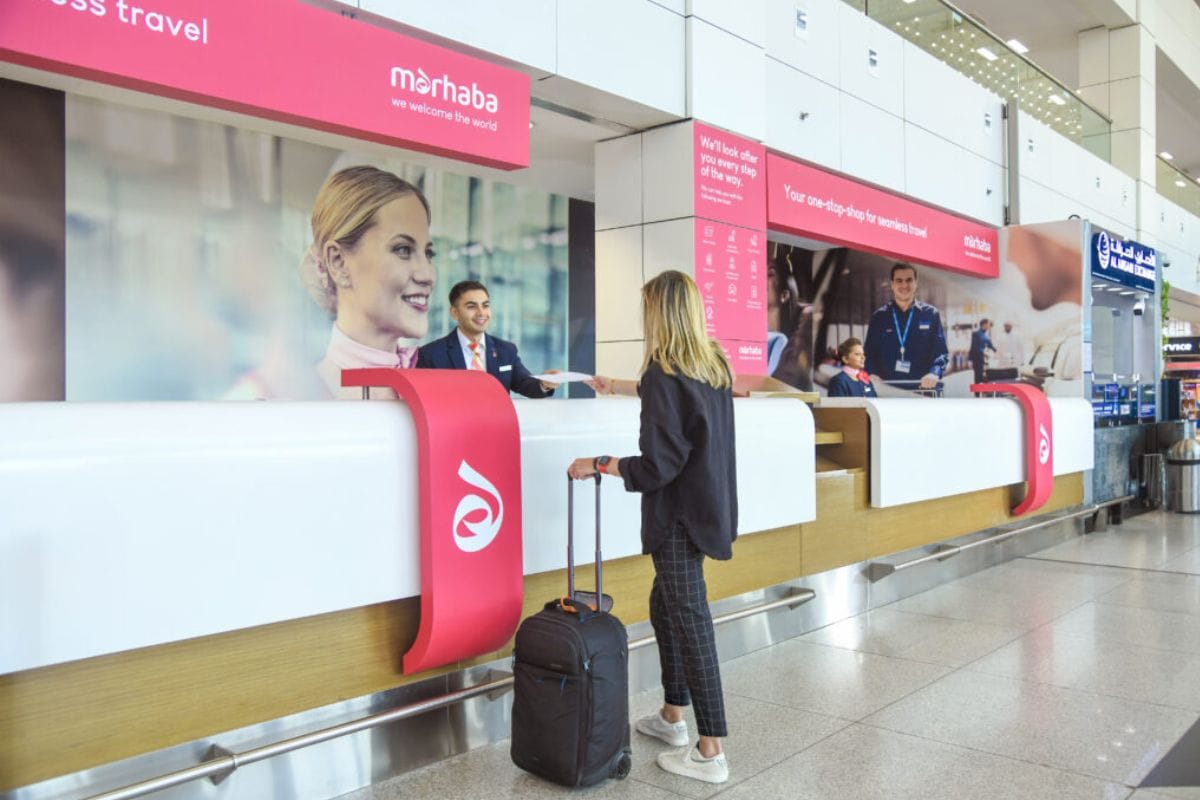
Services like Marhaba offer airport fast-track "from AED 136," with tiered options by terminal and service level.
Target customers: Families, elderly visitors, business travelers, anxious travelers navigating a complex airport handling 92.3 million passengers annually.
Drivers: Risk reduction, time-saving via queue bypass, cognitive load reduction.
Private Club Memberships
Neera private club charges AED 15,750/year plus AED 7,500 joining fee for individual membership (AED 10,500/year for under-32 members).
Target customers: High-net-worth residents seeking lifestyle simplification, status-conscious professionals.
Drivers: Cognitive offloading through concierge coordination, status via exclusivity, trust in curated experiences. The membership trades money for delegation—consistent with research showing that outsourcing disliked tasks improves well-being.
Telemedicine Services
Specialist virtual consultations run AED 550 per session (AED 440 in packages), operating under Dubai Health Authority regulation.
Target customers: Busy professionals, chronic disease patients, parents seeking quick consultations.
Drivers: Convenience through location flexibility, time-saving, trust through regulatory oversight. DHA reported nearly 375,000 telehealth consultations in 2023 (+28% year-over-year).
The Role of Tiering and Choice Architecture
Many Dubai convenience offerings use tiered pricing that serves important psychological functions beyond revenue optimization.
Tiering creates choice architecture where middle options feel reasonable, entry tiers establish accessibility, and premium tiers legitimize very high willingness-to-pay among small segments. This relative pricing (anchoring effect) makes premiums feel justified rather than exploitative.
The Dubai Mall's valet pricing, from AED 50 to AED 525, frames paid parking as voluntary, while the extreme top tier signals that some customers genuinely value exclusivity enough to pay 10× the baseline rate. Similarly, food delivery subscriptions offering Silver and Gold tiers allow users to self-select based on usage and support needs.
Regulatory Factors: Trust and Transparency
Dubai's convenience premium psychology operates within an evolving regulatory framework that shapes fairness perceptions.
Federal consumer protection law prohibits misleading practices. Dubai issued specific guidelines for online food delivery platforms requiring itemized breakdowns before checkout—explicitly showing food costs, delivery fees, service/convenience fees with justifications, and taxes—while prohibiting hidden post-payment charges.
These transparency requirements reduce fairness concerns. When platforms must justify convenience charges explicitly, consumers can make informed decisions about whether premiums align with their needs.
Healthcare regulation requires that telehealth be offered through licensed facilities, adding trust layers that support premium pricing.
When Convenience Premiums Work, and When They Don't
Success factors:
- Clear, immediately understandable value proposition
- Appropriate segmentation aligning with genuine time poverty
- Transparent pricing without hidden fees
- Trust through regulation, established brands, or reputation
- Credible status signaling in premium offerings
Failure patterns:
- Excessive premiums without proportional benefits
- Mandatory convenience fees feeling exploitative
- Inconsistent delivery undermining future willingness to pay
- Poor communication about premium inclusions
- Misalignment with actual customer needs
Business Implications: Designing Convenience Products
For businesses considering convenience premium strategies in Dubai:
Segment by time poverty, not just income: High earners aren't automatically time-poor, and time-poor individuals aren't always high earners.
Bundle multiple convenience dimensions: Combine time-saving with certainty, cognitive simplification, and sometimes status.
Use tiering strategically: Offer entry, standard, and premium tiers to capture different segments while maintaining fairness.
Communicate transparently: Explicitly justify what convenience fees cover to maintain trust.
Build habits through low friction: Make adoption easy and usage automatic.
Align with regulatory expectations: Position convenience premiums as value-adding rather than extractive.
Dubai residents' willingness to pay convenience premiums reflects a rational response to their environment: high time pressure, mobility friction, complex logistics, and limited temporal resources in a city many view as a temporary but intense career chapter.
The premiums that succeed aren't simply expensive alternatives; they're carefully designed products bundling time-saving with certainty, status, and cognitive relief. They operate within a regulatory framework demanding transparency while serving a population that genuinely values getting hours back.
Understanding this psychology helps businesses design offerings that residents genuinely appreciate rather than merely tolerate. It also explains why what looks like profligate spending to outsiders feels like sensible resource allocation to those managing 48-hour workweeks, cross-emirate commutes, and daily complexity.
In a city where time feels scarce and money renewable, convenience premiums are the infrastructure for modern life.
Also Read:
 Umema Arsiwala
 Shahba Mayyeri
 Ummulkiram Pardawala
 Umema Arsiwala
 Ummulkiram Pardawala