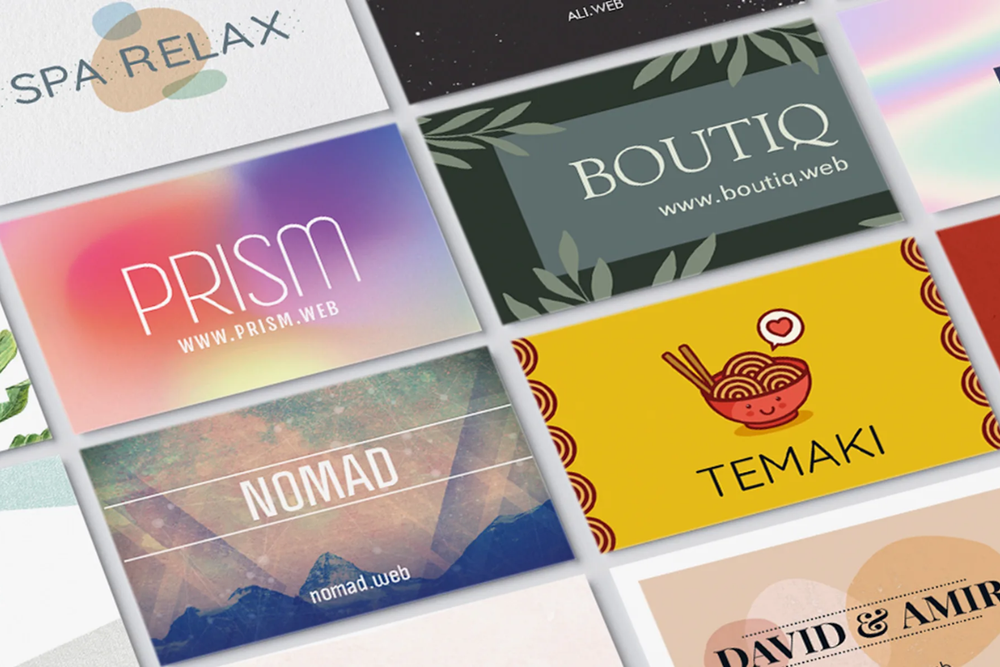
A business name is the first thing a potential customer encounters. It arrives before the logo, before the website, and before a single product is explained. In a distracted, fast-scrolling world, that name has about two seconds to create an impression, and that impression, once formed, is very hard to undo.
The naming landscape has shifted considerably in 2026. Audiences have developed a refined sensitivity to corporate language, and the market has rewarded businesses that prioritize what researchers now call "memorable simplicity" names that are short enough to type from memory, distinctive enough to be found in a search, and emotionally resonant enough to feel worth remembering at all. Understanding how to achieve that balance takes patience, method, and a little linguistic curiosity. That creative journey is what we will explore in this article.
The Descriptive Naming Approach

The most straightforward path a founder can take is giving their business a name that explains, in simple terms, exactly what it does. This is called descriptive naming, and it carries significant practical advantages in markets where speed of comprehension matters more than creative intrigue.
Think about a local service business, a plumbing company, a tax preparation office, or a meal-delivery kitchen. In these contexts, the customer is typically searching with clear intent. They already know what they want; they just need to find who provides it. A name like "QuickFix Plumbing" or "Clear Books Accounting" does the work of a subtitle before the customer even reads one. The name itself is the pitch.
Descriptive naming in practice
Industries where this approach performs well include: professional services (law, accounting, medical), local trade services (roofing, landscaping, cleaning), logistics and delivery, food and meal prep, and repair and maintenance. In each case, clarity builds immediate trust.
Descriptive names also age well in regulated industries. A medical device company called "PulseTrack Diagnostics" instantly communicates the nature of its work to healthcare buyers who need to verify vendor credibility at a glance. There is no puzzling subtext, no metaphor to decode. The name is its own explanation.
The main limitation of this approach appears when a business decides to expand its product line. A company named "SmartSock Fitness" that later wants to sell nutrition products will find that the name constrains its story. For businesses with broad ambitions, a different approach may serve better.
The Abstract and Evocative Method
Abstract names are invented or borrowed words that carry emotional tone without making a literal product claim. They evoke a feeling, an atmosphere, or an aspiration, and they leave room for the business to grow in any direction without the name becoming a contradiction.
Consider a word like "Aura." It does not describe a product category. It does not restrict the company to a single industry. Yet it suggests clarity, sophistication, and a subtle radiance, qualities that a wellness brand, a skincare line, a lighting company, or even a software platform could all build meaning around. The name is a blank canvas with a particular emotional colour.
Many of the most recognised technology companies of the past two decades have relied on this method. These businesses chose words that carried a positive emotional charge but no specific product meaning, freeing them to expand into adjacent markets without ever outgrowing their own identity.
An abstract name is a container with an emotional temperature. The business decides what it holds over time.
Invented or coined words, sometimes called "neologisms," take abstraction one step further. Words like "Kodak," "Xerox," and more recently "Zoom" or "Slack" were either invented entirely or borrowed from obscure contexts and given new meaning. The advantage of a coined word is that it begins with zero associations, which means the brand gets to build all of them. The disadvantage is that it requires more marketing investment to teach the word to an audience, since it carries no pre-existing meaning to anchor it.
A useful middle path is a metaphorical name, a real word chosen from nature, mythology, or everyday life and applied to a business context in a surprising way. A finance app called "Tide" borrows the imagery of natural flow and rhythm. An education company called "Compass" implies direction and guidance without being literal. These names land with immediate warmth because the source word is already understood, while the application feels fresh.
Linguistic Phonetics and Sound Symbolism
The sounds that make up a name carry meaning entirely independent of the word's definition. This area of study, called sound symbolism, reveals that the human brain assigns personality traits to sounds before the conscious mind has processed the actual word. In naming, this matters deeply.
Researchers have studied what is now known as the "buba/kiki" effect, first identified in experiments by psychologist Wolfgang Köhler in the 1920s and later expanded upon by neuroscientist Vilayanur Ramachandran. In those experiments, participants were shown two abstract shapes, one rounded and organic, one sharp and angular, and asked to assign the nonsense words "buba" and "kiki" to each. An overwhelming majority, across different languages and cultures, assigned "kiki" to the sharp shape and "buba" to the round one. The sounds themselves carried visual and tactile meaning.
For naming, this translates directly. Hard consonant sounds — particularly plosives like "k," "p," "t," and "b" — create a perception of energy, precision, sharpness, and speed. A brand called "Kript" or "Pixl" feels fast and technical. Soft vowels and nasal consonants ("m," "n," "l") create warmth, approachability, and calm. A brand called "Nola" or "Lumena" feels gentle and nurturing.
Sound symbolism at a glance
K, P, T, B — energy, precision, sharpness
M, N, L — warmth, softness, calm
Short vowels (i, e) — small, light, fast
Long vowels (o, a) — expansive, strong, slow
Vowel sounds carry their own associations. Short, high-frequency vowel sounds (as in "fit," "tip," or "mini") tend to be perceived as small, light, and precise. Long, open vowel sounds (as in "broad," "go," or "soul") convey weight, breadth, and stability. A fintech startup might benefit from the precision implied by a tight, short-vowel name. A luxury home furnishings brand might prefer the gravitas of an open, resonant vowel.
Rhythm also plays a role. Names with two syllables where the stress falls on the first syllable, what linguists call a "trochee" tend to feel natural and approachable in English. Words like "Apple," "Google," "Twitter," and "Amazon" (where stress falls on the first syllable) demonstrate this rhythm. Three-syllable names are also workable, particularly when they alternate stress in a way that flows naturally when spoken aloud.
When evaluating a shortlisted name, always say it aloud multiple times. Say it in a sentence: "I use [name]." "Have you heard of [name]?" The name must feel easy and unambiguous to pronounce in conversation. If a person hesitates when saying it for the first time, that hesitation will happen every time a customer tries to recommend the brand to a friend.
Practical Brainstorming Techniques
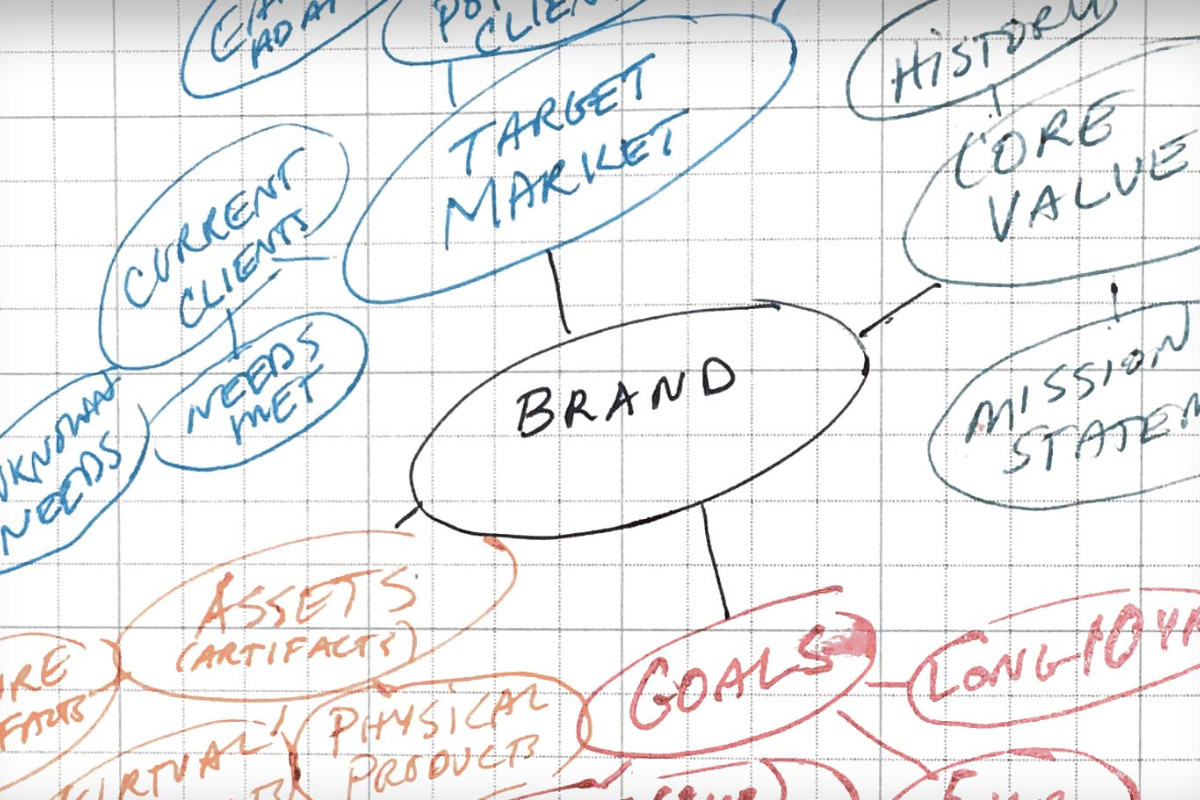
The first name that arrives in a brainstorming session is rarely the best one. Good names are discovered through structured creative methods that push beyond the obvious first few responses the mind produces. Three specific techniques are particularly productive.
Word-mapping begins with a single core concept, perhaps a brand value like "transparency" or a core emotion like "confidence." The exercise involves writing that word in the centre of a blank page and then mapping outward to every associated word, synonym, metaphor, and adjacent concept. The word "transparency" might lead to "glass," "clear," "open," "window," "mirror," "daylight," "honest," "visible," and "prism." Each of those words then becomes the centre of its own smaller map. The process reveals unexpected linguistic territory that a simple synonym search would never uncover.
Reverse-engineering values is a method that starts from the customer experience rather than the product. The question is: how do we want customers to feel one hour after using our product or service? The answers "relieved," "confident," "lighter," and "understood" then became the seeds of a naming search. A brand rooted in the feeling of relief might explore words like "ease," "settle," "resolve," or even a translated word in another language that carries the same emotional weight.
Syllable-stacking is a more playful, experimental technique. It involves collecting two lists, one of appealing syllables based on sound (not meaning) and another of strong consonant beginnings, then combining them in random arrangements to see if anything surprising appears. The syllables "vel," "rix," "mo," "tura," "kine," and "sol" might produce combinations like "Solvex," "Kinemo," "Veltura," or "Rixol." The technique is particularly useful for generating novel, invented names that feel distinctive rather than generic.
Cultural and Global Neutrality

A name that sounds clear and positive in one language may carry an embarrassing or even offensive meaning in another. As businesses increasingly operate across borders, even small ones, through e-commerce, this check has moved from optional to essential.
The principle of "cultural safety" involves running a shortlisted name through at least five to seven language checks, prioritising the primary markets the business intends to serve. This does not require fluency in every language. Online tools and bilingual contacts can provide an initial screen. The goal is to identify any name that means something crude, unlucky, or confusing in a relevant market before the brand is publicly launched.
Practical cultural check process
Run each shortlisted name through Google Translate for the top five languages spoken in your target markets. Then test it in native speaker communities, a brief Reddit post in the relevant language subreddit, or a short question to a bilingual contact, asking whether the word means anything unexpected. Finally, check if the name has any associations with known brands, slogans, or cultural phrases in those markets.
Beyond translation, consider the visual and oral presentation of a name across different cultures. Some cultures read right-to-left; a logo with a name that forms a different shape when reversed may carry unintended meaning. Some languages have no direct phonetic equivalent for certain consonant clusters, making a name like "Strix" difficult to pronounce in markets where it would otherwise be relevant. Aim for names where the sounds themselves are reproducible across a wide phonetic range.
Numerical associations also differ by culture. In several East Asian markets, the number four carries an association with misfortune because it sounds similar to the word for death. A product name with four syllables, or a visual design element with four prominent repeated marks, may require revision for those markets. Cultural neutrality is not about stripping a name of all personality; it is about ensuring the name's personality is not accidentally replaced by unwanted meaning elsewhere.
Digital Availability and Short-Form Appeal

A business name in 2026 will spend much of its life as a social media handle, a URL slug, a search query, and a username in app stores. Each of these contexts places its own constraints on what works, and a name that performs beautifully in speech may be completely unusable in its digital form.
The ideal name should be available or closely approximatable as a username across the core platforms relevant to the business. This does not mean the exact name must be available everywhere. It does mean the brand should be able to establish a consistent, recognisable handle without resorting to awkward workarounds like underscores, double letters, or numeric suffixes that confuse customers trying to find the page.
URL structure matters enormously. A name that fits cleanly into a .com domain without hyphens is still the most trustworthy digital signifier a brand can have. Single-word names and compact two-word combinations (without a space in the URL) perform well in this context. Names longer than four syllables tend to produce URLs that look cluttered and are prone to being misremembered or mistyped.
In a logo, the visual weight of the letters matters as much as the word itself. Some names look right; others need redesigning before they feel balanced.
Visual balance in a logo context is a dimension of naming that is often overlooked during the brainstorming phase. Letters have different visual weights — "W," "M," and "H" are wide; "I," "J," and "L" are narrow. A name composed entirely of narrow letters may look delicate or weak at small sizes. A name with several wide characters may feel heavy or compressed. Testing a shortlisted name in a simple logotype set in a clean, neutral typeface reveals whether the word has natural visual balance or whether the letters create awkward gaps and clusters that a designer will later struggle to resolve.
Reviewing Modern AI Naming Tools
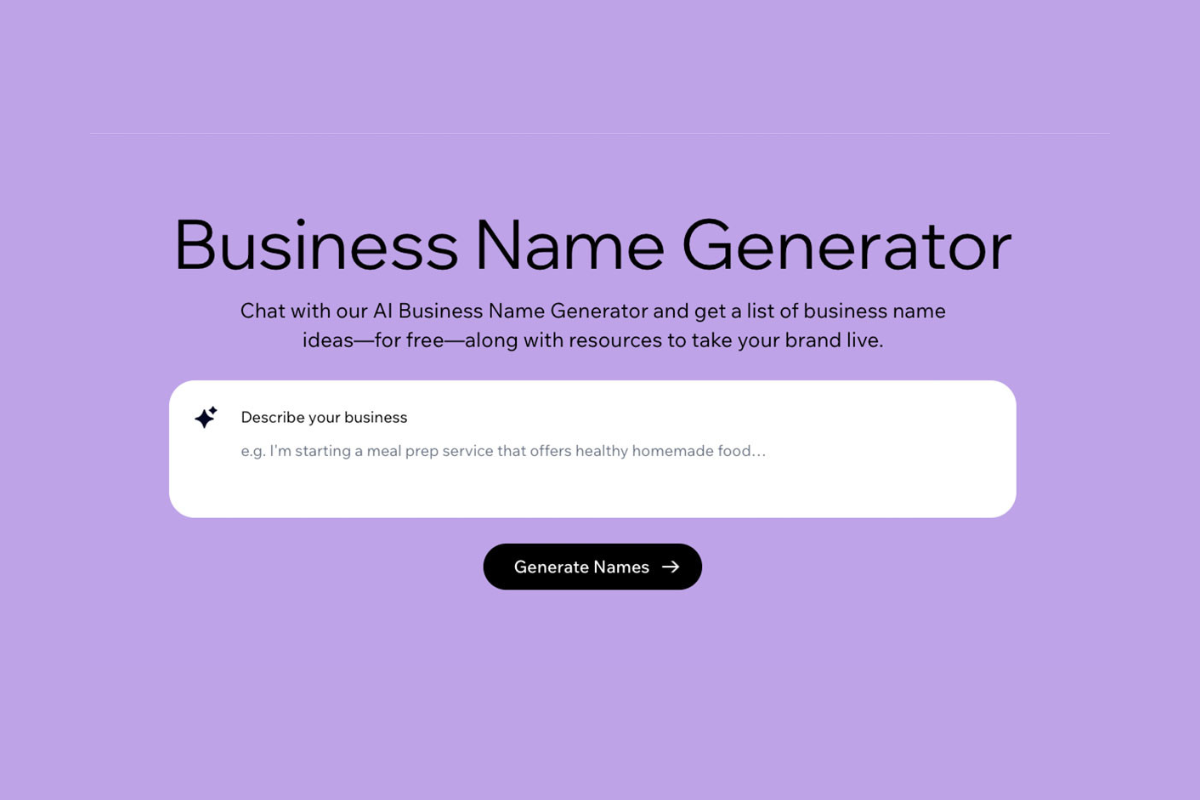
AI-powered naming generators have improved significantly and are now a useful early-stage creative resource. Used correctly, they can produce a breadth of associative options in minutes, covering linguistic territory that a solo brainstorming session might take days to map.
The key to getting high-quality outputs from AI naming tools is the specificity of the input. Generic prompts like "give me a business name for a coffee shop" will produce generic results. A more effective prompt structure follows this pattern: brand personality adjectives + target audience description + desired emotional response + phonetic preference + any words or sounds to avoid.
Example of a high-quality AI naming prompt
"Generate 20 business names for a sustainable outdoor clothing brand. The brand is calm, grounded, and honest speaks to experienced hikers in their 30s and 40s who value durability over trends. Names should feel timeless and slightly rugged, with no more than three syllables. Avoid words that already exist in the outdoor industry (e.g., 'trail,' 'peak,' 'summit'). Prefer names with open vowel sounds over sharp plosive sounds."
Visual rhyming dictionaries, tools that group words by their visual letter patterns rather than their sound, offer a different kind of input. Searching for a word like "stark" might surface "lark," "arc," "dark," "bark," and "quark" words that share visual and sonic qualities but carry different meanings. This is a useful tool for finding name candidates that feel related to a core concept while remaining distinctive.
A standard thesaurus, used creatively, remains one of the most powerful naming tools available. The practice involves looking up a core value word, then looking up the synonyms of those synonyms, going two or three layers deep, to find words that are semantically connected but less obvious. The word "reliable" might lead to "steadfast," which leads to "anchored," which leads to "moorings," which suggests "mooring," a name that carries the emotional weight of reliability while feeling visually and phonetically distinctive.
No AI tool or thesaurus produces a final name. These tools produce raw material. The work of shaping that material into something with genuine creative character remains a human task.
The "Cloud-Testing" Phase

Once a shortlist of eight to twelve names has been assembled, the next stage is gathering objective feedback from people who have no prior connection to the business. Founders often become emotionally attached to names during the creation process, which makes it difficult to evaluate them neutrally. External testing corrects for this.
The simplest method is a short survey, no more than five questions, sent to a group of people who represent the intended customer profile. The survey should not ask "which name do you like best?" That question measures preference, which is subjective and unreliable. Instead, it should test specific qualities: memorability, pronunciation, and first-impression association.
Cloud-testing survey structure
Q1: Read this name once, then close your eyes for ten seconds. What word came back to you? [tests memorability]
Q2: Say this name aloud. Was it easy, slightly awkward, or confusing to pronounce? [tests phonetic clarity]
Q3: Without knowing anything about the company, what kind of business would you expect this to be? [tests brand signal accuracy]
Q4: On a scale of 1–5, how distinctive does this name feel? [tests differentiation perception]
Q5: Is there any word or association in this name that you find confusing or off-putting? [tests unintended meanings]
Social media polls offer a faster, lower-cost alternative, particularly useful for consumer brands with an existing social following. Presenting two or three name candidates in a story-format poll and asking a single, clear question ("Which of these names would you trust for a financial product?") can generate dozens of responses in a few hours. The response patterns are often more revealing than the raw numbers: comments and replies frequently surface associations that the survey designer had not considered.
Iterative Refinement
A productive naming process might generate fifty or even a hundred candidate names across the brainstorming and tool-assisted phases. Narrowing that list to a final shortlist of three requires a structured reduction process, not a single dramatic elimination, but a sequence of filtering passes, each applying a different evaluative lens.
The first pass applies the purely practical filters: domain availability, handle availability on the relevant platforms, and the cultural neutrality check. These are binary tests; a name either clears them or it does not, and they typically remove a significant portion of the list without requiring any subjective judgment.
The second pass applies the phonetic and visual filters discussed earlier: Does the name sound clear when spoken aloud? Does it have visual balance as a logotype? Does the syllable rhythm feel natural in conversation? Names that stumble in this pass are set aside, even if they scored well conceptually.
The third pass applies the brand alignment filter: does the name carry the right emotional temperature for the target audience? Does it signal the right industry, personality, and price point? This is where the cloud-testing data becomes useful; names that consistently triggered the wrong first impression are removed.
What remains after three passes is typically a group of four to six names. The final reduction to three or ultimately to one benefits enormously from a "sleep on it" period. Each name on the shortlist should be written on a separate card and placed somewhere visible for three to five days. Each morning, note which name comes to mind first without prompting. The name that persists in memory without deliberate effort is, almost always, the name with the strongest innate memorability. That quality, the ability to remain in the mind without being pushed there, is among the most valuable attributes a business name can have.
Naming a business well is a creative act that rewards patience, methodical thinking, and genuine linguistic curiosity. It begins with understanding what the name needs to accomplish, who it must speak to, how it must feel, and where it must live in the digital world. It moves through structured creative techniques that generate a broad field of candidates, then through a sequence of practical and subjective filters that narrow the field progressively.
Sound matters. Culture matters. Visual balance matters. And human feedback gathered from real people who represent real customers matters more than any founder's instinct, however sharp. The name that survives all of these tests is the one that deserves to carry a brand into the world.
Great business names are not found in a single moment of inspiration. They are arrived at through a process that is part art, part science, and entirely worth the effort.
Also read:
 Shahba Mayyeri
 Ummulkiram Pardawala
 Umema Arsiwala