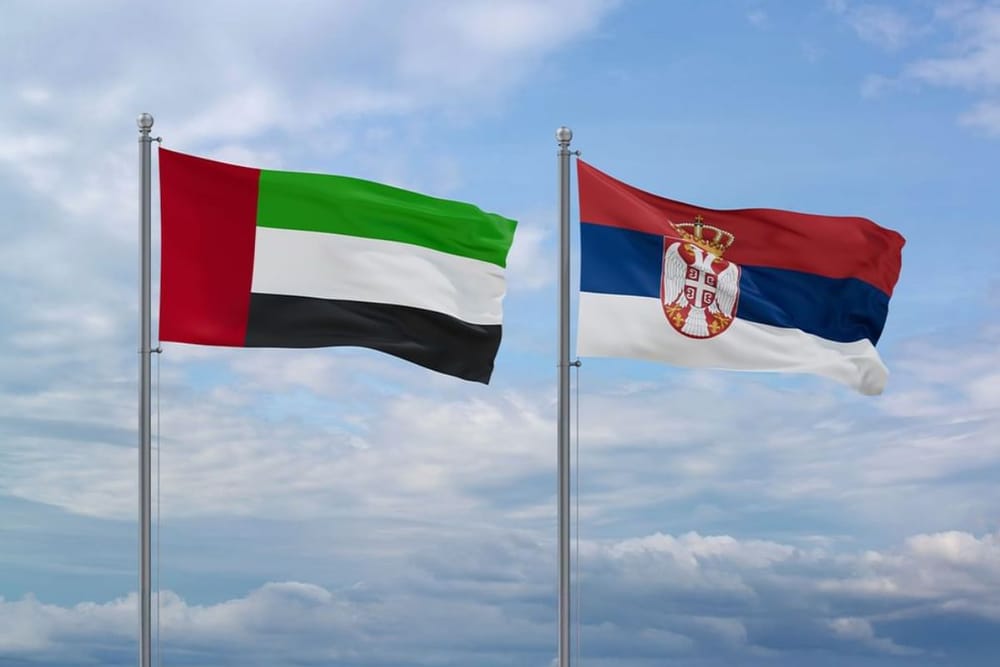
The Comprehensive Economic Partnership Agreement (CEPA) between the United Arab Emirates and the Republic of Serbia has officially come into force, marking a key step in strengthening economic cooperation between the two nations.
The agreement is designed to increase trade and investment flows, opening new opportunities across multiple sectors.
Dr. Thani bin Ahmed Al Zeyoudi, UAE Minister of State for Foreign Trade, highlighted the CEPA’s potential, saying it
“creates new avenues for collaboration, investment, and trade that will benefit both our nations.”
He emphasized that the pact will help generate jobs, reinforce supply chains, and foster a business-friendly environment.
Bilateral non-oil trade between the UAE and Serbia reached about US$121.4 million in 2024—double the level seen in 2021. The agreement is expected to significantly increase this trade, contributing an estimated US$351 million to the UAE’s GDP by 2031. This growth is supported by the elimination or reduction of customs duties on over 96% of tariff lines, enhancing market access.
Serbia’s strategic location and diverse economy position it as a vital gateway into Eastern Europe and the Balkans. The CEPA aims to deepen private sector collaboration and encourage investments in key areas such as renewable energy, agriculture, logistics, and technology.
As Serbia’s largest trading partner in the Gulf Cooperation Council region, the UAE accounted for 55% of Serbia’s trade with the GCC in 2023. The CEPA will further strengthen this relationship through increased foreign direct investment in high-growth sectors.
This agreement is the UAE’s 10th CEPA to come into force, part of a broader strategy to grow non-oil trade to US$1.1 trillion and double the economy’s size by 2031.
News Source: Emirates News Agency