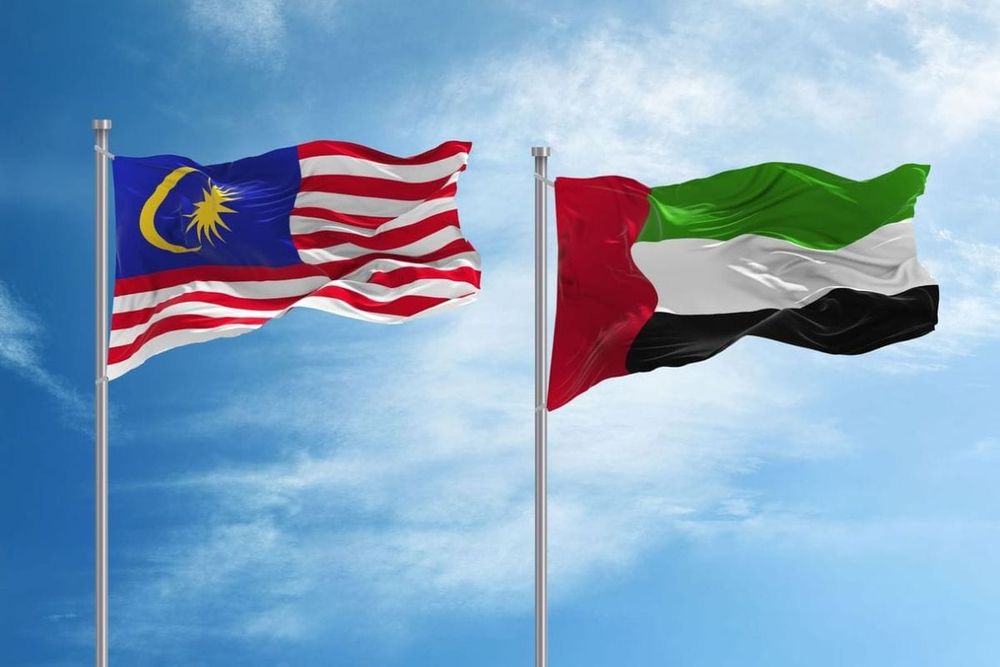
The United Arab Emirates and Malaysia have officially activated their Comprehensive Economic Partnership Agreement, marking a major step forward in bilateral trade and investment.
The agreement, signed in January 2025, aims to expand economic cooperation across multiple sectors and strengthen long-term commercial ties.
Bilateral trade between the two nations reached $3.3 billion in the first half of 2025, a 30.9 percent increase from the same period last year. The CEPA is expected to more than double overall trade, which stood at $5.5 billion in 2024, with a target of raising non-oil trade to $13.5 billion by 2032.
The agreement introduces measures to reduce or remove tariffs, streamline customs procedures, and encourage private sector collaboration. It also includes a dedicated chapter on the Islamic Economy and promotes sustainable development, technology transfer, and innovation. Key sectors highlighted for growth include healthcare, artificial intelligence, renewable energy, and logistics.
Dr. Thani bin Ahmed Al Zeyoudi, UAE Minister of Foreign Trade, described the ratification as “a significant milestone in our economic partnership, paving the way for greater collaboration and innovation.” He emphasized that the CEPA will unlock new investment opportunities while enhancing trade relations between the two countries.
For Malaysia, this marks its first trade agreement with a Gulf Cooperation Council nation, reinforcing its economic ties with the Arab world. The CEPA aligns with the UAE’s broader foreign trade strategy, which seeks $1 trillion in total trade and an $800 billion economy by 2031. Since 2021, the UAE’s CEPA programme has successfully concluded agreements with 31 countries, expanding market access for domestic businesses across a quarter of the global population.
The agreement is widely seen as a pivotal framework for fostering deeper economic integration and long-term collaboration between the UAE and Malaysia.
News Source: Emirates News Agency