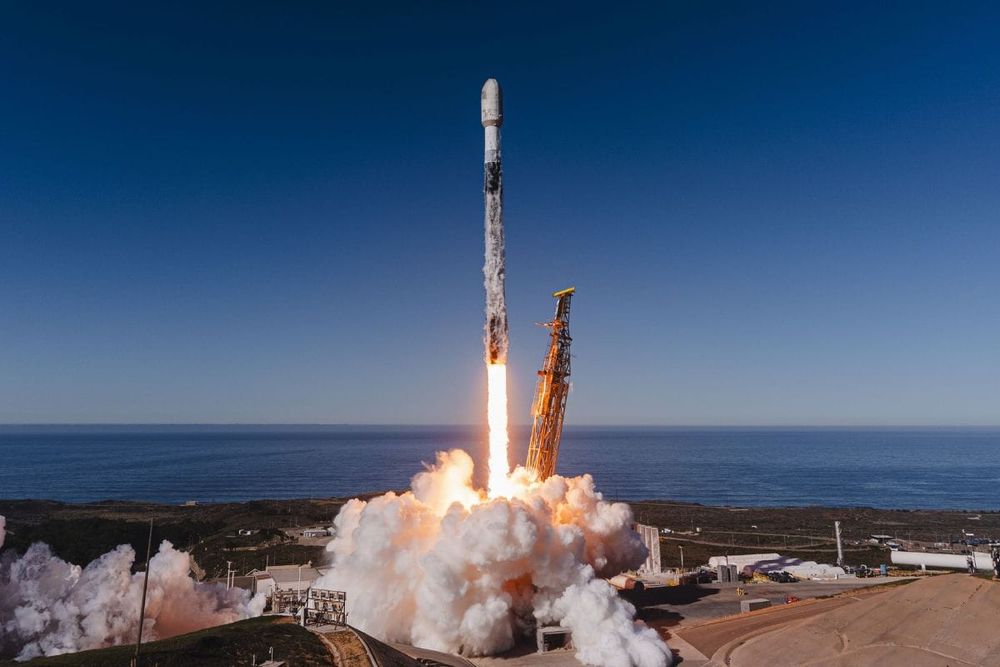
The UAE successfully launched PHI-1, the first modular satellite under the Payload Hosting Initiative, aboard a SpaceX Falcon 9 rocket from California at 10.44 PM UAE time on Friday.
The mission marks a major step in the country’s efforts to broaden participation in space science, research, and technology.
Developed by the Mohammed Bin Rashid Space Centre in partnership with the United Nations Office for Outer Space Affairs, PHI-1 aims to democratise access to space. The 12U CubeSat carries payloads from Bahrain, Nepal, and UAE institutions, enabling partner nations and organisations to test technologies in orbit.
Amer AlSayegh AlGhaferi, Assistant Director General at MBRSC, said the launch reflects the UAE’s commitment to combining local engineering expertise with international collaboration to provide hands-on opportunities for researchers and engineers.
The satellite’s payloads include Bahrain’s AMAN system for secure satellite communications, Nepal’s LoRa Satellite System testing orbital communication, MBRSC’s high-definition video camera, and Sharjah Academy’s student-designed temperature and orientation sensor. Each payload was integrated and tested at MBRSC facilities in Dubai, with partner teams closely involved throughout the development process.
Data from PHI-1 will be received at MBRSC’s Mission Control Centre and shared with partners to advance satellite engineering, real-time mission operations, and scientific research. The mission also supports the United Nations Sustainable Development Goals by fostering quality education, innovation-led economic growth, and wider access to space technology.
Through PHI-1, the UAE reinforces its role in opening space opportunities, strengthening global collaboration, and empowering the next generation of scientists and innovators.
News Source: Emirates News Agency