The World Governments Summit has unveiled a new report highlighting how artificial intelligence can reshape local government operations, while warning that most cities are still in the early stages of adoption despite the technology’s growing importance.
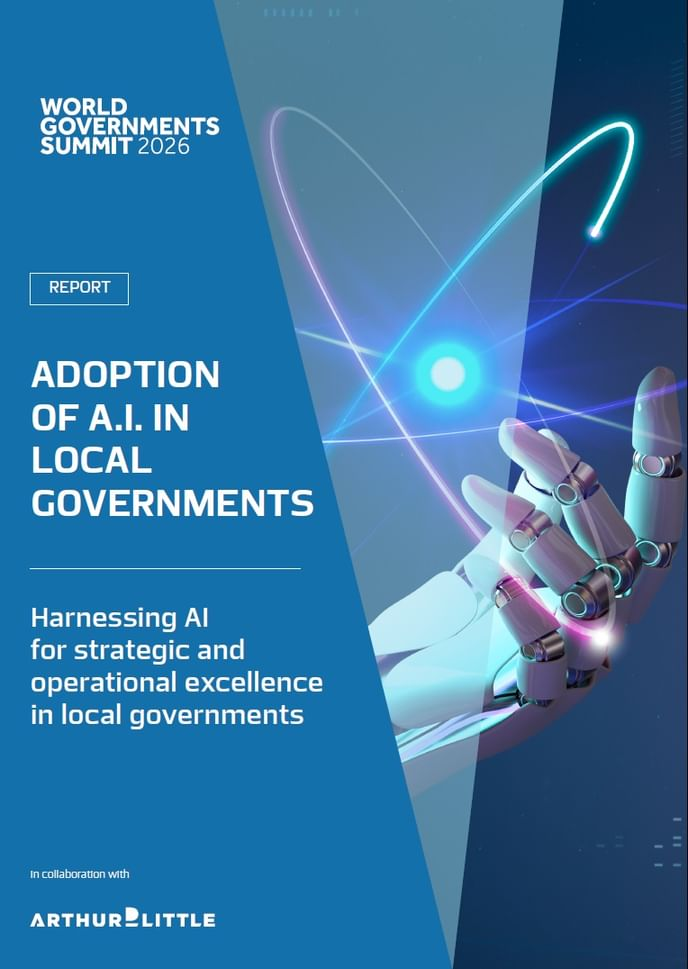
Developed in partnership with Arthur D. Little, the report titled Adoption of AI in Local Governments: Harnessing AI for Strategic and Operational Excellence in Local Governments outlines a comprehensive blueprint for embedding AI into city management. It draws on global case studies to show how data-driven tools can enhance efficiency, service delivery, and decision-making at the local level.
The scale of opportunity is substantial. Global spending on AI-enabled public sector solutions reached US$12.6 billion in 2023 and is expected to rise to US$78 billion by 2033. At the same time, the Government AI Readiness Index now covers 193 national administrations, reflecting rising expectations for public sector transformation.
Several cities are already demonstrating what is possible. Abu Dhabi uses its TAMM virtual assistant to auto-process business licenses, Hangzhou deploys Alibaba’s City Brain platform to manage traffic and urban operations, and Accra applies AI to detect illegal dumping sites. Other examples include Pretoria’s AI-powered digital twins for waste collection and São Paulo’s Smart Sampa public safety platform.
Despite these advances, adoption remains limited. A Bloomberg study cited in the report shows that only 2% of surveyed local governments have achieved full AI implementation. High costs, data privacy concerns, regulatory gaps, operational complexity, and skills shortages continue to slow progress.
To address these challenges, the report recommends strategic partnerships, strong data governance, early regulatory engagement, investment in workforce capabilities, and agile implementation models.
“Embracing AI at the local level could be transformational for cities worldwide,”
said Dr. Raymond Khoury, Partner and Public Sector Lead at Arthur D. Little Middle East, adding that collaboration and shared efforts will be critical to building future-ready cities.
News Source: Emirates News Agency