The World Governments Summit has unveiled a new global report calling on smart cities to shift toward a more personalised, customer-centric model, warning that those failing to adapt risk losing competitiveness and livability.
Developed in partnership with Arthur D. Little, the report titled Urban Futures and Changing Demographics: Transforming Cities of the Future Through Customer-Centricity examines how cities can place citizens at the heart of digital transformation while addressing demographic change, urban growth, and declining quality of life.
Urban areas now host more than half of the world’s population, yet rapid expansion has often come at the expense of livability. The report argues that a customer-centric city balances this trend by delivering personalised, sustainable, and engaging experiences that integrate digital technologies with inclusive planning and decision-making.
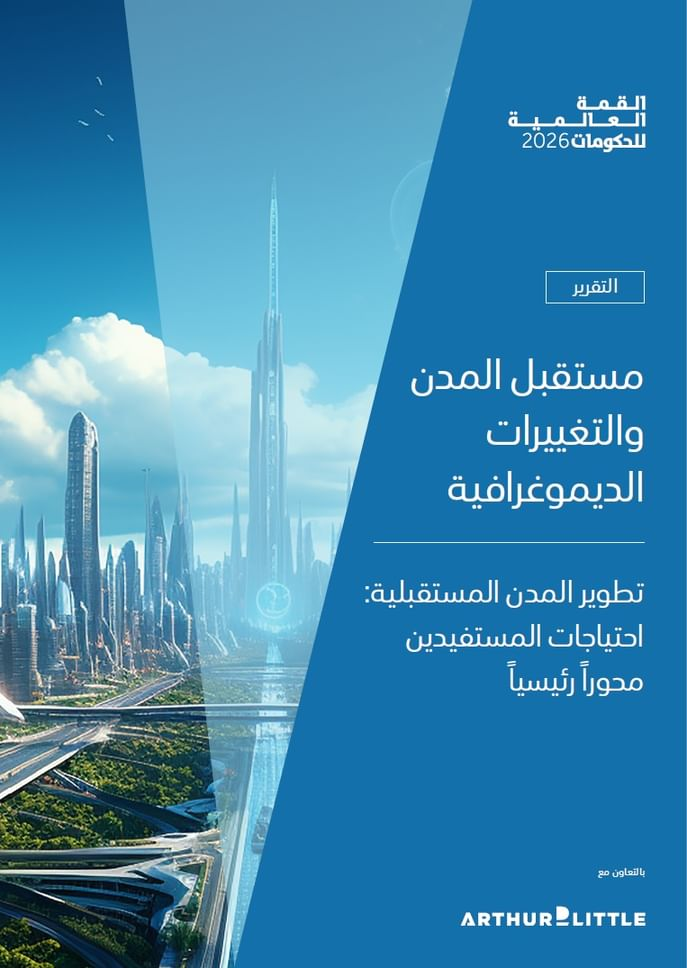
The study outlines five key directions shaping the next generation of smart cities. These include individual-level personalisation through AI and adaptive infrastructure, neuro-responsive environments that minimise user effort, bio-integrated infrastructure capable of self-maintenance, autonomous civic services supported by human oversight, and climate-adaptive systems designed to safeguard public safety.
Looking toward 2070, the report envisions cities powered by collective digital twins, semi-autonomous infrastructure ecosystems, AI-supported transport and education, and climate-resilient urban centres, including floating districts and renewable energy-based megacities.
To translate these concepts into reality, the report urges leaders to define clear city visions, strengthen digital inclusion, build flexible data platforms, measure citizen well-being, test new models through regulated pilots, establish transparent governance for AI, and embed sustainability across all services.
“Smart cities succeed when technology serves people, not the other way around,”
said Samir Imran, Partner for Travel, Transportation and Hospitality at Arthur D. Little Middle East.
“By putting citizens at the center of digital innovation, cities can create livable, sustainable, and competitive environments.”
News Source: Emirates News Agency