Digital tools have changed how people connect. LinkedIn, contact-sharing apps, and QR codes are now part of everyday business. Even so, business cards continue to hold value in face-to-face interactions.
A physical card acts as a small trust token. It shows intention. When someone hands over a card, it signals that the conversation matters enough to carry forward. It gives the other person something real to keep, look at, and remember once the meeting ends.
Business cards also make contact exchange simple and reliable. There is no need to search names, unlock phones, or rely on internet access. In busy meetings, conferences, and quick introductions, a card allows details to change hands instantly and clearly.
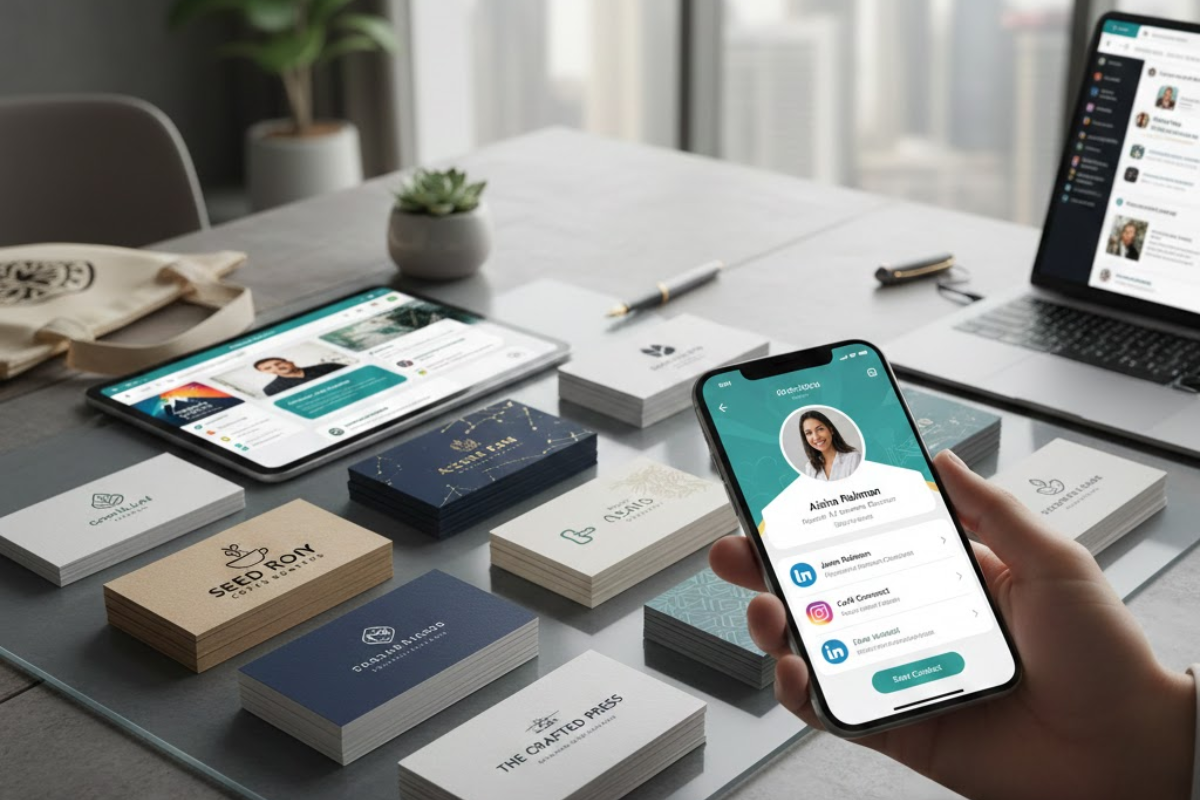
Today’s business cards often support digital follow-up. Many include QR codes or smart features that open a website, save a contact, start a WhatsApp chat, or lead to a portfolio. This turns the card into a starting point rather than the final step. The first moment happens in person. The relationship continues online.
Business cards still matter because they support how people actually meet, talk, and build professional relationships. They create a bridge between a real conversation and an easy next step.
In this article, we will explore what a good business card actually looks like today, the different types available, and how business owners in Dubai can choose a card that fits how they work and who they meet.
What a “Good” Business Card Looks Like in 2026
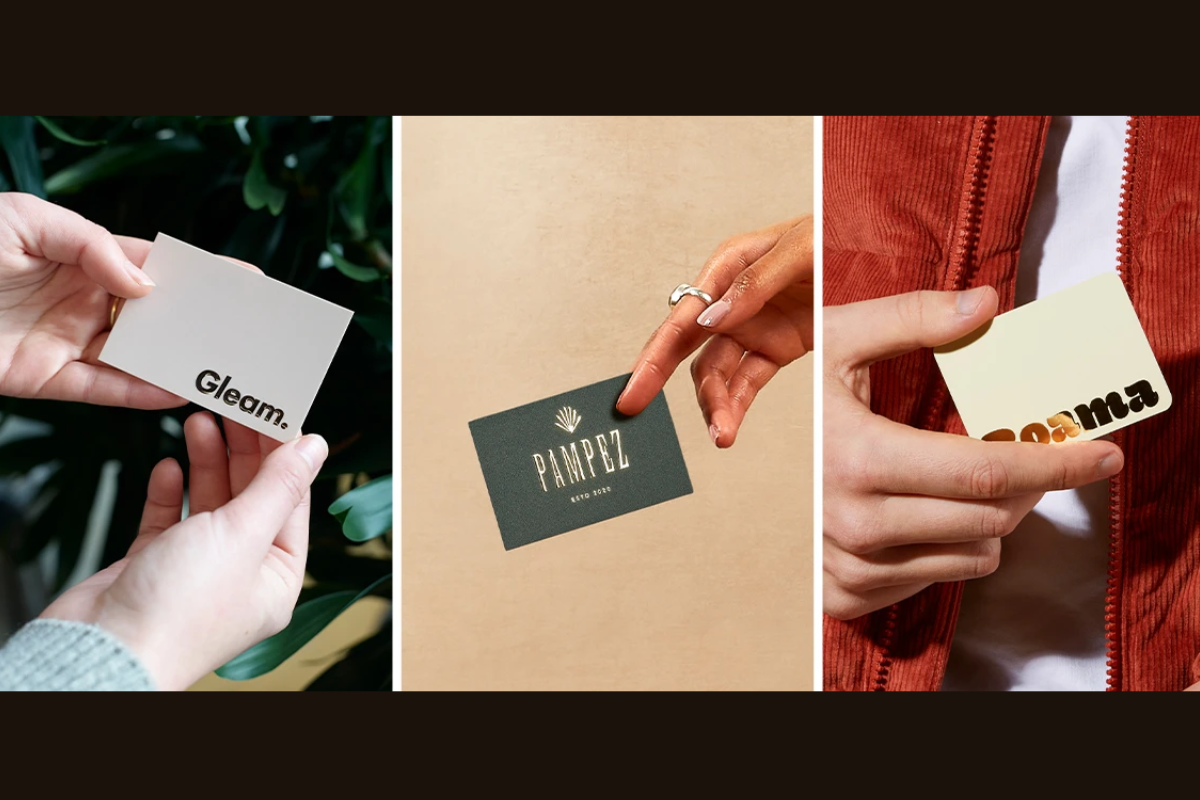
A good business card in 2026 feels calm, clear, and intentional. It does not try to impress through clutter or effects. It helps someone understand who you are in seconds, then gives them an easy way to continue the conversation later.
Minimal layout, strong hierarchy, real whitespace
Minimalism works because it creates order. The eye should land on one clear element first, usually your name or brand. Your role and company come next, followed by contact details. Real whitespace makes this possible. It gives the design room to breathe and allows information to stand out naturally. A card that uses space well feels confident, modern, and easy to read, especially when it is only glanced at for a few seconds.
High legibility, especially in quick exchanges
Business cards are rarely studied carefully. They are read while standing, walking, or moving between meetings. High legibility comes from simple, thoughtful choices: a clean typeface, a readable font size, strong contrast, and enough spacing between lines. When these basics are done right, the card works in real-life situations, not only in a design preview.
Quality stock that holds its shape
The way a card feels often influences how it is judged. A card that bends easily can feel temporary and forgettable. A firmer stock holds its shape, lasts longer in wallets and cardholders, and signals care in how the brand presents itself. In a city like Dubai, where networking is frequent and professional standards are high, durability and finish make a noticeable difference.
Bilingual considerations for Dubai and the UAE
In the UAE, bilingual business cards are widely used. English supports international communication, while Arabic shows cultural awareness and respect for the local business environment. A well-designed bilingual card balances both languages clearly, without crowding the layout or reducing legibility. When handled properly, bilingual design adds credibility rather than complexity.
The Core Types of Business Cards Today
A) Standard paper cards (matte or gloss)
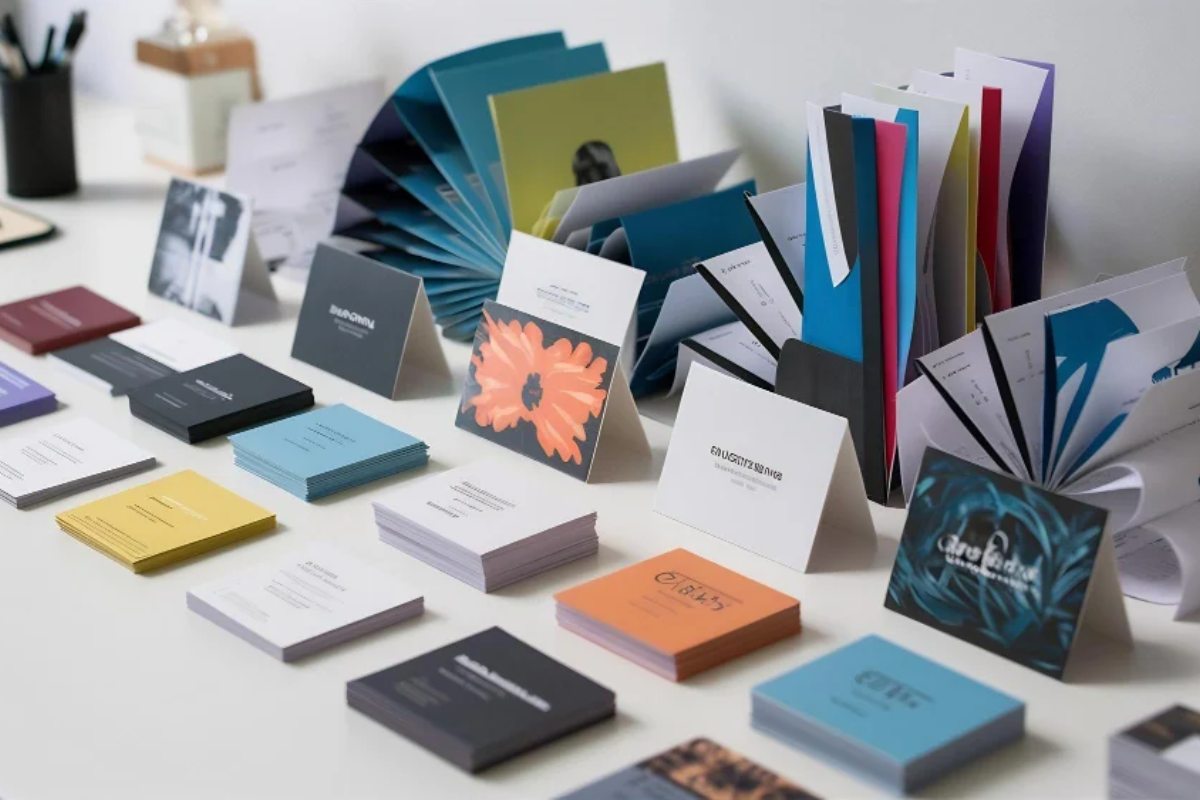
Pros: Lowest cost, quick to print, familiar, and widely accepted
Cons: Easier to crease, can feel generic if design and stock are weak
Best for: high-volume networking, events, temporary campaigns
B) Premium stock cards (thicker paper)
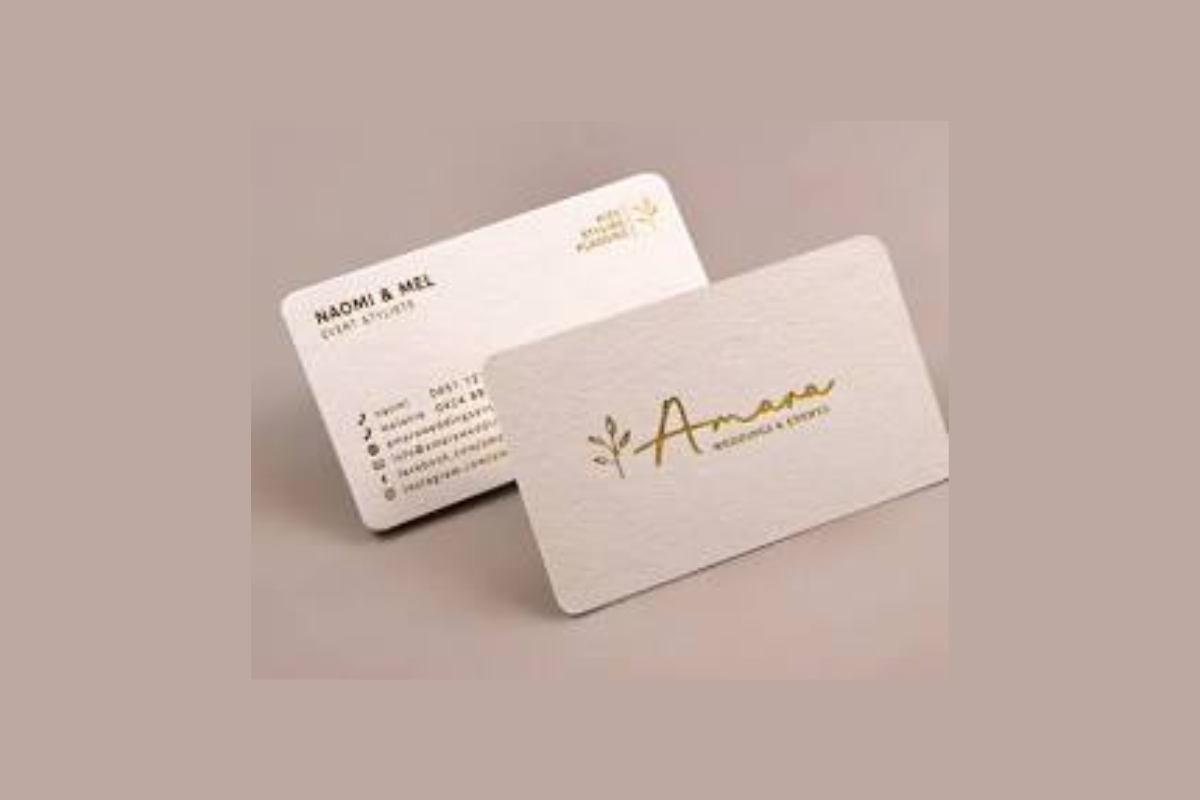
Pros: Feels more credible immediately, holds shape better in wallets, stronger first impression
Cons: Slightly higher cost
Best for: consultants, agencies, real estate, professional services
(Heavier stocks like 350–400gsm are now commonly used for premium business cards.)
C) Textured, soft-touch, or cotton paper cards
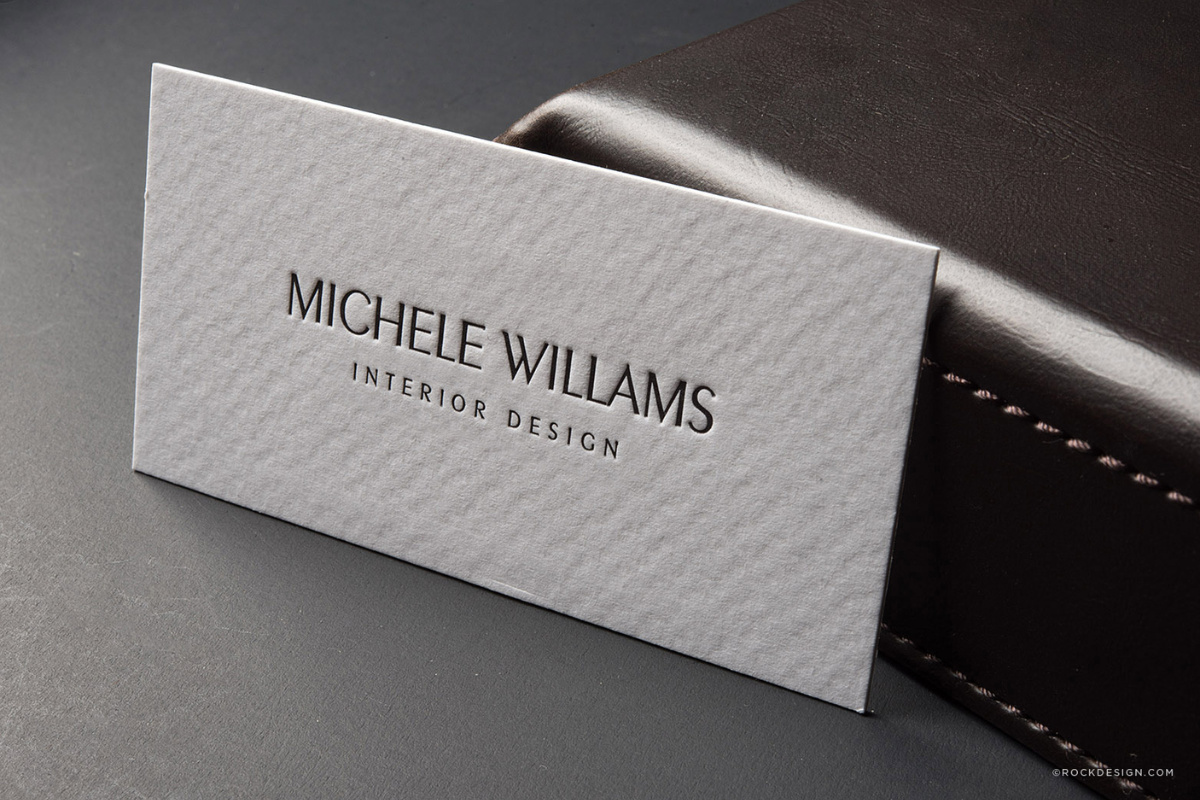
Pros: Tactile and refined, supports minimalist branding, memorable without being loud
Cons: Some textures soften fine details, not ideal for very small text or heavy ink
Best for: luxury services, designers, boutique brands
These options are widely available through Dubai print houses.
D) Eco-friendly cards (recycled or kraft paper)
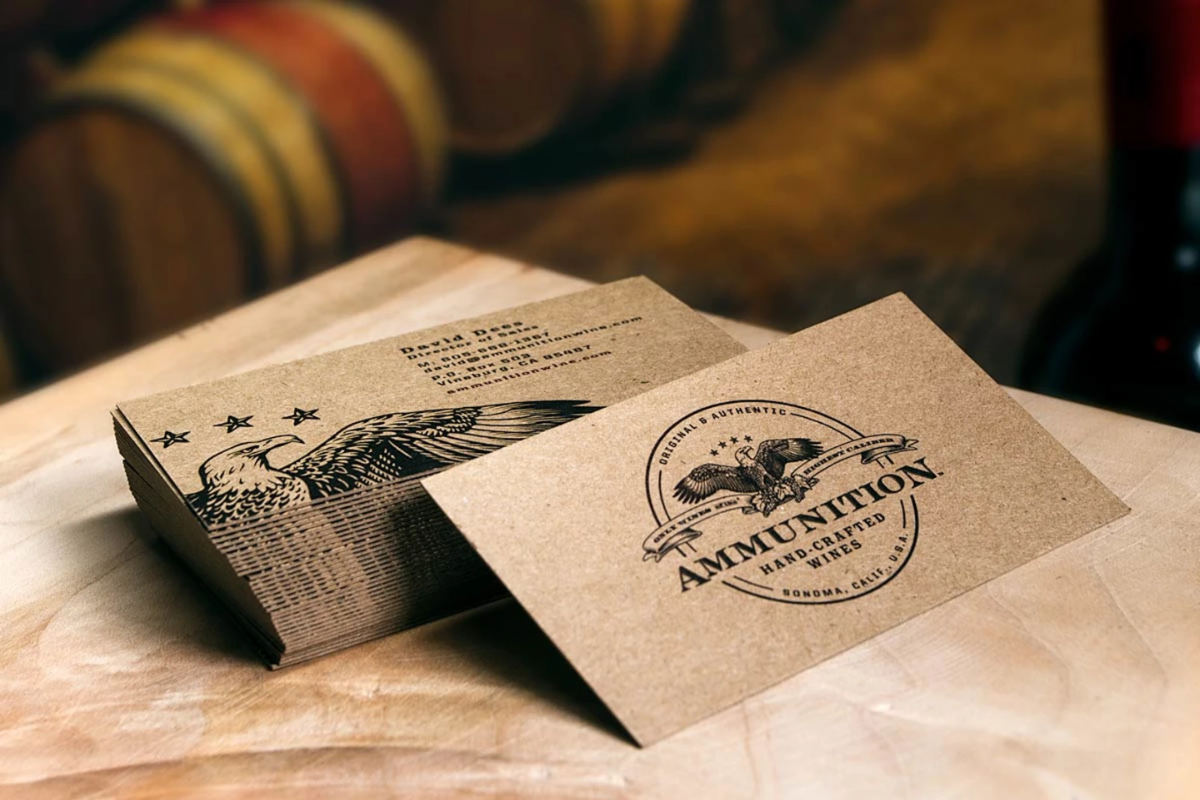
Pros: Communicates values quickly, fits modern brand positioning, increasingly requested
Cons: Kraft paper lowers contrast, which can affect readability if the design is too light
Best for: sustainability-focused brands, cafés, wellness, lifestyle companies
Recycled and kraft stocks are actively offered in the UAE market.
E) Finish-driven cards (spot UV, foil, emboss, letterpress)
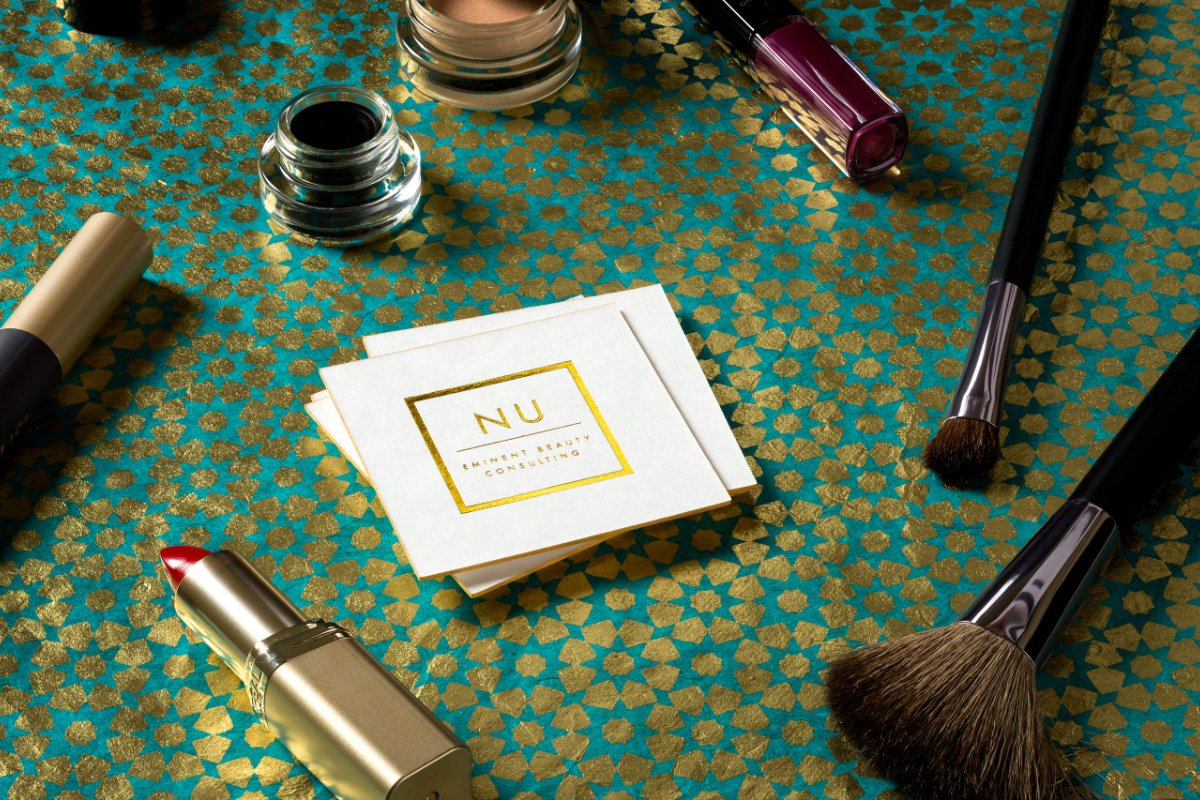
Pros: Premium feel, visually memorable, adds depth when used lightly
Cons: Easy to overdo, loses impact if combined with clutter
Best for: luxury, high-ticket services, selective client meetings
These finishes remain among the most requested premium upgrades.
F) Die-cut or unusual shapes
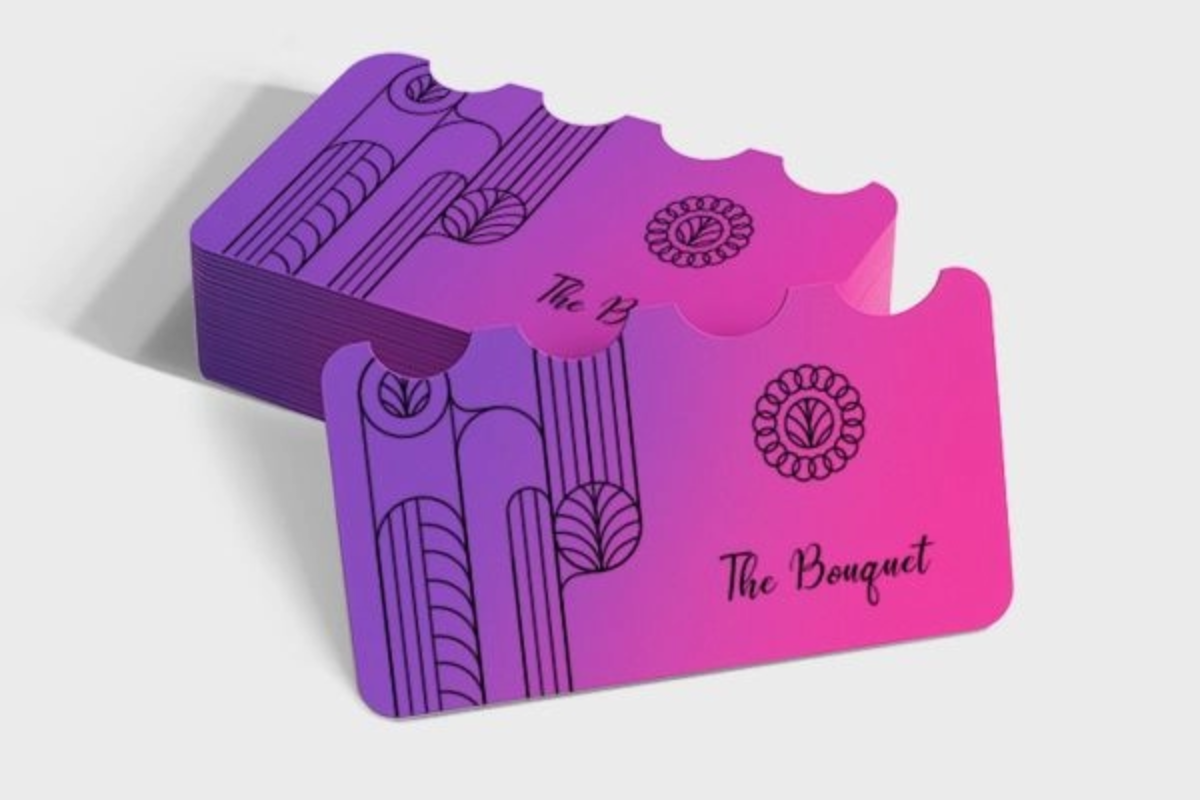
Pros: Instantly memorable, strong for certain creative categories
Cons: Do not fit wallets well, easier to lose or throw away
Best for: exhibitions, product brands, creative campaigns
G) Plastic cards
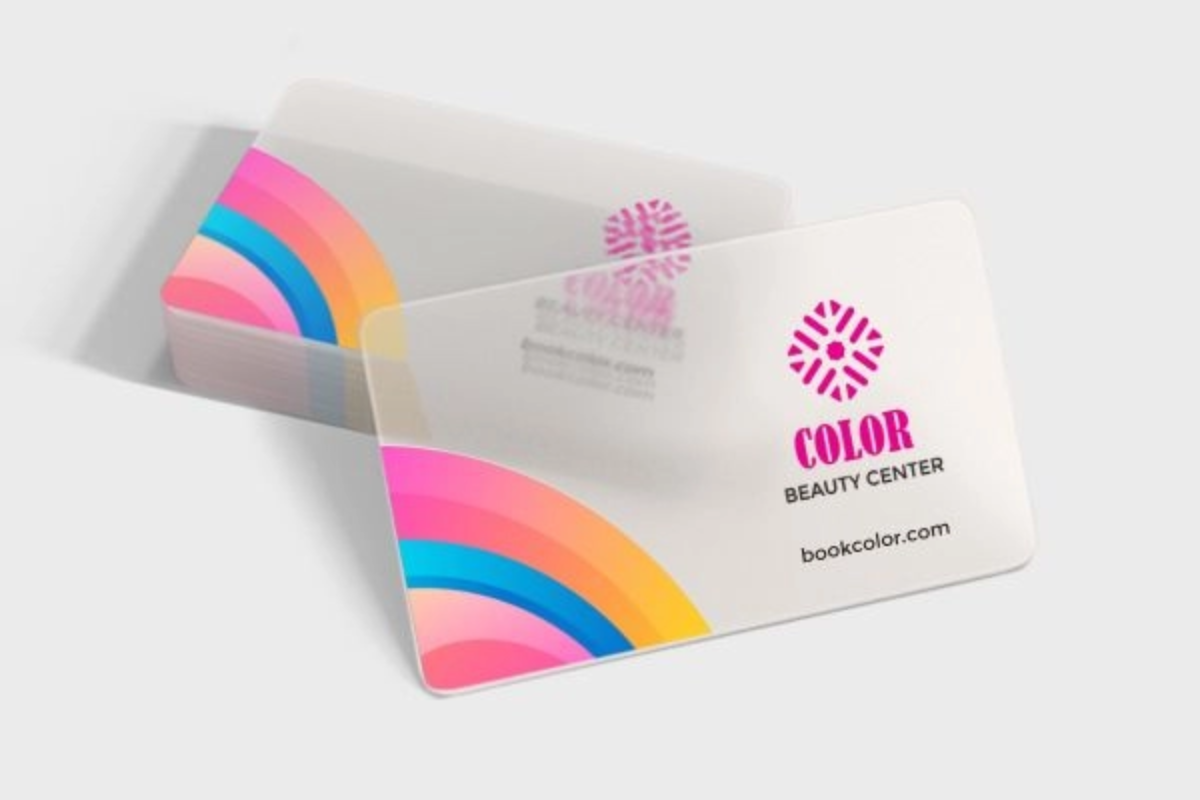
Pros: Durable, waterproof, long-lasting
Cons: Can feel corporate or dated depending on design, sustainability concerns
Best for: memberships, access cards, hospitality, loyalty programs
H) Metal cards
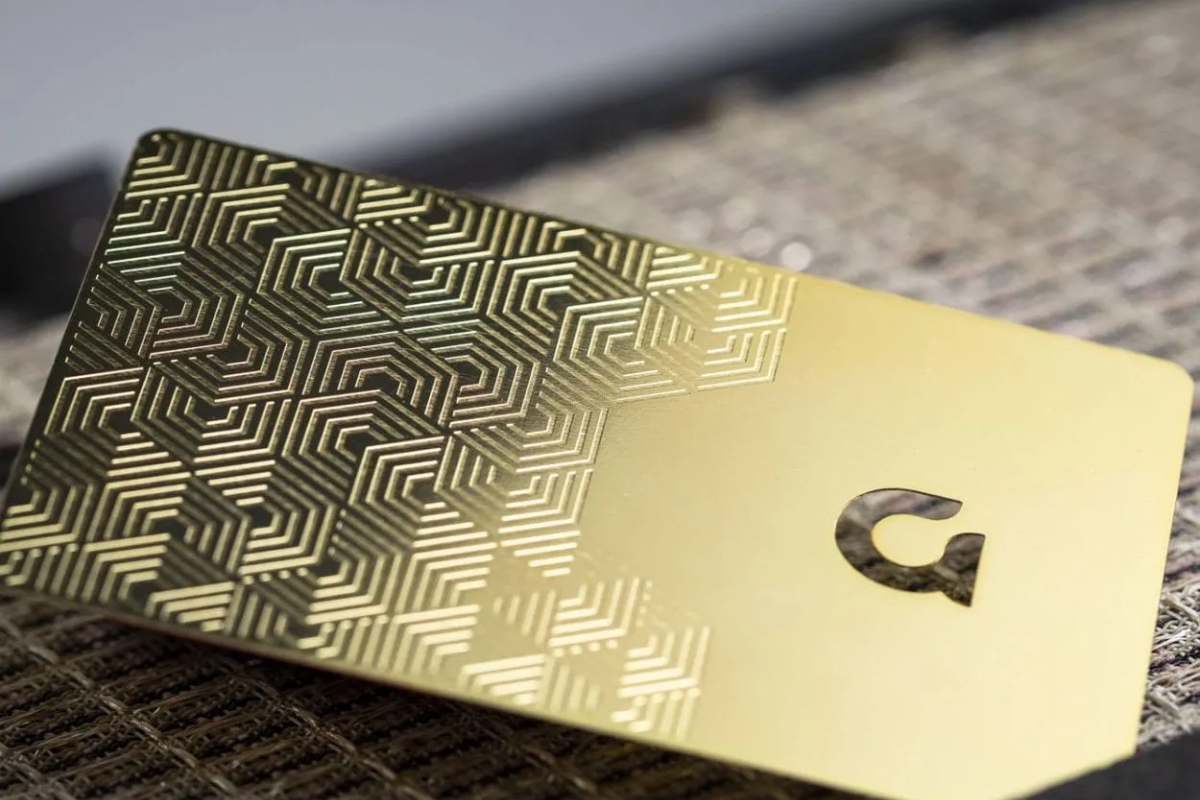
Pros: Ultra-premium, unforgettable, strong status signal
Cons: Expensive, not suitable for every industry, can feel excessive in some meetings
Best for: private wealth, luxury real estate, elite services
I) Smart business cards (NFC + QR)
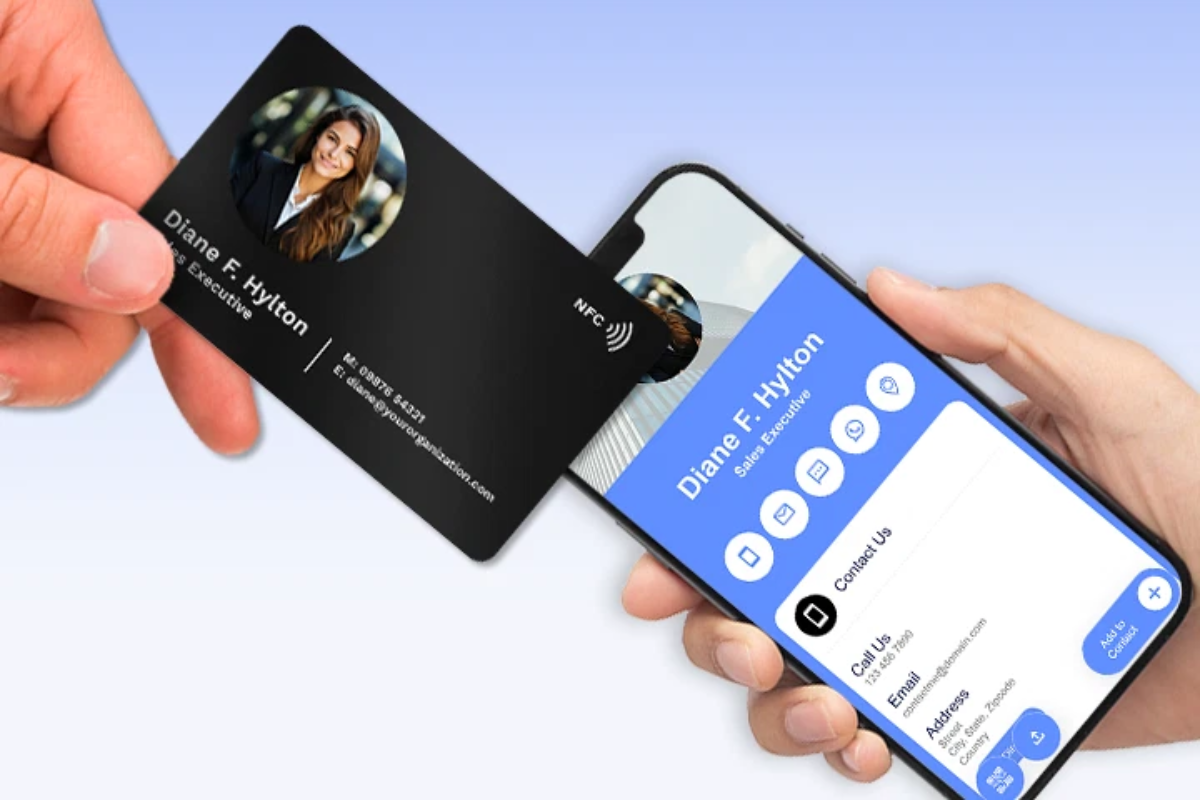
Pros: Tap-to-save contacts, update details anytime, reduce reprints, link to portfolios or booking pages
Cons: Not everyone is comfortable tapping, compatibility varies, depends on having a clean landing page
Best for: sales professionals, founders, consultants, tech-driven brands
J) Digital-only business cards
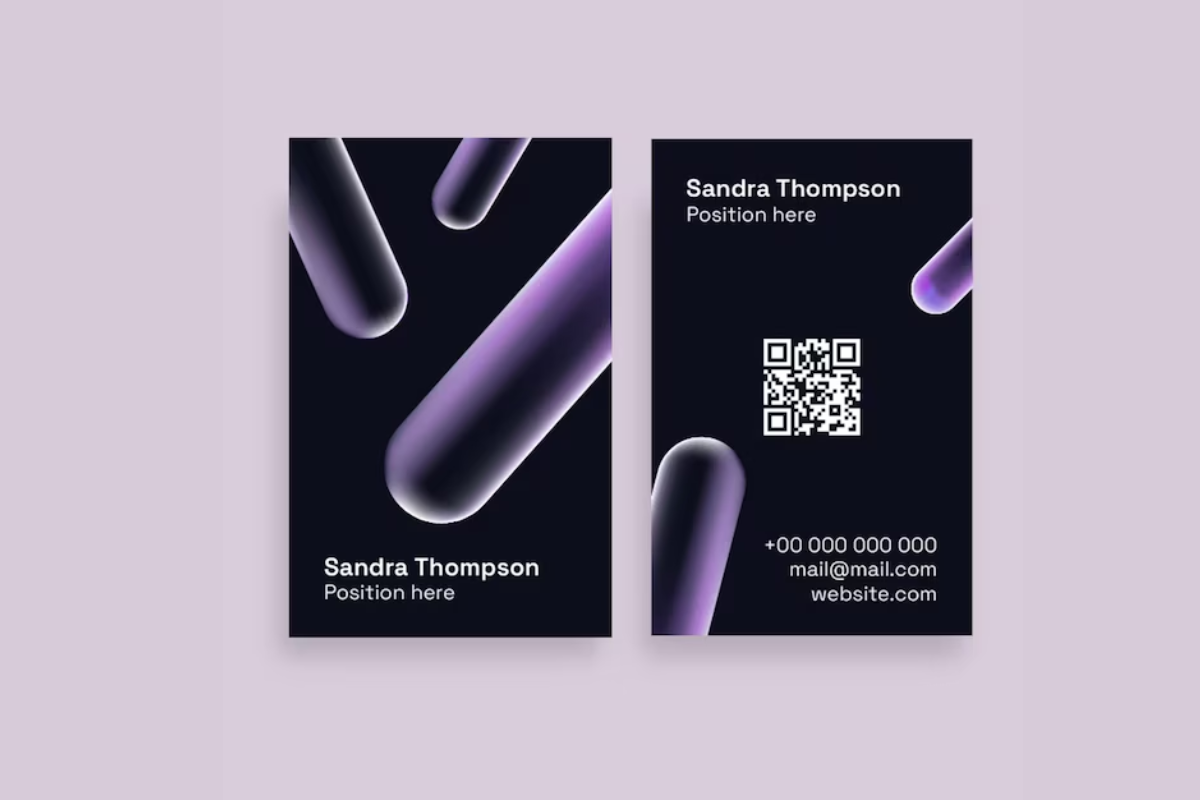
Pros: Easy to share online, eco-friendly, instant updates
Cons: No physical presence, less impact in first face-to-face meetings
Best for: online-first businesses, remote teams, social-led brands
Design Rules That Work in Real Dubai Meetings
A good business card today is built on clarity. Minimalism works when it creates structure, not when it removes useful information.
A strong card has one clear focal point, usually your name and role, or your logo and name. It uses one or two typefaces only, with strong contrast so details can be read instantly. Real spacing between elements keeps the card calm and easy to scan. Social handles should appear only if they actively support how you do business.
In Dubai, practical details matter. Bilingual cards (English and Arabic) are widely used and recommended in UAE-facing environments. Card exchange still carries etiquette. Offering and receiving with the right hand and briefly acknowledging the card reflects professionalism. The local climate and daily movement also play a role. Choosing stocks that hold their shape and finishes that resist scuffing helps the card stay presentable longer.
A good card should feel clear in the hand, easy on the eye, and appropriate for the room you are in.
What to Put on the Card (And What to Cut)
A business card works best when it answers one simple question clearly: who you are and how to reach you. Anything that slows this down weakens the card.
What to keep
A good modern business card usually includes:
- Name – the most important element. It should be easy to find and easy to read.
- Role or title – gives context to the conversation and helps people remember why they met you.
- Company name or logo – connects you to your brand and adds credibility.
- Phone number – still the fastest follow-up method in Dubai business settings, often leading directly to WhatsApp.
- Email address – essential for formal communication and document sharing.
- Website – acts as a central reference point for services, portfolios, or bookings.
- Optional QR code or NFC – useful for instant saving of contact details, opening a profile, or booking a meeting.
These elements match how business relationships actually continue today: quick contact saving first, deeper exploration later.
What to cut
Modern business cards are more effective when they avoid overload. Common elements that weaken cards include:
- Long lists of services – people do not read them on a card. Services belong on your website or profile page.
- Long taglines – they take space away from what matters and are rarely remembered.
- Multiple phone numbers and emails – they create hesitation instead of clarity.
- Too many social media icons – they clutter the design and confuse the next step. One relevant platform is usually enough, if any.
A business card is not a brochure. It is an introduction tool. Its job is to support a real conversation and make the next step easy. When the essentials are clear, and the rest is removed, the card becomes faster to use, easier to keep, and more likely to lead to follow-up.
A business card often continues the conversation after you have left the room. It sits on desks, in wallets, on dashboards, and inside notebooks. In those quiet moments, it represents how clearly you work and how intentionally you present yourself.
A well-chosen card does not try to explain everything. It leaves enough clarity for someone to remember you and enough direction for them to act when the time feels right. The material, layout, and format should all serve that purpose, not distract from it.
For business owners in Dubai, where conversations move quickly and impressions travel far, a business card remains a small but deliberate business decision. When chosen thoughtfully, it becomes less about design and more about how professionally you expect your work to continue.
Also read:
 Shahba Mayyeri
 Umema Arsiwala
 Ummulkiram Pardawala