
Sales is one of the most technically demanding professional disciplines in business. It requires a combination of communication precision, psychological awareness, operational discipline, and subject matter expertise. Despite what popular culture often suggests, the best salespeople are not loud, aggressive, or purely instinct-driven. They are methodical, deeply curious, and genuinely invested in solving problems for the people they work with.
This article examines the specific traits and behaviors that define a good salesperson, grounded in current standards around Consultative Selling and Data-Driven Empathy.
Foundational Communication
The most important communication skill a salesperson can develop is active listening, not as a technique to deploy, but as a default operating mode. Active listening means processing what a prospect says before formulating a response. In practice, this requires restraint. Many salespeople rush to fill the silence with information. A skilled salesperson sits in silence, recognizes it as a processing space for the buyer, and waits.
The mechanics of asking open-ended questions go beyond simply avoiding yes/no formats. A well-constructed open-ended question invites the prospect to explain their thinking, not just confirm a position. Questions like "Walk me through how your team currently handles that process" extract operational detail that closed questions cannot. The goal is to get the prospect talking about their business in specific budget pressures, team dynamics, and failed solutions they've already tried. Every answer narrows the salesperson's understanding of what the prospect actually needs.
Timing matters as much as content. Asking a probing question too early in a conversation, before trust has been established, can feel intrusive. Asking it too late means decisions may already be forming without the salesperson's input. High-performing salespeople develop a sense for when a prospect has shared enough surface information and is ready to go deeper. That moment is when the right open-ended question produces genuine, useful data.
Verbal response timing also includes knowing when not to respond with information at all. When a prospect raises a concern, the instinct is to counter it. The better move is often to acknowledge it, ask a follow-up question about it, and let the prospect elaborate. This does more to build credibility than any rebuttal.
Product and Technical Depth

A salesperson cannot sell what they do not understand. This sounds obvious, but the gap between surface-level product knowledge and genuine technical depth is significant in most sales teams. Understanding a product means knowing its technical limitations just as clearly as its capabilities.
Knowing the limitations serves two purposes. First, it allows the salesperson to disqualify prospects who are not a genuine fit, saving time for both parties. Second, it builds credibility with technically literate buyers. When a prospect asks a difficult question and the salesperson answers it accurately, including the parts that are less flattering, the prospect registers that as honesty. That registration builds trust faster than any feature list.
In 2026, buyers often arrive at sales conversations already informed. They've read the documentation, reviewed competitor comparisons, and may have spoken to users of the product. A salesperson who knows less than the prospect loses credibility immediately. Technical depth means being able to engage with a buyer's specific use case, identify edge cases, and speak to integration requirements, scalability parameters, or compliance considerations, depending on the industry. This requires ongoing learning, not just onboarding training.
Product knowledge also informs the salesperson's ability to ask better questions. When you understand the technical architecture of what you're selling, you know which questions reveal genuine compatibility and which reveal misalignment early.
Resilience and Rejection Management
A "no" in sales is not a personal judgment. Understanding that intellectually is straightforward. Applying it consistently under pressure is a practiced skill.
The psychological process of handling rejection without losing operational momentum begins with correctly categorizing the "no." There are at least three distinct types: a no that means "not now," a no that means "not this product," and a no that means "not this salesperson." Each requires a different response. Conflating them leads either to wasted persistence or premature disengagement.
A salesperson with strong rejection management does not suppress the emotional response; they process it quickly and redirect it into diagnostic thinking. What specifically caused the no? Was it timing, pricing, a competitor's offer, internal politics at the prospect's company, or a genuine product mismatch? Each answer informs the next action.
Operational momentum after a rejection means returning to the pipeline immediately. Not after a break, not after venting immediately. The habit of converting a rejection into a scheduled follow-up action, a reassigned prospect, or a referral request keeps the pipeline active and prevents rejection from compounding into avoidance behavior. High-performing salespeople track their rejection patterns with the same rigor they apply to their wins. The data in a loss is often more instructive than the data in a close.
Strategic Research Skills

The quality of a sales conversation is largely determined before it starts. A salesperson who understands the prospect's business, challenges, and competitive context before the first contact arrives prepared to add value immediately. One who does not is asking the prospect to do unpaid consulting work during a sales call.
In 2026, the research toolkit available to a salesperson is extensive. LinkedIn provides organizational mapping for decision-makers, influencers, recent hires, and departures. Annual reports and earnings calls reveal strategic priorities, margin pressures, and growth targets for public companies. Industry news and trade publications identify regulatory shifts or competitive dynamics that the prospect may be navigating. Job postings from the prospect's company often reveal internal problems — a company hiring six data engineers is telling you something about where their investment is going.
Data-Driven Empathy, a current standard in Consultative Selling, is the practice of using this pre-contact research to understand not just what a prospect does, but what pressures they are operating under. Empathy without data is sympathy. Empathy with data is strategic alignment. When a salesperson opens a conversation by referencing a real, specific challenge the prospect is facing, drawn from research, not assumption, the prospect's posture changes. They stop treating it as a vendor call and start treating it as a relevant conversation.
This research discipline also reduces wasted calls. When pre-contact data indicates a prospect is unlikely to be a fit, wrong size, wrong stage, or competing priorities, a disciplined salesperson does not pursue the call. They qualify out. This is not defeatism; it is pipeline hygiene.
Time Management and Pipeline Discipline
The daily routine of a high-performing salesperson is structured, not spontaneous. Time management in sales is not about working longer hours; it is about concentrating effort on the activities that move deals forward.
Lead qualification is the first discipline. Not every lead deserves equal time. Qualification frameworks assessing budget, authority, need, and timeline exist to help salespeople allocate their most valuable resource, which is attention, to the prospects most likely to close. A full pipeline of poorly qualified leads produces activity without results. A smaller pipeline of well-qualified prospects produces both.
Follow-up cadence is the second discipline. Research consistently shows that most sales require multiple contacts before a decision is made. The salesperson who follows up once and withdraws is leaving revenue behind. But follow-up without a reason, without new information, a relevant development, or a specific question reads as pressure rather than value. High-performers follow up with something: a relevant article, a response to a question raised in the previous conversation, or a case study that addresses a specific concern. Every follow-up touch should advance the prospect's thinking, not just remind them that the salesperson exists.
CRM accuracy underpins all of this. A salesperson who does not log their activity, update deal stages, and record call notes is operating without a feedback loop. The CRM is not an administrative burden; it is the instrument through which a salesperson measures their own patterns and improves.
Ethical Integrity and Trust Building

Long-term sales performance is built on reputation. Reputation is built on behavior in moments when the easier path is to withhold information or oversell a capability.
A salesperson with genuine integrity tells a prospect when the product is not the right fit. This is commercially counterintuitive in the short term. In the long term, it produces referrals, goodwill, and re-engagement when the prospect's situation changes. A prospect who was told the truth and directed elsewhere remembers the salesperson who was honest with them. A prospect who was sold a product that didn't deliver the promised outcome does not come back.
Transparency during the sales process about pricing, timelines, implementation complexity, and known limitations reduces post-sale friction. Contracts signed based on accurate expectations have lower churn rates. Customer success teams inherit more manageable accounts. The internal cost of an oversold deal in support resources, customer success time, and potential legal exposure is rarely factored into the commission calculation, but it is real, and it compounds.
Consultative Selling in 2026 places ethics at the center of the sales model, not as a soft value but as a commercial strategy. A salesperson who operates with consistent transparency across their book of business builds a professional profile that generates inbound interest over time. Trust is the only sales asset that appreciates.
Emotional Intelligence in Practice
Emotional intelligence in sales is not about being warm or likable. It is about accurately reading the emotional and cognitive state of the person across the table and adjusting your communication accordingly.
Reading non-verbal cues requires attention. Changes in posture, pace of speech, level of eye contact, and micro-expressions during specific parts of a conversation carry information. A prospect who was engaged and suddenly becomes quiet after a pricing discussion is communicating something. A salesperson who notices this and addresses it, "I noticed a shift there, is there a concern I haven't addressed?" recovers more deals than one who continues through the presentation unaware.
Mirroring the client's energy is effective when it is calibrated rather than performed. If a prospect is measured and analytical, matching that register, slowing down, being precise, and avoiding enthusiasm markers creates comfort. If a prospect is energetic and fast-paced, a salesperson who is overly formal creates friction. The adjustment should feel natural and be proportionate. Performed mirroring, where the salesperson is clearly adopting a manner inconsistent with their baseline, reads as inauthentic and erodes trust.
EQ also governs how a salesperson manages their own emotional state under pressure. A high-stakes negotiation, a hostile prospect, or a deal falling apart requires the salesperson to remain regulated. Decisions made from frustration or desperation are almost always commercially inferior to decisions made from a stable, clear-headed position.
The Collaborative Mindset

A salesperson does not operate in isolation. The quality of the sale and the customer's experience after the sale depend significantly on how well the salesperson works with internal teams.
Collaboration with the product team means sharing market feedback accurately and systematically. What objections are coming up repeatedly? What competitor capabilities are prospects referencing? This information, properly communicated, shapes product roadmaps and positions the salesperson as a strategic contributor rather than just a revenue generator.
Working with marketing means aligning on messaging, understanding what content is available for specific stages of the funnel, and providing feedback on what resonates with real prospects versus what reads well in a boardroom. The salesperson is the closest point of contact to the market and carries information that marketing needs.
Legal and contracts teams become relevant at the close stage. A salesperson who understands the standard terms, knows where flexibility exists, and can have an informed conversation with the prospect about contractual requirements reduces cycle time and avoids unnecessary escalations. Involving legal early, when there are known complexities, prevents last-minute delays that can kill deals that were otherwise ready to close.
The post-sale handoff to customer success is the final act of the sales process. A clean handoff with accurate documentation of what was promised, what the customer's priorities are, and what sensitivities exist sets the customer up for a successful onboarding experience and the salesperson up for a referenceable account.
Adaptability to Technology
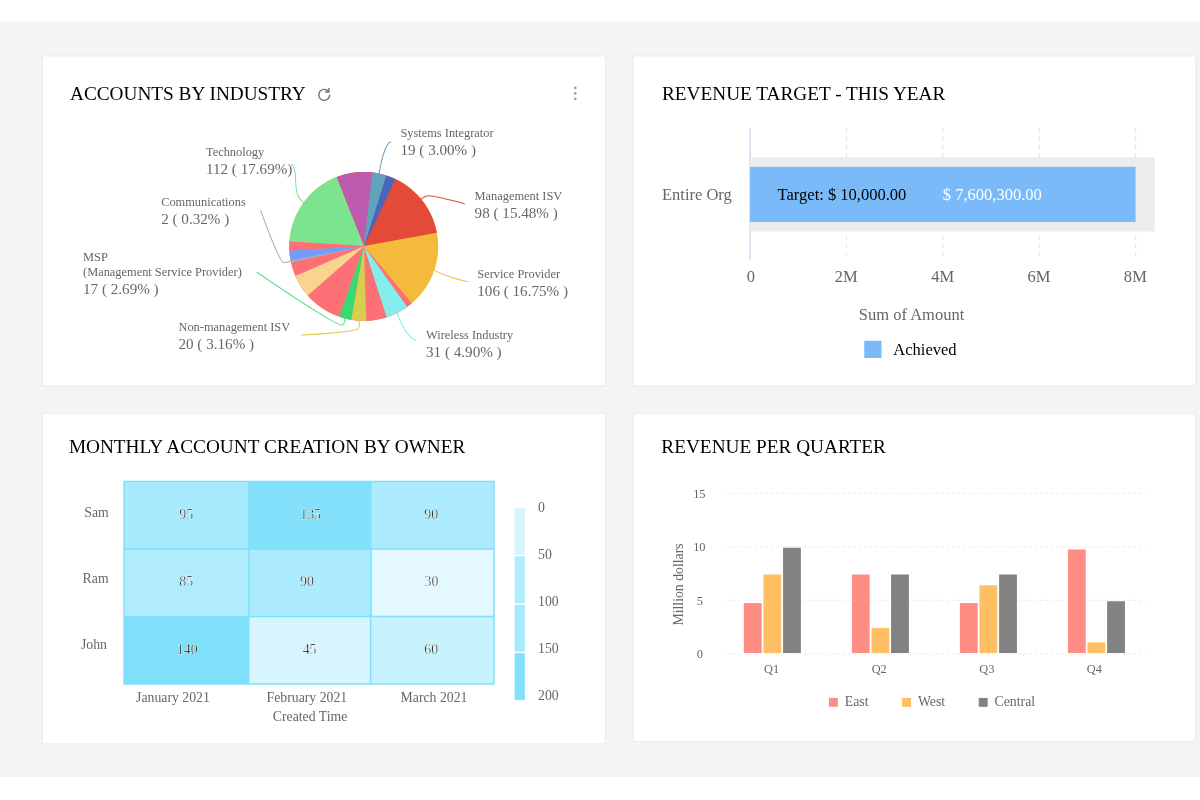
CRM hygiene is not optional for a professional salesperson. A CRM that contains incomplete, inaccurate, or outdated data produces unreliable forecasts, missed follow-ups, and gaps in customer history that create friction during renewals or expansions. The discipline of logging every interaction, updating pipeline stages in real time, and maintaining accurate contact records is what separates a salesperson who is accountable from one who is not.
AI-assisted sales tools in 2026 have become operational standards rather than competitive advantages. Conversation intelligence platforms analyze recorded calls and identify patterns, talk-to-listen ratios, specific phrases that correlate with deal advancement, and moments where prospects expressed hesitation that went unaddressed. A salesperson who reviews this data regularly and adjusts their approach based on it improves faster than one who relies solely on intuition.
AI tools also assist with prospecting, email personalization at scale, and predictive lead scoring. The salesperson's role is not to operate these tools blindly but to interpret their outputs and apply judgment. A lead scoring model may surface a prospect that data suggests is high-intent, but the salesperson's knowledge of that account's history or context may indicate otherwise. Technology augments judgment; it does not replace it.
A good salesperson is defined by a specific combination of technical skills, behavioral habits, and professional values. They listen more than they speak, and they ask questions designed to surface real problems rather than confirm assumptions. They know what they are selling in depth, including its limitations, and they use that knowledge to serve the prospect's genuine interests. They handle rejection as operational data, not personal failure, and they maintain pipeline discipline through structured daily habits.
They research before they engage, collaborate across internal teams, and use technology as a precision instrument rather than a substitute for critical thinking. They operate with transparency as a long-term commercial strategy, not a moral nicety. And they manage their own emotional state well enough to make clear decisions under pressure.
These are not personality traits that some people are born with, and others are not. They are professional skills. They are developed through deliberate practice, structured feedback, and the kind of honest self-assessment that high performers in any discipline apply to their craft.
Also read:
 Umema Arsiwala
 Ummulkiram Pardawala
 Shahba Mayyeri