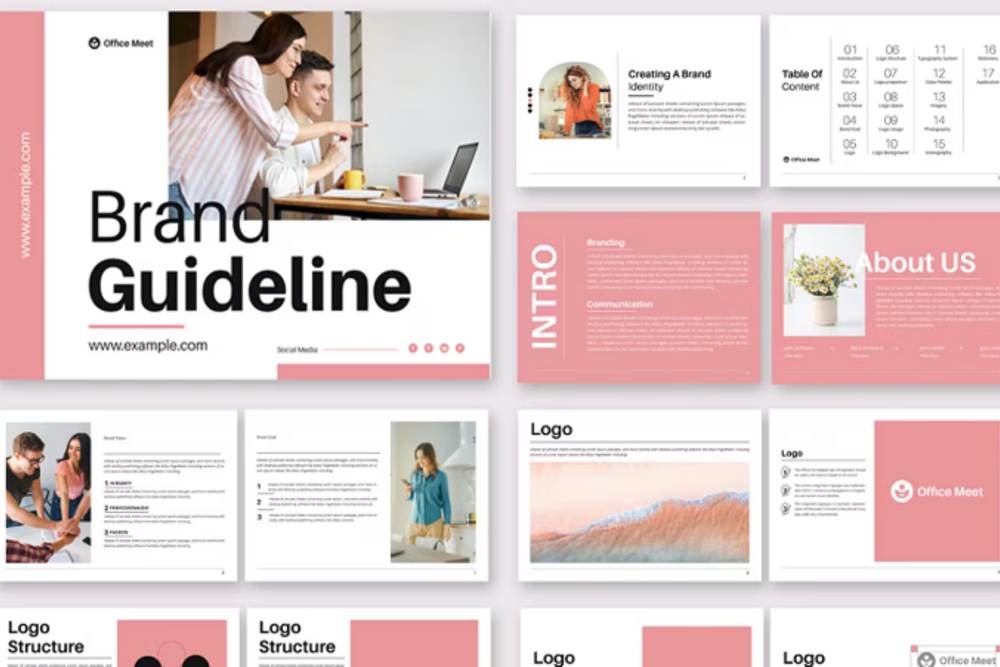
A brand book is a simple document that explains who your brand is and how it should appear anywhere it is seen. It is not limited to logos, fonts, or colours. Those are only the surface-level elements. The real purpose of a brand book is to make sure your brand feels the same every time someone interacts with it. And if you think about how many people represent your business—your team, a graphic designer, a social media agency, a salesperson—how likely is it that everyone naturally sees the brand the same way?
This is where a brand book becomes useful. It gives clarity. It answers the small but important questions people usually guess:
How should we speak to customers?
What tone feels natural for us?
Which design choices represent us well—and which ones feel “off”?
How do we keep the brand consistent across English and Arabic audiences?
These questions do not need to be highlighted separately; they are simply part of how a brand functions every day. When different people answer them differently, the brand slowly starts to look scattered. A post may feel friendly, a proposal may feel stiff, and your website might sound like it belongs to a completely different business. So the real issue is not creativity—it is consistency.
A brand book gently removes that confusion. It gives your team a shared understanding of your brand’s purpose, personality, voice, and visual style. It helps everyone know what fits your brand and what does not, without needing to ask for approval each time. And in a place like Dubai, where teams, vendors, and customers come from different backgrounds, having this clarity becomes even more important. It keeps your brand stable, even as your business grows or changes.
Think of it as a guide that helps your brand show up the same way everywhere, no matter who is handling the work. When this foundation is clear, everything—from marketing campaigns to WhatsApp responses—feels aligned.
In this article, we will look at why your business needs a brand book and what should go inside it, in a way that is practical, easy to use, and designed for real business needs.
Why It Matters for Businesses in Dubai

Dubai’s business environment is built on diversity. With over 200 nationalities living and working in the city (Dubai Statistics Center), customers come with different languages, expectations, and ways of interpreting communication. In such a setting, a brand can easily be understood in several different ways if the messaging and visuals are not consistent. This is one of the main reasons a brand book becomes important—it reduces room for interpretation.
Many businesses in Dubai rely on teams made up of people from different cultural and professional backgrounds. A social media manager might be from the Philippines, a designer from India, a salesperson from Egypt, and a website developer from Europe. Each person brings a different understanding of tone, colour preferences, visual cues, and communication styles. Without a unified reference, how does everyone know what “professional,” “friendly,” or “premium” should look or sound like for your specific brand?
This challenge becomes even more significant because Dubai is a bilingual market. English is widely used, but Arabic remains essential—especially in government-facing communication, public advertising, and any content targeting Emirati audiences. A brand book helps ensure that the identity stays consistent across both languages. It clarifies how tone should translate, how visuals should be adapted, and how layouts should work when right-to-left design is required.
Another practical reason a brand book matters in Dubai is the fast pace of business. Many companies work with multiple agencies—one for social media, another for performance marketing, a third for PR, and sometimes a fourth for design. Without clear brand guidelines, each vendor ends up creating its own version of the brand. Over time, this results in mixed messaging and inconsistent visuals, which can make the company appear unstructured or unclear.
Dubai’s competitive market also plays a role. Customers here are exposed to polished brands every day—from hospitality and real estate to retail and finance. When a brand is inconsistent, it stands out quickly—and not in a good way. A brand book gives businesses the clarity needed to maintain a reliable, stable identity, which helps build trust in a market where customers have many choices.
In simple terms, a brand book matters in Dubai because it makes communication clearer, reduces misunderstandings, and helps businesses present themselves confidently in a multicultural, bilingual, fast-moving environment.
What a Brand Book Helps You Fix

A brand book becomes most useful when you look at the everyday challenges businesses face—not the obvious ones, but the subtle issues that slowly weaken a brand without anyone noticing.
One of the most common problems is mixed messaging, especially when different teams describe the business in different ways. Research in consumer psychology shows that people form brand impressions quickly, often within seconds, and rely heavily on consistency to build trust. When your sales team emphasises one message, your website highlights another, and your social media communicates something else, the customer is left unsure about what your brand actually represents. This uncertainty affects decision-making, especially in service-driven markets like Dubai.
Another issue is visual inconsistency, which tends to happen gradually. A designer uses a slightly different shade of your brand colour, a printer adjusts the logo size based on their own judgement, and your social media agency introduces a new layout style that wasn’t used before. Individually, these changes feel small. But over months, they create an identity that looks fragmented. According to design usability studies, inconsistently presented brands are perceived as less reliable, even when the product or service remains strong.
Differences also appear in how teams communicate. In a city where companies often have employees from several countries, individual interpretations of tone—formal, casual, warm, technical—can vary widely. A brand book helps remove this guesswork by defining a shared communication style. This is not about restricting creativity; it is about making sure your brand sounds familiar no matter who is speaking on behalf of the business.
Another practical challenge is the role of vendors. Many companies in Dubai work with multiple external partners—agencies, freelance designers, photographers, marketing consultants, and event teams. Each partner brings their own understanding of branding, and without a clear guide, they naturally interpret your brand in their own way. Over time, this leads to a scattered presence across platforms. A structured brand book acts as a reference point, ensuring that external teams stay aligned without requiring constant corrections or approvals.
In simple terms, a brand book fixes the small inconsistencies that can easily go unnoticed but collectively impact how the public perceives your business. By creating one unified reference, it reduces confusion, speeds up decision-making, and helps your brand stay clear and coherent as it grows.
The Strategic Essentials to Define First
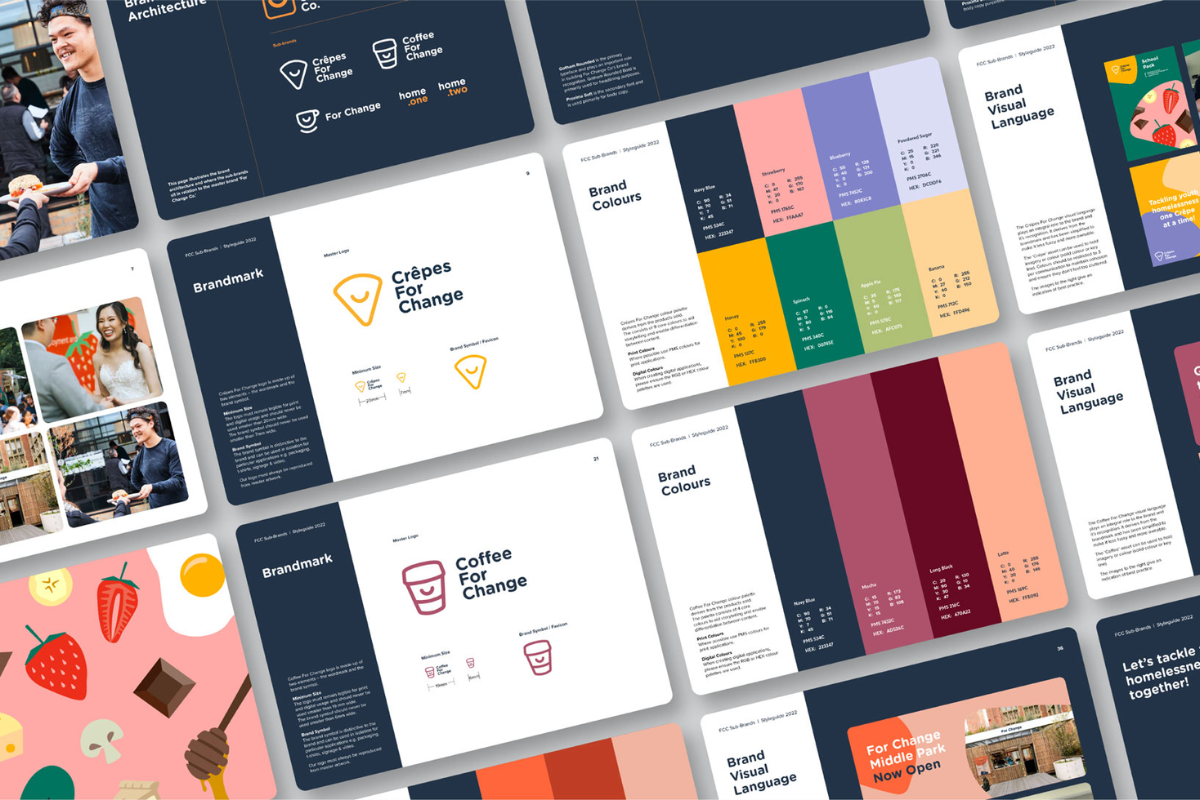
Before any visual or communication guidelines are created, a brand book needs a clear strategic foundation. These elements shape every decision that follows, and without them, a brand book becomes a collection of design rules instead of a meaningful tool. Each component contributes to how the brand positions itself in a competitive environment like Dubai, where clarity and differentiation matter.
A good starting point is defining the brand purpose. This is not a slogan or a marketing line; it is the reason the business exists beyond selling a product or service. Research on brand alignment shows that companies with a clearly articulated purpose make more effective decisions because teams understand what the brand is trying to achieve long-term. This clarity helps maintain consistency even when the business expands or introduces new offerings.
The next element is the value proposition, which explains what the brand offers that is genuinely useful or important to its audience. In markets with wide customer choice—like Dubai’s real estate, retail, or hospitality sectors—a value proposition helps simplify how the brand communicates what makes it relevant. It should be specific enough to guide messaging and broad enough to support future growth.
Understanding customer segments is also essential. Dubai’s market includes residents, tourists, corporates, families, and high-net-worth individuals, each with different expectations. A brand book should reflect who the brand is speaking to and how each segment perceives value. Research in marketing psychology shows that communication is more effective when audiences are clearly defined because teams know which needs, behaviours, and motivations to address.
Another important layer is the brand personality—the set of human traits that shape how the brand should behave and communicate. A brand with a calm, professional personality will write and present itself very differently from one that is energetic or playful. Defining these traits early helps teams align actions and content with the brand’s intended character, reducing inconsistency across platforms.
Finally, the brand book should outline key messages. These are concise statements that express what the brand consistently wants people to understand about it. Strong messaging frameworks help prevent scattered communication, especially when different teams or agencies are involved. They also ensure that campaigns, presentations, and customer interactions reinforce the same core ideas, regardless of the medium.
Your Brand’s Voice and Visual Identity
Once the strategic foundations are set, the next step is defining how the brand expresses itself, both in words and visuals. This section of the brand book is practical and helps teams apply the strategy in day-to-day communication without guessing or interpreting the brand differently.
The first element is the tone of voice, which guides how the brand sounds across all platforms. Tone is not about choosing a personality trait; it is about maintaining a level of clarity, emotion, and professionalism that matches the brand’s role in the market. Research in communication studies shows that tone influences how credible and trustworthy a business appears. A brand book usually outlines the tone in simple terms—for example, warm but direct, confident but not aggressive, or informative without being overly formal. This creates alignment across emails, social media content, internal messaging, and customer-facing communication.
Closely linked to tone is the writing style. This covers structural preferences such as sentence length, vocabulary choices, punctuation rules, and how information should be presented. Some brands prefer concise statements, others use descriptive language, and some rely on a more instructional style. A defined writing style ensures that whether a message is written by a marketer, a sales executive, or an external agency, the brand still “sounds” like one unified voice. This is especially important in Dubai, where teams often come from different linguistic backgrounds and may naturally write differently.
The brand book should then clarify the visual identity, which includes more than just logos and colours. It outlines how layouts should be structured, how imagery should feel, how spacing should be used, and how elements should come together to create a recognisable look. Research in visual psychology shows that consistency in shapes, spacing, and image treatment improves brand recall and helps audiences associate content with the brand more quickly. Clear visual rules also reduce back-and-forth with designers and ensure that materials produced in different contexts still look connected.
In Dubai, an additional consideration is bilingual design. Brands often need content in both English and Arabic, which means the visual system must work smoothly in left-to-right and right-to-left formats. This includes guidelines on typography pairings, alignment rules, spacing adjustments, and how layouts should adapt when switching languages. Because Arabic script has different proportions and flow, a brand book helps prevent designs from looking misaligned or unbalanced when translated. It also ensures that the identity stays consistent across both language audiences, which is essential in sectors like government services, real estate, hospitality, and retail.
A Quick Checklist: Do You Need a Brand Book?
Tick yes to any of the following:
Brand Consistency
- ☐ Your brand looks different across platforms (website, social media, brochures, packaging).
- ☐ Your logo appears in different colours, sizes, or placements depending on who designed it.
- ☐ Your visuals do not follow a uniform style (images, icons, layouts).
Messaging & Communication
- ☐ Different team members describe your business in different ways.
- ☐ Your tone varies—formal in emails, casual on social media, neutral in proposals.
- ☐ Customers sometimes say they are “unclear” about what your business offers.
Team & Workflow
- ☐ New hires take time to understand how the brand should look and sound.
- ☐ Your team frequently asks for clarity on how to write or design something.
- ☐ You spend time correcting or rejecting work because it “doesn’t match the brand.”
External Partners
☐ You work with agencies, freelancers, or vendors who interpret your brand differently.
- ☐ You often need to rebrief partners because the outputs do not align.
- ☐ Each marketing campaign feels like a fresh start instead of a continuation of the brand.
Market Requirements
- ☐ Your business communicates in both English and Arabic, and the two versions don’t feel aligned.
- ☐ You plan to scale, open new branches, or enter new markets and need structured guidelines.
- ☐ You operate in a competitive sector in Dubai where clarity and trust matter (real estate, hospitality, F&B, retail).
Brand Protection
- ☐ You want to protect your logo, name, and assets legally through trademarks.
- ☐ You worry about vendors or partners misusing your brand elements.
- ☐ You have multiple versions of brand files circulating internally.
If you selected even 3–4 items:
Your brand will benefit significantly from a structured brand book.
If you selected 5 or more:
A brand book is now essential for consistency, growth, and clarity.
A brand book gives your business a steady foundation. It keeps your identity consistent, your communication clear, and your team aligned as you grow. In a diverse market like Dubai, this structure helps prevent mixed messaging and ensures your brand feels reliable across every touchpoint. If you’ve faced any of the challenges in this article, a brand book is a simple, practical step toward a more cohesive and confident brand.
Also read:
 Ummulkiram Pardawala
 Shahba Mayyeri
 Umema Arsiwala