In 2026, we have reached a strange, digital paradox. We are surrounded by "perfect" content—flawlessly edited videos, grammatically pristine articles, and hyper-realistic images—yet we have never been more bored.
The internet has become a victim of its own efficiency. When everyone uses the same "optimal" tools to achieve the same "optimal" results, the result is a sterile landscape. In this world, nothing stands out because everything is trying too hard to be correct. We are drowning in a sea of high-definition noise, and the only thing we are truly hungry for is something that feels real.
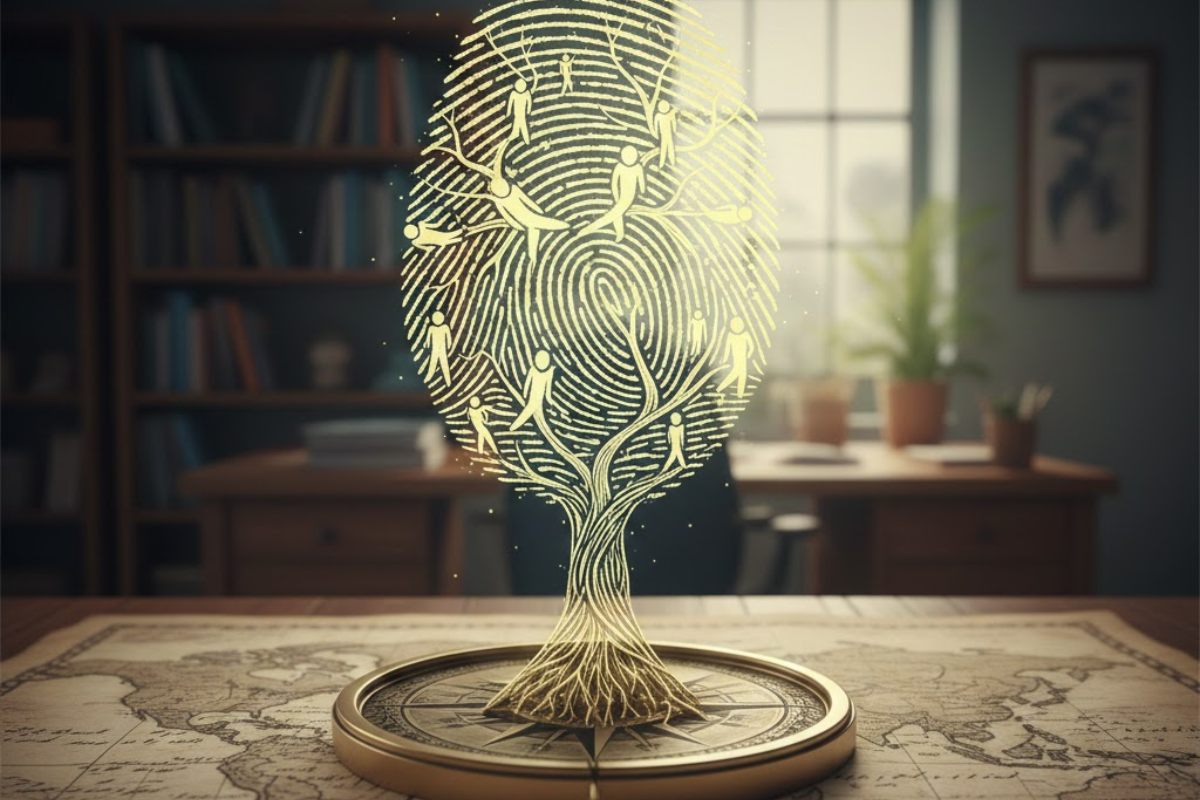
To survive this era, you don’t need more tools; you need to find your Human Signature. Here is why the old rules of "good content" have died, and what is rising to take their place.
The AI Equilibrium: Why "Perfect" is the New Boring
In the pre-AI era, "good" content was a competitive advantage. It required a specific blend of talent, time, and technical skill. Today, that barrier has vanished. AI tools have democratized high-quality production, creating what we now call the AI Equilibrium—a state where the baseline for content is so high that "good" is no longer enough to get noticed.
- The Content Inflation: When anyone can generate a 4K cinematic trailer or a deeply researched white paper in seconds, the market value of that output drops toward zero. If it's easy to make, it’s easy to ignore.
- The Perfection Paradox: Human brains are biologically wired to notice anomalies. AI-generated content is often too smooth, too symmetrical, and too logical. Because it lacks the "happy accidents" of human error, our brains categorize it as background noise.
- The Engagement Trap: We are seeing a massive plunge in traditional search traffic because AI now answers questions directly. If your content only provides "good" information, it’s being intercepted and summarized by an interface before a human ever sees your name.
The Death of the "Expert": Knowledge as a Commodity
For decades, being an "expert" meant having access to and the ability to explain complex information. In 2026, factual knowledge has become a utility—like electricity or water. It’s always there, it’s cheap, and it’s instant.
- The Rise of Delegated Judgment: We have moved from a culture of "searching" to a culture of "delegating." Buyers no longer want to read your 20-page guide; they want an AI agent to summarize the truth for them.
- The Authority Crisis: If a bot can explain the nuances of Dubai's real estate laws or the physics of a camera lens as well as you can, your "knowledge" is no longer your product.
- The Shift to Earned Judgment: True authority in 2026 isn't about knowing facts; it's about interpreting them through the lens of lived experience. People don't follow experts for the "what" anymore; they follow them for the "so what?"
The Sea of Sameness: The "Pinterest-ification" of Reality
Walk into a new café in Dubai, London, or Tokyo, and you’ll likely see the same pampas grass, the same neon sign, and the same minimalist-industrial aesthetic. This is the Sea of Sameness—a global visual monoculture driven by algorithms that reward "safe" beauty.
- Algorithmic Fatigue: 2026 is the year of "algorithmic burnout." Users are physically exhausted by personalized feeds that keep showing them subtle variations of the same thing.
- The Aesthetic Echo Chamber: Creators are trapped in a loop—they see what works for others, use AI to replicate it, and the algorithm reinforces the repetition. This has led to the rise of "Notes App Chic" and "Imperfect by Design" as the only ways to signal a human is behind the screen.
- The Scarcity of Soul: As perfection becomes automated, imperfection becomes the luxury. The "human-made" label is no longer just for sourdough bread; it is becoming the most sought-after tag in the digital world.
The Strategic Framework (The Execution)
The most successful creators in 2026 operate like high-trust consultants rather than low-value broadcasters. They use a structured approach to ensure they are visible enough to be found, but human enough to be followed.
The 70/20/10 Content Rule for Longevity
This is your "content diet." It balances the need for searchability with the necessity of a unique human voice.
- 70% Substance (The Utility): This is high-value, search-first content. It answers the specific "how-to" questions your audience is asking. While AI can answer these too, your advantage is providing the verified path. Use this to build your base, ensuring you are the reliable resource people find when they have a problem to solve.
- 20% Signature (The Stance): These are your deep opinion pieces. This is where you take a stand, challenge industry norms, and show your "Why." AI is neutral; you are not. This 20% is what converts a passive reader into a loyal fan because they finally know what you believe in.
- 10% Raw (The Reality): This is the pure, unedited "behind-the-curtain" footage. No ring lights, no scripts, no AI filters. It might be a voice note about a bad day or a grainy photo of a messy prototype. This 10% serves as your "Proof of Humanity," a signal that there is a real person behind the brand.
Building a "Personal Protocol": The Sovereign Creator
In 2026, relying solely on a social media platform is a survival risk. You must move from being a "user" of an app to a "sovereign" entity that owns its own infrastructure.
- Rented vs. Owned Land: Platforms like TikTok and Instagram are rented land. You do not own your followers; the algorithm does. A sovereign creator uses these platforms as "top-of-funnel" billboards to drive people toward assets they control entirely, like a self-hosted website or a newsletter.
- The "Small Circle" Theory: Instead of chasing millions of followers, focus on a "Small Circle" of high-intent advocates. In an age of digital noise, a private Discord, a paid community, or a high-touch email list is worth more than a million casual scrollers. These are the people who will buy your products and defend your brand.
- Portability of Trust: When you own your audience data and your community spaces, your brand becomes portable. If a platform disappears tomorrow, your business doesn’t. You simply send one email, and your "Small Circle" follows you to the next destination.
The Anti-Algorithm Pivot: Breaking the Pattern
Most creators are trapped in a loop of trying to please the algorithm by being predictable. To find a "high-intent tribe," you must occasionally, and intentionally, break that pattern.
- The Unexpected Insight: Algorithms reward what is "likely" to be clicked. You find your true audience by posting the "unlikely"—the niche, the complex, or the counter-intuitive. This acts as a filter, repelling the casual viewers and attracting the people who are actually looking for depth.
- Intentional Friction: Everything in 2026 is designed to be "frictionless" and "easy." Introduce a little friction. Ask your audience to read a long-form piece, join a waitlist, or answer a difficult question. This friction creates a "high-intent" community because only the most dedicated people will cross the threshold.
- The Discovery Mindset: Instead of following every trending audio or "viral" format, create content that rewards curiosity. When you stop trying to be "viral" and start trying to be "un-ignorable" to a specific group, the algorithm eventually catches up and begins serving you to exactly the right people.
The Economic Reality
The final stage of the Human Signature strategy is the shift from vanity metrics to sustainable profit. In an automated world, "Trust" is the only currency that does not depreciate.
From CPM to CPT: The New Metric of Value
For years, the industry lived by CPM (Cost Per Mille)—paying for every thousand eyeballs. But in 2026, eyeballs are cheap and easily faked by bots. The new gold standard is CPT (Cost Per Trust).
- The Margin of Truth: Brands are moving their budgets away from "Mega-Influencers" with millions of passive followers and toward "Signature Creators" with deep, loyal tribes.
- The Trust Premium: When a creator has a strong Human Signature, they aren't selling an "ad spot"; they are selling their endorsement. This allows you to charge 5x to 10x more than the market rate for a typical "sponsored post" because your audience actually listens when you speak.
- The Loyalty Dividend: Trust creates a shorter sales cycle. Because your audience already believes in your judgment, they don't need a 30-day marketing funnel to buy a product you recommend. They buy because you vouched for it.
The Rise of the 360-Degree Enterprise
The most successful creators in 2026 don't just "post"; they build ecosystems. They have transformed from media lines on a spreadsheet into strategic partners and co-founders.
- Owned Intellectual Property (IP): Instead of just promoting other brands, creators are launching their own. Nearly 45% of full-time creators now own their own product lines—from physical goods to "Sovereign" digital memberships.
- Recurring Revenue over One-Off Deals: The "Human Signature" allows you to move away from the stress of the next brand deal and toward recurring income. This includes paid newsletters (like Substack), gated communities, and subscription-based "Masterminds."
- Hybrid Monetization: A healthy 2026 creator business has at least four revenue streams:
- Active: High-ticket consulting or speaking.
- Passive: Digital products and courses.
- Affiliate: High-trust recommendations.
- Equity: Long-term stakes in companies they help build.
Future-Proofing: Your Asset Against GPT-X
As AI models continue to evolve, they will become better at "simulating" expertise. However, they cannot simulate a history of being right.
- The Integrity Moat: Your greatest economic asset is a decade-long trail of honest takes, failed experiments, and ethical stands. This is a "moat" that no competitor can cross with a better prompt.
- The Boutique Advantage: While AI can scale "mundane" content to billions, it cannot scale intimacy. The future belongs to "Boutique Creators"—those who stay small enough to remain human, but deep enough to be indispensable.
We are entering an age where "content" is no longer the product—connection is. The era of the polished, faceless expert is over, replaced by the era of the imperfect, high-conviction human.
The challenge for you in 2026 is simple: Stop trying to be the most efficient creator in the room, and start trying to be the most human. Your stutter, your specific "weird" obsessions, and your hard-earned failures are not bugs in your marketing strategy; they are the most valuable features you own.
Double down on your Human Signature. It is the only thing the machines cannot take from you.
Also read:
 Ummulkiram Pardawala
 Shahba Mayyeri
 Umema Arsiwala