Dubai International Financial Centre (DIFC) has launched the fourth and final report in its 2026 Future of Finance series, titled "Beyond finance: The strategic business hubs of tomorrow".
Drawing on a high-level roundtable and interviews with more than 20 global business leaders, the report examines how companies and investors are rethinking where they base people, capital and long-term operations. It sets out five mutually reinforcing pillars of urban competitiveness: ease of business, physical and digital infrastructure, financial depth, human capital, and reputation and governance. Austin, Busan, Shenzhen, Bengaluru and Luxembourg are profiled to illustrate them.
The report positions Dubai as a model of multi-pillar competitiveness, in line with the Dubai Economic Agenda (D33), which aims to double the emirate's economy and place Dubai among the top four global financial centres. It points to three shifts strengthening Dubai's appeal: a growing pool of highly skilled talent, institutional credibility and a rising concentration of technology-enabled businesses.
Dubai issued more than 1 million new residence permits in the first half of 2026. The UAE ranks 36th out of 143 countries and first in the region in the World Justice Project Rule of Law Index. Enterprise AI adoption rose from 33 percent in 2024 to more than 50 percent in 2026.
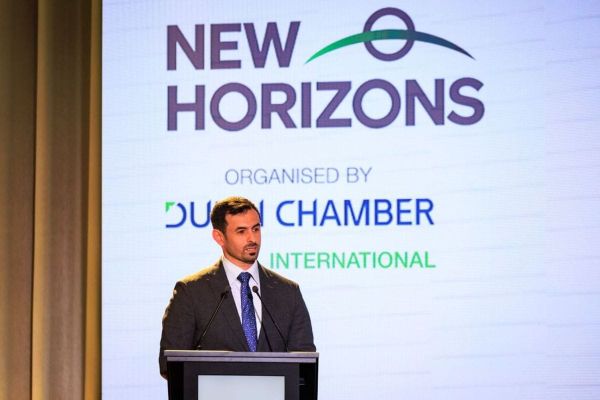
Arif Amiri, Chief Executive Officer at DIFC Authority, said companies are increasingly choosing a base on fundamentals such as a trusted legal and regulatory framework, quality infrastructure, and access to capital and talent.
DIFC's active registered corporate base surpassed 10,000 firms in 2026, up 30 percent year-on-year.
News Source: WAM