In Dubai, the phrase "Send me the location on WhatsApp" is more than just a direction—it's the cornerstone of how business is conducted. The UAE remains one of the world's most "WhatsApp-First" economies, where deals rarely close on the first call and initial interactions often involve warm greetings, small talk over Arabic coffee, and building personal rapport before any business discussion begins.
For SMEs operating in this vibrant, multicultural market, there's a frustrating gap between having a "high volume of chats" and a "high volume of sales." If your sales team spends hours answering "How much?" or "Where are you located?" without seeing a corresponding spike in your bank account, you're caught in what we call the "Chat Trap."
This guide outlines practical strategies to transition from conversational support to conversational commerce, balancing cultural sensitivity with structured sales processes that convert more leads efficiently.
Understanding the UAE Sales Environment
The UAE's business landscape—particularly Dubai—operates on relationship-driven sales rather than aggressive pitches. With over 90% expatriates, high expectations for trust, and deep cultural traditions around hospitality and hierarchy, high-pressure tactics consistently backfire. Patience, respect, and value delivery win.
However, this doesn't mean accepting indefinite "chatting" without progression. The challenge is to honor the cultural necessity of rapport-building while strategically transitioning toward clear next steps and eventual closes.
The Anatomy of the "Chat Trap"
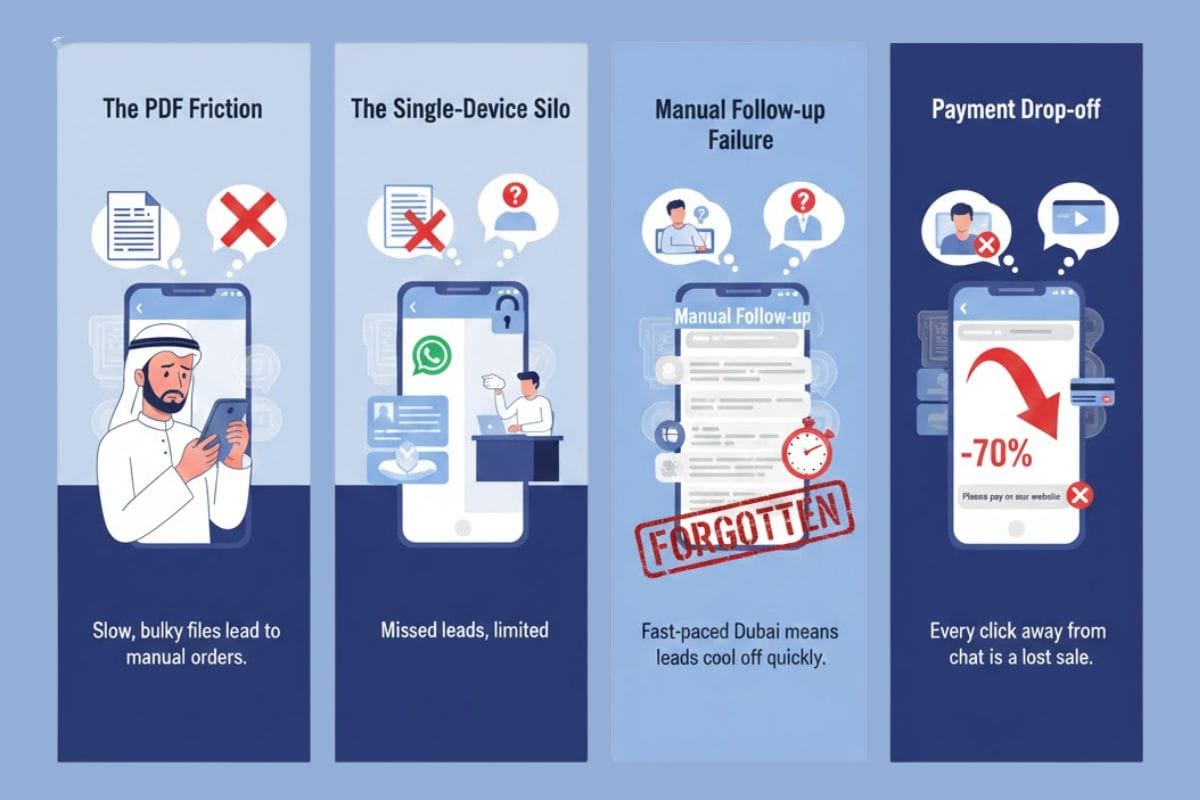
Before implementing solutions, understand why many UAE conversations stall:
The PDF friction: Sending a 20MB price list that customers must download, zoom in on, and manually type back their order creates unnecessary barriers.
The single-device silo: When one salesperson holds the "company phone" while three other leads go unanswered because that person is at lunch, opportunities evaporate.
Manual follow-up failure: In Dubai's fast-paced environment, leads cool off in approximately 15 minutes. Once inquiries scroll down the chat list, they're often forgotten entirely.
Payment drop-off: Directing customers to "go to our website" or "transfer to this IBAN" creates a 70% drop-off rate. Every click away from the chat is a potential lost sale.
These friction points transform what should be straightforward transactions into abandoned conversations.
Step 1: Build Genuine Rapport Without Rushing
The foundation of UAE business relationships is trust, and trust requires time. Begin every interaction with cultural sensitivity:
Formal greetings matter: Use appropriate titles (Sheikh, Dr., Mr./Ms.) and exchange business cards with your right hand—a small gesture that demonstrates cultural awareness.
Engage in personal conversation: Before diving into business, spend time on light topics: family, travel experiences, thoughts about Dubai. This isn't wasted time—it's essential relationship infrastructure.
Honor hospitality customs: Accept offers of Arabic coffee (gahwa), tea, or dates, and reciprocate when appropriate. These rituals create connection.
Prioritize face-to-face meetings: Schedule initial meetings in person or via video when possible. Face-to-face interaction builds trust exponentially faster than email alone. Aim for approximately 20-30% of early interaction focused purely on relationship-building.
The key is balancing patience with subtle progression. While you shouldn't rush to pitch, you should be strategically moving toward qualification.
Step 2: Qualify Leads Early Through Consultative Questions
Once initial rapport is established, transition smoothly into needs discovery using open-ended questions:
"What challenges are you currently facing with [specific pain point] in the Dubai market?"
"How are you currently handling [process/service] for your business?"
"What would an ideal solution look like for your team?"
Apply the 80/20 rule: talk less, listen more. Active listening not only uncovers genuine needs but demonstrates respect—a highly valued trait in UAE business culture.
Identify the true decision-maker: Hierarchy is deeply respected in the UAE. Confirm early who holds purchasing authority to avoid investing time with someone who must escalate every decision. Ask tactfully: "Who else should be involved in evaluating this solution?"
Use this discovery phase to tailor your offering specifically. UAE buyers—both local and expatriate—particularly value solutions that demonstrate sustainability, efficiency gains, or alignment with Islamic business principles where relevant.
Step 3: Demonstrate Clear Value with Local Proof
Generic pitches fail in the UAE market. Instead, present customized proposals that highlight:
ROI with local context: Use Dubai-specific examples, such as free zone advantages, logistics hub benefits, or VAT-compliant processes.
Social proof from similar clients: Share case studies or testimonials from comparable UAE businesses. If you helped a company in Dubai Marina, mention that when speaking with prospects in the same area.
Tangible demonstrations: Offer data, live demos, or pilot programs rather than theoretical capabilities. UAE decision-makers value proof of concept.
Cultural alignment: Reference how your solution respects local business practices, prayer times, or seasonal considerations like Ramadan.
The more your proposal feels specifically designed for their UAE context, the more credible and compelling it becomes.
Step 4: Master Follow-Up with WhatsApp Business
In the UAE, WhatsApp isn't just a communication channel—it's the primary business infrastructure. With 85-97% penetration, 98% open rates, and 45-60% click-through rates, WhatsApp dramatically outperforms email for business communication.
Upgrading from App to API
For any SME with more than two employees, migrating from the free WhatsApp Business App to the WhatsApp Business API (WABA) is essential:
Multi-agent access: Your sales team in Deira and accounts team in JLT can simultaneously access the same customer thread, eliminating the single-device bottleneck.
Verified badge: The green or blue verification badge instantly increases conversion rates by approximately 27% in the UAE market, where consumers are wary of scammers.
WhatsApp Flows: This feature allows you to build interactive forms inside the chat—customers can book appointments, customize orders, or provide details without leaving the conversation.
The 5-Minute Rule
In Dubai's "now" culture, the first business to respond usually wins the contract. Use API-driven auto-replies that don't just say "We'll get back to you," but instead offer an immediate interactive menu that qualifies the lead (budget, location, timeline) while they're still in the buying mood.
Catalog Over Text
Stop describing products in lengthy messages. Use the WhatsApp Catalog feature to showcase offerings visually. Ensure your catalog is bilingual—even if your primary audience speaks English, having Arabic descriptions demonstrates "local permanence" that builds deep trust.
When customers ask about specific items, send products directly from your catalog. They can add items to cart inside WhatsApp without navigating to external sites.
Strategic Follow-Up Timing
Follow up persistently but respectfully—every 3-7 days initially. Share quotes, catalogs, videos, or quick voice notes via WhatsApp. Automate polite reminders for abandoned inquiries while keeping messages personalized.
Voice notes build authority: In the UAE, a 20-second professional voice note from a consultant or manager often builds more rapport than a five-paragraph email. It proves there's a real human behind the service—critical for high-ticket sales.
Step 5: Integrate CRM for Systematic Tracking
You cannot close what you do not track. Integrating WhatsApp with a CRM system (Zoho, HubSpot, Clientify) separates successful closers from perpetual chatters.
Lead context: Instead of "Who is this person again?" you see "This is Omar, he bought furniture in 2024 and prefers Saturday delivery."
Automated follow-ups: Receive nudges if a quote isn't opened within four hours rather than relying on individual memory.
Data ownership: When agents leave, conversations remain company assets rather than disappearing with the employee.
Bilingual support: AI-powered real-time Arabic/English sentiment analysis helps your team respond appropriately across language preferences.
This systematic approach transforms casual conversations into trackable sales pipelines.
Step 6: Remove Payment Friction
The final conversion barrier is often the payment itself. By 2026, Dubai's fintech integration enables in-chat one-tap checkout through WhatsApp API.
Integration with local gateways: Connect to Stripe UAE, Noon Payments, or PayTabs for seamless transactions.
Frictionless workflow: Customer confirms order in chat → Agent generates payment link → Customer pays via Apple Pay or Samsung Pay without closing their keyboard → VAT-compliant invoice automatically sends as PDF.
This removes the 70% drop-off that occurs when redirecting customers to external payment portals.
Step 7: Handle Objections with Cultural Intelligence
Objections in the UAE often arrive indirectly: "We need to think about it" or "Inshallah" (God willing). Rather than accepting these as dead ends, probe gently:
"Is there a specific concern around cost, implementation timeline, or technical requirements?"
"What additional information would help you move forward?"
Offer compromises or alternatives without confrontation. Avoid arguing—reframe discussions as collaborative problem-solving. This approach respects the indirect communication style common in the region while still advancing the conversation.
Step 8: Create Gentle Urgency and Propose Next Steps
Introduce soft urgency through limited-time incentives, market trends (seasonal demand spikes), or upcoming relevant events—but never apply pressure. Phrases like "Limited Q1 slots available" work better than aggressive deadlines.
Always end with clear next actions: "Shall we schedule a product demo next Tuesday?" or "I'll send the contract via WhatsApp for your review tomorrow morning."
This specificity prevents conversations from drifting into indefinite "We'll get back to you" territory.
Step 9: Ask for the Close Confidently
When the moment arrives, use assumptive or trial closes:
"When would you like delivery to start—this week or next?"
"Does this solution address your key operational needs?"
Once agreement is reached, formalize quickly with contracts. Small gifts upon closing—high-quality dates, chocolates, or modest corporate items—strengthen relationships and demonstrate appreciation in culturally appropriate ways.
UAE-Specific Cultural Considerations
Respect religious practices: Be mindful of prayer times, Friday prayers, and the Saturday-Sunday weekend schedule.
Learn basic Arabic phrases: Simple expressions like "Shukran" (thank you) or "Inshallah" (God willing) show respect, particularly with Emirati clients.
Exercise patience: New business relationships may take weeks to months, sometimes 18+ months for complex B2B deals. This is normal and expected.
Leverage local events: Dubai's extensive expo calendar and networking events provide valuable opportunities for in-person relationship progression.
Train for cross-cultural communication: Ensure your team understands the diverse buyer profiles across GCC nationals, Indian, European, and Asian expatriate communities.
Legal and Compliance Considerations
TDRA VoIP restrictions: Voice and video calling via WhatsApp remains restricted. Base your strategy on messaging, voice notes, and file sharing rather than calls.
PDPL data privacy: You must have opt-in consent. Never "cold WhatsApp" leads from scraped lists—it's the fastest route to getting your business number banned and reported to authorities.
Respect opt-outs: Always include a way for customers to stop receiving messages. In the UAE, spam damages brand authority instantly and irreparably.
In 2026, your WhatsApp account functions as your digital storefront. If you allow it to remain merely a help desk, you're leaving significant revenue on the table.
Converting chats to contracts in the UAE requires balancing cultural respect with structured sales processes. By building genuine rapport, qualifying consultatively, demonstrating localized value, mastering WhatsApp Business tools, integrating systematic CRM tracking, removing payment friction, and honoring cultural communication norms, your organization can transform casual "How much?" inquiries into confirmed "Order Received" transactions.
The UAE market rewards those who understand that relationships precede transactions—but also that relationships without progression waste everyone's time. Master this balance, and your chat volume will finally translate into the sales growth your business deserves.
Also Read:
 Ummulkiram Pardawala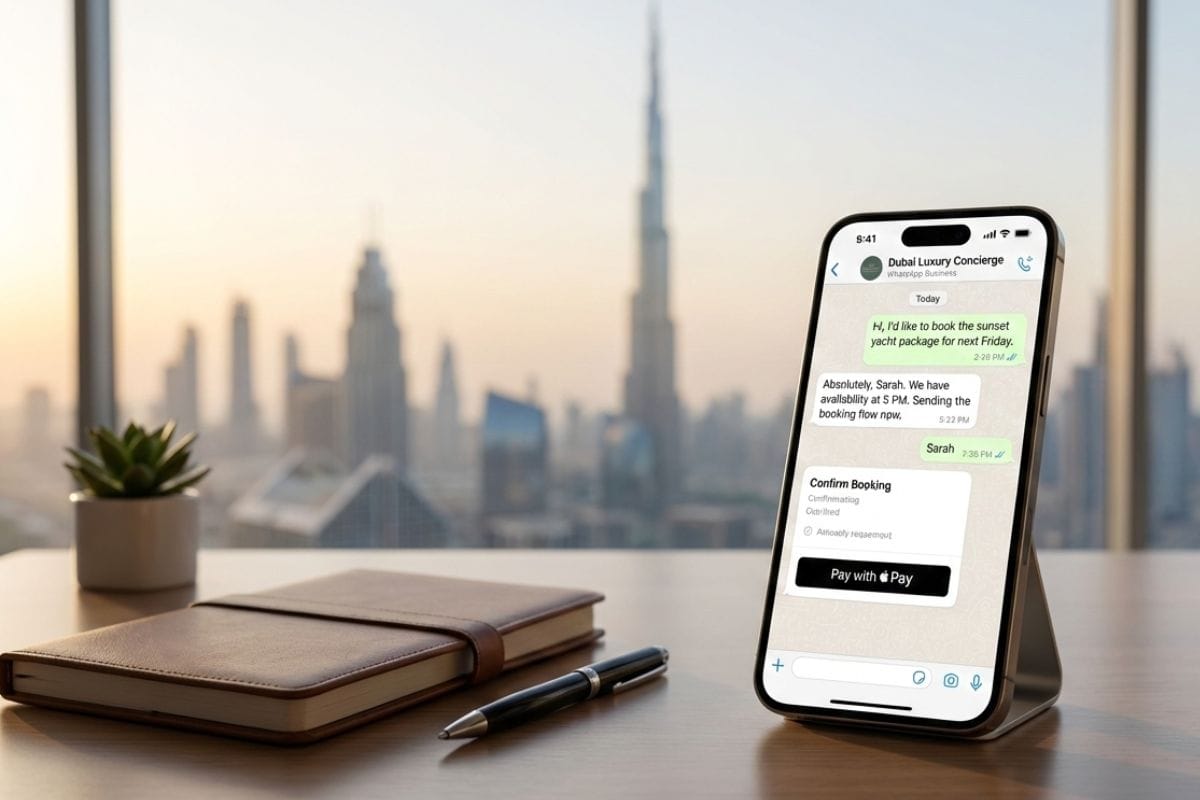
 Shahba Mayyeri
 Ummulkiram Pardawala
 Umema Arsiwala