
Pricing services in Dubai's 2026 market requires more than simple cost calculations. The Emirate's unique business environment, characterized by high operational costs, diverse client expectations, new tax regulations, and intense competition, demands a strategic approach that balances profitability with market positioning.
This guide provides practical frameworks for service-based businesses to establish sustainable pricing structures.
Understanding Your Cost Baseline
Before setting client-facing prices, you must accurately calculate the minimum revenue required to maintain operations. Dubai's high-cost environment means many entrepreneurs underestimate their true operational expenses.
Fixed Operational Costs
Licensing costs: Mainland companies registered with the Department of Economy and Tourism typically incur AED 10,000–25,000 annually for trade licenses, plus mandatory physical office space. Free Zone companies have lower initial costs (AED 5,500–50,000+ depending on the zone) but face restrictions on direct mainland trading.
Office space: Mainland businesses need at least 200 square feet of dedicated space, costing AED 15,000 to over AED 100,000 annually depending on location. Premium areas like DIFC or Business Bay command significantly higher rents that must be factored into pricing.
Visa costs: Each employee visa costs approximately AED 3,000–6,000 annually. For service businesses that scale through people, these per-head costs directly impact minimum billable rates.
Tax Obligations
Corporate Tax: Businesses with taxable profits exceeding AED 375,000 pay 9% corporate tax. If you previously targeted 20% net margins, you now need approximately 29% gross margins to achieve the same post-tax profit.
Value Added Tax (VAT): Once your annual taxable turnover exceeds AED 375,000, you must charge 5% VAT. For B2B services, quote VAT-exclusive prices for clarity about actual revenue. For B2C services, final prices must be VAT-inclusive, requiring careful margin calculations.
Labor Costs and Billing Multiples
For service businesses, labor represents the largest cost component. A standard benchmark in Dubai professional services is applying a 2.5× to 3.5× multiplier to base salaries, covering office space, equipment, insurance, visa costs, non-billable time, and profit margin.
Example: A marketing manager earning AED 25,000 monthly (AED 300,000 annually) working 1,760 billable hours per year costs AED 170/hour. Applying a 3× multiplier yields a billing rate of AED 510/hour.
Selecting Your Pricing Model
Dubai clients have diverse expectations around pricing structures. Choosing the right model for your service type significantly impacts both sales success and operational sustainability.
Fixed-Fee Project Pricing
This model works well for clearly defined deliverables: website development, logo design, or specific consulting projects.
Critical requirement: Detailed Scope of Work documents with explicit limits on revisions. Scope creep is common in Dubai's business culture. Without clear boundaries, fixed-fee projects become unprofitable.
Pricing examples:
- Website development (basic): AED 10,000–25,000
- Market entry strategy: AED 25,000–50,000
- Brand identity package: AED 15,000–40,000
Monthly Retainer Model
Retainers provide predictable recurring revenue while offering clients priority access and ongoing support. This model suits social media management, SEO, legal advisory, accounting, and consulting.
Dubai market rates (2026):
- Basic retainer (startups): AED 7,500–15,000 monthly
- Growth retainer (established SMEs): AED 18,000–33,000 monthly
- Enterprise retainer (multinationals): AED 37,000–70,000+ monthly
Structure considerations: Clearly define what's included in the base retainer versus what triggers additional fees. Specify response times and deliverables covered.
Value-Based Pricing
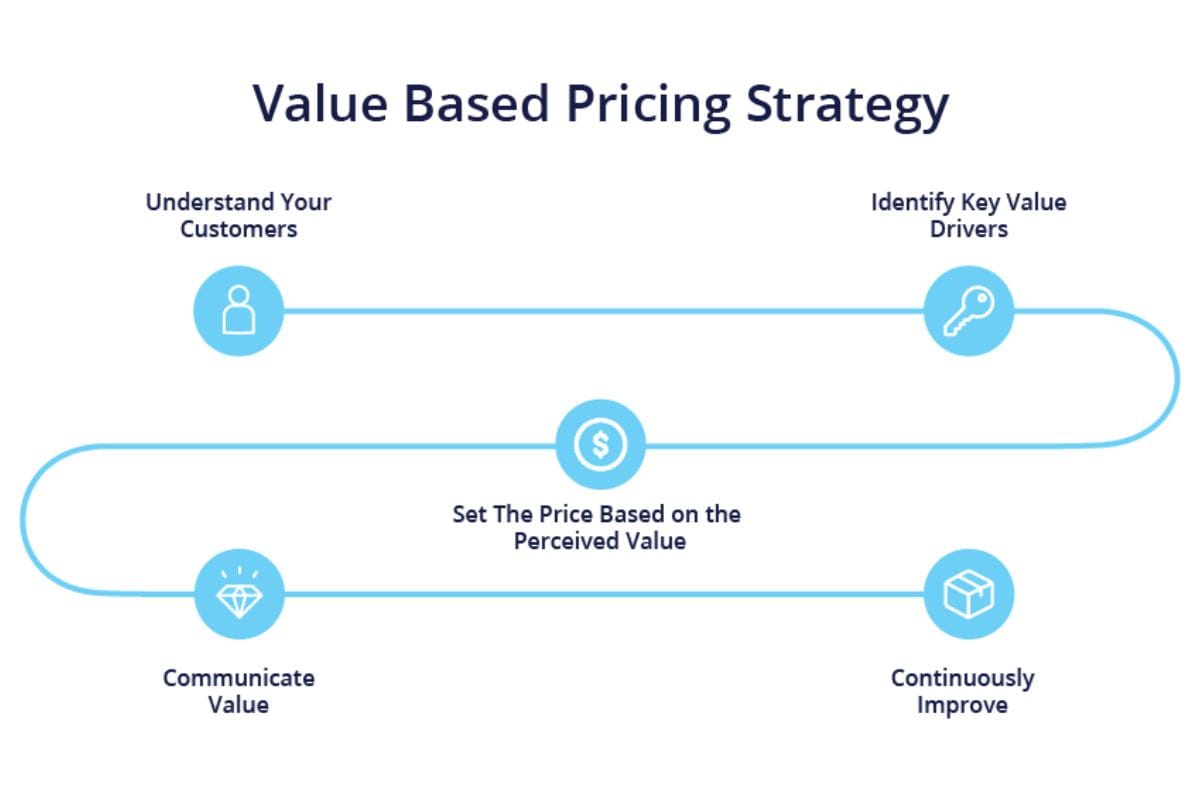
The most sophisticated approach decouples fees from time spent, linking them to economic value delivered.
When it works: Consulting that generates measurable cost savings, marketing producing quantifiable revenue increases, or strategic advice enabling major business decisions.
Pricing logic: If your consulting saves a client AED 500,000 in operational inefficiencies, charging AED 75,000 (15% of savings) is justifiable regardless of hours invested.
Implementation: This requires documenting baseline metrics, agreeing on measurement methodology, and building trust through case studies demonstrating similar outcomes.
Hourly Billing
While declining in popularity, hourly billing remains common in legal services and specialized technical support.
Dubai benchmarks (2026):
- Junior specialist: AED 500–1,500/hour
- Senior consultant: AED 1,500–3,000/hour
- Partner/director level: AED 3,500–5,000+/hour
Challenge: With AI and automation increasing productivity, purely time-based pricing becomes increasingly difficult to justify.
Creating Tiered Service Packages
Dubai's market spans bootstrapped startups to multinational corporations. Offering tiered packages allows you to serve multiple segments without diluting your brand.
Essential Tier: Targets startups with standardized services and minimal customization. Pricing: AED 5,000–15,000 for projects, AED 3,000–8,000 monthly retainers.
Growth Tier: Serves established SMEs requiring customized strategies and dedicated account management. Pricing: AED 15,000–50,000 for projects, AED 18,000–33,000 monthly retainers.
Premium Tier: Designed for multinationals expecting white-glove service and C-suite level consulting. Pricing: AED 50,000+ for projects, AED 37,000+ monthly retainers.
Accounting for Dubai-Specific Factors
Several unique aspects of Dubai's business environment should influence pricing decisions.
Extended Payment Cycles
Despite government initiatives, many sectors operate on 45-90 day payment terms, with actual payment often arriving 15-20 days beyond agreed terms.
Pricing strategy: Consider offering 3-5% discounts for upfront payment, or build a "financing premium" into standard pricing. Alternatively, require 30-50% deposits for projects or advance payment for monthly retainers.
Relationship-Building Time Investment
Dubai's business culture prioritizes personal relationships and face-to-face interactions. Initial meetings often involve extended pleasantries before business discussions.
Pricing consideration: Factor in travel time, parking costs (AED 20-40 per meeting), and opportunity cost of non-billable relationship development. This essential time must be covered by your overall pricing structure.
Cultural Negotiation Expectations
Negotiation is deeply embedded in Middle Eastern business culture. Many clients derive satisfaction from securing better terms than initially offered.
Strategic approach: Build a 10-15% negotiation buffer into initial proposals. This allows you to offer concessions—price reductions, additional services, or extended payment terms—that facilitate agreement while maintaining acceptable margins.
Language and Localization
For technology services and content creation, supporting both English and Arabic adds complexity. Bilingual app development requires UI/UX adjustments for Right-to-Left layouts and may increase development costs by 20-30%.
Market Positioning and Competitive Benchmarking
Understanding where your pricing sits within the competitive landscape helps avoid underpricing that signals low quality or overpricing that eliminates you from consideration.
The Danger of Underpricing
In a premium market where clients often equate price with quality, unusually low pricing frequently backfires. A marketing retainer priced at AED 3,000 monthly, when competitors charge AED 12,000-18,000, doesn't signal a good deal; it raises questions about experience and service quality.
Sector-Specific Benchmarks
Digital marketing agencies:
- Basic social media management: AED 7,500–15,000 monthly
- Comprehensive growth marketing: AED 18,000–33,000 monthly
- Enterprise multi-channel strategy: AED 37,000–70,000+ monthly
Business consulting:
- Freelance consultant daily rate: AED 1,500–3,500
- Boutique agency projects: AED 15,000–50,000
- Large firm engagements: AED 50,000–250,000+
Technology development:
- Simple mobile app (MVP): AED 10,000–25,000
- Custom software solution: AED 30,000–150,000
- Enterprise platform: AED 250,000–1.8 million+
Legal services:
- Document drafting: AED 2,000–10,000
- Company formation: AED 5,000–50,000
- Monthly legal retainer: AED 10,000–50,000
Protecting Your Margins Through Contract Structure
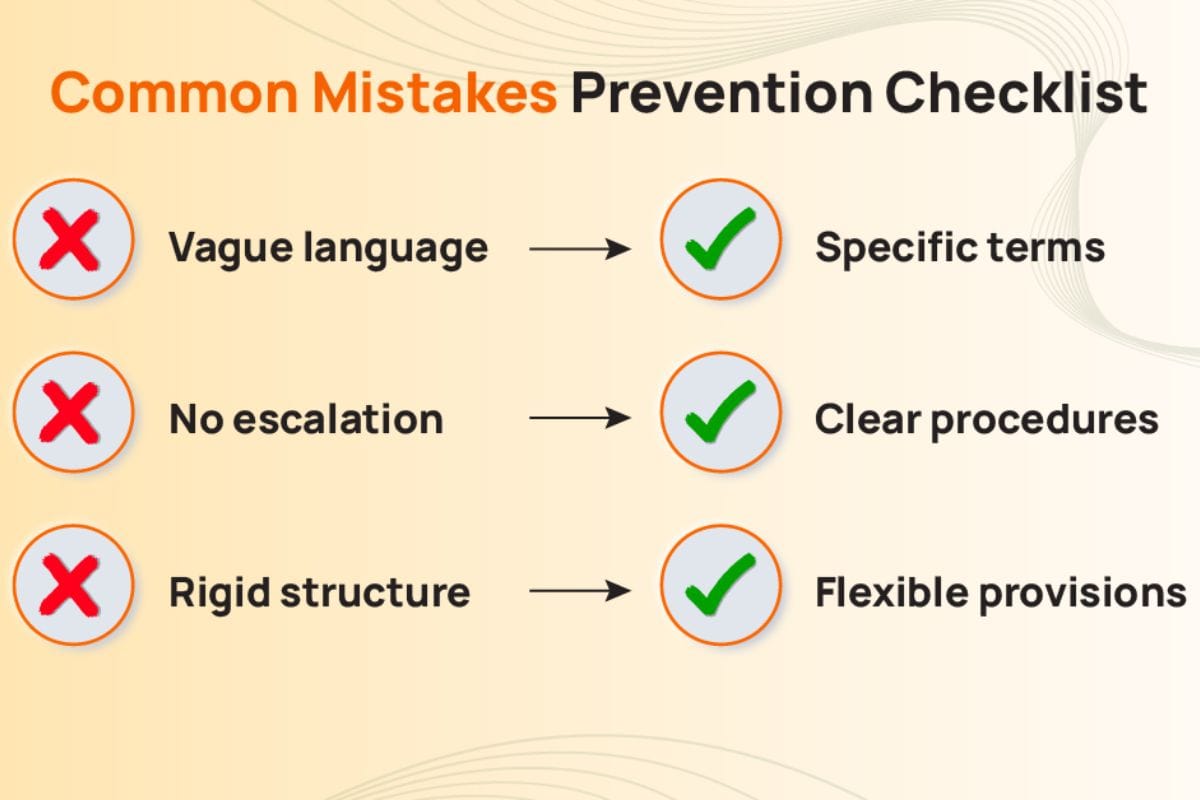
Beyond the quoted price, how you structure payment terms and contractual protections significantly impacts actual profitability.
Payment Milestone Strategies
Project-based work: Request 30-50% deposit upfront, with remaining payments tied to specific deliverables (e.g., 30% advance, 40% at midpoint, 30% upon completion).
Monthly services: Require advance payment on the 1st of each month rather than payment in arrears. This improves cash flow and reduces non-payment risk.
Service Suspension Clauses
Include explicit contract language allowing you to pause service delivery if invoices remain unpaid beyond 15 days past due date. This protects against clients accumulating unpaid invoices while continuing to demand work.
Scope Change Procedures
Define clear processes for handling requests outside the original scope, including how additional work will be estimated, approved, and billed. This prevents "small additions" from gradually transforming project economics.
Adapting for Future Market Conditions
As Dubai's market matures, several trends will influence pricing strategies.
AI and Automation Impact
Generative AI and automation tools are dramatically reducing time required for many tasks. Law firms report up to 74% of billable work is now automatable, creating pressure on time-based pricing models.
Strategic response: Shift toward value-based and fixed-fee pricing that allows you to retain efficiency gains as profit rather than passing all time savings to clients through reduced billing hours.
Emphasis on Net Value Delivery
Clients increasingly evaluate services based on net ROI rather than gross outputs. Property management services, for example, are judged on net yield generated for owners, not just units managed.
Pricing opportunity: If you can demonstrate measurable value creation—cost savings, revenue increases, or risk mitigation—your pricing becomes easier to justify regardless of competitive benchmarks.
Successful service pricing in Dubai requires balancing multiple factors: accurate cost accounting including Dubai's specific overhead structure, strategic model selection aligned with your service type and target market, cultural intelligence around negotiation and relationship expectations, and clear contractual protections ensuring quoted prices translate into collected revenue.
The most successful service businesses in Dubai's 2026 market have moved beyond cost-plus pricing to strategic models that capture value, maintain sustainable margins despite extended payment cycles and negotiation pressures, and position them appropriately within a segmented market spanning startups to multinationals.
Your pricing is a statement about your positioning, the clients you serve, and the value you deliver. In a competitive, sophisticated market like Dubai, thoughtful pricing strategy becomes a significant competitive advantage.
Also Read:
 Ummulkiram Pardawala
 Umema Arsiwala
 Shahba Mayyeri
 Umema Arsiwala