Running a restaurant in Dubai has always required a particular kind of ambition. The city demands high standards, moves at pace, and rewards operators who can combine creative excellence with sharp commercial discipline. In 2026, that commercial discipline increasingly comes down to one thing: how well you manage what sits in your storeroom.
The hospitality sector has shifted from being primarily about the experience on the plate to encompassing the entire supply chain behind it. Rising global commodity prices, the UAE's National Food Security Strategy 2051, which targets halving food waste by 2030, and the January 2026 total ban on single-use plastics have collectively raised the operational stakes for every F&B business in the emirate.
In this environment, smart inventory management is not a technology upgrade reserved for large restaurant groups. It is a practical necessity for any operator serious about long-term viability.
Why 2026 Has Changed the Calculation
Dubai's D33 Economic Agenda is actively reshaping the competitive landscape for F&B businesses. Its ambition to double the size of the city's economy by 2033 means more entrants, more competition, and — crucially — more government infrastructure and support available to operators who align with its priorities. Food waste reduction, local sourcing, and digital financial compliance sit at the intersection of that agenda and the daily operational decisions of every restaurant owner.
What has made smart inventory management newly compelling in 2026 is not any single development but the convergence of several. Technology costs have fallen to the point where cloud-based inventory platforms are accessible to SMEs, not just enterprise groups. Local supply chains have matured, making integration with UAE-based producers genuinely practical. And regulatory requirements around e-invoicing and VAT documentation have made digital record-keeping not just efficient but obligatory. For restaurant owners who have been hesitant to digitise their back-of-house operations, that window has closed.
Predictive AI: From Reactive to Proactive Ordering
Traditional inventory management was inherently reactive. Stock levels were checked manually, orders were placed when shelves ran low, and demand forecasting relied on a combination of experience and guesswork. The result, in most kitchens, was a cycle of over-ordering followed by waste, or under-ordering followed by shortages — neither of which serves a margin-sensitive business well.
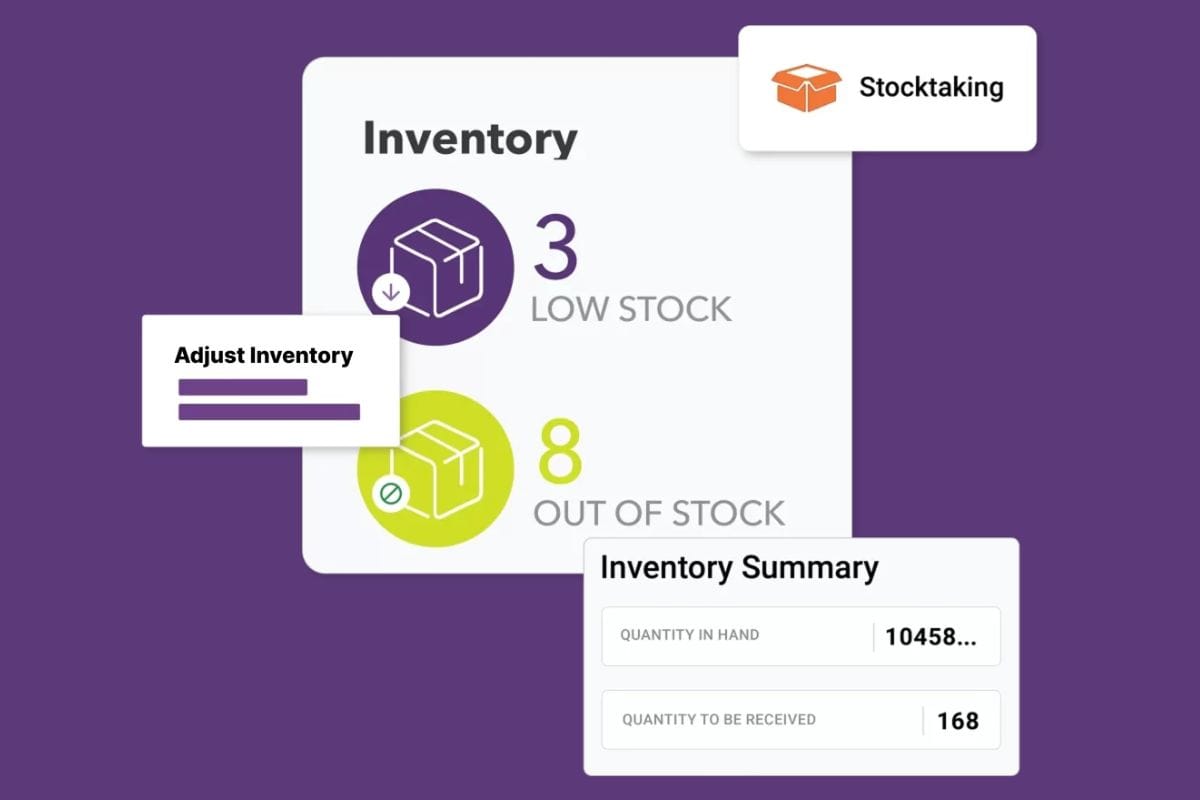
Modern inventory platforms integrated with predictive AI break that cycle. By connecting directly to a restaurant's point-of-sale system and drawing on a range of external data inputs, these tools shift ordering from a reactive task to a forward-looking one. In practice, this means a system that automatically adjusts its recommended stock levels based on historical sales patterns from the same period in previous years, upcoming local events — a major summit at Expo City Dubai, a festival, a public holiday — and even climatic conditions. In a city where high humidity levels measurably shift customer preferences toward lighter, chilled dishes, that last variable is more commercially relevant than it might initially appear.
The operational benefit is twofold. Restaurants carry less dead stock while simultaneously reducing the risk of running short on high-demand items during peak periods. Over a full trading year, the cumulative impact on food costs and waste figures is substantial.
IoT and the Intelligent Storeroom
Alongside software-driven forecasting, the physical storeroom itself is becoming smarter. Internet of Things sensors are now standard in well-equipped Dubai kitchens, and their day-to-day impact is tangible.
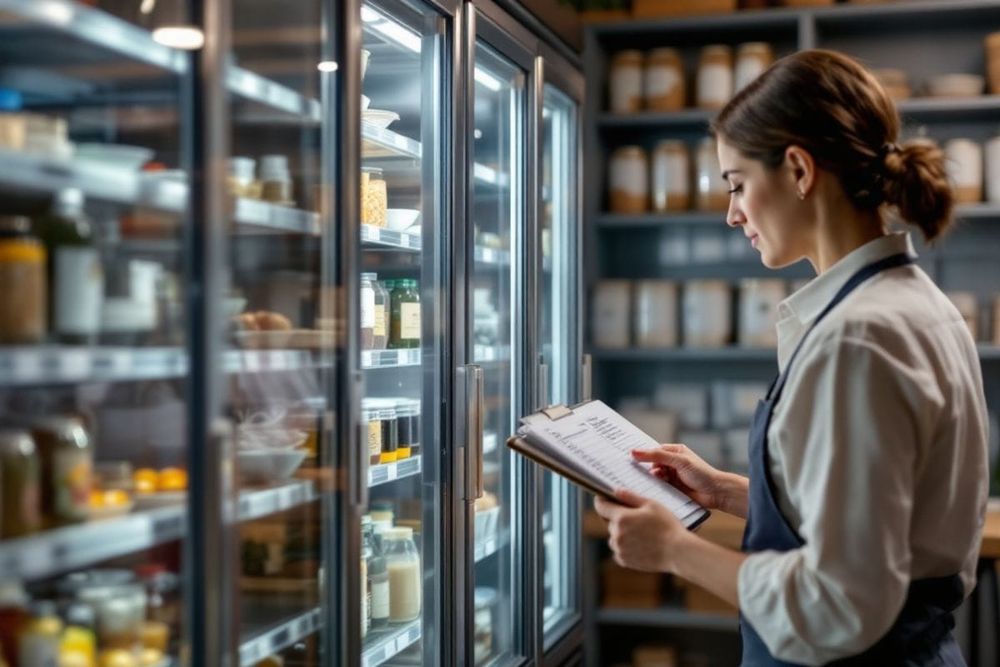
Temperature monitoring is the most immediate application. In Dubai's climate, a two-degree rise inside a walk-in chiller can put thousands of dirhams of inventory at risk within hours. Smart sensors monitor conditions continuously and send instant alerts to a manager's phone the moment a fluctuation is detected — before product is lost rather than after. For operators running multiple outlets or managing large cold-storage facilities, this level of real-time visibility was simply not available at an accessible price point until recently.
Shelf-life tracking through RFID tagging and advanced barcode systems adds a further layer of precision. By automating the First-In, First-Out principle — the basic discipline of using older stock before newer arrivals — these tools remove a significant source of preventable waste from the kitchen. When a batch of imported chocolate or a delivery of locally grown produce is approaching its use-by date, the system flags it automatically, giving the kitchen team time to incorporate it into a daily special or an adjusted prep list rather than discovering it has expired during a busy service.
Waste Analytics and the Ne'ma Initiative
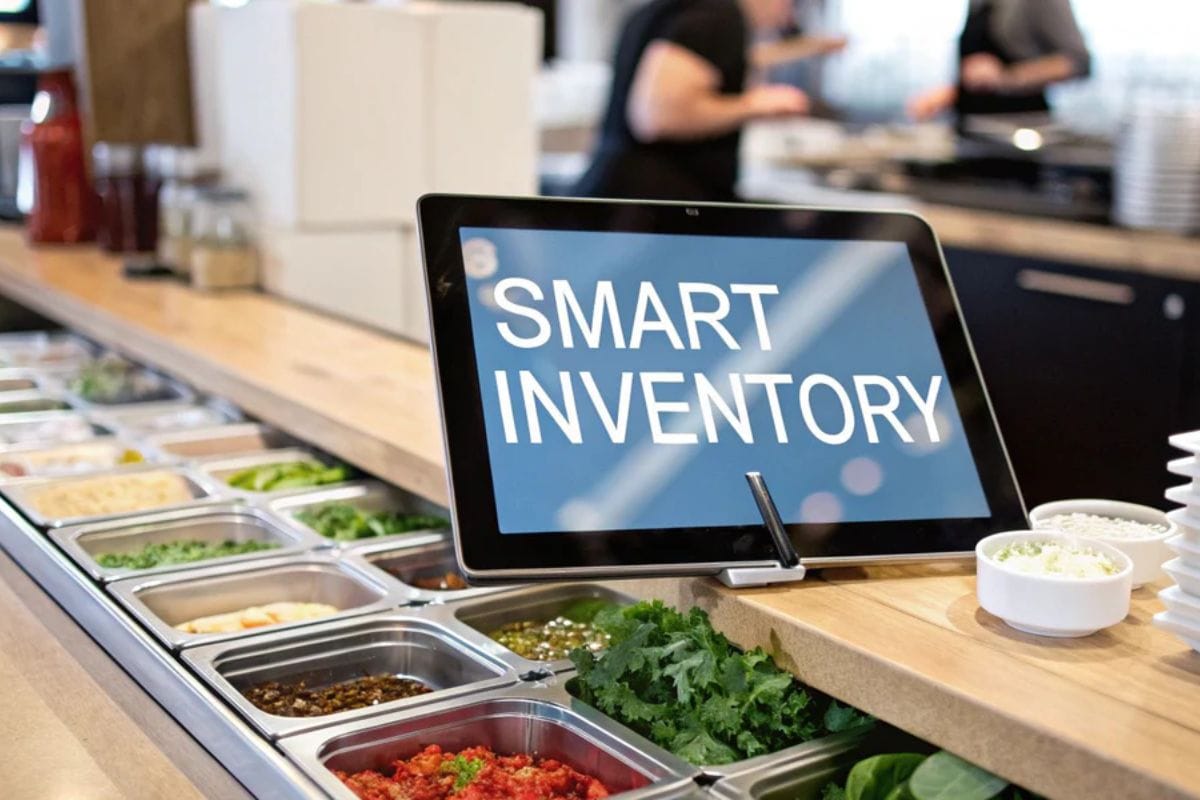
The UAE's ne'ma National Food Loss and Waste Initiative has become a defining framework for responsible F&B operations in 2026. For restaurant owners, it represents both an ethical commitment and a practical operational benchmark — and smart inventory systems are the mechanism through which that benchmark becomes measurable.
Waste analytics modules within modern inventory platforms allow kitchen teams to log not just the quantity of discarded food but the reason for it: spoilage due to improper storage, over-preparation ahead of a quieter-than-expected service, or plate waste returned from the dining room. Each category points to a different operational fix. Spoilage patterns may indicate a storage or ordering issue. Consistent over-preparation of a specific ingredient may suggest a recipe or portion-sizing adjustment. Repeated plate waste on a particular dish is a signal worth taking to the menu development conversation.
This data-driven approach to waste also enables more structured engagement with the UAE Food Bank. Restaurants that maintain accurate digital records of surplus food — its type, quantity, and condition — are better positioned to manage safe and compliant food redistribution, turning what would otherwise be a cost into a contribution to the city's social infrastructure.
The Local Supply Chain Opportunity
One of the most commercially interesting developments in Dubai's F&B sector over the past two years has been the maturation of local and regional food production. The UAE's vertical farming sector, its expanding aquaculture operations, and producers such as Silal and the hydroponic farming programmes associated with major retail groups now offer restaurants a genuinely competitive alternative to imported produce for a growing range of ingredients.
Smart inventory systems make it practical to integrate these local suppliers directly into purchasing workflows. By connecting supplier catalogues to the inventory platform, purchasing teams can compare lead times, freshness metrics, and pricing across local and international sources within a single interface. Shorter supply chains mean fresher product arriving with greater predictability — a material advantage in a market where consistency of quality is a key differentiator. The sustainability credential of local sourcing also resonates with a meaningful and growing segment of Dubai's dining population, and the 'Made in UAE' provenance story is one that communicates well both on the menu and in brand storytelling.

Compliance, E-Invoicing and Financial Hygiene
The Federal Tax Authority's transition to a fully digital e-invoicing framework in 2026 has added a compliance dimension to inventory management that restaurant owners cannot afford to overlook. Every goods receipt — a delivery of dairy, a shipment of imported spices, a drop from a local farm — now needs to be matched to a digital invoice, reconciled against physical stock counts, and recorded accurately for VAT purposes.
An integrated smart inventory system handles this automatically. When a delivery is received and logged, the corresponding documentation is generated, matched, and filed in a format that satisfies FTA audit requirements. For a busy kitchen operation where administrative tasks compete directly with service preparation, this automation removes a meaningful source of error and overhead — and ensures the business is audit-ready at any point rather than scrambling to reconstruct records when a review is requested.
A Practical Roadmap for Getting Started
For Dubai restaurant owners considering a move toward smart inventory management, the implementation process need not be disruptive. A structured three-step approach provides a clear path from assessment to full operation.
- Audit your current waste before selecting any technology. Spend one week systematically logging every item discarded from the kitchen — the quantity, the reason, and the point in the supply or preparation process at which it was lost. This exercise serves two purposes: it gives you a baseline against which to measure improvement, and it clarifies which specific problems you need a system to solve. Choosing software without this clarity is one of the most common reasons implementations underdeliver.
- Select an integrated cloud platform, not a standalone tool. The commercial value of smart inventory management comes from integration — with your point-of-sale system, your accounting software, and your supplier network. A system that does not communicate with these existing tools simply digitises your storeroom without transforming how the business operates. When evaluating platforms, prioritise those with established integrations for the tools your business already uses, whether that is Xero, QuickBooks, or a specific POS provider.
- Invest in staff adoption as much as in the technology itself. The most sophisticated inventory platform generates no value if the team does not use it consistently. In Dubai's best-run kitchens, digital literacy is as much a part of the job as culinary technique. Structured training, clear accountability for data entry, and management reinforcement of new processes determine whether a system becomes embedded in daily operations or quietly abandoned after the initial enthusiasm fades.
Building Resilience Into the Business
Smart inventory management in 2026 is ultimately about operational resilience — the ability to absorb cost pressures, supply disruptions, and regulatory demands without compromising the quality or sustainability of what reaches the dining room. For Dubai's restaurant operators, the commercial case is clear: reduced waste, lower food costs, better compliance, and a stronger position in a supply chain that is increasingly oriented toward local, traceable, and sustainable sourcing.
Dubai's F&B sector is as competitive and as dynamic as it has ever been. The operators who will define its next chapter are those who match their culinary ambition with the same level of rigour in the back of house — treating data, technology, and supply chain discipline not as administrative burdens but as genuine competitive advantages.
Also Read:
 Umema Arsiwala
 Shahba Mayyeri
 Umema Arsiwala
 HiDubai Newswire