In a city where "bigger is better" and luxury apps are a dime a dozen, many Dubai SMEs feel pressured to invest in five-figure loyalty software just to keep up with the competition. But here's the 2026 reality: your customers are suffering from "App Fatigue." Between the banking apps, the delivery aggregators, and the government portals, the last thing a customer in Dubai wants is another 150MB of software clogging their phone just to get a free coffee or a discount on a hair trim.
The good news? Loyalty programmes in Dubai don't have to mean expensive apps, AI dashboards, or enterprise platforms. Many small businesses quietly run effective loyalty systems with simple tools—WhatsApp, punch cards, spreadsheets—and still manage to bring customers back more often, increase average spend, and deepen trust. For a local business, loyalty isn't about the code—it's about the connection.
This article explores practical, low-cost ways to design loyalty that actually works in Dubai's context, without buying sophisticated software.
Start with Behaviour, Not Points
Before choosing any tool or designing any reward structure, decide what behaviour you want to reward. Points only make sense if they're tied to something the customer and the business both care about. Too many businesses copy big-brand schemes without thinking through their own priorities.
For a Dubai SME, loyalty might be about:
- More frequent visits (for cafés, salons, clinics, car washes)
- Larger or more consistent purchases (for retail, services, subscriptions)
- Referrals and genuine word-of-mouth in Dubai's tight-knit expat and local communities
- Valuable feedback or reviews that help you improve your offering
When you're clear on the behaviour, you can design simple rewards around it instead of copying generic schemes that need advanced tech to manage.
Example: A neighbourhood café in Jumeirah might decide its priority is weekday morning visits from residents nearby. Instead of a generic "points on everything" system, it can run a simple "Buy 9 coffees before 11am, get the 10th free" stamp card or digital log. This focuses on the exact behaviour that matters most to the business.
Low-Tech Structures That Still Work
You can build surprisingly effective loyalty using tools you already use daily. Here are the methods that continue to deliver results for Dubai SMEs in 2026.
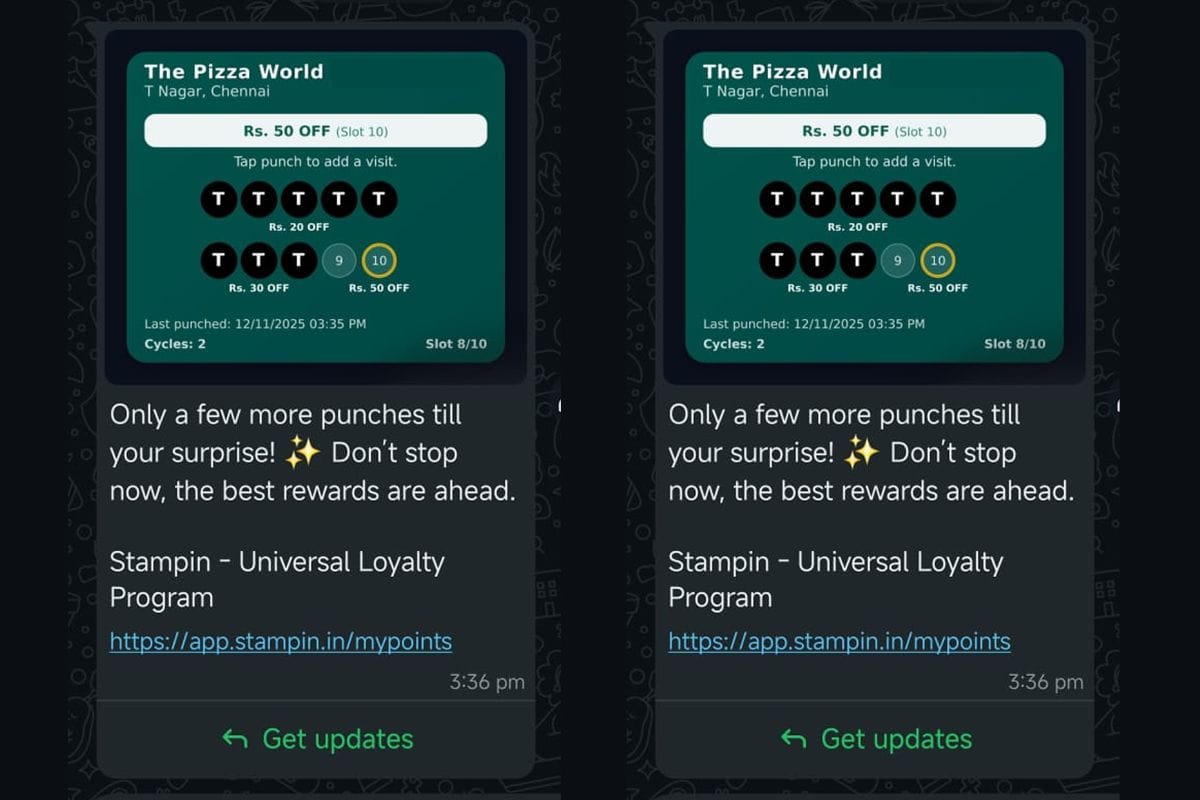
- The WhatsApp "Digital Punch Card"
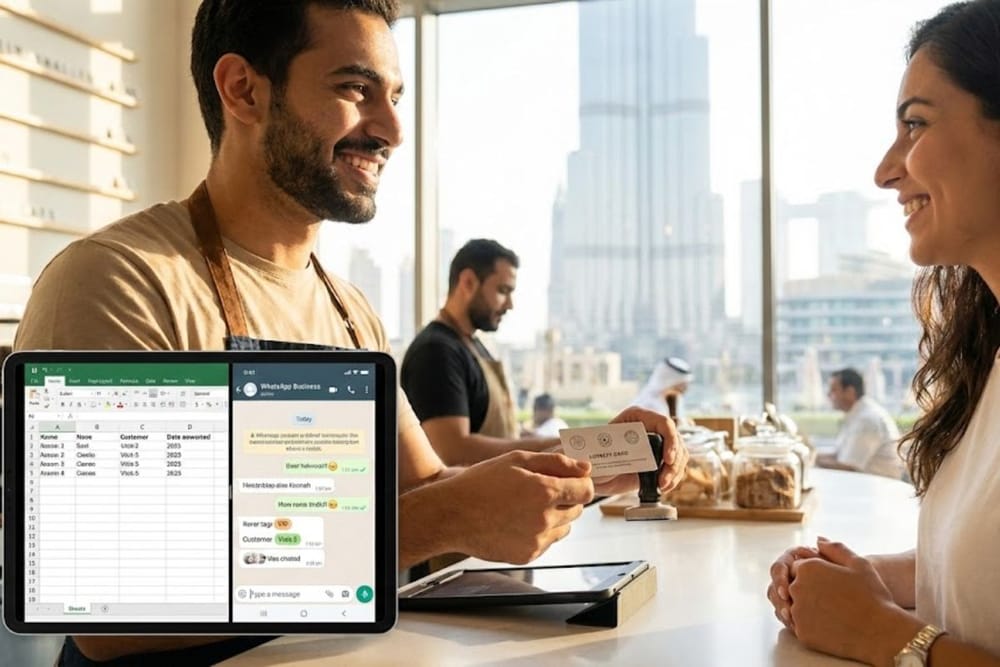
In 2026, WhatsApp is the operating system of Dubai. Instead of a separate app, use WhatsApp Business features to track loyalty in a way that feels natural to your customers.
The Tagging System: Every time a customer visits, add a tag to their contact (e.g., "Visits-1", "Visits-2"). When they hit "Visits-10," your sales agent or AI bot triggers a "Reward Unlocked" message. This simple backend tracking is invisible to the customer but gives you complete control.
The Proof of Purchase Thread: Ask customers to send a quick photo of their receipt to your WhatsApp Business number. In return, you send them a unique "Reward Voucher" image they can redeem on their next visit.
Why it works: It's frictionless. The customer doesn't have to log in or download anything; they just stay in the chat they already use to talk to their friends and family. This removes the biggest barrier to adoption.
You can also create an "insider" broadcast list for regulars, offering early notice of new items, small loyalty-only offers (e.g., "every 5th order this month includes a free add-on"), and simple check-ins. Because the list feels more personal than a mass email, customers are more likely to read and respond—especially if you mix value (tips, updates) with rewards, not just constant promotions.
- Punch Cards and Stamps (Physical or Digital)
Don't underestimate the power of a beautiful, physical card in a digital world.
Ideal for: Cafés, bakeries, car washes, quick services, beauty salons.
How it works: Give each customer a small card; each purchase earns a stamp or hole punch; a full card unlocks a free item or discount.
Why it works: Extremely easy to explain and quick at the counter. There's also a tactile satisfaction to seeing progress that digital points can't replicate.
The "DIFC" Standard: If your brand is premium, a high-quality, thick-stock card feels like a membership, not a coupon. It becomes something customers want to keep in their wallet.
The Twist: Instead of the predictable "Buy 9 get 1 free" (which can feel like a chore), use a "Surprise & Delight" model. Tell them: "Keep this card; every 3rd visit, we have a surprise gift for you." The unpredictability keeps the reward more effective at triggering dopamine than a standard 10th-visit freebie.
To avoid fraud or confusion, keep rules clear (expiry dates, what counts as a stamp) and use a recognizable stamp or hole punch that's difficult to replicate.
- The Spreadsheet + Unique Customer IDs
For many small businesses, a simple Google Sheet (secured with 2FA) is enough to run a professional loyalty programme.
The basic structure:
- Column A: Name
- Column B: WhatsApp Number or Email
- Column C: Last Visit Date
- Column D: Number of Visits or Total Spend
- Column E: Preferred Product/Service (e.g., "Oat Milk Latte" or "Fade Haircut")
Use simple formulas to see who qualifies for a reward—for example, every 5th visit, every AED 1,000 total spend, or customers who haven't visited in 21 days.
The Pro Move: Once a week, filter by "Last Visit Date." If a regular hasn't been in for 21 days, send a personalized "We miss you" message. This personal touch beats a generic app notification every time and can reactivate customers before they forget about you entirely.
This works well for home businesses, personal services, and B2B services where staff know customers by name. It's not glamorous, but it keeps costs close to zero while still letting you reward repeat behaviour systematically.
The "Secret Menu" Strategy (Status Over Points)
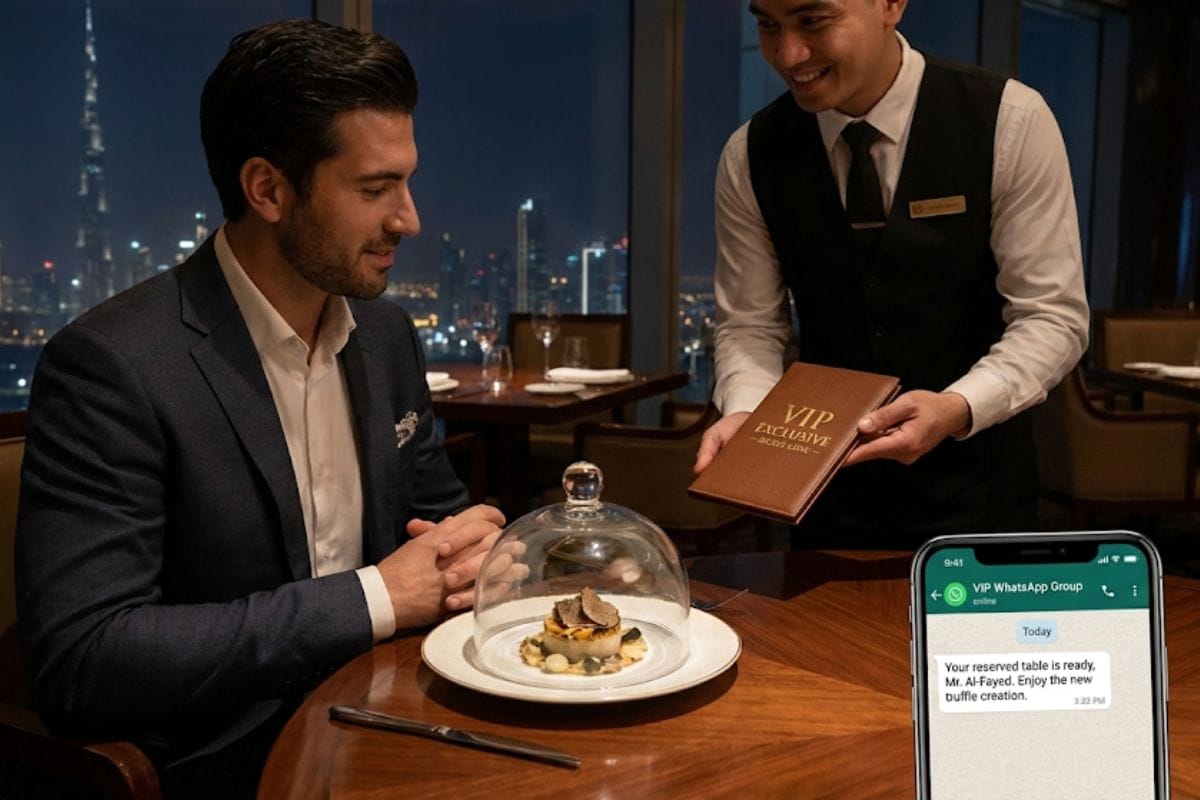
Dubai is a city built on status and exclusivity. Sometimes, the feeling of being an "insider" is more valuable than a 10% discount—especially for customers who can easily afford the full price.
The Strategy: Create a "VIP WhatsApp Group" or a "Close Friends" list on Instagram for your top 50 customers. These are people who have demonstrated loyalty through repeat purchases or high spend.
The Perk: Give them access to a "Secret Menu," early booking slots, or first look at new collections. If you run a boutique in Al Quoz, let them see the new collection 24 hours before it goes live. If you operate a restaurant in DIFC, offer a seasonal dish that's only available to VIP members.
The Cost: AED 0. You're simply rearranging your existing inventory or schedule to favor your most loyal fans. The exclusivity creates perceived value far beyond the actual cost.
This taps into what Dubai customers often value most: time, convenience, and feeling recognized rather than small cash savings. A well-timed free valet, express service, or preferential booking slot can feel more meaningful than 1% cashback.
The "Social Referral" Loop
In the UAE's tight-knit expat and local communities, a recommendation from a friend is worth more than a billboard on Sheikh Zayed Road. You can harness this without any software.
The Buddy Pass: Give your regular customer a physical "Invite a Friend" voucher. If the friend uses it, both get a perk on their next visit. This creates a win-win that encourages organic referrals.
The Tag-to-Win: Ask customers to post a story of their experience and tag your business. You "Heart" the story and send them a "Thank You" code via DM for their next visit. This generates social proof while rewarding advocacy.
The Milestone Shoutout: When a regular hits a milestone (e.g., their first anniversary with your salon, their 50th visit to your café), ask if you can feature them on your social media page. Most customers appreciate the recognition, and it shows potential customers the kind of relationships you build.
Simple Reward Ideas That Fit Dubai Customers
Dubai customers are already bombarded with big-brand loyalty apps, airline miles, and mall points. For a smaller business, the advantage is personal relevance, not bigger numbers.

Rewards that often resonate:
- "On us" moments: A free drink, dessert, or service upgrade after a certain number of visits
- Priority access: First access to new menu items, time slots, or product drops
- Personalized treats: Remembering a customer's usual order and comping it during their birthday month
- Bundle savings: "Book 4 hair appointments in a quarter, get 50% off the 5th"
- Surprise gifts: Small, unexpected additions that create delight rather than transactional exchanges
The key is making customers feel seen and valued, not just processed through a points calculator.
Designing Clear Rules (So It Doesn't Become Chaotic)
Without software enforcing rules automatically, clarity is everything. Keep your programme extremely simple:
Limit the number of rules: One main mechanic (e.g., "every 10th visit free") and maybe one occasional seasonal bonus is enough.
Write it down: Put a short, human-friendly explanation at the counter, on your menu, or in your WhatsApp greeting. Something like: "Visit us 10 times, get your 11th coffee on us. Simple as that."
Decide on expiry: You can set a reasonable expiry (e.g., 6 months) to keep things manageable, but be generous and flexible with genuine loyal customers. Nothing damages goodwill faster than losing earned rewards on a technicality.
Train your team: Everyone should know who qualifies, how to record it, and how to say no politely if someone doesn't meet the criteria. Your staff are the real engine of the programme.
A messy, constantly-changing loyalty scheme confuses staff and customers and quickly erodes trust. Consistency is more important than complexity.
Dubai Legal & Practical Nuances
Before you launch, remember that Dubai has specific rules regarding promotions and data that apply even to low-tech programmes.
The DED Factor: If your "loyalty programme" involves a game of chance (like a raffle or a draw where not everyone wins), you must obtain a permit from the Department of Economy and Tourism (DET). However, a straight "points-for-purchase" or "buy-X-get-Y" programme is generally considered standard commercial practice and doesn't require a raffle permit.
Data Privacy (PDPL): Even without software, if you're keeping a spreadsheet of customer names and phone numbers, you're a "Data Controller" under UAE data protection laws.
- Ask for consent: A simple "Is it okay if we add you to our loyalty list?" at the counter is the bare minimum.
- Be transparent: Tell them they'll receive a maximum of one message per week. In 2026, over-communication is the fastest way to get "Blocked" on WhatsApp.
- Provide opt-out: Make it easy for customers to leave the programme if they choose.
Measuring If Your Programme Actually Works
Even without fancy dashboards, you can track basic impact through simple observation and record-keeping:
- Repeat rate: Out of 10 recent customers, how many have bought from you before?
- Average spend: Do "loyalty members" spend slightly more or choose higher-value options?
- Visit frequency: Are regulars coming slightly more often after you introduced the programme?
- Engagement: Do people ask about the programme, show their card, or reply to your WhatsApp updates?
You can capture these metrics in a simple monthly review. If you notice no change after 60-90 days, either the reward isn't attractive enough, the communication isn't clear, or your team isn't promoting it consistently.

Common Pitfalls to Avoid
When small businesses set up loyalty programmes without expensive software, a few mistakes can dilute impact:
Making it too complicated: Multiple point categories, exclusions, and tiers are hard to track manually. Keep it almost "childishly" simple.
Only rewarding discounts: Constant price cuts can train customers to wait for deals. Mix in non-discount rewards like access, recognition, or small gifts.
Ignoring staff behaviour: If your team never mentions the programme, doesn't log visits, or seems confused, adoption will stay low. Regular training and reminders are essential.
Forgetting to promote it: Mention your loyalty programme on your receipts, social media, WhatsApp replies, and in-store signage. If customers don't know it exists, they can't value it.
A Practical Way to Start This Month
If you're a Dubai SME without a loyalty system yet, you can launch a basic version in one week:
Day 1-2: Choose one behaviour to reward (e.g., repeat visits or referrals).
Day 3: Decide on one clear reward (e.g., 10th visit free, or AED 50 credit after AED 500 spent).
Day 4: Pick a tracking method (punch card, WhatsApp log, or simple spreadsheet).
Day 5: Design simple materials—a card template, a WhatsApp message script, or counter signage.
Day 6: Train your team on exactly how to explain and record the programme.
Day 7: Launch quietly and test with your existing regular customers first.
Then commit to running it for 60–90 days before changing anything. Give it time to gain traction and gather real data.
Summary Checklist for Your Low-Cost Programme
- Choose your "Currency": Is it a free product, an insider perk, or a surprise gift?
- Select your "Track": WhatsApp tags, a physical card, or a simple Google Sheet?
- Write clear, simple rules that customers can understand in one sentence
- Train the team to record a visit in under 10 seconds
- Check compliance: Ensure you aren't running an unlicensed raffle
- Set up basic data privacy practices (consent, transparency, opt-out)
- Promote the programme in at least 3 places (counter, WhatsApp, social media)
- Schedule a 30-day check-in to review what's working
Loyalty in Dubai doesn't have to look like the big shopping mall programmes or airline miles schemes. For smaller businesses, the most powerful "programme" is still a mix of consistency, recognition, and small, thoughtful rewards that show customers you notice and value them.
The tools don't matter as much as the intention behind them. Whether you're using a beautifully designed punch card, a simple WhatsApp group, or a well-maintained spreadsheet, what customers remember is how you made them feel—recognized, valued, and part of something slightly exclusive.
In a city where everyone is chasing the next big tech solution, sometimes the smartest competitive advantage is simply being genuinely thoughtful with the tools you already have. No expensive software required.
Also Read:
 Shahba Mayyeri
 Umema Arsiwala
 Ummulkiram Pardawala
 Umema Arsiwala
 HiDubai Newswire