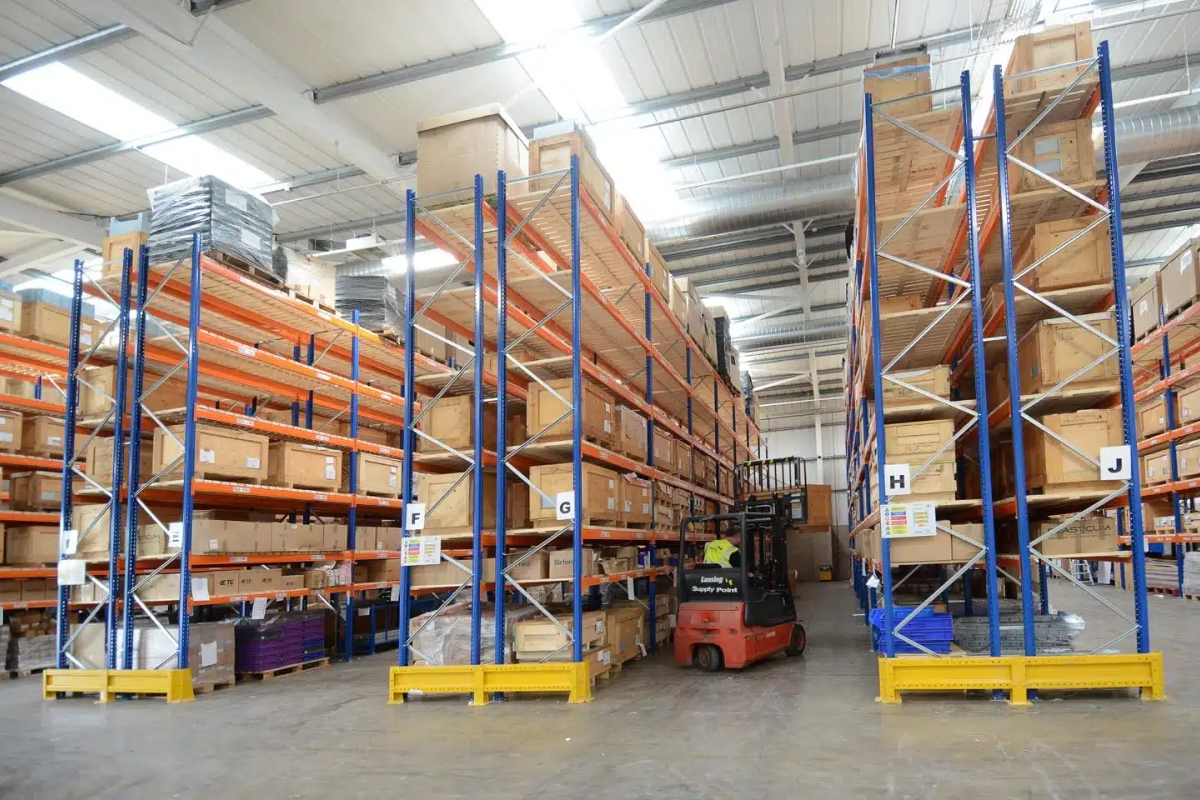
Industrial space planning has moved well beyond the old idea of counting racks, marking aisles, and filling whatever footprint is available. In 2026, the practical question is how to turn every cubic meter, every travel path, and every handling step into useful capacity without creating safety, access, or maintenance problems. That requires engineering discipline, accurate data, and layouts that can change as stock profiles, throughput, and labor patterns change.
A well-used facility is not one that feels full. It is one in which storage, movement, picking, replenishment, and dispatch all happen with control. The strongest layouts treat volume, structure, automation, and ergonomics as parts of one system. Vertical storage equipment, mezzanine floors, AI-driven slotting, autonomous transport, and IoT-based monitoring all play a role when they are selected and integrated correctly.
Defining Industrial Space Efficiency
Industrial space efficiency is now planned around cubic footage as well as floor area. A warehouse with a generous clear height can carry a large reserve of usable volume if the storage system, fire strategy, and access methods are engineered for that height. This is why facility planning now begins with a volume map. That map identifies usable height below sprinklers, beam intrusions, service routes, loading positions, maintenance zones, and emergency egress paths.
A volume-based view changes several design decisions:
- Storage capacity is calculated through clear height, beam spacing, tray dimensions, and handling envelope.
- Picking zones are located through travel frequency and ergonomic reach bands.
- Replenishment zones are sized through actual SKU behavior and reserve stock profiles.
- Workstations are placed with attention to flow, visibility, and access to support equipment.
- Dispatch areas are planned around staging time and door availability, not empty floor area alone.
This approach reduces stranded air space, protects circulation routes, and supports higher inventory density without sacrificing operational control. It also makes capital planning more precise because every structural and automation decision can be tied back to a measurable part of the building volume.
Vertical Engineering and High-Density Storage
Vertical Lift Modules and Vertical Carousels are now standard tools in industrial space optimization, where parts storage, spare parts handling, tools, small cartons, and high-value inventory need compact containment. Modern Vertical Lift Modules can reach 30 meters in height, and leading systems use height sensing to measure the stored load on each tray so the control system can place trays in the smallest available vertical gap. That logic reduces wasted headroom inside the machine and raises net storage density within the tower.
Height sensing matters because tray assignment affects the internal pitch of the machine. When tray heights are recorded accurately, the controller stores each tray based on the real load profile rather than the nominal tray height. Over time, this creates a tighter stack of tray positions. The result is a more efficient use of enclosed vertical volume and steadier retrieval logic.
Vertical systems work well when the engineering team defines:
- Maximum tray payload.
- Item envelope and packaging consistency.
- Daily retrieval frequency.
- Access control requirements.
- Interface with WMS and barcode or RFID data capture.
- Maintenance access and rescue procedures.
Vertical Carousels add value in parts environments with stable container geometry and repetitive access patterns. VLMs suit broader SKU mixes because tray heights are dynamic, and the machine can accommodate varied stock dimensions. In both cases, the goods-to-person principle reduces walking, keeps items inside a controlled footprint, and supports compact workstation design. Official vendor specifications and white papers in 2026 continue to center these systems on dense vertical storage and ergonomic access at the retrieval opening.
The Mechanics of Mezzanine Flooring
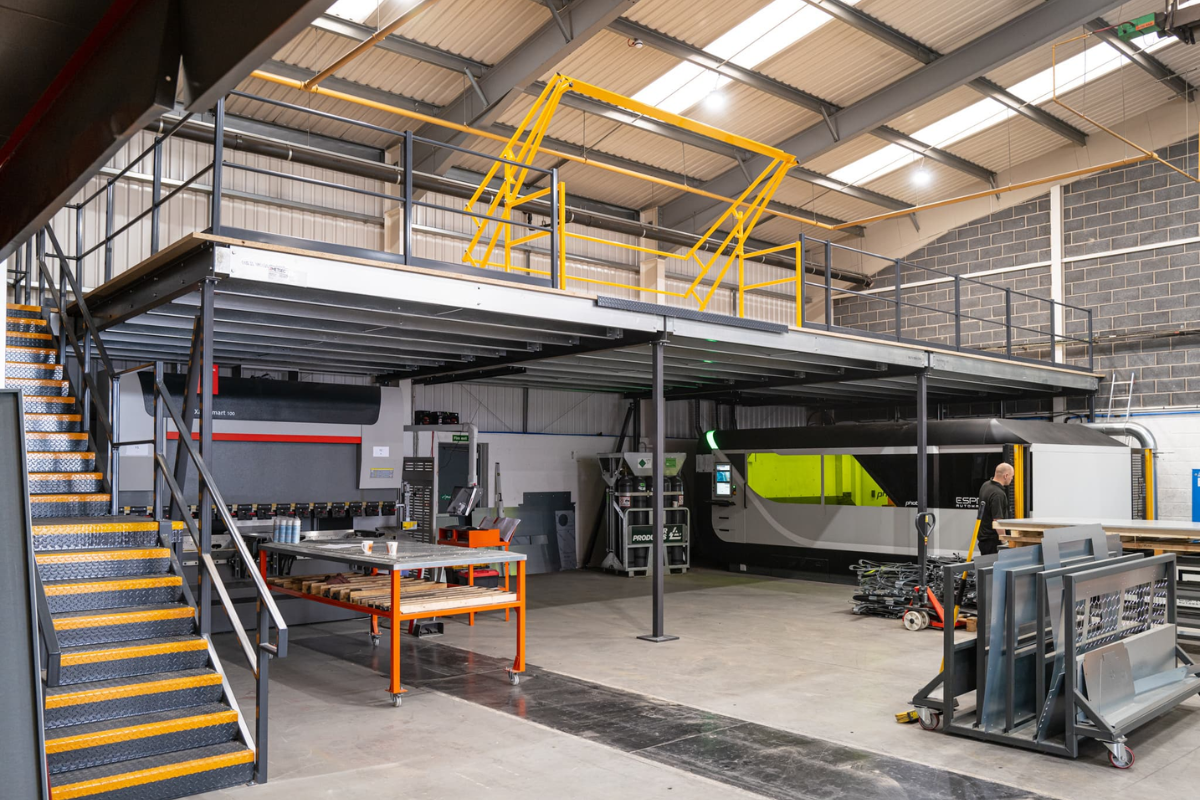
Mezzanine flooring is often the most direct path to additional industrial capacity when the host building has suitable clear height and slab performance. Good mezzanine design begins with structural loading, not with deck area. In Dubai, Administrative Resolution No. 37 of 2021 states that live load on a mezzanine floor must not be less than 5 kN per square metre. That requirement must be integrated into the steel design, deck selection, connection design, slab checks, and approval process.
A mezzanine design package should cover:
- Imposed loads, dead loads, and concentrated point loads.
- Column grid and base plate reactions.
- Host slab capacity and anchorage method.
- Beam deflection limits for occupied or storage use.
- Stair geometry and landing arrangements.
- Guardrail loading and edge protection.
- Fire resistance strategy.
- Means of escape and travel distance compliance.
Structural steel for mezzanines is commonly specified through grades covered by EN 10025, including S275 and S355, subject to the project engineer’s calculations, span requirements, vibration criteria, and local authority acceptance. These grades remain standard references for weldable structural steel in building applications.
Fire protection also has to be treated as a structural issue. Intumescent coatings expand under heat and form an insulating layer around steel members, helping the frame maintain integrity for the required fire resistance period. AISC and UL guidance both describe intumescent systems as suitable passive fire protection for exposed structural steel. In Dubai, fire design must align with the UAE Fire and Life Safety Code and the authority review process.
Egress is equally important. Stairs, handrails, landings, headroom, exit signage, and unobstructed escape paths need to be locked into the layout early. Any storage plan that encroaches on exit routes undermines the whole purpose of the mezzanine.
AI-Driven Inventory Slotting

Slotting determines where every SKU lives inside the facility. In 2026, AI-driven slotting tools can process item velocity, order frequency, line affinity, cube, weight, handling constraints, and replenishment patterns to assign a storage location that fits the actual operating profile of the item. SAP documents slotting by machine learning as a way to derive slotting rules automatically and reduce manual rule maintenance, while Blue Yonder positions machine learning slotting as continuous, real-time optimization around the right product and the right slot.
The practical mechanics are straightforward:
- Fast-moving items are identified through picks per day, picks per week, or lines per order.
- Order history is analyzed to detect affinity groups that should be located within the same pick sequence.
- Product dimensions and handling requirements are matched to storage media.
- Replenishment triggers are adjusted through demand patterns and service targets.
- Slot assignments are revised as demand changes.
A strong slotting model also accounts for exceptions. Fragile SKUs, regulated products, temperature-sensitive items, and items with packaging instability need specific rules even when velocity data suggests another location. The real value of AI is not automation for its own sake. It is the ability to refresh slotting logic continuously as the SKU base evolves, thereby keeping the building aligned with current order behavior.
Modular and Reconfigurable Layouts
Industrial layouts perform best when they can be reconfigured without major construction. Seasonal SKU spikes, promotional bundles, new product families, and temporary packing surges all affect how space should be used. Mobile racking, foldable workstations, and modular shelving allow operators to reshape storage and work cells with limited disruption.
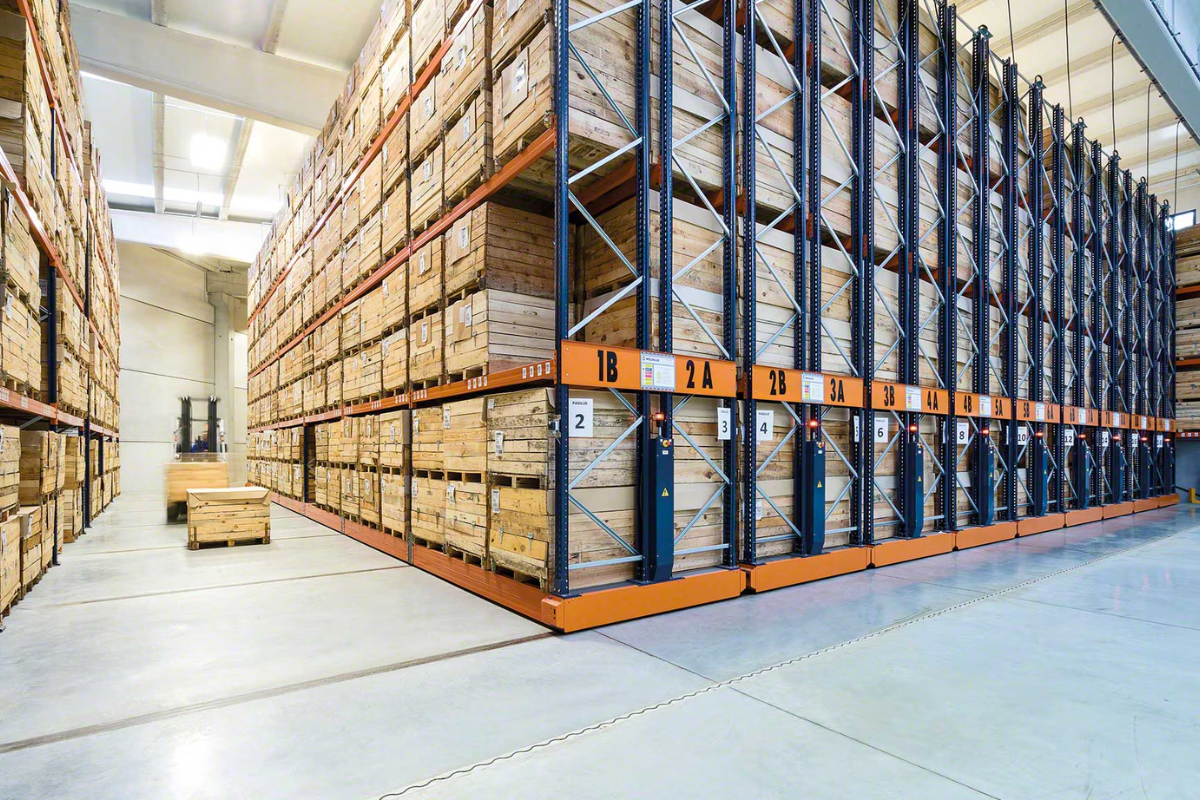
Mobile racking systems place storage rows on powered or mechanical bases so aisle access opens only where it is needed. Vendors continue to present these systems as a high-density option for pallet storage and shelf storage where footprint pressure is high.
Modular design principles include:
- Standard bay widths and shelf increments.
- Bolted frames for rapid relocation.
- Utility drops are positioned for future workstation moves.
- Folding or nesting benches for temporary kitting areas.
- Spare power and data capacity for added scanners or printers.
These details matter because a rigid layout creates dead zones once product mix changes. A modular layout keeps the building usable across many operating states and supports phased expansion inside the same envelope.
Autonomous Internal Transport
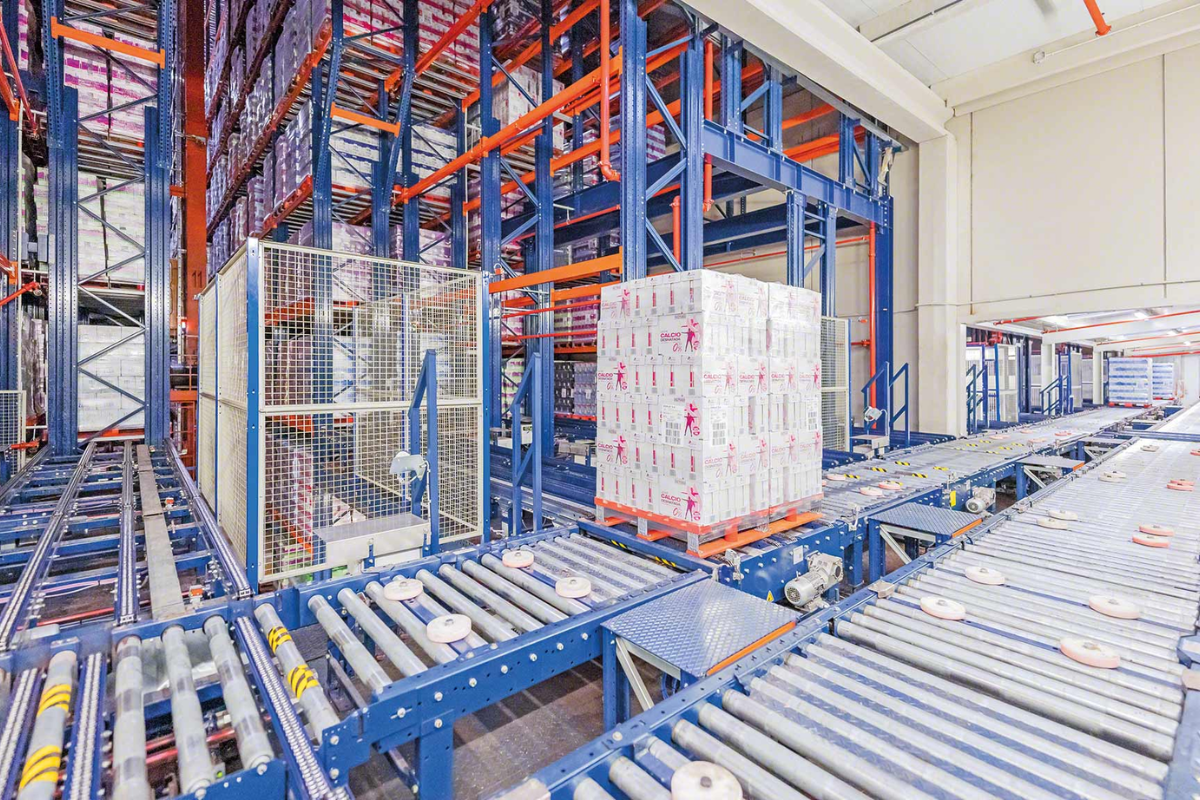
Autonomous Mobile Robots and AGVs support internal transport of totes, shelves, pallets, and work-in-progress between storage, picking, consolidation, and dispatch. Their role in space utilization is tied to route discipline and reduced dependence on fixed handling infrastructure. AMR vendors emphasize flexible navigation, while AGV suppliers continue to support purpose-built transport tasks such as pallet movement and repetitive feed routes.
Space planning around autonomous transport focuses on:
- Defined robot corridors.
- Intersections with pedestrian protection logic.
- Charging zone placement.
- Queue zones at workstations.
- Hand off points for pallets, carts, or shelves.
- Fleet rules that prevent local congestion.
A facility that uses autonomous transport well can reclaim floor area that would otherwise be reserved for staging carts, manual tugger circulation, or loosely managed buffer stock. It also makes travel behavior measurable, which supports later layout refinement.
Data Enhanced Visibility
Dense facilities need real-time visibility. IoT sensors and digital twins make it possible to monitor slot occupancy, floor loading, environmental conditions, equipment health, and traffic patterns as they occur. Siemens describes digital twins as virtual models linked to real-world systems through sensor data, while its IIoT material points to real-time monitoring and analysis for physical assets and processes.
At the protocol level, industrial deployments increasingly rely on OPC UA and MQTT. Siemens documentation shows OPC UA PubSub via MQTT for publishing device data to cloud and analytics environments. The OPC Foundation 2026 cloud reference architecture also highlights OPC UA over MQTT for industrial connectivity into cloud and digital twin environments.
Useful sensor layers include:
- Load cells or strain monitoring on critical floor zones.
- Occupancy sensors on storage lanes and pick faces.
- Environmental sensors for heat, humidity, and dust.
- Utilization counters on doors, lifts, and packing stations.
- Position and status telemetry from mobile robots.
This data allows engineers to see where usable capacity is being lost. It also supports threshold alarms when floor loading, congestion, or idle equipment begins to affect throughput.
Inbound and Outbound Orchestration
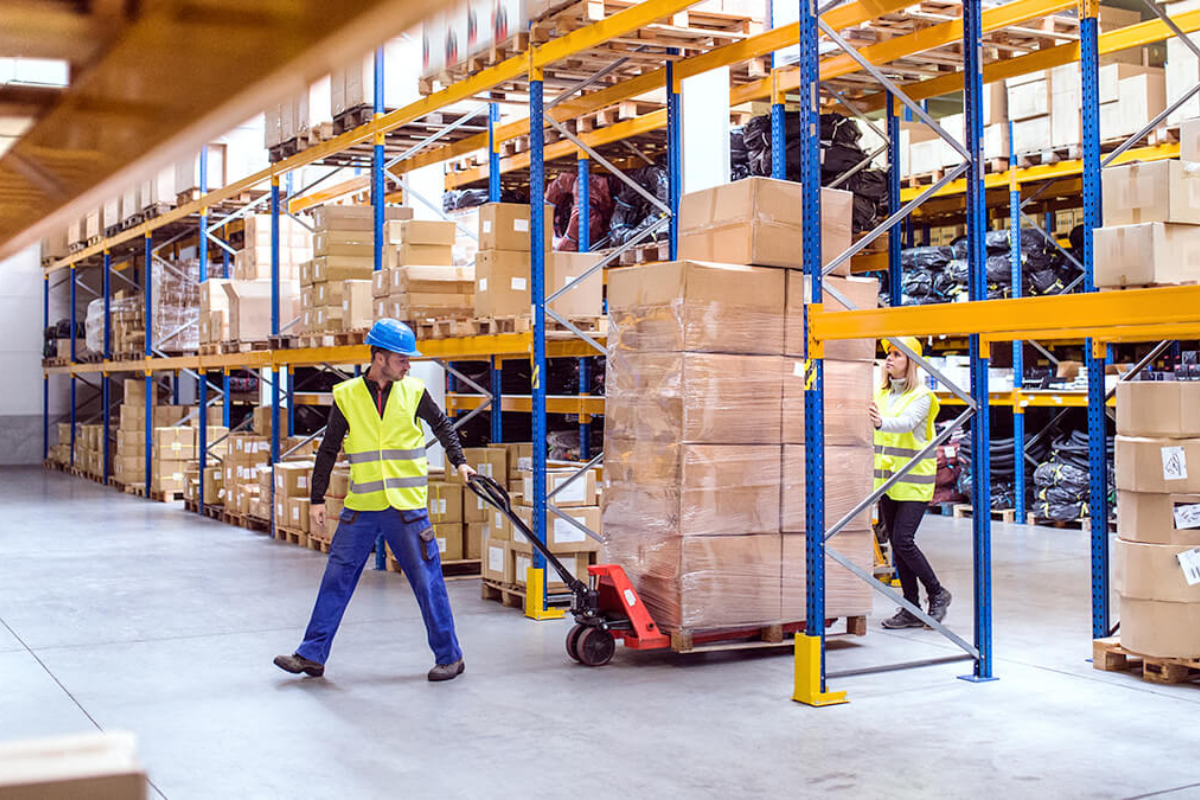
Loading zones often become the hidden limiter in a space strategy. A compact warehouse can still operate smoothly when dock to stock flow is well orchestrated. Problems begin when receiving, checking, putting away, picking, staging, and dispatch all compete for the same floor area without time control.
Dock orchestration should cover:
- Appointment scheduling for inbound and outbound vehicles.
- Door assignment logic by load type and dwell time.
- Fast registration through barcode, ASN, or RFID.
- Directed put-away based on slot availability and item class.
- Time-stamped staging windows for outbound orders.
- Exception lanes for damaged, mixed, or unplanned receipts.
Automated dock to stock control reduces queue formation around doors and keeps receiving stock from spreading into circulation space. The key is to move each pallet, tote, or carton through a defined decision path immediately after unloading.
Human Centric Ergonomics in Dense Spaces
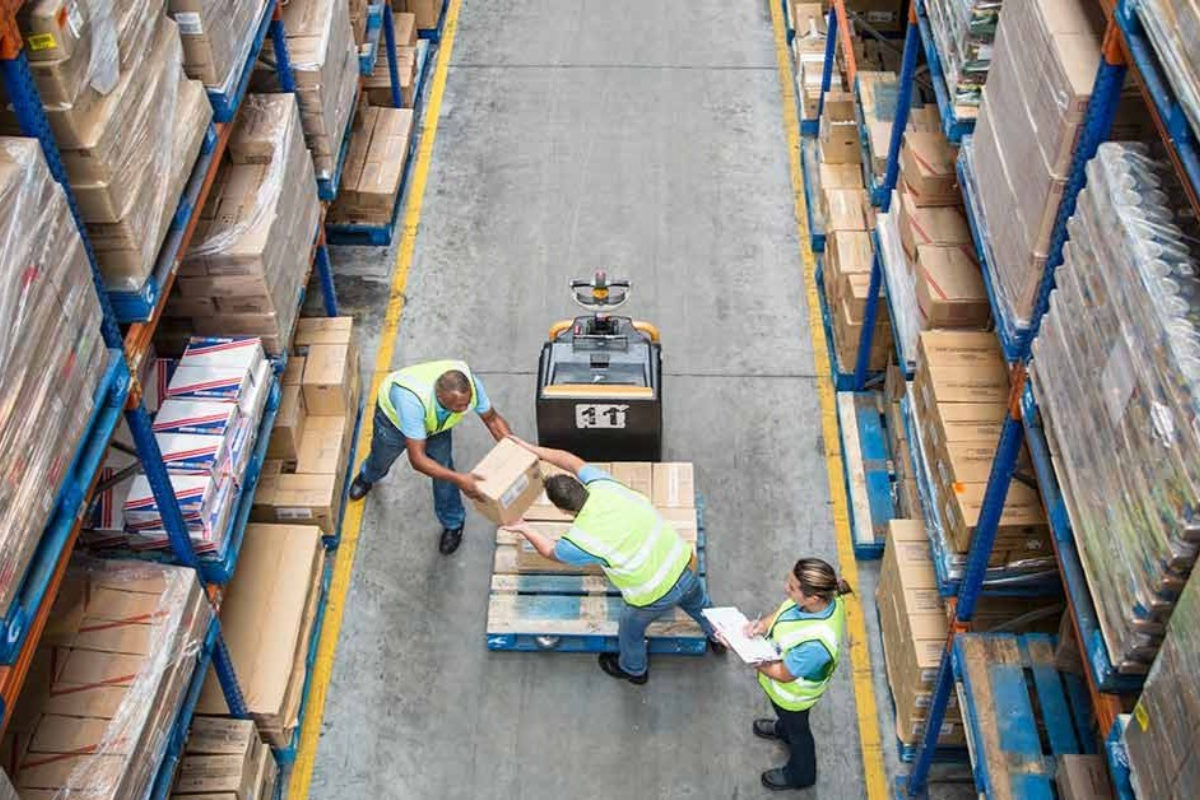
A high-density facility still has to work well for people. Goods-to-person systems help by presenting inventory at an ergonomic access point and reducing travel, bending, reaching, and searching. Kardex and other suppliers continue to define VLM use around this principle, with strong emphasis on retrieval openings designed for controlled access.
Human-centric design in compact spaces should include:
- Pick windows at a safe reach height
- Anti-fatigue flooring at fixed work positions
- Clear visual cues for robot crossings
- Lighting targeted at pick and inspection points
- Noise control around automation clusters
- Standard work that limits twisting and overreaching
Dense space does not have to mean stressful space. A layout is sustainable when operators can maintain pace, accuracy, and safety throughout the shift.
Scalability and Future Proofing
Future proofing comes from modularity, reserve capacity, and clean data architecture. Facilities grow successfully when rack frames can be extended, mezzanine bays can accept additional deck area, WMS rules can absorb new SKU classes, and sensor networks can add devices without redesigning the whole system.
A future-ready site plan should preserve:
- Vertical reserve where structural and fire design allow it.
- Utility corridors for added equipment.
- Expansion points for conveyors, robots, and charging infrastructure.
- Data standards that support new sensors and control nodes.
- Flexible storage media for changing carton and tote profiles.
The smartest use of industrial space is therefore not a single piece of equipment or one redesign exercise. It is the disciplined coordination of structure, storage, software, transport, and ergonomics inside the full building volume. When those elements are engineered together, a facility gains capacity, control, and resilience without depending on relocation as the first answer.
Also read:
 Umema Arsiwala
 Shahba Mayyeri
 Umema Arsiwala





![Interview with Nader Bassit, CEO of El Greco Restaurant [Wakira Investments] in Dubai](/content/images/size/w600/2023/08/Untitled-design--1-.jpg)