
Many entrepreneurs wear long hours like a badge of honor, convinced that the more they work, the closer they get to success. It’s the classic “grind” mindset—days that start before sunrise, nights that end past midnight, and weekends that blur into weekdays. But is logging 12 to 16 hours really proof of progress, or could it be masking deeper inefficiencies? Research consistently shows that productivity peaks far earlier than most expect—often around 44 to 50 hours a week—and declines sharply beyond that. If the returns diminish after a certain point, what exactly are we gaining from those extra hours?
The truth is, overwork can drain the very qualities that entrepreneurs depend on most: clarity of thought, sharp decision-making, and the creativity to see opportunities others miss. The World Health Organization even links long working hours—55 or more per week—to significantly higher risks of stroke and heart disease. For a founder building something from the ground up, what’s the point of scaling a business if your own health and judgment deteriorate in the process? And if the pace you set as a leader encourages burnout in your team, are you really setting up the business for sustainable growth?
Perhaps the most important question is this: Are you building a business that thrives because of your hours, or in spite of them? In this article, we’ll explore why long working hours don’t guarantee success, the hidden costs entrepreneurs often overlook, and what it takes to shift from exhausting effort to meaningful impact.
The Productivity Plateau Every Business Owner Hits
No matter how driven you are, there comes a point when working more hours stops giving you more results. For most people, productivity reaches its peak somewhere between 40 and 50 hours a week. Beyond that, the returns get smaller, and after a certain point, they may even reverse.
Why? Fatigue gradually chips away at your ability to focus, think strategically, and make clear decisions. Tasks start taking longer, mistakes become more frequent, and important opportunities get overlooked. Even if you feel “busy” all day, the actual value of your output may be shrinking.
For entrepreneurs, this isn’t just about personal stamina—it’s about business performance. If extra hours mean slower decisions, more errors, and less innovation, is the grind really helping you grow? And if your team sees you burning out, will they follow your lead or quietly disengage?
Recognizing the productivity plateau isn’t a sign of weakness—it’s a strategic advantage. The goal isn’t to push past it, but to work smarter within the hours that bring the highest impact.
When Overwork Starts Hurting the Business

Even the most committed entrepreneurs can overstep the line, where more hours translate into less clarity, more errors, and mounting costs. Here’s how overwork subtly undermines your business:
1. Strategic Thinking Slows Under Mental Fatigue
When you're running on empty, mental clarity takes a hit. Chronic overwork triggers cognitive overload, making it harder to anticipate risks, prioritize effectively, or adapt to changes in real time. This sluggish decision-making hampers long-term vision and weakens your competitive edge.
2. Mistakes Multiply, Rework Consumes Time
Tired minds are prone to slip-ups—typographical errors, overlooked details, or flawed assumptions. Once one mistake enters the pipeline, it multiplies: clients get delayed, colleagues do extra work, and low-level issues balloon into high-level headaches. What seems like a little overtime can end up eating hours or even days of progress.
3. Teams Burn Out—and Leave With Your Intellectual Capital
Exhausted teams aren’t just less productive—they’re more likely to mentally check out or resign. And turnover is expensive: replacing a skilled team member can cost 30% to 200% of their annual salary, factoring in hiring costs, lost productivity during ramp-up, and dropped morale. Recruitment, training, and redeployment all sap resources you can’t afford to lose. (Employee retention data)
Reflect on These Questions:
- Are long hours slowing your sharpest thinking just when your business needs it most?
- Are errors creeping into work that then require even more effort to fix?
- What knowledge and momentum might you be losing if your overworked team starts to leave?
When those late nights stack up, the impact isn’t just personal—it ripples through every layer of your business. Recognizing this isn’t admitting defeat—it’s getting real. Ready to flip the script toward smarter growth, not just longer hours?
The Illusion of Progress vs. Real Growth
Spending long hours at work can create a comforting sense of achievement, but that feeling doesn’t always align with actual business results. You might end a 14-hour day exhausted, yet realize nothing meaningful has moved forward. Many entrepreneurs look back at an incredibly busy week and struggle to identify a single milestone that truly pushed the business ahead.
Being busy often means filling the day with activity, but effectiveness comes from directing your energy toward actions that genuinely shift key metrics. Multitasking, constant context-switching, and endless “urgent” tasks can erode focus until the day becomes more about movement than momentum. If the hours are piling up but revenue, customer satisfaction, or market position remain unchanged, the activity is little more than noise.
The bigger loss is in opportunity. Every hour consumed by low-value work is an hour taken from strategic thinking, innovation, and growth-focused decisions. The entrepreneurs who move ahead are the ones who protect their time for high-impact work and resist the pull of constant busyness, trading the appearance of progress for the substance of it.
Health and Leadership Risk Factors

Long hours don’t just flatten productivity—they raise real health and business risks. The WHO and ILO’s joint assessment found that working 55 hours or more per week is linked to a 35% higher risk of stroke and a 17% higher risk of dying from ischemic heart disease compared with a 35–40-hour week. In 2016 alone, long working hours were associated with an estimated 745,000 deaths worldwide. If the “extra push” risks your health—and the continuity of your company—what exactly are you gaining?
There’s also the leadership paradox: founders who routinely overwork (or signal constant availability) unintentionally set a norm that presence = performance. Teams mirror what leaders model; the result is chronic overtime, rising exhaustion, and declining judgment across the org. Research shows that cultures tolerating excessive hours and blurred boundaries fuel burnout, a precursor to errors, disengagement, and avoidable turnover. Even something as common as after-hours email pressure is tied to anxiety and emotional exhaustion, which erodes decision quality and family stability, costs that later show up in missed deadlines and rework. Are you optimizing for short-term throughput while undermining the very capacity you need to scale?
Leaders who pivot from “always on” to output-focused, boundary-respecting work see the opposite effect: clearer decisions, steadier teams, and healthier performance over time. The signal matters—when you protect recovery and model sane hours, people feel permitted to do their best work within them.
Why the UAE Shifted Toward Shorter Official Weeks
Around 2022, the UAE made pioneering moves to reshape its workweek, trimming hours that reflect a clear shift from time-based effort to outcome-driven performance. Here’s how it unfolded and what entrepreneurs can take away:
4.5-Day Week: Aligning Efficiency with Well-Being
In December 2021, the UAE announced that all federal government departments would adopt a 4.5-day workweek starting from January 2022. Employees now work full days Monday through Thursday, and a half-day on Friday. This model aligns with global business norms, supports religious observance (Friday prayers), and intentionally boosts work-life balance and overall performance.
Sharjah’s Bold Step: Embracing a Full Four-Day Week
Beyond the federal mandate, Sharjah pioneered the region’s first full four-day public sector workweek, in effect since January 2022. Now, public employees work Monday through Thursday, with a three-day weekend (Friday–Sunday). Reports indicate a remarkable 88% increase in productivity, a 90% rise in job satisfaction, and 94% customer satisfaction. The shift has also fostered improved health, reduced fatigue, and stronger family engagement.
Dubai's “Flexible Summer”: A Seasonal Four-Day Week
Building on these shifts, starting July 1, 2025, Dubai’s government is launching the “Our Flexible Summer” initiative. For the summer months (until September 12, 2025), public sector employees will follow one of two schedules:
- Four 8-hour days with Fridays off; or
- Four 7-hour days with a 4.5-hour Friday.
This builds on a successful 2024 pilot, which delivered improved employee happiness, productivity, and work-life balance.
What Entrepreneurs Can Learn from These Experiments
- Prioritize outcomes over hours. UAE’s shift underscores that smart scheduling—aligned with natural rhythms—can enhance efficiency without sacrificing results.
- Boost morale and retention. Sharjah’s data shows that shorter official weeks can dramatically increase job satisfaction and reduce fatigue, making a business more sustainable.
- Offer seasonal flexibility. Dubai’s summer schedule is a strategic model: dynamic, responsive, and employee-centric—perfect for industries with seasonal intensity.
- Model healthier norms. When leadership sustains balanced hours, the entire organization absorbs a more sustainable, intentional work culture.
The UAE’s evolving workweek proves that cutting hours doesn’t cut effectiveness—in many cases, it sharpens focus, sustains energy, and spurs real growth.
What Actually Drives Success for Entrepreneurs

Driving a business forward isn’t about clocking endless hours—it’s about working smart and sustainably. Three key levers consistently separate tired effort from thriving results:
1. Outcome-Based Work Planning
Instead of mapping your schedule by tasks and check-ins, plan by outcomes—what real results will this week move forward? Frameworks like OKRs (Objectives and Key Results) help entrepreneurs align activities with meaningful goals, ensuring every action connects directly to progress. Compared to task-driven planning, outcome-based plans give clarity, focus, and adaptability, designed for evolving markets where priorities can shift in real time.
2. Strategic Delegation and Automation
High-performing founders don’t do it all—they enable others to step in and automate the rest. Delegation not only gives leaders time to think strategically, it also empowers teams, boosts morale, and sharpens organizational capacity. Effective delegation correlates with improved performance, innovation, and employee engagement. Meanwhile, automation can reclaim enormous amounts of time through simple tools or process automation, which then gets rerouted toward growth-focused initiatives. If automation eases repetitive work and delegation aligns tasks with people, your business grows not through busyness, but through leverage.
3. Regular Recovery to Recharge Creativity
Pushing nonstop might boost output briefly, but it kills strategic thinking. Steady success relies on an intentional balance: short periods of recovery and reflection strengthen focus, recharge mental clarity, and sustain decision-making power. Because insight and innovation don’t come from grind—they come from rest, space, and perspective.
The most effective entrepreneurs don’t measure success by how much they squeeze into a day—they measure it by how well each day advances their vision. When you plan for outcomes, delegate smartly, and give yourself room to recharge, every moment becomes more intentional, and every hour more impactful.
Smarter Time Management & Mindset Shift: From Hours to Impact
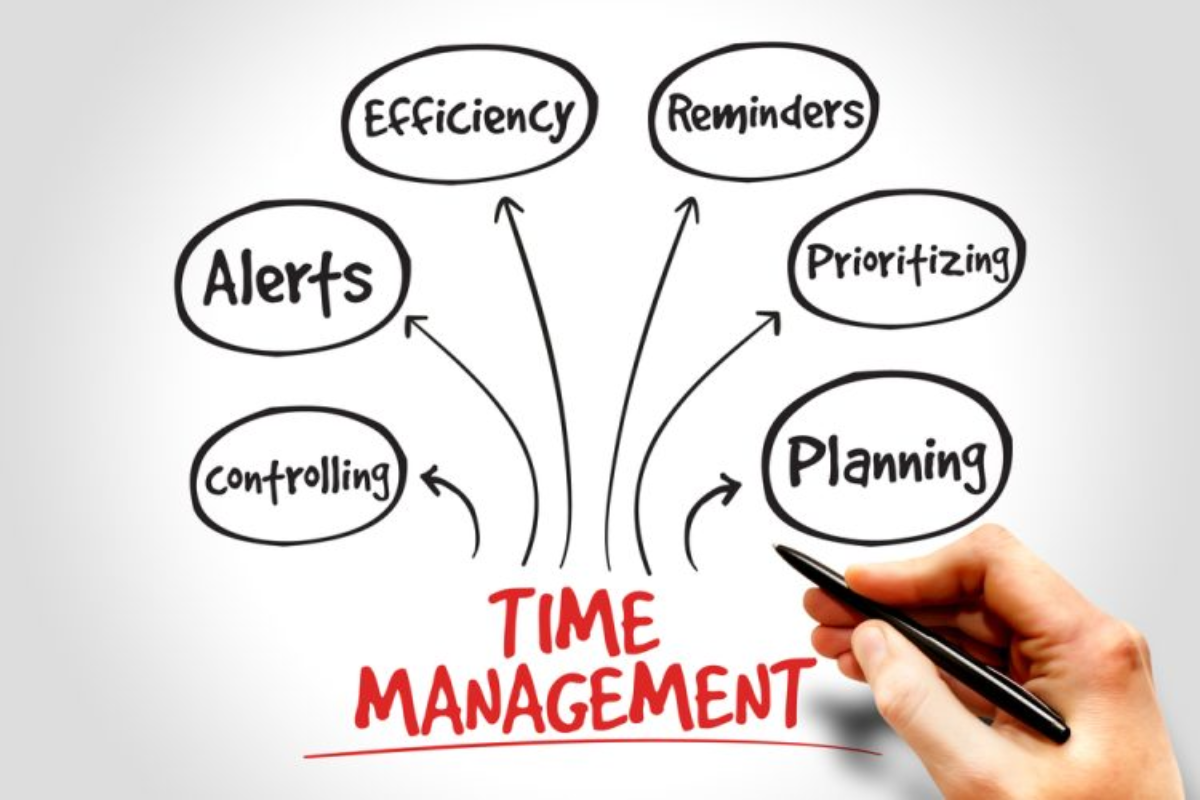
Founders often pride themselves on outworking everyone else, but sustainable success comes from managing time intentionally and redefining what “productive” truly means. By combining effective time management practices with a shift in mindset, you can scale your business without endlessly adding to your hours.
Time-Boxing High-Value Tasks
Allocating fixed time slots for your most important work forces focus and prevents tasks from expanding unnecessarily. This approach encourages you to prioritize what truly matters instead of letting lower-value activities consume your best energy. Over time, you start to identify which tasks deserve prime calendar space and which can be delegated, automated, or dropped entirely.
Non-Negotiable Focus Hours
Protecting uninterrupted blocks of time each week for deep work—strategy sessions, creative thinking, or problem-solving—ensures you operate at your highest capacity. These hours become the anchor points of your schedule, reducing context-switching and allowing complex ideas to fully develop.
Measure by Results, Not Hours
Productivity isn’t about being the last one in the office; it’s about moving the needle on business goals. Tracking progress through tangible outcomes—like revenue growth, client acquisition, or project delivery—removes the pressure to “look busy” and keeps your focus on real impact.
Redefining Success Metrics
Success for a founder should be measured in terms of growth, profitability, innovation, and team health, not sheer effort. This means setting clear, outcome-based goals for yourself and your team, and regularly evaluating whether your current activities are directly contributing to those goals.
Building a Business That Scales Without More Hours
True scalability comes from systems, delegation, and automation. Document processes so they can be repeated without your constant involvement, empower your team to take ownership of their work, and use technology to streamline repetitive tasks. This way, growth is fueled by efficiency and leverage rather than personal sacrifice.
When you combine disciplined time management with a results-first mindset, you create a business that grows stronger without burning you—or your team—out in the process.
n the long run, the entrepreneurs who stay ahead aren’t the ones with the most hours on their timesheets—they’re the ones who can consistently bring a clear mind, steady focus, and sound judgment to their work. Sustainable energy is what allows you to respond to challenges with composure, seize opportunities at the right moment, and keep your team aligned without burning them out.
Treating your energy as a finite but renewable resource shifts the way you lead. It pushes you to design systems that protect your focus, manage your time as intentionally as your capital, and leave space for recovery. Over time, this approach creates a rhythm where both you and your business can grow without losing the capacity to think deeply and act decisively.
Success built this way doesn’t come from sheer endurance—it comes from ensuring that when you do show up, you have the clarity and drive to make every move count.
Also read:
 Umema Arsiwala
 Shahba Mayyeri
 HiDubai Newswire
 HiDubai Newswire