
Launching a small business without a theoretical foundation is a little like building a house without a blueprint. You might get something standing, but it will cost you more time, money, and stress than necessary. The early stage of any business ideation, validation, lean setup, and initial traction is where most ventures either take root or quietly collapse. The decisions made in those first months are not usually about product features or office furniture. They are about the mental models the founder carries into every meeting, every customer conversation, and every financial decision.
Books cannot replace experience. But they can sharpen the instincts of someone who has not yet accumulated enough experience to rely on. Reading the right texts before spending your first dollar can help you avoid predictable mistakes, ask better questions, and build structures that last longer than the initial burst of enthusiasm.
The ten books in this list were selected specifically for founders in the early phase, not for seasoned executives managing large organizations, but for people working through an idea that has not yet been tested by the real world. Each book addresses a distinct part of the launch journey without overlapping with the others. Together, they form a cohesive education for the first-time founder, and that is precisely what this article sets out to explore.
The Lean Startup
Eric Ries
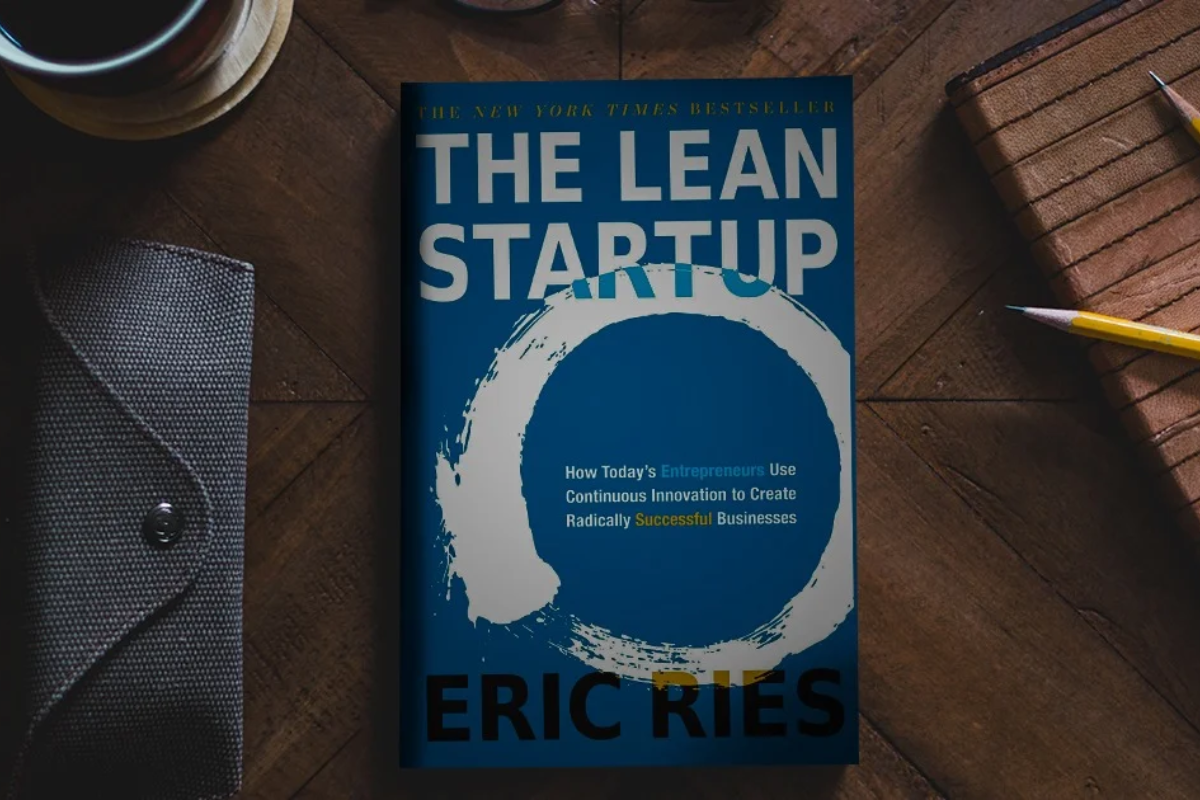
Eric Ries wrote this book as a response to a problem he observed repeatedly in early-stage companies: founders spending months, sometimes years, building products that nobody wanted. His answer was a disciplined methodology built around one central loop: Build, Measure, Learn. The idea is simple but demanding in practice. Instead of building a complete product before testing it, a founder builds the smallest possible version of their idea, the Minimum Viable Product, or MVP, puts it in front of real customers, collects data on what happens, and then decides whether to persevere with the current direction or pivot to a new one.
The MVP is not a rough draft of a finished product. It is a deliberate learning instrument. Its purpose is to answer a specific question about customer behaviour with the least possible investment of time and money. Ries draws a hard distinction between what he calls "vanity metrics," numbers that look good but tell you nothing actionable, and validated learning, which is concrete evidence that a business hypothesis has been tested against reality.
For founders tempted to spend months perfecting something before showing it to anyone, this book provides a structured argument for why that approach is dangerous.
"The only way to win is to learn faster than anyone else."
— Eric Ries, The Lean Startup
The Mom Test
Rob Fitzpatrick

Rob Fitzpatrick identified a specific and common failure mode in early-stage startups: founders who talk to customers and come away with false confidence. The problem is not a lack of customer conversations. The problem is how those conversations are structured. When a founder describes their idea and then asks, "What do you think?" they are almost always going to get polite, encouraging, and useless feedback. People do not want to hurt your feelings. Even your own mother will tell you your idea is great to avoid disappointing you, hence the title.
Fitzpatrick's methodology is about asking questions that even a biased person cannot lie to you about. The technique focuses on the customer's actual past behaviour rather than their imagined future behaviour. Asking someone, "Would you pay for this?" is unreliable because it is hypothetical. Asking "How do you currently handle this problem?" and "How much have you spent trying to solve it?" gives you factual data grounded in reality.
This book is a practical manual for structuring conversations in a way that produces an honest signal, which is the rarest and most valuable thing a founder can gather before building anything.
"The measure of a useful question is whether it gives you useful data, not whether it makes people smile."
— Rob Fitzpatrick, The Mom Test
Company of One
Paul Jarvis
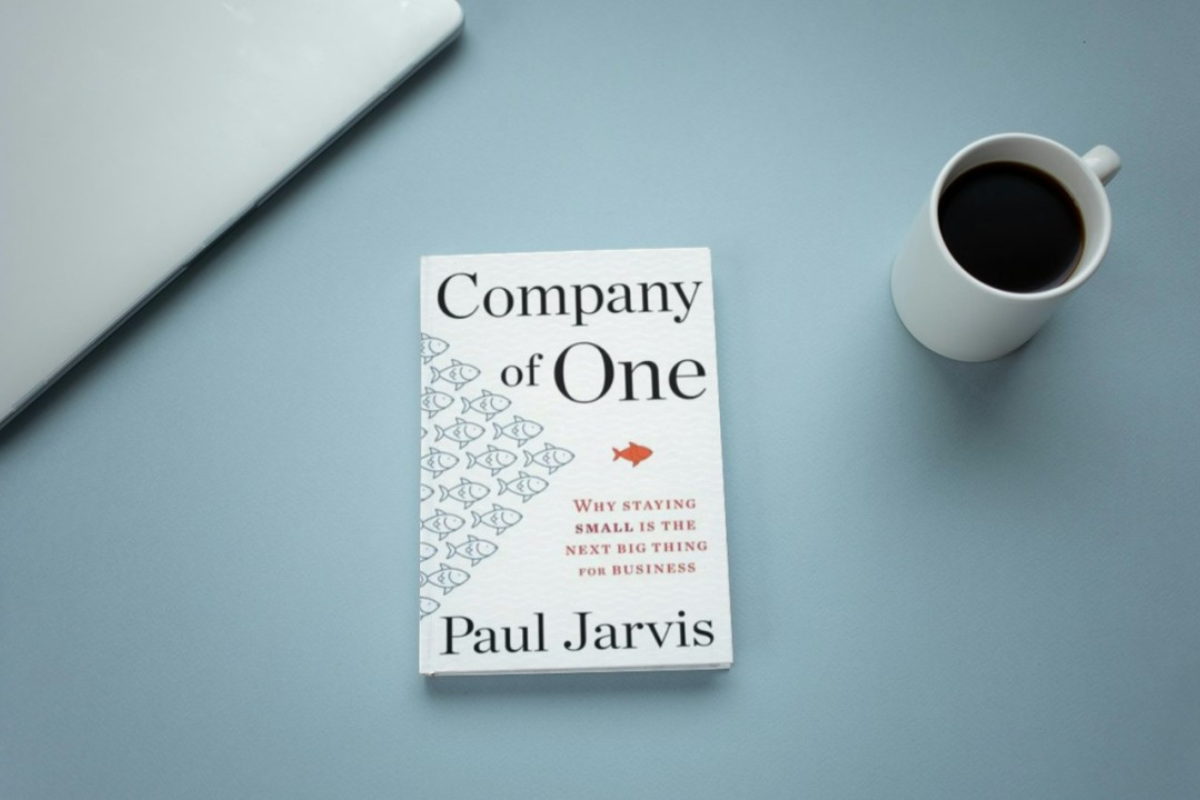
Most business literature treats growth as an unquestioned good. The bigger the company, the more employees, the larger the revenue, the better. Paul Jarvis challenges this assumption directly. His central argument is that growth for its own sake can destroy the very thing that made a small business worth building in the first place: simplicity, autonomy, and quality of life for the founder. The book asks a question that most entrepreneurship texts skip entirely: What if you do not want to grow? What if staying small is not a failure condition but an intentional strategy?
Jarvis profiles independent consultants, solo operators, and small teams who have built sustainable, profitable businesses without adding headcount year after year. He argues that a company of one is not a stepping stone to a larger company; it is a legitimate destination. For early-stage founders who feel pressure to raise investment, hire quickly, and scale aggressively, this book offers a well-reasoned counterpoint.
It is especially relevant to founders who want to maintain creative control, serve a specific niche deeply, and build something they can manage without becoming a full-time manager. The "question of growth" Jarvis poses is worth sitting with before you build any infrastructure for expansion.
"Resilience is often achieved by having less debt, less overhead, less of everything that requires more money to sustain."
— Paul Jarvis, Company of One
Profit First
Mike Michalowicz
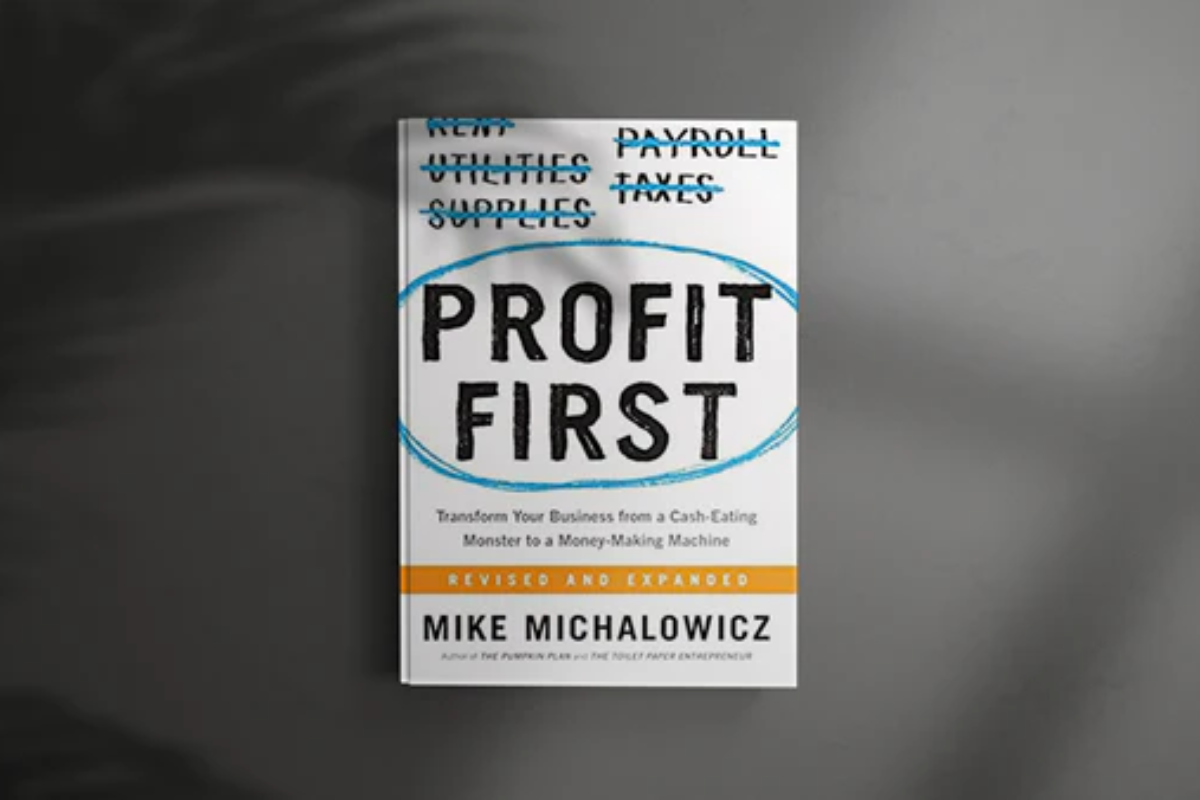
Most small business owners manage cash using the traditional formula: Sales minus Expenses equals Profit. Profit, in this model, is whatever is left over after the bills are paid. Mike Michalowicz argues that this formula is the root cause of cash flow problems in most small businesses, because what is left over is almost always nothing. Expenses have a way of expanding to consume all available revenue, and profit is perpetually deferred to a future quarter that never arrives.
Michalowicz proposes inverting the formula: Sales minus Profit equals Expenses. By allocating profit, first depositing a predetermined percentage into a separate account before paying anything else, a business forces itself to operate on what remains. This is not a complex accounting system. It is a behavioural system. It works because it removes the temptation to spend first and save the rest, which is a temptation most founders lose to.
The book provides a practical account structure, separate bank accounts for profit, owner's pay, taxes, and operating expenses, and a rhythm for managing them. For any founder who has ever reached the end of a profitable month with nothing to show for it, this book offers a structural answer to a behavioural problem.
"Your business is an entity that should serve your life, not consume it."
— Mike Michalowicz, Profit First
Start with Why
Simon Sinek
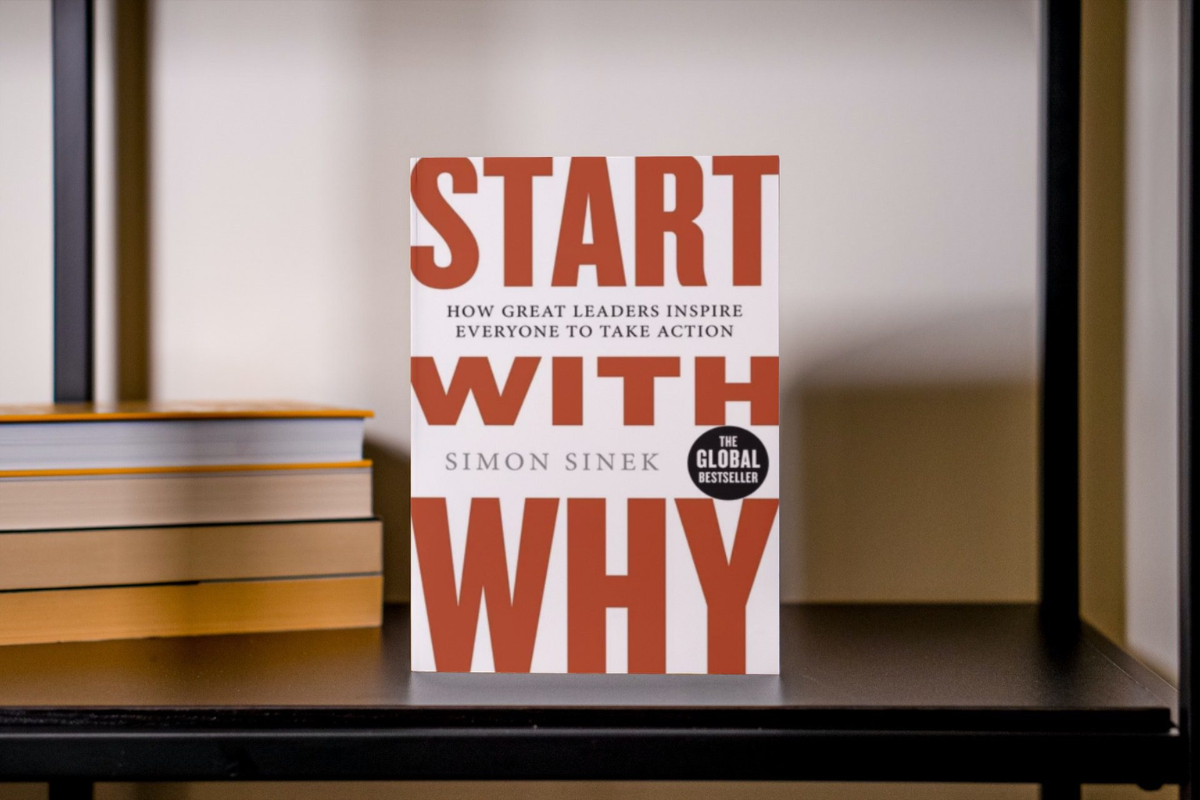
Simon Sinek built this book around a simple observation: most organisations can articulate what they do and how they do it, but very few can clearly explain why they do it. Not why in the sense of making a profit that is a result, not a reason, but why in the sense of purpose: the belief or cause that makes the organisation worth existing. Sinek's "Golden Circle" framework places why at the centre, surrounded by how, and then what. His argument is that people do not buy what you do; they buy why you do it.
For early-stage founders, this has immediate practical consequences for branding, messaging, and early customer attraction. A business with a clear sense of purpose communicates differently from one that leads with features and pricing. It attracts early adopters, people who share the belief, rather than customers who are simply shopping for the cheapest option.
Building clarity about why your business exists before you write a single piece of marketing copy is the kind of foundational work that pays dividends for years. This book gives founders the language and framework to do that internal work early, when it is easiest to course-correct, and most likely to set the right tone for everything that follows.
"People don't buy what you do; they buy why you do it."
— Simon Sinek, Start with Why
Atomic Habits
James Clear
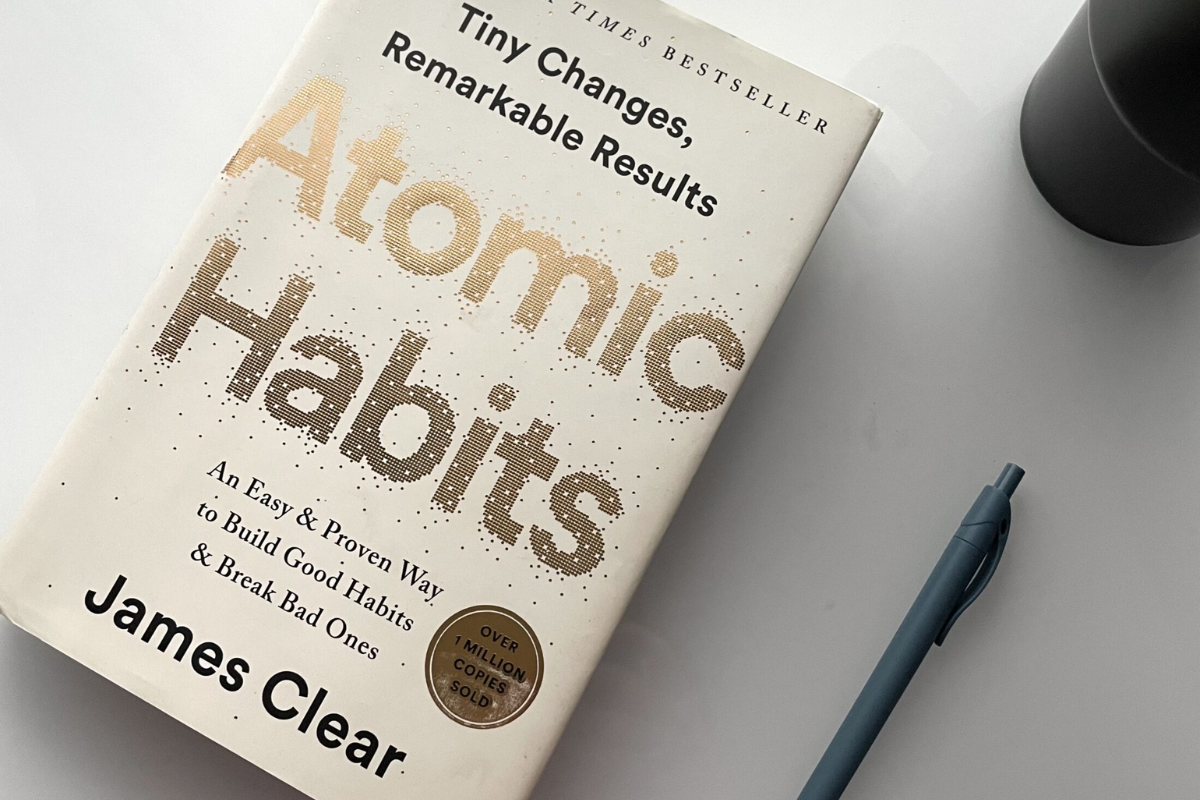
The early days of running a business are chaotic. There is no HR department to keep you accountable, no performance review to structure your goals, and no clear line between work hours and everything else. Most new founders discover quickly that motivation alone is not a reliable engine. James Clear's core argument is that systems are more reliable than goals, and that the path to meaningful long-term results is built from small, consistent, daily habits so small they feel almost trivial, yet compounding into significant change over time.
Clear's framework introduces the "habit loop" cue, craving, response, and reward, and gives founders practical tools for designing habits that stick. The famous 1% improvement principle underpins the book: a 1% improvement each day results in outcomes nearly 38 times better over the course of a year.
For a first-time founder juggling product development, client calls, and administrative work, this is not an abstract idea. It is a framework for structuring the daily rhythms of the business: when to write, when to call customers, when to review finances, and how to make those routines automatic rather than decisions that require daily willpower. A business built on good daily systems has a structural advantage over one that depends on bursts of heroic effort.
"You do not rise to the level of your goals. You fall to the level of your systems."
— James Clear, Atomic Habits
Zero to One
Peter Thiel
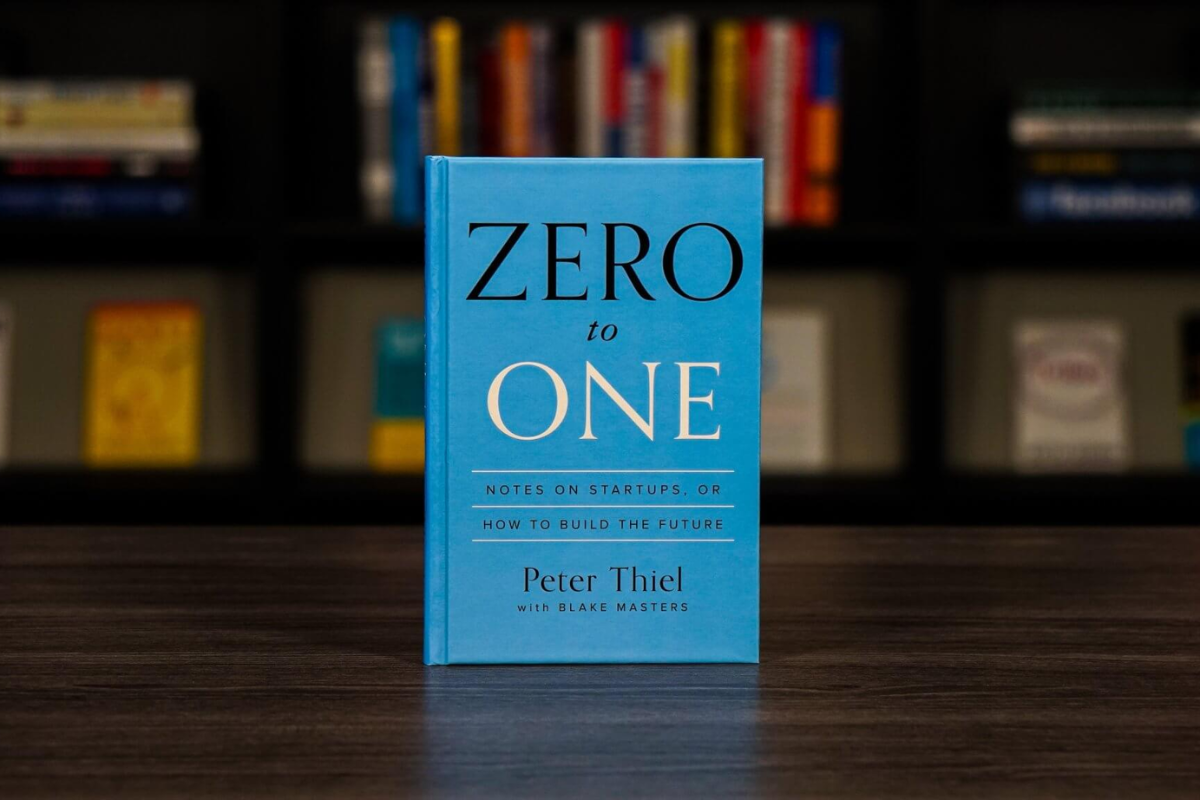
Peter Thiel divides progress into two categories. Horizontal progress is taking something that works and copying it — going from one to n. Vertical progress is creating something that did not exist before — going from zero to one. Most small businesses are built on horizontal progress: a better coffee shop, a faster delivery service, a cheaper version of an existing product. Thiel's argument is that this kind of competition is structurally difficult and often financially unrewarding, because when you are competing in an existing market, you are subject to every pressure that market already imposes.
He argues instead for building something that creates its own market — a product or service so different from what exists that competition is temporarily irrelevant. This does not require a technology startup or a venture-funded team. It requires asking a question that Thiel makes central to the book: "What important truth do very few people agree with you on?"
For early-stage founders, this is a genuinely useful provocation. It pushes back against the instinct to copy successful models and asks instead what the founder knows, sees, or believes that others do not. Answering that question honestly can reveal the kind of distinctive positioning that allows a small business to charge fair prices, attract loyal customers, and build something that holds up over time.
"All failed companies are the same: they failed to escape competition."— Peter Thiel, Zero to One
The E-Myth Revisited
Michael E. Gerber
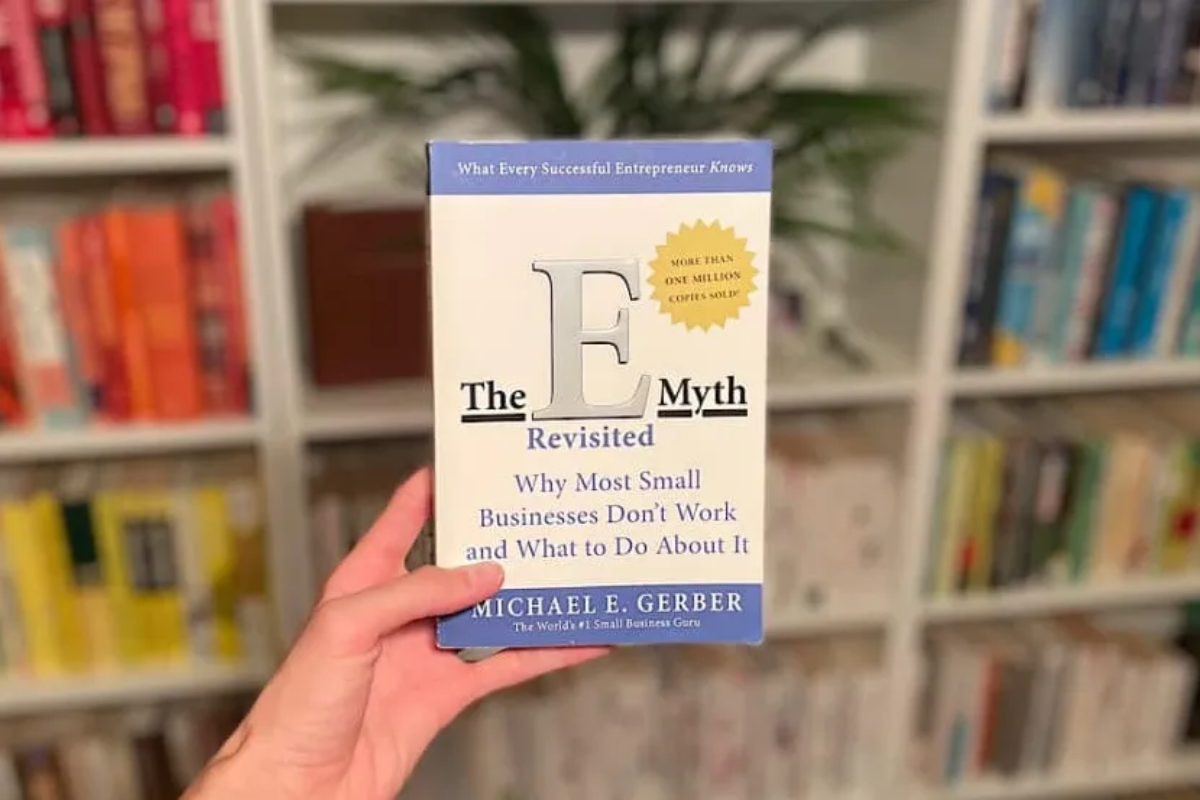
Michael Gerber identifies what he calls the "entrepreneurial myth," the mistaken belief that people who are skilled at a technical craft are naturally equipped to run a business built around that craft. A talented baker who opens a bakery, a skilled accountant who starts a firm, a gifted designer who launches an agency, each of these people is making the same hidden assumption: that being good at the work is the same as knowing how to build and run the business that delivers the work. Gerber argues that these are entirely different activities, and confusing them is why most small businesses fail.
The central distinction in the book is between working in your business and working on your business. Working in it means doing the daily tasks, serving customers, making the product, and handling queries. Working on it means building the systems, processes, and structures that allow the business to function consistently without requiring the founder's constant personal involvement.
Gerber introduces the idea of thinking of your business as a franchise prototype, a system so well-documented and repeatable that anyone could operate it. For a founder early in the process, this is a useful frame: building documented, repeatable systems from the start rather than relying on the founder's memory and improvisation for every task.
"The purpose of going into business is to get free of a job so you can create jobs for other people."
— Michael E. Gerber, The E-Myth Revisited
Blue Ocean Strategy
W. Chan Kim & Renée Mauborgne
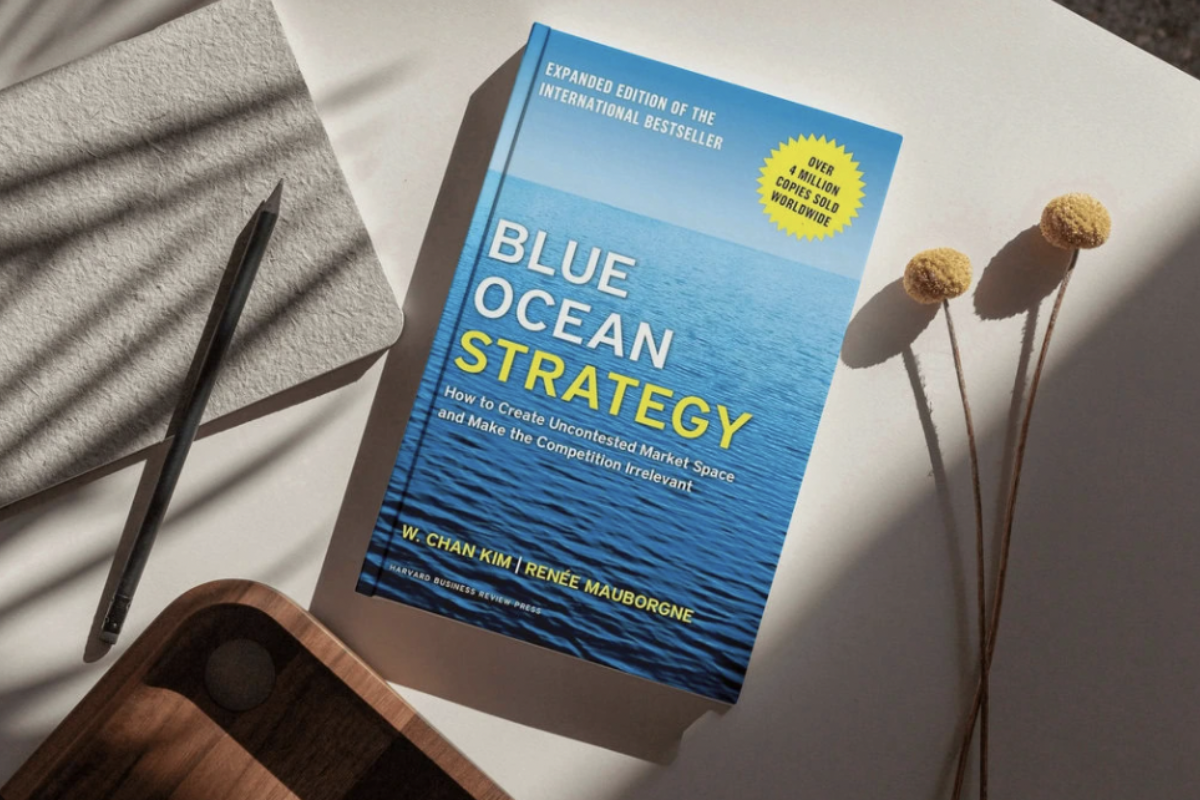
W. Chan Kim and Renée Mauborgne spent years studying industries across sectors and found a consistent pattern. Most businesses are locked in what they call "red oceans," defined markets with established competitors, where growth comes from taking market share from others. In these spaces, products tend to converge toward similarity, prices compress, and margins shrink. The ocean is red because competition is bloody. Their alternative concept, the "blue ocean," describes market space that does not yet exist, created by a business, not contested by one.
The analytical tool at the heart of the book is the "strategy canvas," a visual framework that maps the factors an industry competes on and shows where a business might reduce, eliminate, raise, or create those factors to build something new. This is not speculative thinking; the authors document it through case studies across airlines, hotels, entertainment, and more.
For early-stage founders, this framework is most useful at the positioning stage: before locking in a business model, using the strategy canvas to identify where you could serve a need that nobody else is currently addressing. Blue Ocean Strategy is a structured methodology for finding spaces where your business can grow without needing to fight for every customer.
"The best way to beat the competition is to stop trying to beat the competition."
— W. Chan Kim & Renée Mauborgne, Blue Ocean Strategy
Show Your Work!
Austin Kleon
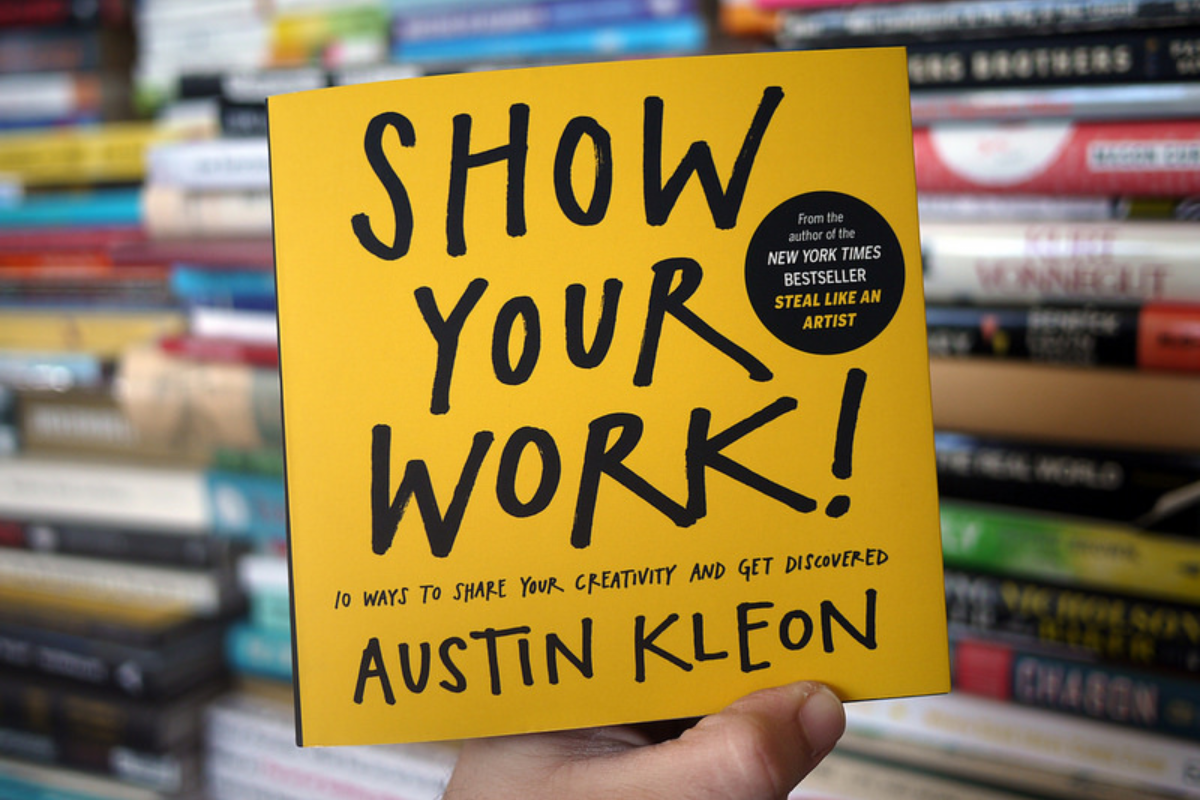
Austin Kleon wrote this short, illustrated book as a practical guide for creators and makers who struggle with self-promotion. His central argument is that building an audience does not require a finished product. It does not require a launch event or a polished portfolio. It requires sharing the process, the thinking, the decisions, the failures, and the small wins as the work unfolds. He calls this "becoming a documentarian of what you do."
For early-stage founders, this idea has direct business value. Sharing the process of building a company, what you are learning, what problems you are solving, and what you are making builds an audience before you have a product to sell them. It creates transparency that generates trust. It invites feedback at a stage when feedback is still cheap to act on. And it establishes a body of public work that functions as both marketing and proof of competence.
Kleon's advice is low-pressure and accessible: a daily dispatch, a photo of the work in progress, a short description of what you learned today. The consistency matters more than the production quality. For a founder who feels uncomfortable with self-promotion, this book offers a way to share that feels honest rather than performative because it is rooted in the actual work, not in projecting an image.
"Stop worrying about making it and start worrying about contributing to the conversation."
— Austin Kleon, Show Your Work!
No single book covers every challenge a first-time founder faces. Together, these ten do.
Read them in sequence or in the order your current pressures demand. Return to them at different stages, and the same page will mean something different after your first ten customer conversations. The goal is not to absorb every idea, but to build the mental models that make early decisions a little less improvised.
Also read:
 Umema Arsiwala
 Ummulkiram Pardawala
 Umema Arsiwala