Dubai has built one of the most admired hospitality markets in the world, and the numbers behind it keep giving investors reasons to pay attention. Record visitor arrivals, rising room revenue, a steady stream of landmark openings and a government that treats tourism as a pillar of its long-term economic plan have all combined to make the emirate a magnet for hotel capital.
Owners, operators and first-time investors are now looking at the sector from different angles, from branded luxury resorts to renovated city hotels and fresh ideas in sustainable hospitality.
The shape of the opportunity is more varied than most headlines suggest, so where are the strongest openings for anyone ready to put money to work?
1. Record Visitor Numbers Are Building Lasting Demand
Dubai welcomed 19.59 million international overnight visitors in 2025, a 5% rise on the 18.72 million recorded in 2024, which made it the third record-setting year in a row. The momentum carried through to the end of the year, with December alone bringing 2.04 million visitors, a 6% increase on the same month a year earlier. Steady growth of this kind gives hotel owners a dependable base of demand to plan around, and it is one of the main reasons institutional and private investors keep returning to the market.
2. Room Rates and Revenue Per Room Keep Climbing
Healthy visitor numbers are translating into stronger financial performance for hotels. According to the Dubai Department of Economy and Tourism, the average daily rate rose 8% to AED579 in 2025, while revenue per available room increased 11% to AED467. Revenue per available room is the figure that investors tend to watch most closely because it captures both pricing power and occupancy in one number, and growth at that pace points to a market where well-run hotels can earn strong returns.
3. The Upper End of the Market Is Performing Strongly
Dubai’s identity as a premium destination shows up clearly in the data. Cavendish Maxwell reported that hotel occupancy averaged 81% in 2025, with upscale hotels gaining 4.9% and luxury hotels gaining 4.5%, while the upper midscale segment reached the highest occupancy level at 84.4%. The same report noted that nearly 70% of the city’s hotel inventory sits in the high-end category, which confirms that investors who favour premium assets are working in the heart of the market rather than at its edges.
4. Landmark Openings Keep the Destination Fresh
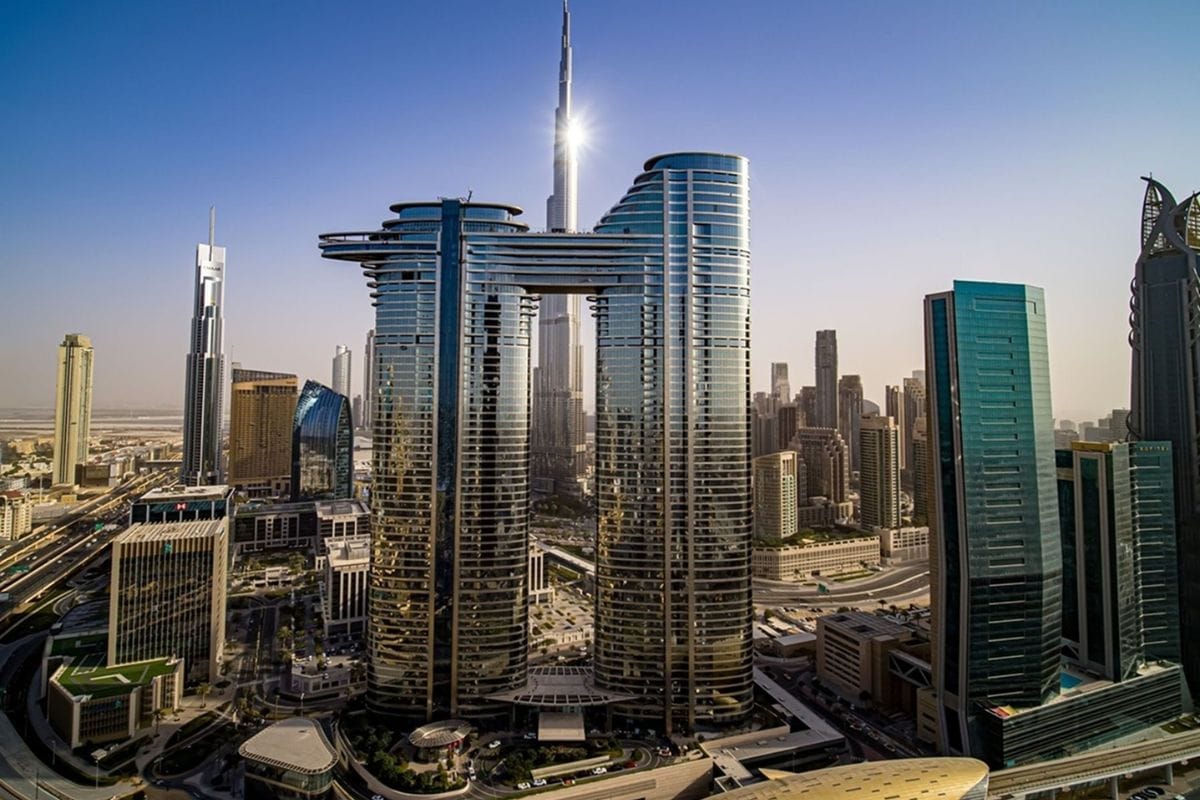
New properties give returning travellers a reason to come back and give first-time visitors a reason to choose Dubai over other global cities. The openings recorded in 2025 included Ciel Dubai Marina, the world’s tallest hotel, along with Jumeirah Marsa Al Arab, Mandarin Oriental Downtown and Cheval Maison at Expo City. Knight Frank noted that the tallest hotel and a 259-key Mandarin Oriental were due to bring more than 1,000 rooms to the city in the final months of 2025, which shows how quickly the destination keeps reinventing itself at the top end.
5. A Measured Supply Pipeline Supports Long-Term Growth
Looking ahead, Cavendish Maxwell projects that Dubai will add 9,300 hotel keys between 2026 and 2028, made up of 4,600 in 2026, 2,900 in 2027 and 1,800 in 2028. That is a gradual and well-spaced schedule, and JLL’s latest report indicates that around 4,900 additional rooms are anticipated in Dubai by the end of 2026. A pipeline that tapers over several years gives the market time to absorb new rooms and gives investors a clearer view of future competition when they assess a site or an acquisition.
6. Hospitality Is Creating Jobs and Building Skills
Every new hotel brings employment and expertise to the emirate, and that has a direct effect on service quality. Industry executives estimate that luxury hotels create an average of 1.3 to 1.5 jobs per room, compared with 0.5 to 1 per room in the budget category, which means the new pipeline could generate roughly 12,000 to 13,900 jobs. A deep and growing talent pool helps operators maintain the standards that Dubai guests expect, and it strengthens the case for investing in properties where service is a key part of the value.
7. Source Markets Are Becoming More Diverse
A healthy destination draws guests from many places, and Dubai’s mix keeps broadening. In 2025, GCC and MENA proximity markets accounted for a combined 26% of visitors, with 2.99 million arrivals from the GCC and 2.17 million from the wider MENA region. JLL describes the UAE’s outlook as supported by strong tourism fundamentals, continued investment in the destination and a diversified blend of international, regional and domestic demand. For investors, this variety spreads risk across different traveller types and seasons, and it opens the door to concepts aimed at families, long-stay guests and weekend visitors from nearby countries.
8. Business Events Are a Growing Source of Bookings
Dubai has worked hard to position itself as a global meeting place, and the results are visible in the pipeline of conferences heading its way. In the first half of 2025 alone, Dubai Business Events secured 249 successful bids to host international conferences, congresses and incentive programmes, which are expected to bring more than 127,000 delegates to the city. Corporate travellers tend to book well in advance and often stay longer than leisure guests, so hotels with strong meeting facilities and convenient locations are well placed to benefit.
9. Acquisitions and Renovations Are Opening New Routes In
The market is entering a phase where buying and upgrading existing hotels is as attractive as building new ones. Knight Frank says the UAE is moving from a development-heavy cycle to a more balanced, investment-led phase in which hotel transactions are expected to stay active, and Dubai continues to dominate regional deal activity. At the same time, a number of properties have begun extensive renovation projects to elevate the guest experience. For investors, a well-located existing hotel with room for modernisation can offer a quicker path to returns than a ground-up development.
10. Government Vision and Sustainability Add Long-Term Confidence
Policy direction matters enormously in hospitality, and Dubai’s is clear. The emirate is working toward the Dubai Economic Agenda D33, which focuses on strengthening its position among the world’s leading cities for tourism, living and investment. Dubai International also kept its position as the world’s busiest airport for international passengers for the 11th consecutive year in 2025, which underlines the connectivity that supports the whole sector. Sustainability is rising in importance too, with 237 hotels receiving the Dubai Sustainable Tourism Stamp in 2026, an increase of 55%, a sign that green credentials are becoming part of how hotels compete.
Dubai’s hospitality sector rests on strong foundations: consistent visitor growth, a premium-led product, a deep events calendar, world-class connectivity and a government with a long-term plan. Recent momentum is encouraging as well, with 6.97 million international visitors arriving between January and August 2026, including 869,000 in August alone. Anyone considering an investment should look closely at location, operator track record and brand positioning, and speak with a qualified financial adviser before committing capital.
Also Read:
 Shahba Mayyeri
 Shahba Mayyeri
 Shahba Mayyeri
 Shahba Mayyeri
 Ummulkiram Pardawala