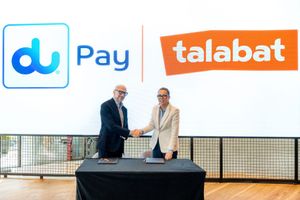
Cash-on-delivery was supposed to be the bridge that connected hesitant shoppers to online commerce. In markets like the UAE, Saudi Arabia, Egypt and across much of South and Southeast Asia, it became something far more complicated. What started as a trust-building mechanism gradually hardened into one of the most persistent and costly structural problems in regional ecommerce, and for many businesses, it quietly bleeds them dry while the revenue numbers look just fine on paper.
The numbers tell one story. The returns, the failed deliveries, the cash handling costs and the inventory that sits locked in limbo tell another. And the question that more ecommerce operators are now asking is not whether COD is a problem, but how deep that problem actually runs and what it looks like to build a business that no longer depends on it. The answer, it turns out, involves a lot more than just nudging customers toward card payments.
Why COD Became So Dominant in the First Place
To understand the trap, you have to understand why COD spread so aggressively across developing and emerging markets in the first place. It was not irrational consumer behaviour. It was a logical response to a set of very real structural conditions.
In the early years of ecommerce in the Middle East and South Asia, digital payment infrastructure was patchy, consumer trust in online merchants was low, and product quality was genuinely inconsistent across platforms. Shoppers had no reliable way to verify that what they ordered would match what arrived, and card fraud was a growing concern that made people understandably reluctant to enter their payment details online. COD solved all of these problems at once. You only pay when the package is in your hands, you can inspect it before committing, and you never have to share your financial information with a merchant you have not yet learned to trust.
Platforms and logistics companies encouraged this by making COD the default option or at least the most prominently featured one, which in turn trained millions of shoppers to expect it. By the time digital payments infrastructure improved and trust in online shopping grew, COD was already deeply embedded in purchasing habits across the region.
The Real Cost of COD: What the P&L Statement Misses
The direct cost of COD is visible enough. Logistics companies typically charge a premium for COD deliveries because they have to handle cash collection, and that cash has to be reconciled, transported and remitted back to the merchant, often on a settlement cycle that can stretch anywhere from a few days to a few weeks. For a business running on thin margins, that delay in cash flow alone can create serious working capital strain.
But the more damaging costs are the ones that sit just below the surface. The return rate for COD orders is significantly higher than for prepaid ones across virtually every product category, and this is not just an observational pattern but a structural reality. When a customer pays upfront, they have skin in the game. The psychological commitment is real and the purchase is final in their mind. With COD, the commitment only materialises at the moment of delivery, which means the customer can change their mind at any point in the journey without any financial consequence.
The Hidden Cost Stack
The full cost of a single failed COD delivery includes the original shipping cost, the return shipping cost, the cost of restocking or writing off the product if it is damaged in transit, the operational cost of the customer service interaction and the time cost of remapping the inventory back into the system. When you also factor in the cash reconciliation overhead and the fraud risk that comes with customers ordering multiple items with no intention of keeping them, the picture becomes genuinely troubling for businesses operating at scale.
There is also a subtler cost that rarely gets quantified. COD orders tend to attract a disproportionate share of low-intent buyers, meaning people who are browsing casually and order on impulse with little genuine need for the product. Prepaid customers, on average, tend to have stronger purchase intent, lower return rates and higher lifetime value. Building a business heavily weighted toward COD therefore distorts your customer data, skews your unit economics and makes it much harder to identify and retain your most valuable buyers.
The Return Problem: COD's Most Expensive Symptom

No aspect of the COD problem is more expensive or more operationally disruptive than returns, and return rates in COD-heavy markets can run anywhere from 20% to 40% in categories like fashion and electronics, compared to single-digit return rates in mature prepaid markets.
Part of this is deliberate. There is a well-documented phenomenon in ecommerce markets across the Gulf and South Asia where some buyers order the same product in multiple sizes, colours or variations with the explicit intention of keeping only one and returning the rest. This behaviour, sometimes called bracketing, is manageable when orders are prepaid because the financial friction discourages it. With COD, there is no friction at all, and the merchant absorbs the entire cost of the experiment.
Returns also cascade in ways that are not always obvious. A returned product has to be inspected, reconditioned if possible, restocked and relisted. If it comes back damaged or the packaging is compromised, it may have to be sold at a discount or written off entirely. In fast-moving categories where prices shift quickly, the time it takes to process and relist a return can mean selling at a lower margin than the original sale would have delivered.
What Smart Ecommerce Players Are Doing Differently
The businesses that are successfully reducing their COD dependency are not doing it through blunt force. Simply removing COD as an option in a market where trust is not yet fully established will just move your customers to a competitor. The approach that actually works is more nuanced, and it operates across several dimensions simultaneously.
Incentivising Prepaid Without Punishing COD
The most effective lever that ecommerce operators have found is financial incentivisation rather than restriction. Offering a genuine discount or added benefit for prepaid orders, whether that is a fixed reduction, free shipping, priority dispatch or an exclusive product, shifts customer behaviour gradually and voluntarily. Customers who might have defaulted to COD out of habit start choosing prepaid when the value difference is clear enough, and once they have a positive prepaid experience, repeat purchase rates tend to reflect the shift.
Several platforms in the UAE and Saudi Arabia have experimented with loyalty point structures that offer accelerated accumulation for prepaid orders, which effectively builds the habit of prepaid checkout into the retention mechanics of the business rather than treating it as a separate initiative.
Using Data to Manage COD Risk Selectively
Rather than applying a blanket approach, the more sophisticated operators have built or adopted risk-scoring systems that evaluate individual orders for their likelihood of being rejected or returned. Factors like order history, delivery address, phone number verification, order value, time of day and product category feed into a score that determines whether COD is offered, restricted or flagged for manual review.
A buyer with ten successful COD completions and a strong address history is a very different risk profile from a new account placing a high-value COD order from an unverified number. Treating both identically is a failure of data use, and the companies that have layered risk intelligence onto their COD offering have seen measurable reductions in return and rejection rates without meaningfully impacting their overall conversion rates.
Building Genuine Trust in Digital Payments
Part of the reason COD persists is that the trust infrastructure around digital payments has not always been communicated well to end consumers. Many shoppers who are technically capable of paying online still choose COD because they are not confident about what happens if something goes wrong and they need a refund, or because they have had a bad experience in the past.
Businesses that invest in making their refund policies clear, their payment security visible and their customer service accessible have found that the preference for COD softens over time, particularly when a positive prepaid experience reinforces the lesson. This is a longer play than discount incentivisation, but it compounds more durably because it shifts the underlying trust dynamic rather than just the transaction behaviour.
The Role of Buy Now Pay Later in the Transition
One of the more interesting developments in this space is the rise of buy now pay later as a bridge between COD behaviour and digital payment adoption. BNPL services like Tabby and Tamara in the GCC have grown rapidly by offering customers a familiar logic, pay later, without the operational costs that COD imposes on merchants. The payment is guaranteed to the merchant upfront, the customer gets flexibility in when they settle, and the return dynamic shifts because the transaction is already processed.
For merchants, BNPL also tends to increase average order values because customers feel less pressure about committing to a large purchase when the settlement is spread out. The data from several UAE-based fashion and electronics retailers suggests that BNPL orders carry a meaningfully lower return rate than COD while also carrying a higher basket size, which is a favourable combination from a unit economics perspective.
BNPL is not without its costs or complexities, particularly the processing fees that platforms charge, but for many businesses it represents a genuine stepping stone toward a prepaid-dominant model that does not require the customer to make a leap of faith all at once.
Key Metrics Ecommerce Businesses Should Be Tracking

Most ecommerce operators track their COD ratio as a percentage of total orders, but that is often where the analysis stops. The businesses that are making the most progress on reducing COD dependency are tracking a more complete set of metrics that reflects the true cost and risk picture.
- COD completion rate by product category and geography, because the failure rate varies significantly across both dimensions and the intervention strategy should reflect that variation rather than treating the business as a monolith.
- Return rate by payment method, which almost always reveals a substantial gap between COD and prepaid that can be used to build the internal business case for incentivising the shift.
- Days cash outstanding from COD settlements, which quantifies the working capital cost of delayed remittances and makes the cash flow argument for reducing COD dependence concrete and measurable.
- Customer lifetime value segmented by first payment method, which in most markets shows that customers who start prepaid have a higher long-term value than those who start on COD, giving you a data-backed reason to invest in acquiring prepaid-first customers.
- COD fraud rate, including orders placed with invalid phone numbers, repeated rejection patterns from the same address and multi-order spam, which helps identify whether the COD problem is primarily a consumer behaviour issue or a fraud issue, because the solutions to each are quite different.
The businesses that have made the most progress on the COD problem are the ones that stopped treating it as a payment operations issue and started treating it as a customer experience and trust issue. The mechanics of changing payment method preferences are secondary to the underlying question of why customers choose the payment method they do, and the answer almost always comes back to trust, familiarity and perceived risk.
Building prepaid-first behaviour takes time, and it requires consistency across the customer journey, from the clarity of the checkout experience to the speed of refunds to the quality of post-purchase communication. Every positive prepaid experience is a data point that moves the customer further away from needing COD as a safety net, and at scale, those data points accumulate into a meaningfully different business.
The ecommerce players who will look back on COD as a chapter they moved through, rather than a condition they are permanently managing, are the ones investing now in the infrastructure of trust: reliable fulfilment, transparent policies, responsive service and payment experiences that feel as safe as they actually are. That combination, more than any single tactical intervention, is what makes the exit from the COD trap both possible and permanent.
Also Read:
 Umema Arsiwala
 Shahba Mayyeri
 Umema Arsiwala
 Shahba Mayyeri
 Umema Arsiwala