The movement of high-value goods across international borders has always been an exercise in friction management. Customs duties, financial guarantees, documentation requirements, and the logistical complexities of temporary admission have historically created significant barriers for gallery owners, auction houses, private collectors, and luxury goods operators trying to move assets fluidly between markets. Dubai has long positioned itself as a solution to this problem — but a new initiative approved in March 2026 represents the most ambitious and technically sophisticated step yet in that direction.
The Virtual Warehouses Initiative, approved by Dubai's Executive Council as part of the Dh1 billion economic stimulus package on 31 March 2026 and effective from 1 April, is being overseen by Dubai Customs. In its first phase, the initiative focuses specifically on the fine arts sector, a deliberate and strategic choice that signals both Dubai's ambitions in the global luxury market and its approach to piloting high-technology trade infrastructure before scaling it more broadly. For businesses operating in or adjacent to the luxury goods space, it represents a material and immediate change in what is possible from a logistical standpoint.
What the Virtual Warehouse Initiative Actually Does
At its core, the Virtual Warehouses Initiative replaces the traditional physical customs holding model with a digitally managed framework for temporary admission. Under the previous system, importing high-value goods into Dubai on a temporary basis, for an exhibition, an auction, a private viewing, or a consignment arrangement, required customs duties to be paid or secured through a financial guarantee, tied to a specific physical location and a defined time window. The administrative overhead was substantial, the financial exposure was real, and the geographic restrictions created genuine operational constraints for businesses managing fluid, high-value inventories.
The Virtual Warehouses Initiative removes these barriers in several important ways. Under the new temporary admission declaration framework, imports of artworks are entirely exempt from standard customs duties and from the requirement to provide financial guarantees, eliminating two of the most significant cost and cash flow burdens associated with temporary high-value imports. For private artworks specifically, the duty suspension period has been extended to three years, providing an exceptionally broad window for exhibition, loan, sale, and trade activity without triggering immediate tax liability.
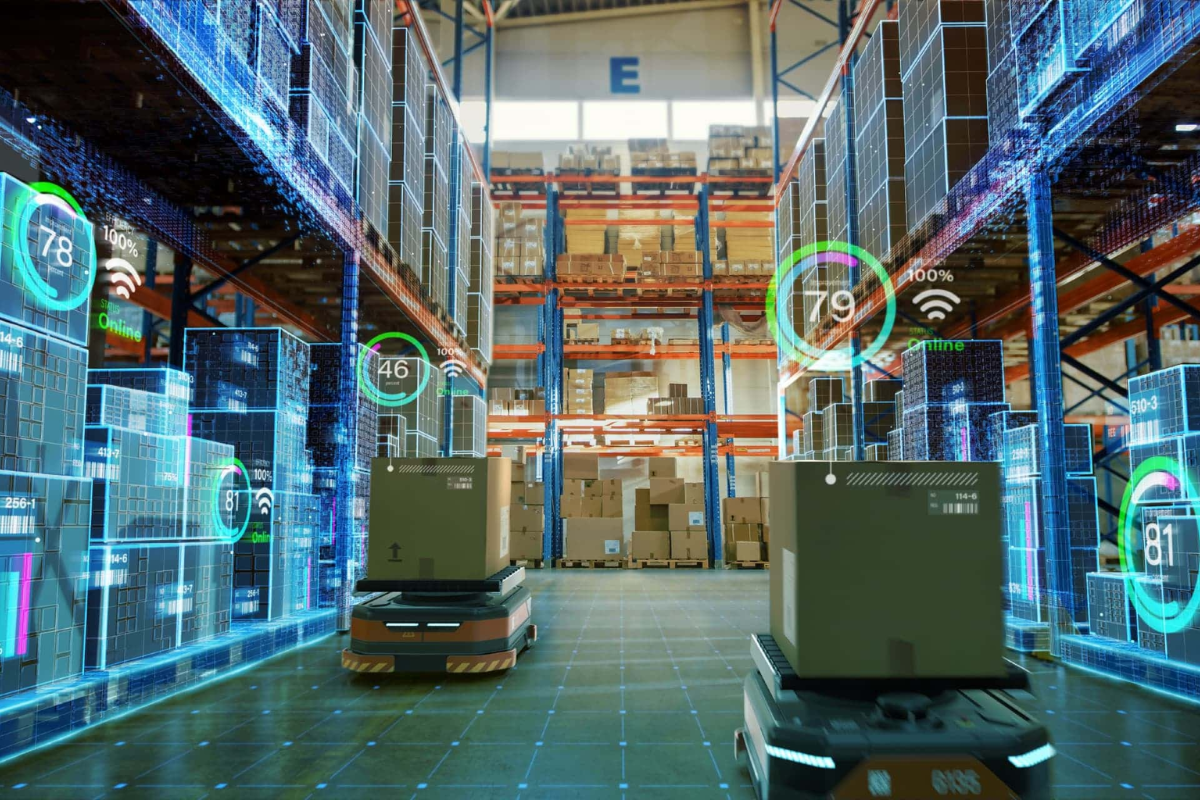
Perhaps equally significant from an operational perspective are the changes to geographical restrictions and administrative processes. The initiative removes the location-binding that previously required goods to remain at a specified physical site, simplifying time extensions and giving operators genuine flexibility in how and where goods are held and displayed. Alongside this, the framework introduces virtual copies of artworks, digital representations used for continuous high-technology tracking, ensuring that the increased operational freedom does not come at the expense of customs oversight or provenance integrity.
Building on the Art Flow Foundation
The Virtual Warehouses Initiative does not emerge from a standing start. It builds directly upon Dubai Customs' Art Flow pilot project, an earlier programme that tested streamlined customs procedures for artwork imports and established the technological and regulatory groundwork that the new initiative now scales. That pilot programme demonstrated both the commercial appetite for this type of facilitation and the technical feasibility of managing high-value temporary imports through a digitally tracked, paperwork-light framework.
The decision to pilot the broader Virtual Warehouses concept through the fine arts sector first is strategically coherent. Fine art represents one of the most logistically complex categories of high-value goods — works move between galleries, auction houses, museums, private collectors, and storage facilities across multiple jurisdictions, often on tight exhibition timelines and with significant provenance documentation requirements. If a virtual warehouse model can be made to work smoothly for fine art, the operational principles and technology infrastructure it produces are transferable across a wide range of other luxury and high-value categories, from jewellery and watches to rare wines and collectible assets.
What This Means for the Luxury Market in Dubai
Dubai's luxury market is already one of the most active in the world. The emirate hosts Art Dubai — one of the leading international contemporary art fairs, along with a growing calendar of auction events, gallery openings, and private collector gatherings that draw high-net-worth individuals from across the Gulf, Asia, Europe, and beyond. The city's combination of geographic connectivity, tax-efficient structures, and a concentrated population of ultra-high-net-worth residents and visitors makes it a natural trading hub for premium assets.
What has historically limited Dubai's position in the global art and luxury logistics market relative to established hubs like Geneva, Singapore, and London is not demand or infrastructure, it is the administrative friction and financial exposure associated with temporary imports. The Virtual Warehouses Initiative addresses this directly. By making it cost-free and administratively straightforward to bring artworks into Dubai on a temporary basis, the initiative reduces the friction that has previously caused galleries, collectors, and auction houses to route high-value transactions through other jurisdictions.
For gallery owners and art dealers, the three-year duty suspension on private artworks is particularly significant. It means that a work can be brought into Dubai, exhibited at multiple venues, offered for private sale, held in storage, and eventually either sold locally or re-exported — all within a single three-year window and without customs duties crystallising at any point during that period. This transforms Dubai from a stopover market for luxury assets into a genuine medium-term holding and trading location.
The Technology Dimension: Virtual Tracking and Digital Provenance
One of the most forward-looking aspects of the Virtual Warehouses Initiative is its integration of high-technology tracking through virtual copies of artworks. This is not simply a digital filing system. The concept of a virtual representation, a structured digital record tied to a specific work, enables continuous monitoring of an asset's location, condition, and custodial chain without requiring constant physical inspection or paper documentation updates.
For the luxury goods sector more broadly, this has implications that extend well beyond administrative convenience. Provenance, the documented history of ownership and movement of a high-value asset, is one of the primary determinants of value in the fine art and collectables market. A digital tracking infrastructure that creates an immutable, continuously updated record of an asset's movement through Dubai's ecosystem enhances that provenance documentation in ways that benefit sellers, buyers, and insurers alike.
It also addresses one of the key concerns that has historically surrounded freeport-style arrangements for high-value goods: the risk of assets moving through the system without adequate transparency. By building high-technology tracking into the framework from the outset, Dubai Customs is positioning the Virtual Warehouses Initiative as a model that combines commercial facilitation with regulatory integrity, a combination that is essential for attracting the trust of the international luxury market.
The Broader Strategic Signal
The Virtual Warehouses Initiative should be read not just as a logistics policy but as a statement of competitive positioning. Dubai is making a deliberate and well-resourced bid to become the preferred hub for high-value asset movement in the region and, over time, to challenge the dominance of established luxury logistics centres in Europe and Asia. The combination of duty-free temporary admission, digital tracking infrastructure, geographic flexibility, and a three-year suspension window creates a proposition that is difficult for competing jurisdictions to match without equivalent legislative and technological investment.
The initiative also arrives at a moment when the global art and luxury market is actively looking for alternatives to traditional hubs. Geneva's freeport model has faced increasing scrutiny over transparency. London's post-Brexit customs environment has added friction for European dealers. Singapore remains highly competitive but geographically distant from the Gulf's growing concentration of high-net-worth wealth. Dubai's timing and its combination of connectivity, regulatory modernity, and now a purpose-built virtual warehousing framework, positions it to capture a meaningful share of this repositioning.
What Comes Next
The first phase of the Virtual Warehouses Initiative is explicitly framed as a pilot, a proof-of-concept for the fine arts sector that builds the regulatory framework, technological infrastructure, and operational processes that will underpin broader expansion. The logical trajectory is an extension of the model to other categories of high-value goods: jewellery, watches, rare collectables, premium fashion, and other luxury assets that share the fine art sector's combination of high value, complex provenance requirements, and international mobility.
For businesses in the luxury space, whether they are gallery owners, private dealers, auction houses, logistics operators, or high-net-worth individuals managing a collection, the immediate practical step is to engage with Dubai Customs directly to understand how the new temporary admission declaration framework applies to their specific situation.
The duty exemptions and administrative simplifications are already in effect as of April 2026, and the advantage of early engagement is the ability to restructure import and holding strategies before competitors do.
Also Read:
 Umema Arsiwala
 Ummulkiram Pardawala
 Ummulkiram Pardawala
 Shahba Mayyeri