Dubai imports the vast majority of what it eats. That fact has shaped the city's food system for decades and it is now, steadily and deliberately, beginning to change.
Across the emirate, farms that never needed soil are producing thousands of kilograms of greens every day. UAE-labelled honey, dairy, herbs, and artisanal products are appearing on menus and supermarket shelves with growing regularity. Residents are paying attention and paying a premium. The shift is not cosmetic. It is structural, technology-driven, and backed by one of the most ambitious food security agendas in the world.
The Technological Leap That Made It Possible
The story of local food in the UAE begins with a pragmatic problem: how do you grow food reliably in one of the world's most arid climates, with extreme heat, minimal rainfall, and limited freshwater reserves?
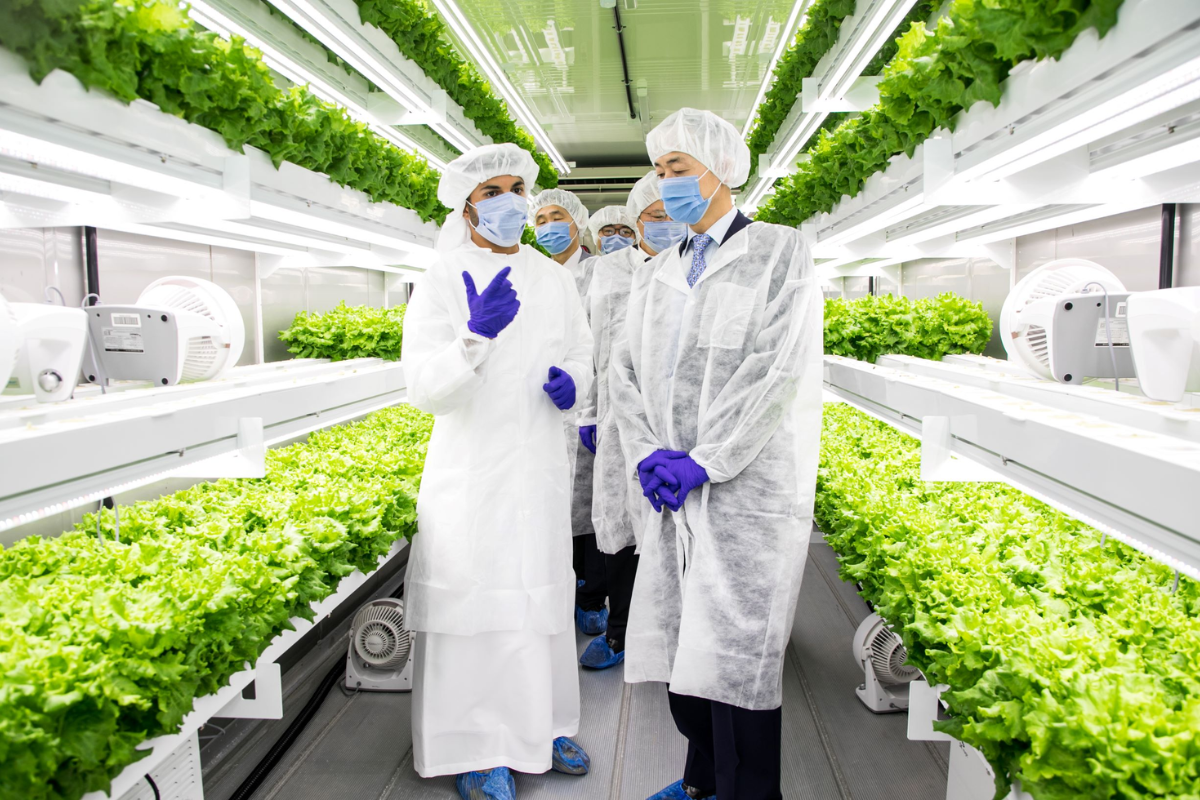
The answer arrived not through traditional agriculture but through technology. Hydroponics and vertical farming methods that grow plants in controlled indoor environments using water-based nutrient systems without soil have proven exceptionally well-suited to the UAE's conditions. These systems operate independently of outdoor temperatures, seasonal rainfall, and pest exposure. They produce consistent yields every single day of the year, 365 days without interruption.
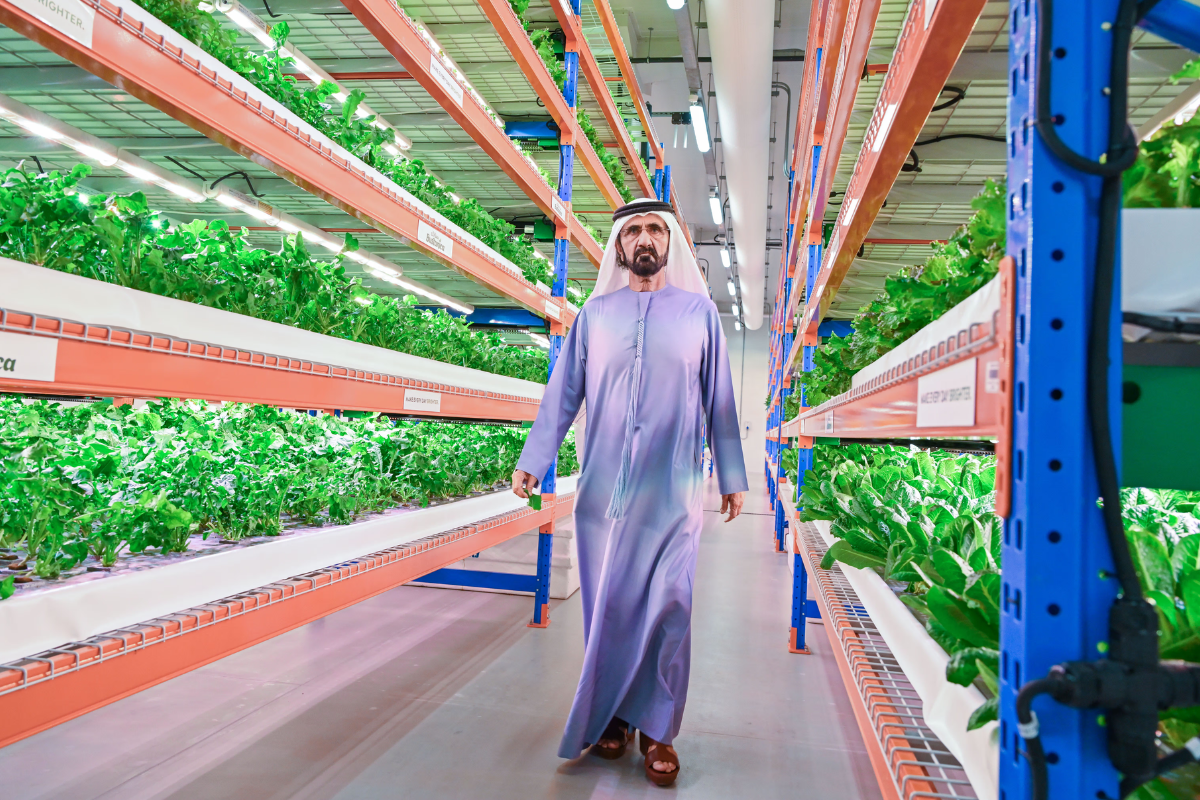
The scale of what has been built here is worth stating plainly. Bustanica, located near Al Maktoum International Airport, is the world's largest indoor vertical farm 330,000 square foot facility producing over one million kilograms of pesticide-free leafy greens annually, using 95% less water than conventional agriculture and zero soil. It is the most visible proof point of what UAE agritech can achieve, but it is far from the only one.
Dubai's Food Tech Valley and the expanding AgTech Parks are drawing in startups, research centres, and private investors focused on indoor farming, vertical systems, and agricultural robotics. Elite Agro, one of the UAE's leading domestic producers, has expanded its hydroponic and controlled-environment operations to increase the local supply of fruits and vegetables.
Smaller urban farms and hydroponic herb growers are supplying restaurants and retailers across the city. The ecosystem that has grown around these initiatives has brought a new category of producer into a market that, just five years ago, barely existed. This is not farming in any traditional sense. It is precision food production and it is operating at scale across the emirate.
The Freshness Factor: Hours, Not Days
Speak to any chef at a serious Dubai restaurant, and the conversation about local produce almost always returns to the same point: freshness. Not freshness as a marketing word, but freshness as a measurable, tangible quality that affects texture, taste, and nutritional content.
Produce grown in the UAE and destined for Dubai's supermarkets or restaurant kitchens can travel from harvest to table in a matter of hours. Being locally produced facilitates swift delivery from farm to fork in the UAE, preserving the produce's nutritional value. The locally grown greens also offer enhanced crunchiness and superior flavour. This is a direct consequence of distance or rather, the absence of it.
UAE vertical farms operate on continuous production cycles where temperature, humidity, light, and nutrients are all precisely controlled meaning every batch meets the same standard regardless of the season or the weather outside. Produce is harvested at peak nutrition and maximum flavour, reaching supermarket shelves and restaurant kitchens the same day.
For Dubai's hospitality sector, which serves an internationally sophisticated clientele, this consistency has real commercial value. A hotel group that sources its salad greens locally can offer guests produce that was grown within the city they are visiting. A café chain that features UAE-grown herbs on its menu can make a credible, verifiable claim about provenance. These are not abstract sustainability talking points. They are product quality advantages with a clear supply chain story behind them.
The Pride of "Made in the UAE"
Consumer behaviour in the UAE has shifted meaningfully toward locally sourced products, and this shift is backed by data rather than sentiment alone. Market analysis indicates that 72% of consumers in the UAE are willing to pay a premium for products labelled as locally sourced, according to a 2025 NielsenIQ survey.
This appetite for local products has been met with a growing number of "Made in UAE" food offerings. The UAE plans to introduce 140 new locally produced food items over this year and next, in a push to strengthen domestic supply chains. The initiative focuses on expanding output across dairy, poultry, and processed food categories. Alongside this, milk production has reached 130,000 litres per day and is expected to rise to 300,000 litres by 2029, with supply targeted to serve more than one million people.
The government has also moved to make local produce more visible at the point of purchase. The Ministry of Climate Change and Environment launched the 'Sustainable Product' initiative on January 29, 2026, specifically designed to increase the visibility of local produce in retail outlets. The initiative introduces a standardised labelling system that allows consumers to instantly identify goods grown within the UAE.
For business owners in the food and beverage space, this labelling framework is a practical opportunity. Products carrying a verified local origin have an increasingly clear market advantage among a consumer base that is actively looking for them. The "Made in UAE" identity, when it can be substantiated with supply chain transparency, is becoming a genuine commercial asset.
The Evolution of the Dubai Palate
Dubai's food culture has always been cosmopolitan. The city's restaurants represent virtually every culinary tradition in the world, and its residents drawn from over 200 nationalities bring an equally diverse set of taste preferences and food expectations.
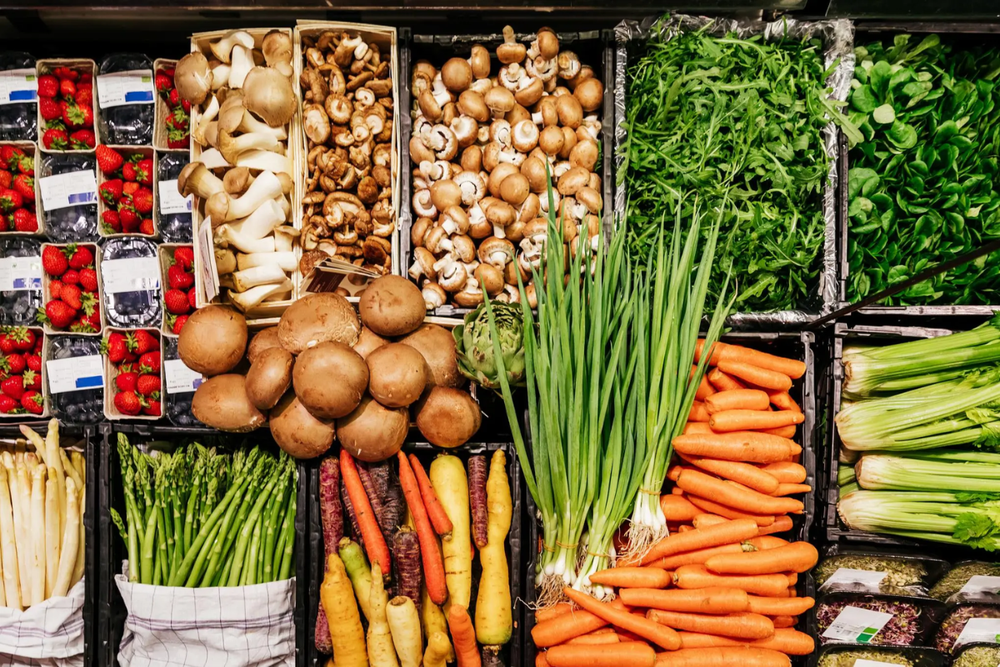
What has evolved in recent years is a growing interest in regional and seasonal ingredients. UAE-grown produce has introduced Dubai residents to flavours that are distinct from their imported equivalents. Hydroponic arugula has a different texture. Locally grown herbs carry a sharper, more immediate aroma. Strawberries harvested within hours taste noticeably different from those that have been in cold storage across a long supply chain.
This has created a quiet but genuine recalibration of expectations, particularly among food-conscious residents and the city's growing wellness community. Farmers' markets increasingly common across Dubai's neighbourhoods — have become spaces where direct engagement with local producers shapes how people think about what they eat. The producer behind the product has a face and a location. The provenance is not a claim; it is a verifiable fact.
Restaurants and cafés that have built their menus around local ingredient sourcing have found a receptive audience. Seasonal menu design a concept historically associated with European fine dining is gaining traction here too, supported by the year-round availability of UAE-grown greens and the expanding variety of locally produced items entering the market. The Dubai palate is not simply global anymore. It is becoming locally rooted as well.
Supporting the Local Ecosystem: Business and Community Impact
The growth of local food production in the UAE creates value beyond the plate. It generates employment, stimulates agri-tech investment, supports small and medium producers, and directs consumer spending into the domestic economy.
Solico Group, one of the Middle East's most established food manufacturers, has placed UAE-based manufacturing at the centre of its food security strategy. Through its AED 130 million SoFood Dubai factory, now live and in production, the Group is demonstrating how locally anchored production is reshaping regional food security. The facility, fully operational in Jebel Ali Free Zone, now produces up to 40 tonnes per day.
The Food Innovation Hub UAE, eighteen months after its launch at COP28, is already strengthening the UAE's food innovation landscape. Its flagship Access Program, officially launched at the Emirates Agriculture Conference in May 2025, is designed to help food and agriculture innovators grow by connecting them with resources, capital infrastructure, networks, and support.
For the small artisanal producer the beekeeper in Hatta, the date farmer in Al Ain, the hydroponic herb grower supplying restaurants in Jumeirah — this ecosystem of institutional support represents a serious commercial opening. Programs like "Emirati Produce First" aim to improve local market access, while restaurants and hotels are incentivised to source more local produce, strengthening farm-to-fork connections.
Choosing to source locally is also a business continuity decision. Global supply chain disruptions whether triggered by geopolitical events, shipping constraints, or weather events in producing countries have underscored the value of having reliable domestic production available. A restaurant group or hotel chain with established local supplier relationships is simply less exposed to the volatility that external supply chains can introduce.
Building a Resilient Food Future for the Emirates
The enthusiasm for local flavours in Dubai is not disconnected from a larger strategic reality. The UAE's National Food Security Strategy 2051 sets a clear national direction: to make the UAE one of the world's top-ranked countries on the Global Food Security Index. The strategy targets a 50% increase in local food production by 2051, with a key milestone of 30% by 2030, boosting fresh food cultivation through tech-integrated methods like hydroponics and controlled environment agriculture.
A program launched in late 2024 empowers communities to engage in domestic agriculture and aims to increase the number of productive farms by 20%, organic farms by 25%, and cut agricultural waste by 50% by 2030.
These are concrete, measurable targets. They represent government commitment at the highest level and signal that the infrastructure investment, regulatory frameworks, and institutional support for local food production will continue to expand. For businesses operating in food retail, hospitality, or agriculture, this trajectory creates a stable and growing market.
The Ministry of Finance has enacted amendments to the Tax Procedures Executive Regulations, specifically tailored to relieve the burden on local agricultural enterprises, effective April 1, 2026. These regulatory changes are designed to lower the operational costs for hydroponic vertical farms and traditional livestock ranchers alike, thereby incentivising rapid expansion within the sector.
The direction of travel is clear. The UAE is building a food system that is resilient, technologically advanced, and deeply connected to national identity. Local flavours are a central part of that system.
The obsession with local flavours in Dubai is not a passing preference. It is the result of converging forces advanced agricultural technology, a national food security agenda, rising consumer awareness, and a maturing food culture that have aligned to make UAE-produced food a credible, high-quality, commercially significant category.
UAE vertical farms are producing over a million kilograms of pesticide-free greens every year, available 365 days, delivered to tables within hours of harvest. One hundred and forty new locally produced food products are entering the UAE market over the next two years. Consumers are demonstrating a clear willingness to pay for local provenance. Institutions, investors, and policymakers are directing sustained resources toward expanding the ecosystem.
For Dubai's residents, this means fresher food with a verifiable story. For the city's businesses, it means a growing market built on quality, transparency, and resilience. For the UAE as a nation, it means a food system that is increasingly capable of sustaining itself on its own terms.
Also read:
 Shahba Mayyeri
 Umema Arsiwala
 Ummulkiram Pardawala