A strategic guide for business owners navigating growth, capacity, and market expansion in one of the world's most competitive commercial environments.
Dubai's business environment moves at a pace that few markets in the world can match. New sectors emerge rapidly, government-led economic initiatives open fresh opportunities across industries, and the city's position as a global trade and logistics hub means that timing in every business decision carries significant weight.
For many founders and solo business owners operating in Dubai, there comes a point where the business begins to outgrow the individual running it. Revenue may be climbing. Client demands are increasing. New market opportunities are appearing. Yet the systems, capital, and expertise required to seize those opportunities exceed what one person can effectively manage alone.
This is the inflection point that precedes the decision to bring on a business partner. It is not a decision driven by sentiment or convenience. It is a strategic call, one that, when made at the right moment and for the right reasons, can define the long-term trajectory of a business. This article outlines the key indicators that signal that the moment has arrived.
Recognising the Ceiling of Solo Growth

Every business structure has a capacity limit. For solo operators, that limit becomes visible not in a single dramatic event but in a gradual accumulation of bottlenecks. Delivery timelines start stretching. Follow-up calls go unreturned. Strategic planning gets pushed to weekends because operational demands fill the working week.
In Dubai, where client expectations are high and competition is well-resourced, these bottlenecks carry a direct cost. Missing a tender deadline, delayed response to a procurement inquiry, or an inability to handle multiple project threads simultaneously can result in lost contracts that rarely come around twice.
The ceiling of solo growth is not simply a personal energy problem. It is a structural one. A single decision-maker controls every function: sales, finance, operations, client management, compliance, and the business can only scale as fast as that individual can process decisions. Once the cost of that limitation begins to appear in lost revenue or stalled pipelines, the conversation about partnership becomes a strategic necessity.
Skill-Set Gaps in a Dual-Economy Market
Dubai operates as both a digital economy and a physical trade hub. Businesses that thrive here typically operate across both dimensions, maintaining an online presence, digital sales channels, and data-driven marketing, while simultaneously managing physical logistics, supplier relationships, and in-person client engagement.
For a business owner whose core expertise sits firmly in one domain, the other often goes underdeveloped. A logistics operator with deep supply chain knowledge may lack the digital infrastructure to scale e-commerce fulfilment efficiently. A tech entrepreneur may have a strong product but limited ability to navigate the relationship-based procurement environment that governs B2B sales across much of the Gulf.
Bringing on a partner whose professional capabilities complement your own is one of the most capital-efficient ways to close this gap. The cost of hiring senior specialists across both domains, digital strategy, trade operations, and regulatory navigation, can be prohibitive for a growing SME. A partner with verified expertise in the missing area brings that capability without the recurring overhead of senior employment costs. The key criterion is specificity: the skill gap must be real, documented, and directly tied to a revenue opportunity the business cannot currently access.
Entering New Market Segments in the UAE
The UAE is not a single homogenous market. It contains distinct commercial ecosystems across sectors, government contracting, retail, hospitality, real estate, professional services, and manufacturing, each with its own procurement processes, relationship networks, and regulatory considerations.
A business well-established in one segment may identify a clear opportunity in another but lack the access to pursue it. In Dubai, particularly, entry into new sectors often depends on who you know as much as what you offer. The Majlis culture, the tradition of relationship-building through regular, informal gatherings, remains a foundational feature of business life here. Trust is established over time and through personal connection. Contracts in the government and semi-government space, for example, are rarely awarded to businesses without credible introductions and established reputations within the relevant network.
A partner who already holds those relationships, who has spent years building credibility within a target segment, represents something that cannot be purchased through advertising or accelerated through product development. When market expansion is the strategic goal, and when the barrier to that market is relational access rather than product fit, partnership is a direct solution.
Financial Capital vs. Intellectual Capital

Not all partnerships are structured around financial investment. Yet financial capacity remains one of the clearest signals that a partnership conversation is warranted.
Growth in Dubai often requires substantial capital deployment at speed. Securing a commercial space in a prime location, bidding on a large government tender with upfront fulfilment requirements, scaling a team ahead of a new contract, or investing in technology infrastructure, each of these scenarios creates capital demand that may exceed what a business can self-fund without compromising operational liquidity.
A financially contributing partner resolves this without the interest burden of debt financing or the dilution terms often attached to institutional investment at early growth stages. The capital comes in exchange for equity and decision-making involvement, which is precisely why financial partnerships require the same level of scrutiny as intellectual ones. A partner who provides capital but misaligns on operational direction or long-term vision creates problems that outlast the initial funding benefit.
The more sustainable framing is to evaluate what form of capital the business most urgently needs. If the gap is financial, a financially contributing partner may be the right structure. If the gap is knowledge, networks, or technical capability, an intellectual capital partner, one who brings expertise and access in exchange for equity, may deliver greater long-term value.
Cultural Alignment in Dubai's Business Ecosystem
Dubai's commercial environment is multicultural in composition but specific in its business norms. Punctuality, discretion, relationship primacy, and long-term orientation are consistently valued across the diverse nationalities that make up the city's business community. Deals are built on trust over time. Pushiness or short-term transactional thinking tends to erode credibility quickly.
A potential partner must be evaluated not only for what they bring commercially, but for how they operate within this ecosystem. Their communication style, their reputation in existing networks, and how they have conducted business with previous associates, these factors carry real weight in a market where professional communities are interconnected, and word travels efficiently.
Cultural misalignment between partners does not always present itself immediately. It typically emerges under pressure during a difficult client negotiation, a cash flow squeeze, or a strategic disagreement about direction. Assessing a potential partner's operating values before formalising an arrangement is as important as assessing their credentials. In a business environment as relationship-dependent as Dubai's, a partner whose conduct undermines your standing in the market represents a cost that financial statements do not capture.
Operational Workload and Decision-Making Bandwidth
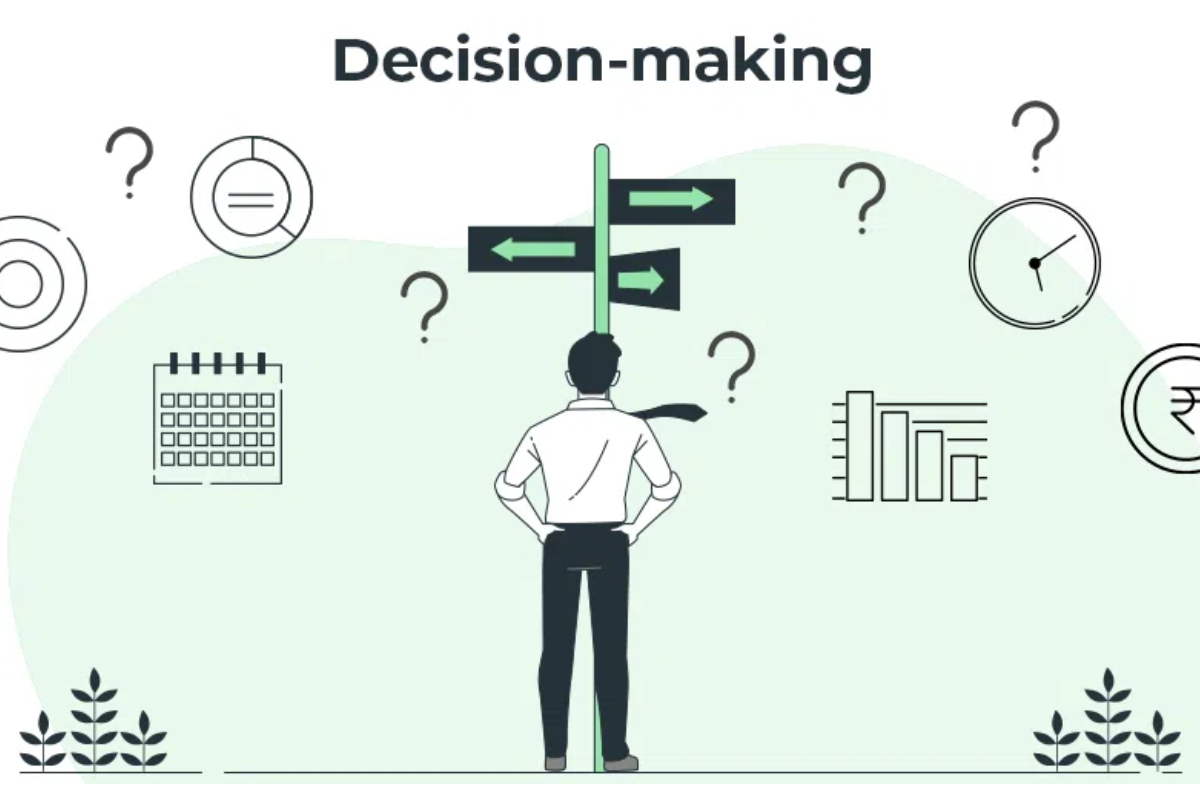
A less discussed but equally important indicator is the state of the current owner's decision-making capacity. Effective business leadership requires cognitive space and time to analyse, plan, and respond to market signals. When day-to-day operational demands consume all available bandwidth, the business enters a reactive mode. It stops making considered strategic moves and starts simply responding to whatever is most urgent.
In high-growth markets like Dubai, reactive businesses fall behind. Opportunities that require fast, informed decisions, a proposal to co-develop a product with a distributor, an invitation to join a consortium bid, and an approach from an acquisition-minded group demand leadership that has the bandwidth to evaluate and act. A business owner who is simultaneously handling accounts, resolving staff issues, managing client relationships, and chasing payments cannot consistently meet that standard.
A partner who takes formal ownership of specific operational domains, whether finance, business development, or delivery, restores the leadership capacity needed to make those high-stakes decisions well.
When the Timing Is Premature
Clarity on the right time to bring on a partner also requires clarity on when the timing is wrong. Pursuing a partnership out of short-term financial pressure, loneliness in the role, or general optimism about what a partner might contribute without specific evidence of need tends to produce poor outcomes.
A partnership formed to solve a temporary cash flow problem typically dissolves when the pressure eases, leaving equity permanently transferred. A partnership is pursued because the current owner wants to reduce their workload without a clear operational role for the partner, which produces conflict over contribution and value. Partnerships entered into with vague mandates and undefined responsibilities rarely survive the first serious business challenge.
The timing is right when there is a specific, documented gap in skills, capital, market access, or operational capacity that a clearly identified partner would directly address. The clearer that gap, the more precisely the partnership can be structured to resolve it.
What to Evaluate in a Potential Business Partner
Identifying the right moment to bring on a partner is only half the decision. Evaluating the right person requires a separate, equally rigorous process. The qualities that matter most are not always the ones most visible during initial conversations.
Complementary Competence, Not Duplicate Capability
The value of a partnership compounds when each person operates in a domain the other cannot. A partner who mirrors your existing strengths adds headcount but not breadth. The more useful question is whether the candidate's functional expertise covers territory that the business currently cannot. In Dubai's market, which rewards businesses that can move across digital, physical, and relational dimensions simultaneously, a partner who closes a genuine capability gap is structurally more valuable than one who reinforces existing strengths.
A Verifiable Track Record in Relevant Conditions
Claimed experience and demonstrated performance are different things. A strong potential partner should have a visible history of delivering results in conditions comparable to what the business faces, similar sector, similar scale, or similar market environment. In Dubai specifically, prior experience navigating the pace and relationship dynamics of Gulf business carries real weight. Theoretical knowledge of a market is not equivalent to having operated within it.
Decision-Making Style Under Pressure
Partnerships are tested not during smooth periods but during difficult ones. A potential partner's approach to high-stakes decisions, how they handle ambiguity, how they respond to financial strain, and how they behave when an important deal falls through reveals more about long-term compatibility than any initial conversation. Seek evidence of their conduct during a past business challenge, ideally through direct reference from someone who observed it firsthand.
Clarity on Role and Contribution
Effective partnerships are built on defined mandates. A candidate who struggles to articulate precisely what they will own, what decisions fall within their authority, and what outcomes they are accountable for is signalling a structural problem before the arrangement even begins. In the Dubai business context, where accountability and credibility are closely linked, ambiguity in a partner's role tends to create friction both internally and in the eyes of clients and stakeholders.
Long-Term Horizon Alignment
Partners who hold fundamentally different views on the business's trajectory — one prioritising aggressive regional expansion, the other preferring steady consolidation will encounter recurring conflict at the strategic level regardless of how well they perform operationally. The conversation about the three-year and five-year direction should happen before any formal arrangement is agreed upon, not after. Alignment on the destination makes it significantly easier to agree on the path.
The decision to bring on a business partner is ultimately a decision about the long-term sustainability of the enterprise. A business built around a single individual, however capable, carries structural fragility. Its capacity is bounded. Its knowledge is concentrated. Its networks are limited to one person's relationships. Its ability to absorb disruption, illness, burnout, and market shifts is constrained.
A well-timed, well-structured partnership addresses each of these limitations. It distributes decision-making, broadens capability, deepens market access, and creates a foundation from which the business can grow beyond what either partner could have built independently.
In Dubai, where the pace of economic development creates windows of opportunity that open and close quickly, businesses that are structurally positioned to act tend to outperform those that are not. Partnership, at the right moment and with the right person, is one of the most reliable ways to build that structural readiness.
Also read:
 Shahba Mayyeri
 Ummulkiram Pardawala
 Umema Arsiwala