
Late payments are one of the most common challenges facing small businesses and freelancers in Dubai. While the city offers a robust legal framework for recovering debts, many business owners struggle with when to escalate and what steps actually work. This guide provides a systematic approach to handling late-paying clients, from prevention through legal action.
Understanding Dubai's Payment Culture
Before addressing late payments, understand the local business environment. Payment cycles in Dubai tend to be longer than in some Western markets, with 45–60 day terms being standard for B2B transactions. Government and large corporate clients may extend to 90 days or more.
The period between invoice and payment often includes internal approval proces ses, scheduled payment runs (often weekly or bi-weekly), and WPS salary priorities. Understanding these factors helps you distinguish between standard processing delays and genuine late payment issues requiring intervention.
Prevention: Setting Clear Terms from the Start
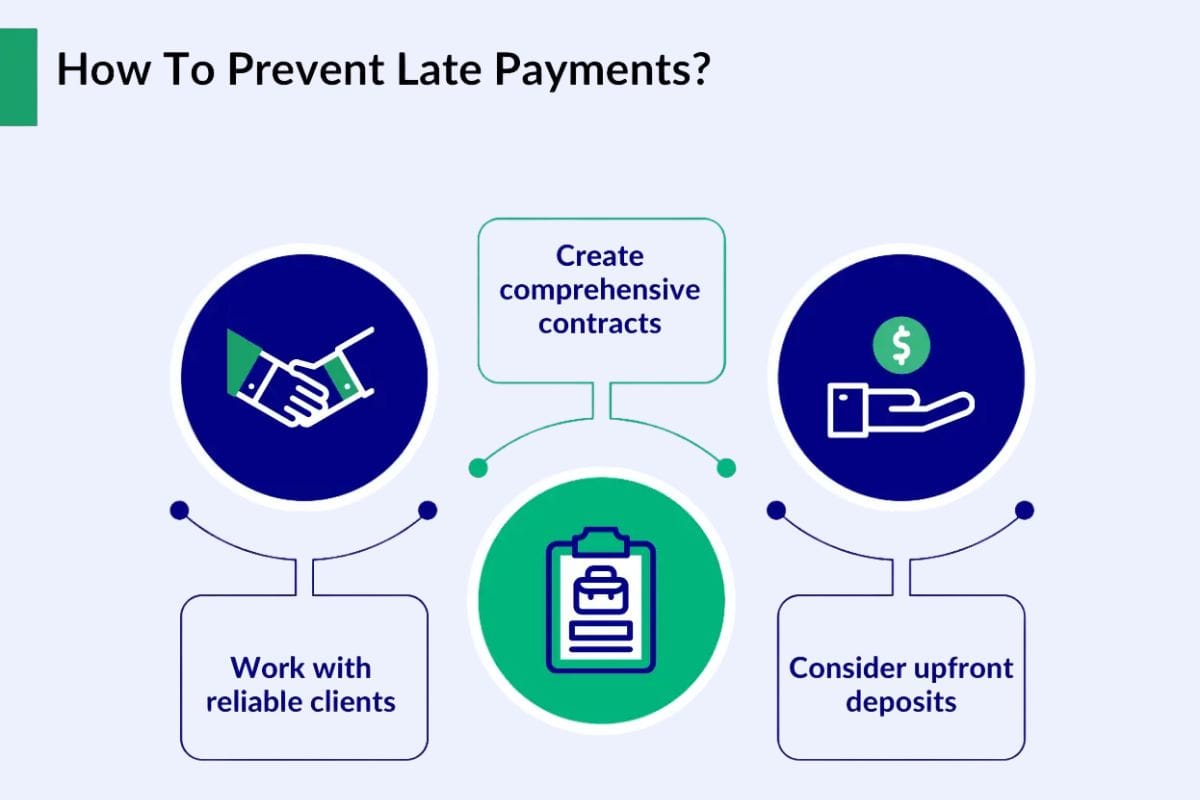
The most effective strategy for handling late payments is preventing them through clear initial agreements.
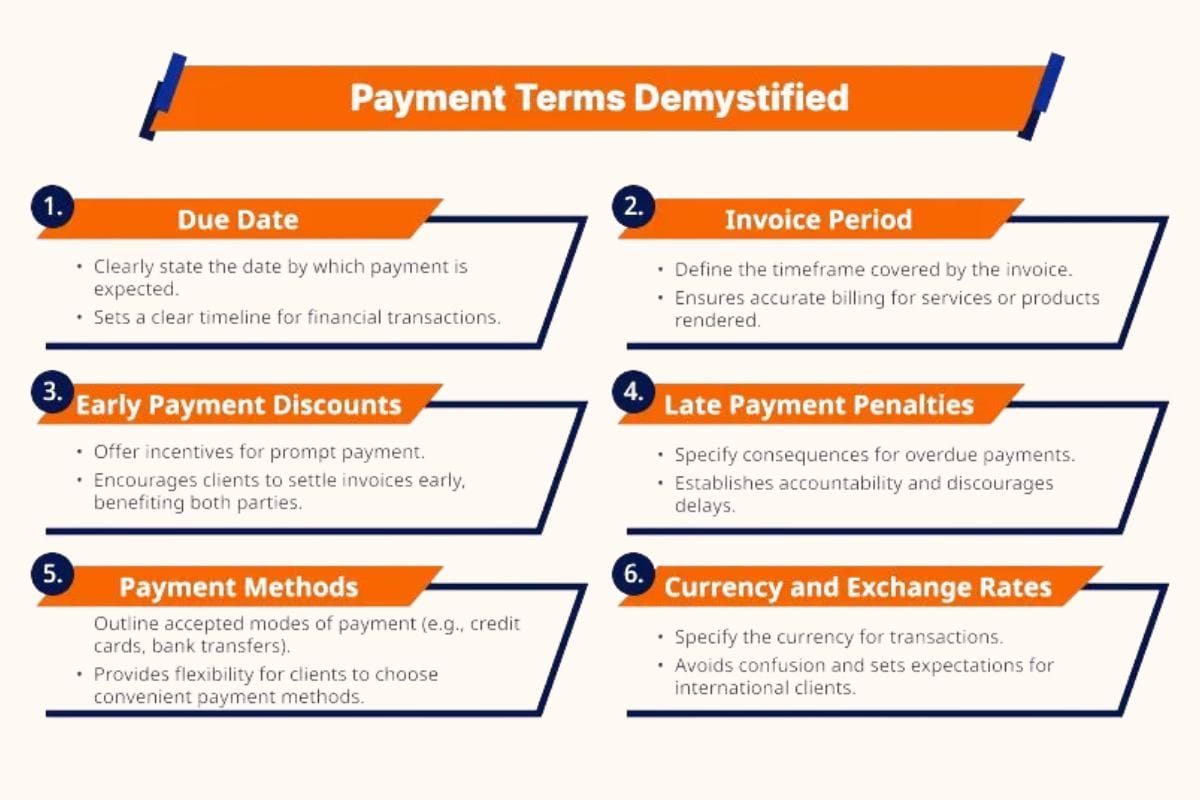
Essential Contract Elements
Specific payment terms: State exactly when payment is due. "Net 30" means 30 days from invoice date. "Net 30 from delivery" provides even more clarity.
Payment method: Specify whether you accept bank transfer, cheque, or credit card. Include your bank details.
Late payment penalties: UAE law allows contractual late payment fees. Common terms include 1-2% monthly interest on overdue amounts. Example: "Invoices unpaid after 30 days will incur a 1.5% monthly late fee."
Milestone payments for projects: For larger projects, structure payments by milestone (30% upfront, 40% at halfway, 30% on completion) to avoid carrying all risk.
Consequences of non-payment: Include language about suspension of services if invoices remain unpaid beyond 15-30 days overdue.
Get It in Writing
Verbal agreements are difficult to enforce in Dubai's courts. Always have signed contracts. For smaller jobs, a detailed quotation accepted via email serves as a basic contract.
The Practical Escalation Framework
When payment becomes overdue, follow this systematic approach rather than jumping to aggressive action.
Days 1-7 Overdue: The Friendly Reminder
Action: Send a polite email reminder assuming good faith.
Template approach: "I hope this email finds you well. I'm reaching out regarding Invoice #[number] dated [date], which was due for payment on [date]. I wanted to check whether this has been processed. If you need me to resend the invoice or provide additional information, please let me know."
Success rate: This often resolves the issue immediately, especially with established clients who overlooked the due date.
Days 8-15 Overdue: The Follow-Up Call
Action: Call your primary contact.
Approach: Remain friendly but direct. Ask whether there's an issue with the invoice.
Key questions:
- "Has the invoice been approved for payment?"
- "Is there anything you need from me to process this?"
- "When can I expect payment to be made?"
Document everything: After the call, send an email summarizing what was discussed and any commitments made.
Days 16-30 Overdue: The Formal Written Notice
Action: Send a formal but professional email escalating the matter.
Elements to include:
- Invoice number, date, and amount
- Original due date and number of days overdue
- Any late fees accruing per your contract terms
- A firm deadline for payment (typically 7 days)
- Consequences if payment isn't received
Template approach: "This is a formal notice regarding Invoice #[number] dated [date] for AED [amount], which is now 21 days overdue. As per our contract terms, a late payment fee of [amount] has been applied. We require full payment within 7 days (by [specific date]). If payment is not received, we will be forced to [suspend ongoing work/engage collection services/pursue legal remedies]."
Days 31-45 Overdue: Escalate Internally
Action: Contact someone senior to your usual contact—a manager, finance director, or business owner.
Rationale: Your regular contact may lack authority to resolve the issue due to internal politics or budget freezes.
Days 45+ Overdue: Prepare for Legal Action
At this point, informal approaches have failed. You're dealing with either a genuine cash flow crisis or deliberate non-payment.
Legal Options in Dubai
Dubai provides several mechanisms for recovering unpaid invoices, each with different costs, timelines, and effectiveness.
- Mediation Services
What it is: Dubai Courts offer free mediation where a neutral mediator helps both parties reach agreement.
Cost: Free Timeline: 2-4 weeks Best for: Disputes about work quality or scope, not just refusal to pay Limitation: Requires client cooperation.
- Small Claims Court
What it is: Simplified court procedure for claims under AED 100,000.
Process:
- File claim online through Dubai Courts Smart Services
- Pay filing fee (5% of claim value, minimum AED 100)
- Court schedules hearing (4-8 weeks)
- Both parties present evidence
- Judge issues decision
- Judgment can be executed through court enforcement
Cost: 5% of claim value, plus optional lawyer fees
Timeline: 2-4 months from filing to judgment
Best for: Clear-cut cases with solid documentation
Documentation needed:
- Original signed contract
- Invoices
- Proof of delivery/completion
- Correspondence about payment
- Bank statements showing non-payment
- Full Civil Court Proceedings
What it is: Standard court process for larger claims or complex disputes.
Cost: Higher court fees, mandatory lawyer fees (typically 10-15% of claim value) Timeline: 6-18 months Best for: Large amounts (over AED 100,000) or complex disputes
- Bounced Cheque Criminal Proceedings
What it is: If your client paid with a cheque that bounced, this is a criminal offense in UAE.
Process: File police report, criminal court proceedings follow
Cost: Minimal filing fees Timeline: 3-6 months Note: Powerful leverage but destroys business relationships
Practical Enforcement: After You Win
Winning a court judgment doesn't automatically mean you get paid. You must enforce through the Court Execution Department to:
- Freeze the debtor's bank accounts
- Seize assets
- Prevent travel (in extreme cases)
- Garnish receivables from other parties
This requires additional fees (typically 8% of judgment amount) and can take weeks or months.
The Reality Check
Legal action costs beyond money:
- Time and attention diverted from your business
- Uncertainty about recovery even with judgments
- Relationship destruction
- Potential reputational impact
This is why the escalation framework emphasizes resolution at earlier stages.
Alternative Strategies
Beyond formal legal action, consider these practical alternatives:
Offer a Settlement Discount
If a client owes AED 50,000 and has been non-responsive for months, offering to settle for AED 40,000 paid immediately might be better than AED 50,000 you may never collect. Calculate legal fees and lost time, then decide what discount makes sense.
Payment Plans
For clients with genuine cash flow issues:
- Break the total into weekly or monthly installments
- Require post-dated cheques or automatic transfers
- Include interest to compensate for delayed payment
- Get this agreement in writing
Barter or Trade
In some cases, accepting services or products in lieu of cash payment may have value if you can use them or resell them.
When to Walk Away
Sometimes the cost of recovery exceeds the likely benefit. Consider walking away when:
- The amount is small (under AED 5,000) and client is completely unresponsive
- The client has declared bankruptcy or closed operations
- Legal fees would consume most of the recovery
- Your time is better spent acquiring new clients
Write it off as a business loss and learning experience, tighten your client screening, and move forward.
Prevention Strategies for Future Clients
After dealing with late payers, implement these safeguards:
Screen new clients: Check reputation, ask for references, search for complaint histories.
Require deposits: Take 30-50% upfront for new clients or larger projects.
Shorten payment terms: If Net 60 causes problems, shift to Net 30 or Net 15.
Use progress billing: Bill monthly or at milestones rather than waiting until project completion.
Implement credit limits: Don't let any client's unpaid invoices exceed a threshold you can afford to lose.
Monitor payment patterns: If a reliable client suddenly pays late, this may signal financial trouble—tighten terms immediately.
Handling late-paying clients in Dubai requires balancing relationship management with firm business practices. Start with the assumption of good faith, escalate systematically, know your legal options, but also recognize when pursuing payment costs more than it's worth.
The best strategy is prevention through clear contracts, appropriate payment terms, and careful client selection. When prevention fails, use the escalation framework to resolve issues early before they require legal intervention.
Dubai's legal system provides robust tools for debt recovery, but they work best when you have solid documentation, clear contracts, and patience. By understanding both the practical and legal steps available, you can recover what you're owed while minimizing damage to your business operations and reputation.
Also Read:
 Ummulkiram Pardawala
 Ummulkiram Pardawala
 Umema Arsiwala
 Umema Arsiwala