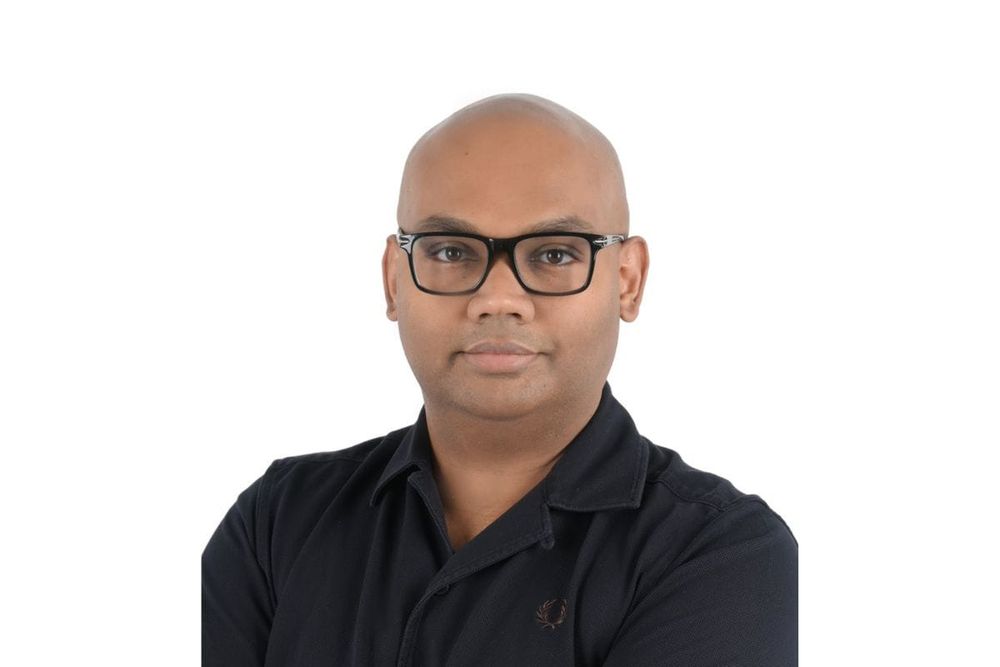
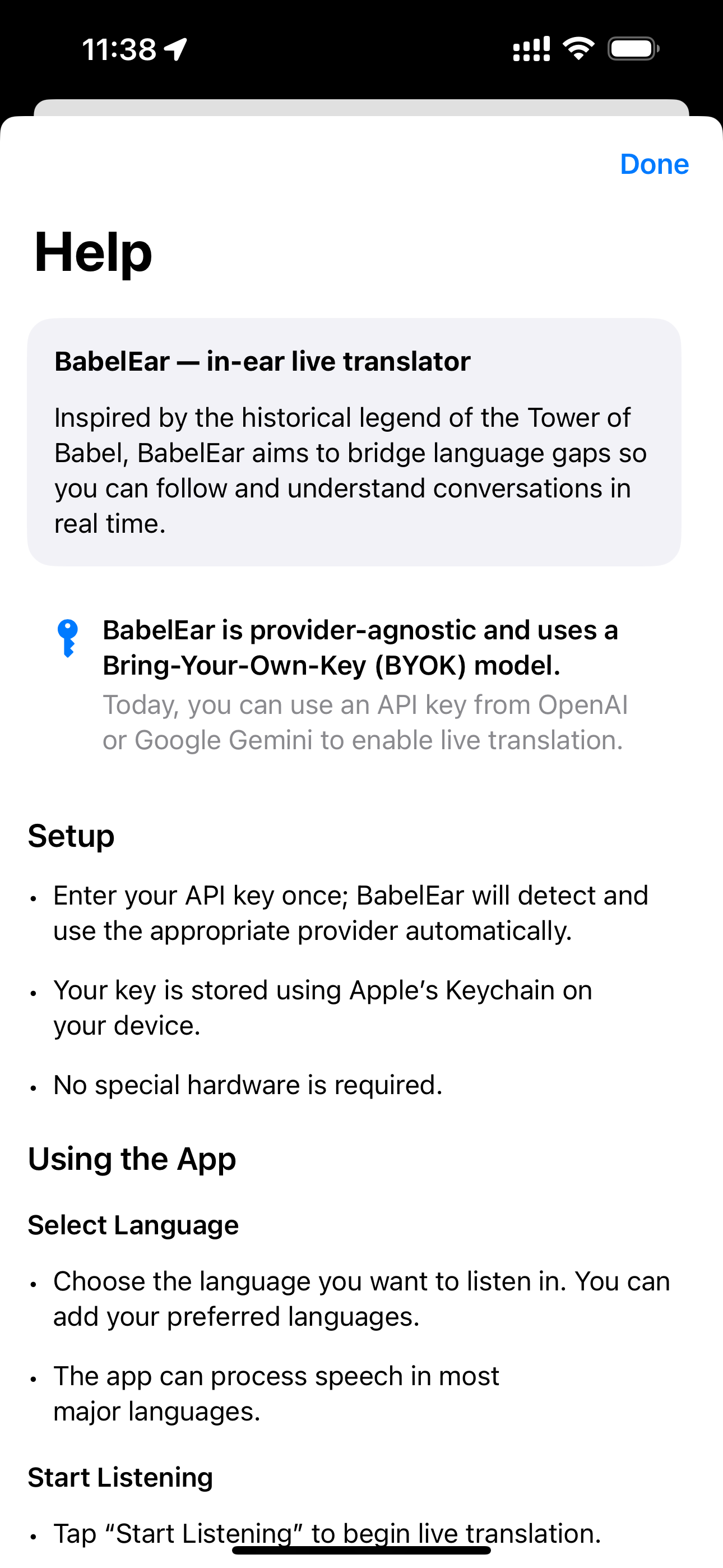
In an increasingly interconnected world, overcoming language barriers remains one of the greatest challenges to seamless communication. Arjun Gopinath, founder of BabelEar, is addressing this challenge with an innovative solution: a live in-ear translation app designed to facilitate real-time multilingual conversations. Drawing inspiration from the concept of the BabelFish and leveraging advanced AI technology, BabelEar aims to transform how individuals and businesses engage across languages.
In this exclusive interview, Arjun shares insights into the app’s capabilities, its development journey, and the vision driving its future.

Can you give us a simple overview of what BabelEar does and how it helps people or businesses?
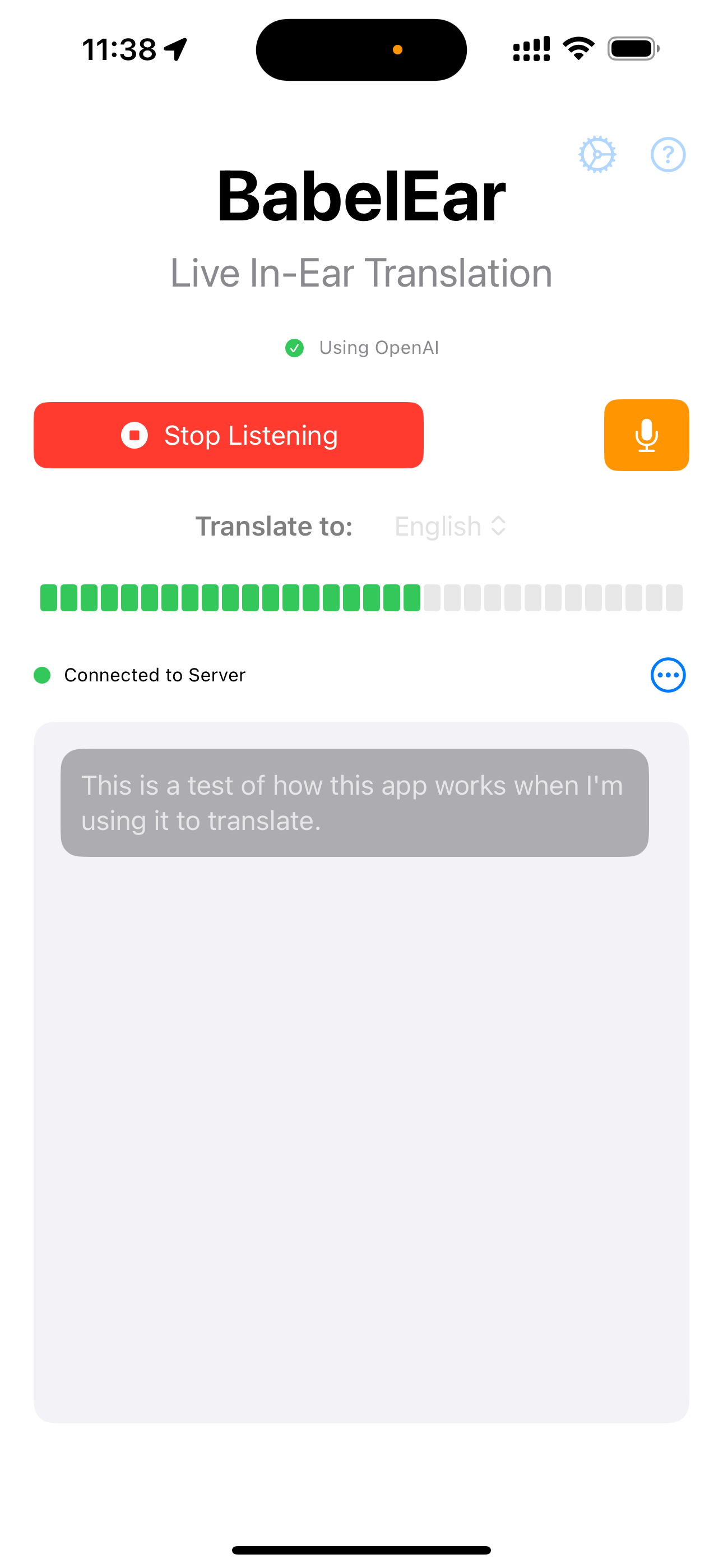
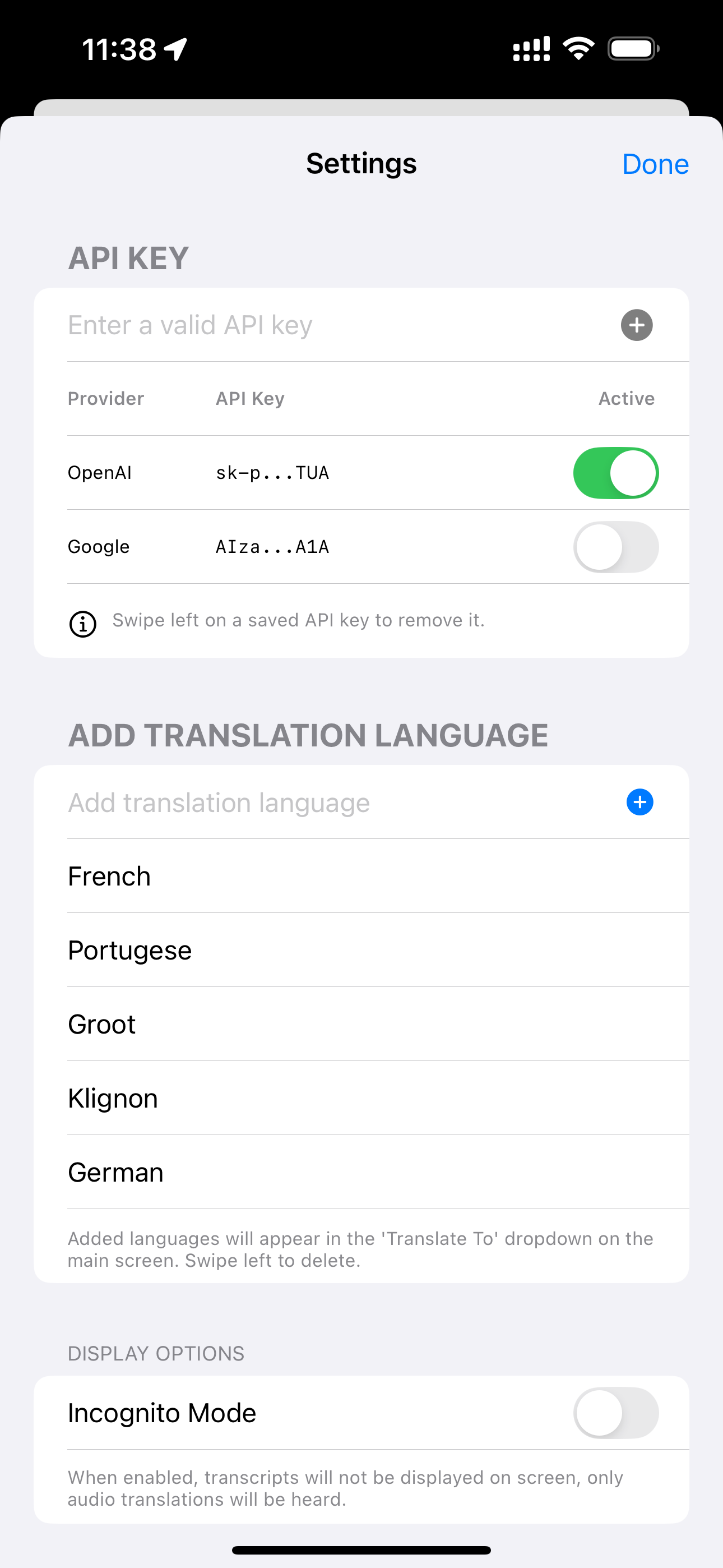
Simply put, BabelEar is an app that breaks down spoken-language barriers in real time. It listens to spoken conversations around you and plays back the translated speech in your chosen language almost instantly. Crucially, it's provider-agnostic, letting users connect with their choice of API from providers like Google or OpenAI, ensuring they have full control over their experience.
You’ve said BabelEar isn’t meant for formal use, like in business meetings or legal situations. What should users keep in mind about how accurate the translations are?
Our focus is on speed and accessibility, not 100% legal-grade precision. At the moment, for everyday chats—asking for directions, ordering food, small-talk—it’s typically around 70-90% accurate. But idioms, technical jargon or subtle cultural nuances can still slip through. However, as the AI gets better, we expect this accuracy to increase.
You also mentioned that translation accuracy depends on the language. How do you let users know about that, and are you planning to improve this over time?
Unlike traditional translation apps, we are not doing a language pair model, we translate whatever is heard into the language the user chooses. So if the App hears English, Arabic and French at the same time but the user has chosen output in Urdu, it will translate the best it can. We are working on improving the understanding of the model, and we expect to get better as we go along.
You’re building BabelEar in public, sharing updates openly. How do you balance being transparent while also protecting your long-term ideas and plans?
We are working on the App level of AI, where we can add value. We have published our high-level roadmap, tweet and post about weekly progress, and welcome early adopters and all feedback. At the same time, core components (proprietary API optimizations, certain UX experiments) are kept proprietary.
What does success mean to you—do you want millions of users, to create social impact, to get acquired, or something else?
Success is a multi-axis goal.
- First, we want to see people genuinely using this—families, travelers, small businesses—that’s our social impact metric.
- Second, I truly believe that by the time the year 2040 rolls around, everyone will have an in-ear translator. I want BabelEar to be that translator.
- Finally, Dario Amodei recently stated that we will see the first single person Billion dollar company by 2026. I think BabelEar can be one of that and if it is a dubai based company, it will be the icing on the cake
You’ve said you want BabelEar to stay free for everyone. How does that work if you’re also open to taking money from investors?
We made a deliberate choice to reject a subscription model. Instead, BabelEar operates as a BYOK (bring your own key) model, where you pay for your API Key directly with the provider. This was a conscious decision to prioritize user freedom and privacy over rushing to revenue. We believe technology should be accessible, and since API prices drop astronomically over time, this model allows us to keep the app free for users permanently.
What kind of investors or funding would best fit your goals—are you thinking about things like community support, grants, or other options that don’t require giving up control?
While we are not actively raising money, we are seeing incoming interest. Our ideal partners are those who understand that our vision is not about quick monetization, but about long-term social impact. They would need to share our foundational commitment to user privacy and our goal of putting a BabelEar in every person's ear. As an investor-turned-operator, I know the importance of partnering with someone who prioritizes this future over compromising user trust for short-term revenue.
Even though BabelEar is free, are you tracking things like how many people use it or how often? Could those numbers help shape a future business plan?
No. This is a foundational principle for us. We are not tracking anything other than anonymous download numbers from the app stores. My goal is for people to be free to talk and connect, without worrying about their privacy being invaded by another app. I want to be unequivocally clear: we do not and will not ever listen to your conversations.
If you ever decide to make a paid version for businesses, what would make that the right move—and how would you explain that to your early users?
Yes, we have had discussions with businesses and governments for paid versions, specifically tailored and hosted on their premises. For example, we exploring the use of BabelEar at Airports and at health facilities. There are some specific privacy and security concerns to be addressed, but I’m confident that this can be handled. And frankly, the business and enterprise versions will have no bearing on the current and future versions of BabelEar.
Have you thought about open-sourcing BabelEar or inviting other developers to help you improve it, while still keeping it free for users?
Oh yes. I am totally open for collaborations. We cannot exist in silos and we need collaboration, so this is something that we would always need.
Where do you see BabelEar in two years—in terms of features, users, and your own role in the project?
- Features: Offline translation packs, voice cloning, deeper domain packs (medical, legal) via opt-in modules
- Users: We cross 1 million users by the end of 2026.
- My Role: I expect to be active on this space. This is the most fun I am having in an app in a long time and I expect to keep working on this.
Also Read:
 Maryam Pervez
 Maryam Pervez
 Maryam Pervez
 Maryam Pervez
 Maryam Pervez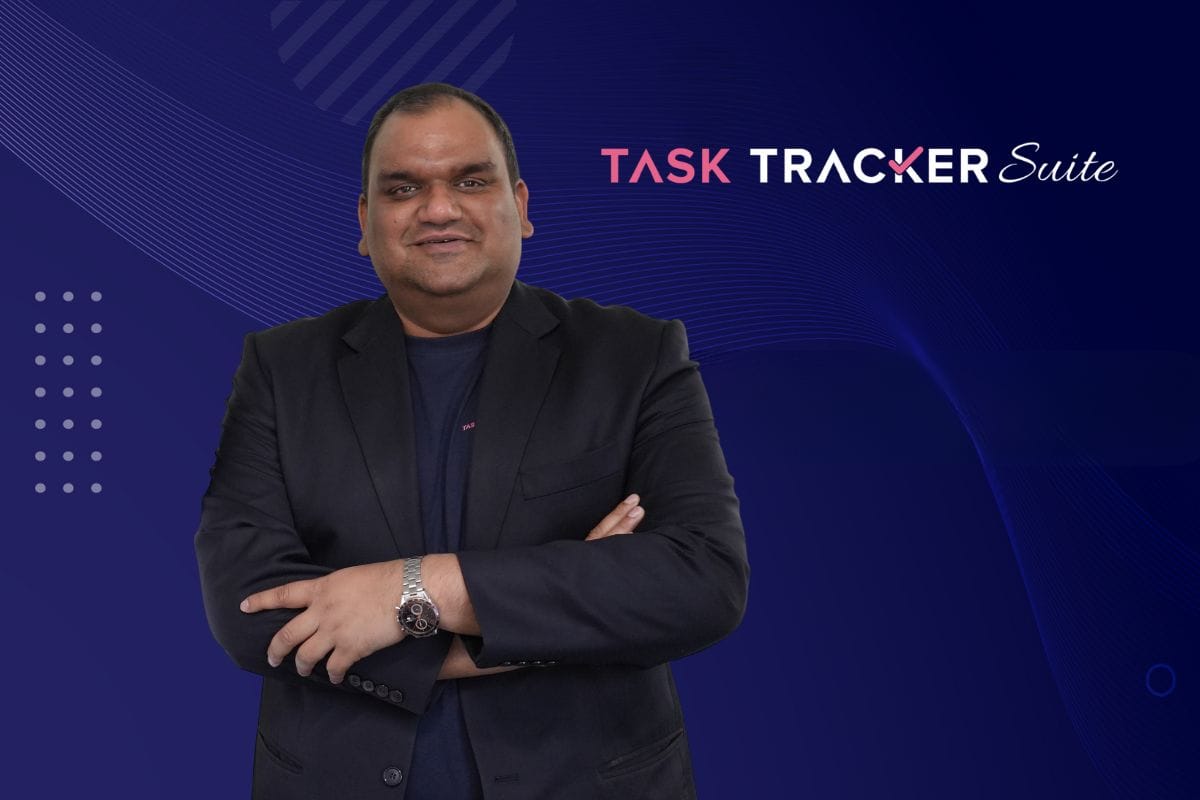



![Interview with Nader Bassit, CEO of El Greco Restaurant [Wakira Investments] in Dubai](https://storage.ghost.io/c/8e/d7/8ed7937e-239e-4c73-8661-3ab95a578ef0/content/images/size/w300/2023/08/Untitled-design--1-.jpg)