Every year, something interesting happens across Dubai's dining scene. Restaurants that normally charge AED 400 a head suddenly open their doors at AED 195. Tables that take weeks to book become available. Diners who might never have stepped inside a particular venue find themselves ordering the chef's signature dish, sipping on house-paired wines, and walking out genuinely impressed. Dubai Restaurant Week is, on the surface, a promotional event. But underneath all the set menus and social media posts, it's actually one of the most revealing case studies in pricing psychology and value positioning you'll find anywhere in the region.
The real lesson here isn't about discounting. It's about what happens when you deliberately engineer the conditions under which people experience your value, and what smart business owners across every industry can take from that.
Why Discounting and Value Positioning Are Not the Same Thing
This distinction matters more than most people realise, and Restaurant Week makes it impossible to ignore. When a restaurant cuts its prices during this event, it isn't saying "we were overcharging you before." It's saying "we want to remove the barrier that was stopping you from experiencing what we do." That's a fundamentally different message, and it produces a fundamentally different outcome.
A straight discount communicates that your product is worth less. Value positioning, on the other hand, uses price as a tool to shape perception, manage access and build a relationship with a customer segment that might otherwise never engage with you. Restaurant Week is effective precisely because participating restaurants don't compromise on the experience. The ambience is the same, the service is the same, the kitchen is running at the same standard. What changes is the entry point, not the product itself.
For business owners outside the food industry, this is worth sitting with. The question isn't whether to offer a lower price point occasionally. The question is whether you're doing it in a way that elevates your brand or quietly erodes it.
The Psychology Behind a Curated Price Point
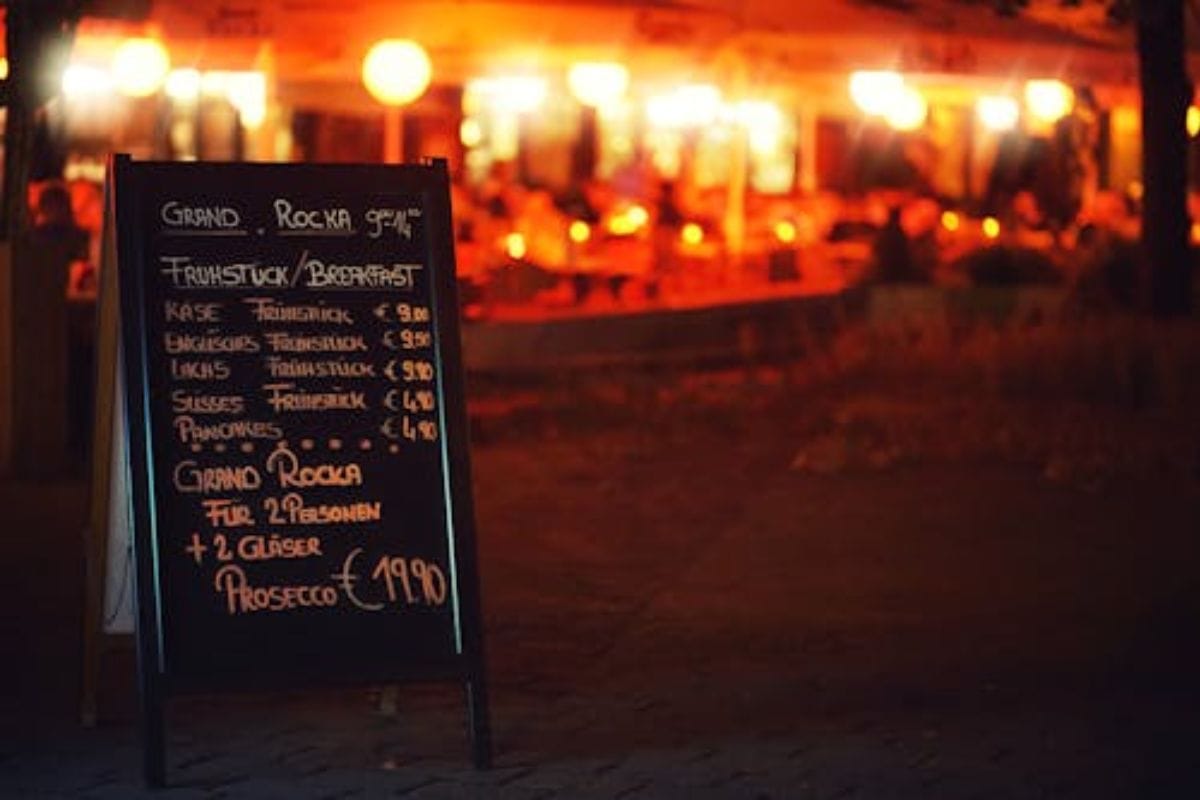
There's a reason Restaurant Week menus are structured the way they are. You're not handed a discounted à la carte sheet. You receive a curated two or three-course set menu, carefully designed to give you a complete and memorable experience within a defined price. That structure is intentional, and it works on multiple levels.
First, it removes decision fatigue. When someone is visiting a restaurant for the first time, the full menu can be overwhelming, and the fear of choosing wrong can actually diminish enjoyment. A set menu eliminates that friction entirely. You're guided toward dishes the kitchen executes brilliantly, which means the experience is optimised before you've even sat down.
Second, the curated menu controls the narrative. Restaurants use this period to put their best cooking forward, not to offload ingredients or push less popular dishes. The result is that first-time visitors are forming their impressions based on the restaurant's genuine strengths.
For any business, the takeaway is this: when you introduce someone to your brand at a lower price point, don't give them a stripped-back version of what you do. Give them a curated version that's been designed to demonstrate your core value clearly and confidently.
How Perceived Value Shifts With Context
One of the most fascinating dynamics during Restaurant Week is how the same meal can feel like exceptional value at AED 195 and entirely reasonable at AED 400, depending on how it's framed and when you're experiencing it. This isn't confusion on the part of the diner. It's a completely rational psychological response to context.
Value perception isn't fixed. It shifts depending on the reference point someone brings to an experience. During Restaurant Week, diners arrive with an awareness that they're accessing something at a special price, and that awareness primes them to notice quality more acutely. They're looking for evidence that the restaurant deserves its reputation. When they find it, the satisfaction is compounded. And critically, the AED 400 price tag suddenly feels anchored in something real rather than abstract.
This is the anchoring effect in action. By letting customers experience full quality at a reduced price, the higher price becomes something they understand rather than something they question. The restaurant doesn't need to justify its regular pricing after that. The customer has lived the value.
Businesses that use introductory pricing strategically, particularly in consulting, professional services, software, and hospitality, often see this exact dynamic play out. Clients who come in through a lower-priced entry point frequently become the most loyal full-fee clients, because they made their decision based on direct experience rather than assumption.
What Restaurants Actually Gain (That Isn't Revenue)
If you run the numbers purely on a per-seat basis, Restaurant Week is not a windfall for most participating restaurants. Margins are tighter, volumes are higher, and the kitchen team is under more pressure than usual. So why do top-tier restaurants keep participating year after year? Because what they gain isn't measured on a single transaction.
Here's what actually happens during Restaurant Week for a restaurant that executes well:
- New customer acquisition at a fraction of normal marketing costs, because the event itself drives footfall and media attention that a standalone promotion never could.
- Social proof at scale, with hundreds of diners sharing photos, writing reviews and tagging the restaurant across platforms, generating organic visibility that paid advertising struggles to replicate.
- Database expansion, as many restaurants use reservations during this period to build their email lists and loyalty programmes, turning one-time visitors into a long-term audience.
- Staff performance benchmarks, since the volume and scrutiny of the week often surfaces both strengths and gaps in service delivery that normal operations might obscure.
- Competitive intelligence, because a full restaurant gives management a chance to observe exactly who their new customers are, where they came from and what they respond to.
The business lesson here is about measuring the right return. Not every customer interaction should be evaluated on immediate revenue. Some of the most valuable business activities are the ones that build the conditions for future revenue.
The Difference Between Access Pricing and Desperation Pricing
This is perhaps the most important strategic distinction the restaurant industry has quietly been demonstrating for years, and it's one that businesses in almost every sector need to understand clearly.
Access pricing is intentional, temporary and tied to a specific goal: introducing your product to a segment of the market that hasn't tried it yet, or re-engaging customers who have drifted. The price is lower, but the experience, the presentation and the messaging all communicate that this is an opportunity, not a clearance sale.
Desperation pricing is reactive, often poorly communicated and almost always damaging to brand equity. It happens when businesses panic about slow periods and slash prices without a clear strategy. Customers who engage during a desperation discount often carry that price expectation forward, making it harder to restore normal pricing later. Worse, it can signal to the market that the business is struggling, which creates a reputational drag that outlasts the promotion itself.
Restaurant Week works because the entire frame around it is one of celebration and access, not necessity. The restaurants involved are making a deliberate choice, and that intentionality comes through in every touchpoint from the way the menus are designed to the way front-of-house teams communicate the offer.
Five Value Positioning Lessons Any Business Can Apply
The strategic thinking behind Restaurant Week isn't exclusive to restaurants. These principles travel remarkably well across industries, and applying them thoughtfully can change how you position your pricing at every tier.
- Design your entry point, don't just lower your price. A curated, intentionally built offering at a lower price point is far more effective than a discounted version of your standard product. Think about what experience you're engineering, not just what number you're putting on it.
- Give customers your best, not your leftovers. When someone engages with your brand at a promotional price, they're forming their foundational impression. Make sure what they experience represents your genuine capability.
- Frame the offer as an occasion, not a markdown. Language, timing and context shape perception more than most business owners realise. A well-framed limited offer creates excitement; a poorly framed one creates doubt.
- Measure what matters beyond the transaction. Track new customer acquisition, retention rates, review volume, referral activity and lifetime customer value alongside the direct revenue from any promotional period.
- Use the window to build a relationship, not just a sale. Collect contact information, invite feedback, personalise follow-up communication and create a reason for that customer to come back at full price.
Building Your Own Restaurant Week Moment
The broader strategic point is that you don't need to wait for an industry-wide event to apply these principles in your own business. The conditions that make Restaurant Week effective are ones you can create deliberately, and doing so can transform how a new segment of your market experiences your brand.
Start by identifying the friction point that's preventing potential customers from trying what you do. It might be price, but it might equally be uncertainty about fit, lack of social proof, or simple unfamiliarity with your category. Then design an entry experience that addresses that specific friction without diminishing the quality of what you deliver. Give it a clear time frame, communicate it as an opportunity rather than a discount and build in mechanisms to capture the relationship beyond the initial interaction.
When it's done well, a well-designed access offer doesn't just bring in new customers. It validates your positioning, strengthens your pricing confidence and builds the kind of first-hand reputation that no amount of marketing spend can replicate. Restaurant Week has been proving that in Dubai's dining scene for years. The question is whether your business is ready to learn from it.
Also Read:
 Umema Arsiwala
 Umema Arsiwala
 Ummulkiram Pardawala
 Ummulkiram Pardawala