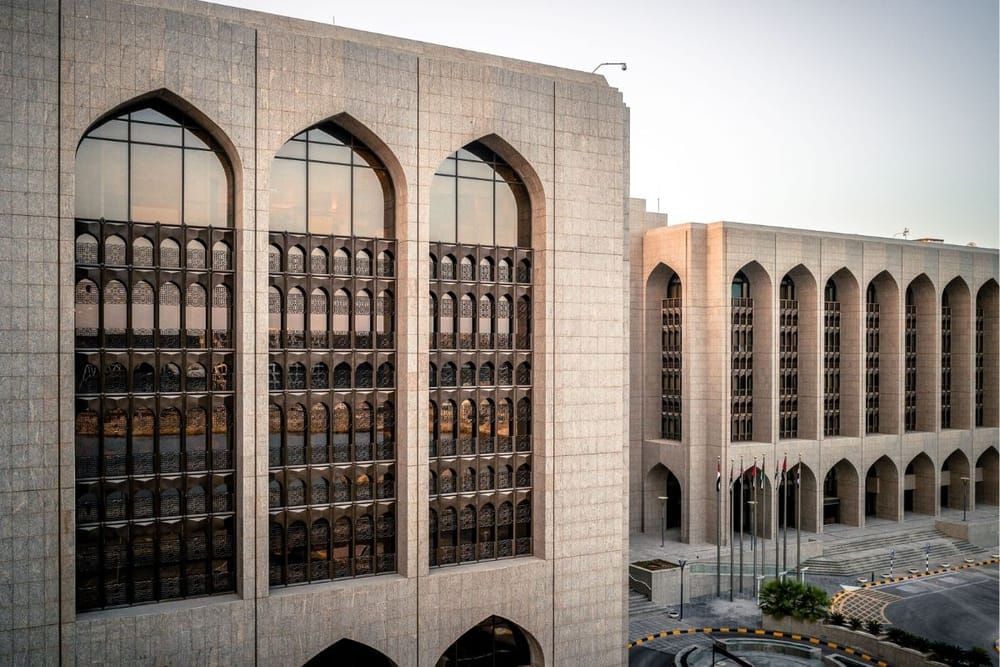
The UAE economy continued its steady growth in early 2026, driven by a resilient banking sector, rising foreign trade, and sustained investor confidence, reinforcing the country’s position as a stable and adaptable global economic hub.
Data from the Central Bank of the UAE showed total banking assets climbed 1.1 percent in February to exceed AED5.472 trillion. Credit expanded by 1.2 percent to AED2.63 trillion, while deposits rose 1.9 percent to AED3.4 trillion, reflecting strong liquidity and domestic financial activity.
The sector’s stability remains well above global benchmarks, with the capital adequacy ratio at 17 percent and liquidity coverage exceeding 146 percent. UAE banks also gained global recognition, with institutions including First Abu Dhabi Bank and Emirates NBD featured among the world’s best banks.
International confidence in the UAE’s economic outlook remains firm. Moody’s maintained an Aa2 rating, while S&P Global Ratings affirmed its AA/A-1+ rating, citing strong fiscal resilience supported by government assets exceeding 180 percent of GDP.
Trade continues to be a major growth engine. Under the Comprehensive Economic Partnership Agreements programme, the UAE expanded ties with countries including Philippines and Nigeria. The nation also ranked ninth globally among merchandise exporters, according to the World Trade Organisation.
Foreign trade reached AED6 trillion in 2025, up 15 percent year-on-year, with non-oil trade surging 27 percent. Meanwhile, Mubadala Investment Company reported assets of AED1.4 trillion, and ADNOC strengthened its global brand position.
Business activity also accelerated, with registered companies surpassing 1.45 million and continued growth in new licences across emirates. Strong demand for UAE Treasury bonds further highlighted investor confidence, with March issuances oversubscribed more than four times.
News Source: Emirates News Agency