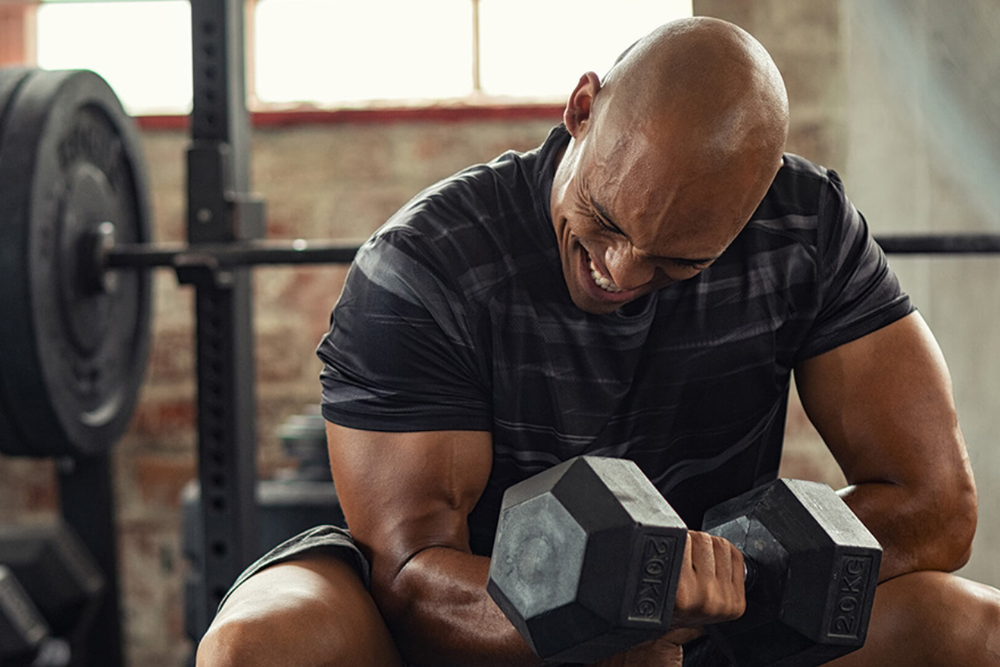
The gym is the same. The equipment has not moved. But something about the way people are showing up to train has changed, and if you have spent any time around fitness culture in this city recently, you have probably felt it without being able to fully name it.
It is not that people are suddenly more motivated. It is not that a new workout trend swept through and replaced everything before it. It is something quieter and more interesting than that. The reason people are training has shifted. And when the reason changes, everything else eventually follows.
The Old Model Made Sense. It Just Was Not the Full Picture.
For decades, the fitness industry was built around a simple and effective promise: show up, work hard, look better. Gyms were designed around that promise. Rows of resistance machines targeting specific muscle groups, cardio equipment calibrated to caloric burn, progress tracked in kilograms lost and centimetres reduced. The system worked because it delivered exactly what it said it would.
What it was less honest about was everything it was not delivering. The person who spent three years on the chest press and the leg extension built muscle in those specific patterns. But ask them to carry heavy bags up three flights of stairs without losing their breath, or to play a full game of football with their kids on a Friday morning, and the gap between gym fitness and real-world physical capability becomes obvious fast.
This is not a criticism of traditional training. It is a description of a gap that science has been quietly documenting for years, and that fitness culture is now starting to close.
What the Science Was Saying All Along
Here is the part most gyms never put on their marketing material. The human body was not designed to move in isolated, fixed patterns. It was designed to carry, climb, push, pull, run, and recover. The muscles do not operate independently. They work in chains, coordinated systems that fire together to produce movement in the real world. When you train in isolation, on a machine that removes the need for balance, coordination, and full-body stability, you are training a version of your body that does not exist outside the gym.
The research on this has become harder to ignore. VO2 max, which is your body's ability to use oxygen efficiently during sustained effort, is now considered one of the strongest predictors of long-term health and longevity. Not how much you can bench press. Not your body fat percentage. How well your cardiovascular system can sustain output over time. And the training that builds VO2 max most effectively is not thirty minutes on a stationary bike at a comfortable pace. It is a varied, high-intensity, full-body effort that pushes the aerobic system to adapt.
Grip strength is another one. It sounds almost comically simple, but grip strength has consistently emerged in research as a marker of overall physical health and functional independence later in life. The kind of training that builds real grip strength is not a bicep curl machine. It is carrying heavy things, pulling your bodyweight, and using your hands the way they were designed to be used.
None of this means the gym is wrong. It means the gym, as it was traditionally designed, was answering a narrower question than most people realised they were asking.
Functional Fitness Is Not One Thing. It Is Many.
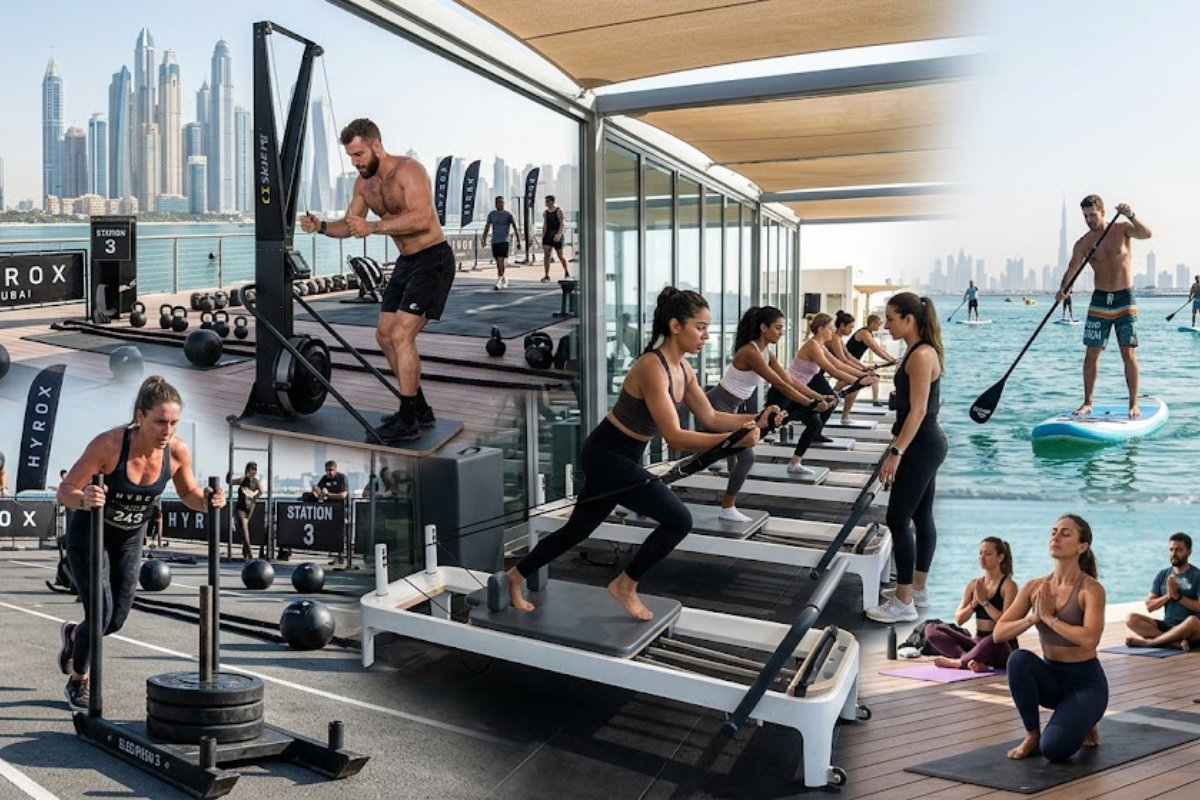
This is where the conversation gets interesting. Functional fitness is not a single format or a single aesthetic. It does not look like one thing. It looks like many things, and Dubai in 2026 has become one of the best cities in the world to see all of them happening at once.
Take HYROX. A race format that combines eight kilometres of running with eight workout stations, including sled pushes, ski erg, wall balls, and rowing. What makes it significant is not the specific movements but what it demands of the body: the ability to perform under accumulated fatigue. Running a kilometre and then immediately pushing a weighted sled is not a test of isolated fitness. It is a test of how well your entire system holds together when it is already under stress. You cannot train for that on a chest press machine. You need open space, full body movement, and a cardiovascular system that has been built to recover quickly between efforts.
Then there is reformer Pilates, which looks nothing like HYROX but is doing something equally important. The spring resistance of the reformer machine challenges muscles through their full range of motion rather than in the shortened, contracted position that most resistance machines favour. The result is a body that is simultaneously stronger and more mobile, with connective tissue and joint health that holds up over the years rather than breaking down under repetitive load. The core work in Pilates is not about visible abdominal muscles. It is about the deep stabilising system that protects the spine, transfers force between the upper and lower body, and keeps the entire structure functioning as a coordinated unit. People who have added reformer Pilates to their training in Dubai are reporting changes that go beyond how they look. Better posture, less back pain, more controlled movement, and a body that feels more capable in daily life.
Breathwork has entered the mainstream conversation in a way that would have seemed unusual five years ago. Structured breathing practices, whether standalone sessions or integrated into movement classes, are now offered across multiple studios and wellness spaces across the city. The science behind this is legitimate and worth understanding. Conscious control of breathing directly influences the autonomic nervous system, shifting the body between states of stress and recovery. For people who train hard and live busy lives, learning to deliberately activate the parasympathetic nervous system is not a wellness indulgence. It is a practical tool with measurable effects on recovery, sleep quality, and stress management.
Mobility training has followed a similar trajectory. Formats built around controlled joint movement, loaded stretching, and range of motion work are filling classes across Dubai. Athletes who move better, through greater range with more control, generate force more efficiently and recover faster between sessions. Mobility work is no longer the thing you do instead of a real workout. It is increasingly understood as the thing that makes every other workout more effective and more sustainable over time.
And then there is the water. Dubai sits on the Arabian Gulf, and a growing number of residents have figured out that some of the most effective functional training available to them requires nothing more than getting into or onto it. Paddleboarding is perhaps the most underrated functional fitness format in the city right now. Standing and moving on an unstable surface demands constant engagement from the deep core stabilisers, the same muscles that Pilates targets, but in a completely unpredictable environment that no gym floor can replicate. Every paddle stroke requires the legs, core, and upper body to work as one connected system. Balance and proprioception, the body's ability to sense and control its position in space, are trained continuously, and these are exactly the markers that research links most strongly to long-term joint health and physical independence.
Open water swimming adds a cardiovascular and full-body coordination demand that pool swimming approximates but never quite matches, and aqua fitness, often dismissed as a low-intensity option, places genuine resistance on the body through water pressure in ways that are particularly effective for joint health and recovery. All of these formats share something that the traditional gym floor does not offer: an environment that is constantly changing, constantly demanding adaptation, and completely impossible to go through on autopilot.
Recovery Became Part of the Conversation

Here is something that would have sounded unusual five years ago and sounds completely normal today. People are treating recovery as seriously as they treat the workout itself.
Cryotherapy, infrared sauna, ice baths, and EMS therapy have moved from things elite athletes do to things committed recreational exercisers build into their weekly routine. The reason is straightforward once you understand the science. Training creates stress on the body. Adaptation, which is the actual goal of training, happens during recovery. If your recovery is passive, just rest days and sleep, there is a ceiling on how much training load your body can handle before it starts breaking down rather than building up.
Active recovery interventions work by accelerating the processes your body uses to repair muscle tissue, reduce inflammation, and restore the nervous system after high-intensity effort. Whole body cryotherapy, exposure to extreme cold for two to three minutes, has demonstrated measurable effects on inflammatory markers and perceived muscle soreness. Infrared sauna, which penetrates tissue more deeply than conventional heat, is used for both cardiovascular adaptation and nervous system recovery. These are not spa treatments dressed up in fitness language. They are tools with a physiological rationale, and the people using them most consistently are seeing the difference in how they train across a full week.
The cultural observation here is telling. Dubai is a city that normalises high performance in almost every other area of life. Long working hours, demanding careers, and constant social engagement. The idea that physical performance requires the same deliberate management that professional performance does has landed here in a way that feels natural.
The Social Layer Nobody Talks About Enough
There is one more dimension to what is happening in fitness culture that science does not fully explain, but that anyone living here can feel.
This is a city where a significant portion of the population arrived without a ready-made social life. No old friends nearby, no family down the road, no decade-old routines that make a new place feel like home. In that context, a training community becomes something more than a fitness decision. It becomes one of the primary ways people build a life here.
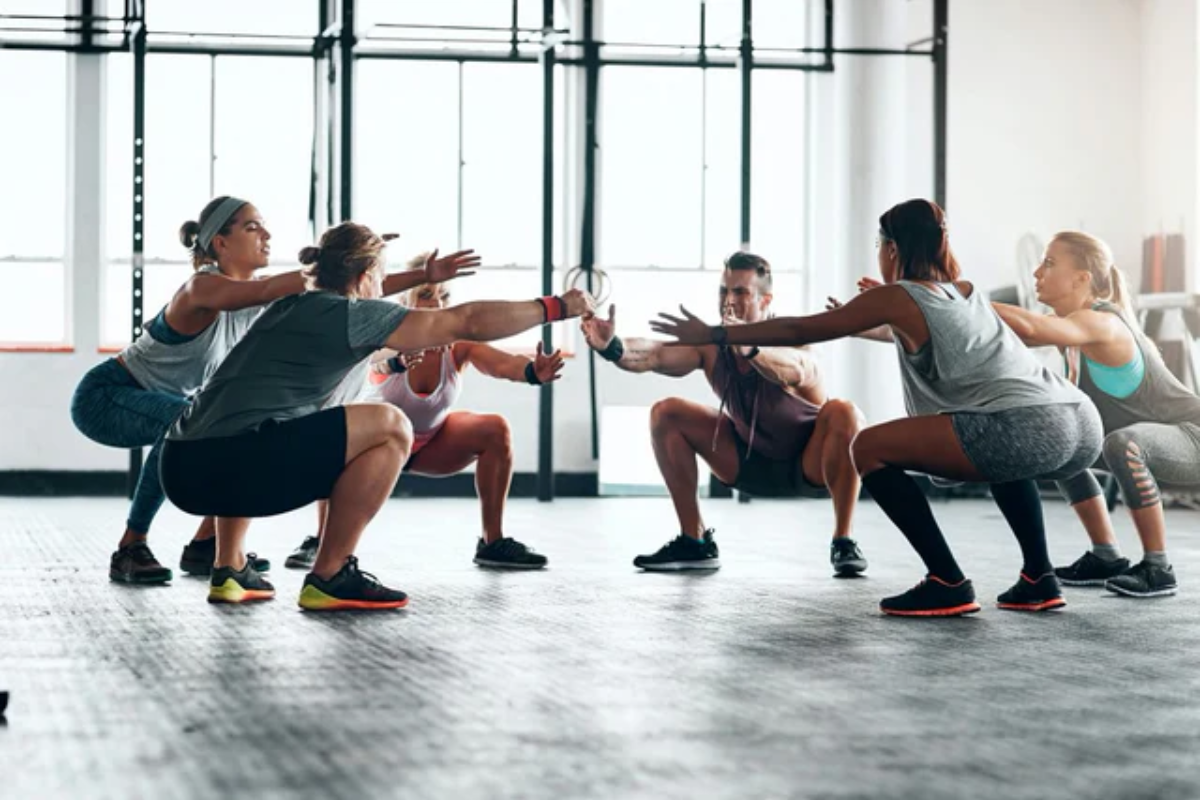
The group training formats that have grown most significantly in Dubai, functional fitness classes, HYROX training groups, Pilates studios, and social wellness spaces that combine movement with food and recovery, are all formats that create recurring human connection around a shared physical challenge. That is not a coincidence. It is a response to a genuine social need that the traditional solo gym session was never designed to meet.
The venues that have understood this have built around it. Spaces where you stay longer than the class, such as the café, the recovery area, and the communal zones, are considered part of the gym floor itself. Where the membership feels less like access to equipment and more like belonging to something. That shift in what a fitness space can be is one of the most significant changes happening in Dubai right now, and it is being driven not by what people want from their bodies but by what they want from their lives.
So What Does This Mean for You
If you train in Dubai, or you are thinking about starting, the most useful thing this shift offers is permission to ask a better question than the one the industry has historically encouraged you to ask.
Instead of asking how you want to look, ask how you want to feel at fifty. Instead of measuring progress only in kilograms and centimetres, consider what it would mean to move better, recover faster, and sustain a level of physical output that makes your actual life richer. Those goals are not softer versions of fitness goals. In many ways, they are harder because they require a longer view and a more honest relationship with your own body.
Fitness culture, for all its variety and noise, is quietly pointing toward something that science has been suggesting for years. The old model was never the complete picture. The city is building a more complete one, and it is worth paying attention to.
Also read:
 Umema Arsiwala
 Umema Arsiwala
 Shahba Mayyeri