For years, the mechanics of Dubai’s world-class food delivery and takeaway ecosystem relied on a silent, heavily integrated partner: single-use plastic. From the secure plastic lids capping iced matchas to the durable clamshell containers holding hot business lunches, lightweight polymers were the default choice for preserving product integrity across long delivery journeys under the desert sun.
But as of January 1, 2026, the era of convenient, virgin plastic packaging has officially drawn to a definitive close.
Under the final, sweeping phase of Executive Council Resolution No. (124) of 2023—and supported by a broader, nationwide federal mandate—the UAE has completely prohibited the import, production, and circulation of the most common single-use plastic items.
This latest regulatory threshold expands earlier bans on bags and straws to target the core structural components of food service packaging: plastic plates, disposable cutlery, food containers, and beverage cups, along with their corresponding plastic lids.
For Dubai's food and lifestyle businesses, this is no longer a gentle prompt toward corporate social responsibility. It is an operational reset that demands a total restructuring of supply chains, cost sheets, and consumer expectations.
The Reality of Phase 3: What Exactly Is Gone?
Dubai’s approach to eliminating single-use plastics was purposefully structured to prevent immediate market paralysis, rolling out in carefully timed increments starting in 2024. However, the January 2026 milestone represents the most significant challenge yet for commercial kitchens, cafes, and lifestyle retailers because it removes the high-volume formats that once dominated daily procurement.
The current enforcement framework leaves zero room for ambiguity. The ban blankets all food service layouts, including cloud kitchens, fine dining establishments, juice bars, boutique bakeries, and e-commerce fulfillment operations.
Crucially, the regulation targets the often-overlooked components of packaging—such as the clear plastic lids used on paper coffee cups and the plastic chopsticks or forks bundled into delivery bags. With active inspections by Dubai Municipality underway and non-compliance carrying immediate financial penalties starting at AED 2,000, businesses can no longer simply run through old inventory. The market has transitioned, and alternative material integration is the only viable path forward.
Sourcing the New Standard: The Alternative Material Landscape
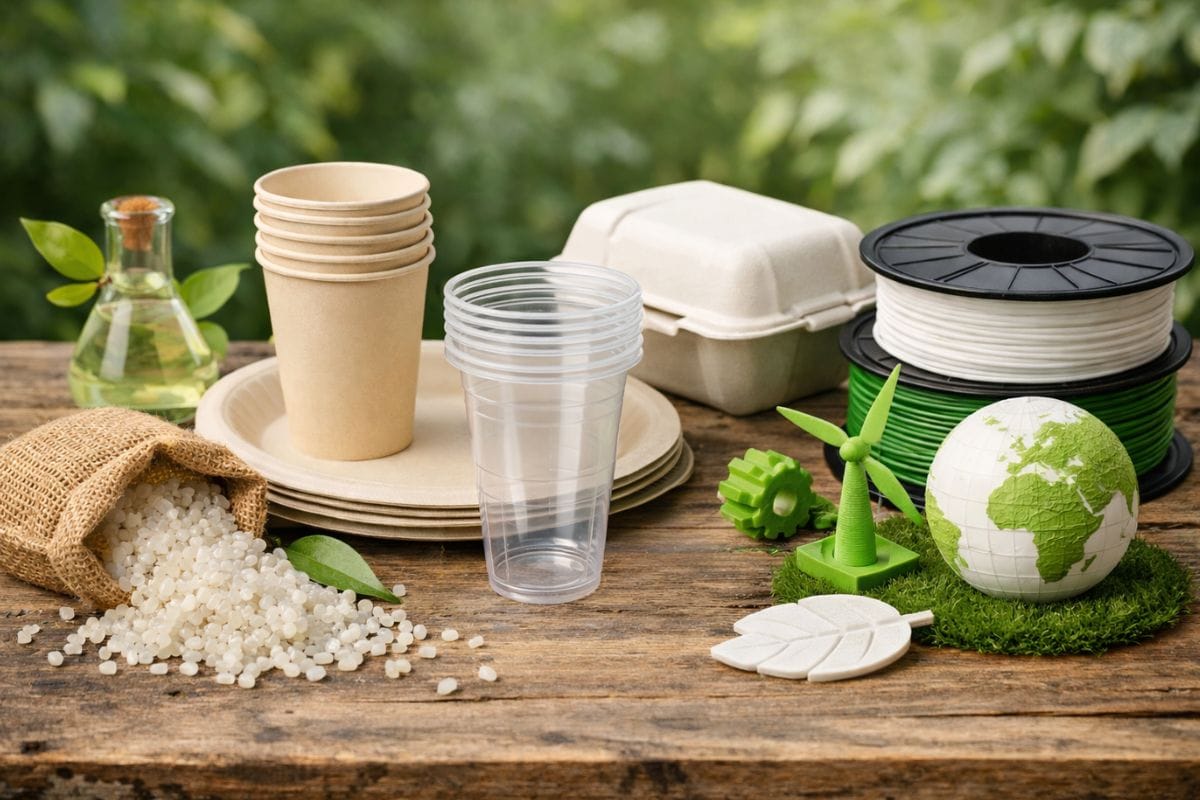
Faced with the immediate removal of traditional plastics, Dubai's culinary and lifestyle operators are turning to a highly sophisticated spectrum of organic, plant-based, and highly recyclable alternatives. The transition has triggered a gold rush for packaging suppliers capable of delivering alternatives that can withstand the intense thermal demands of local food delivery without getting soggy or leaking.
- Bagasse (Sugarcane Fiber): Derived from the natural byproduct of sugarcane processing, bagasse has quickly become the premium standard for hot food containers, burger boxes, and sturdy bowls. It handles high temperatures beautifully, retains structural integrity under heat lamps, and decomposes naturally without leaving toxic residues.
- Molded Wheat Straw and Bamboo Pulp: For salad bowls and cold culinary presentations, bamboo pulp and wheat straw offer a visually elevated, textured aesthetic. Lifestyle cafes heavily leverage these materials because their raw, earthy tones perfectly match the "clean eating" and mindful aesthetic that modern Dubai consumers actively seek.
- Aqueous-Coated Kraft Paper: Traditional paper cups frequently utilized a thin interior polyethylene (plastic) lining to prevent leaking—a design feature that now falls into a risky regulatory gray area. Forward-thinking coffee shops are upgrading to cups featuring advanced water-based, aqueous coatings that provide fluid resistance while remaining fully recyclable in standard paper streams.
- Polylactic Acid (PLA) and rPET Pathways: For clear cold-brew cups and juice bottles, virgin plastic has been replaced by PLA (a compostable polymer derived from cornstarch) or rPET (recycled polyethylene terephthalate). Because the UAE regulation explicitly permits certified recycled-content plastics to foster a circular economy, rPET has emerged as a critical, cost-effective lifeline for high-volume beverage operations.
The Operational Math: Managing the Margin Squeeze
While the environmental argument for the ban is undeniable, the financial math behind the transition is keeping restaurant owners and accountants awake at night. In the food and beverage industry, margins are notoriously thin, typically hovering between 10% and 15%. Virgin single-use plastic was historically an incredibly cheap commodity; swapping it out for premium molded fiber or aqueous-lined paper can increase a business's unit packaging costs by anywhere from 20% to 45%.
For an independent cafe processing five hundred takeaway orders a day, a minor increase of 50 fils per container can quickly scale into thousands of dirhams in added operational expenses over a month.
Compounding this challenge is Dubai’s highly competitive delivery market, where consumers are highly sensitive to sudden menu price increases.
To absorb these shifting costs without alienating their customer base, clever operators are optimizing their inventory management. Rather than automatically including a bundle of wooden cutlery, napkins, and condiment cups with every single delivery order, platforms are shifting to strict "opt-in" protocols on apps like Talabat and Deliveroo. By cutting down on the volume of unrequested materials sent out, businesses can offset the higher per-unit cost of compliant packaging.
Re-engineering the Consumer Experience
Beyond the ledger sheets, the single-use ban forces a comprehensive redesign of the user experience. Packaging is the primary touchpoint a customer has with a brand during a delivery or takeaway interaction, and alternative materials behave very differently than plastic.
A classic example is the battle over the hot beverage lid. Early paper and bioplastic lids occasionally suffered from fitment inconsistencies, leading to spills during bumpy motorcycle deliveries. Wooden forks and spoons, while eco-friendly, possess a completely different mouthfeel than smooth plastic cutlery, which can subtly alter how a customer perceives the texture of a premium dessert or a delicate dish.
To counter these sensory issues, boutique lifestyle brands and high-end eateries are testing materials heavily before rolling them out across their networks. They are working alongside packaging engineers to run rigorous simulated delivery tests—putting hot liquids and sauces into vehicles for 20-minute test drives to monitor structural resilience. The goal is to prove that sustainability does not require a sacrifice in premium quality.
The Future of a Circular Economy in Dubai
Ultimately, the 2026 single-use ban is driving a profound psychological transformation across Dubai's business community. It is forcing companies to transition away from the outdated "take-make-waste" industrial model and actively embrace circular economy principles.
The long-term winners in this updated regulatory environment are those treating the ban not as an irritating compliance hurdle, but as a strategic platform to build deeper brand loyalty.
As Dubai marches steadily toward its ambitious Zero Waste by 2041 targets, the businesses that successfully eliminate single-use plastics are reaping real reputational dividends. Consumers in the region are increasingly voting with their digital wallets, displaying a clear preference for brands that demonstrate authentic, transparent environmental stewardship. By stripping plastic out of the delivery pipeline, Dubai’s culinary and lifestyle leaders aren't just protecting the local environment—they are future-proofing their brands for a highly conscious, global marketplace.
Also Read:
 Shahba Mayyeri
 HiDubai Newswire
 Ummulkiram Pardawala
 Shahba Mayyeri