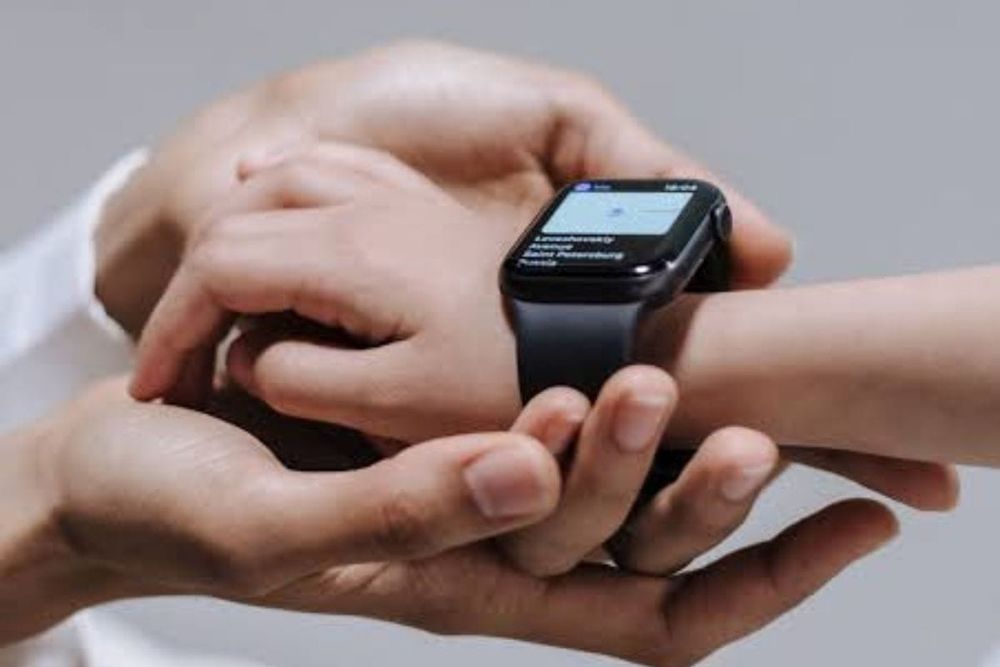
What if the device on your wrist understood your body better than you do?
Your smartwatch buzzes gently during what feels like an entirely ordinary afternoon. There is no argument brewing, no deadline looming that you are aware of, and yet the little screen tells you that your stress levels have spiked. A few seconds later, you notice your jaw is clenched and your shoulders have crept up toward your ears without you ever deciding to hold them that way. The device saw it coming before you did. This is happening on a genuinely large scale now.
There were over 562 million smartwatch users worldwide in 2025, and closer to home, the UAE and Saudi Arabia together account for more than half of all smartwatch purchases across the wider Gulf region, a reflection of just how quickly this technology has embedded itself into daily life here in Dubai and beyond.
More tellingly, over half of wearables released recently are built to lean on AI for sharper, more predictive health tracking rather than simple step counting, and mental health focused wearables have grown from a niche category into a fast expanding slice of the entire industry. With workplace stress reportedly affecting more than three in four employees across major economies, it is not surprising that so many people are turning to a device that catches tension building long before it turns into a headache, a sleepless night, or a short temper.
The question worth sitting with is how a small band of plastic and metal manages to read your internal state more accurately than you can read it yourself, and what that actually means for the way we understand health going forward.
Your Body Sends Signals Long Before Your Mind Catches Up
Stress rarely announces itself with a neon sign but through small physiological shifts that most of us have been trained to ignore because we are busy, distracted or simply unaware that anything is happening.
Your heart rate creeps up a few beats per minute, your breathing becomes slightly shallower and your skin temperature dips as blood flow redirects toward your muscles in preparation for a threat that may never materialise. These changes are part of the body's ancient stress response system, and they happen automatically through the autonomic nervous system without requiring any conscious input from you.
The trouble is that human awareness tends to lag well behind these biological shifts. You might not consciously register that you are stressed until you are already snapping at a colleague or reaching for a third coffee to push through an afternoon slump.
Wearable sensors, on the other hand, are constantly sampling this data in the background, catching the earliest ripples of a stress response long before it reaches the surface of your awareness.
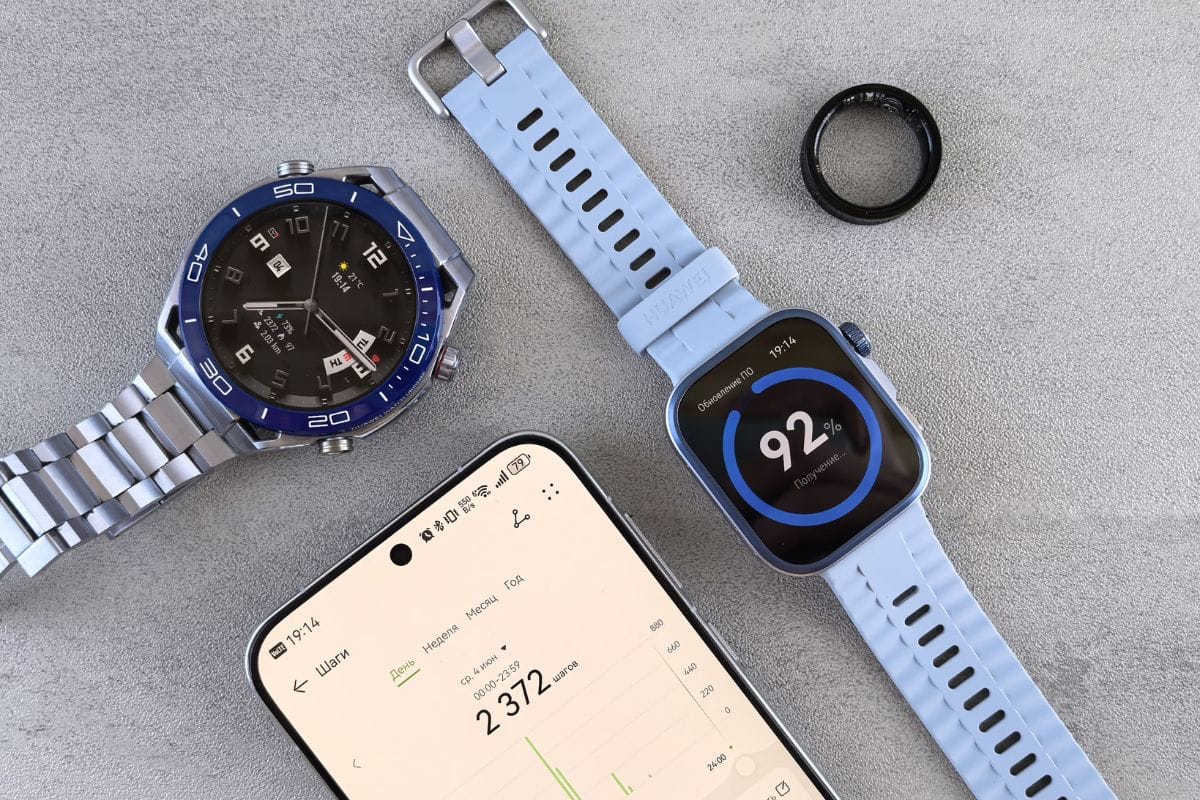
Heart Rate Variability has Become the Quiet Star of Stress Detection
If there is one metric that has taken over the world of wearable health tracking, it is heart rate variability, often shortened to HRV. Unlike your standard heart rate, which simply counts beats per minute, HRV measures the tiny variations in time between each heartbeat.
A healthy, relaxed nervous system produces a heart rhythm that is slightly irregular, with small fluctuations between beats that reflect the body's ability to adapt smoothly to changing demands. When stress kicks in, that variability tends to shrink, and the heartbeat becomes more metronomic and rigid. This shift is subtle enough that you would never notice it by simply checking your pulse, yet it is precisely the kind of pattern that optical sensors and accelerometers embedded in modern wearables are designed to pick up.
Companies producing fitness trackers and smartwatches have leaned heavily into HRV because it offers a genuinely reliable window into how your nervous system is coping, rather than just how hard your heart happens to be working at any given moment.
Sleep and Recovery Data Fill in the Gaps Your Pulse Can't Cover
Stress detection would be incomplete if it only looked at what happens while you are awake and moving around. Much of the real story unfolds while you sleep, which is why most modern wearables track sleep stages, movement during the night, and even subtle changes in breathing patterns as you drift between light sleep, deep sleep, and REM cycles. Poor sleep quality and chronic stress feed into each other in a loop that can be difficult to break without awareness of what is actually happening overnight.
A wearable that notices you spent unusually little time in deep sleep, tossed and turned more than usual, or had an elevated resting heart rate through the night can flag that your body is carrying tension into the next day even before you have had your morning coffee. This layering of sleep data on top of daytime stress metrics gives a far richer picture than either dataset could provide on its own, and it is one of the reasons why sleep tracking has become such a central feature rather than an afterthought in wearable technology.
Algorithms Turn Raw Numbers into Patterns that Actually Mean Something
Collecting data is the easy part. Making sense of it is where artificial intelligence genuinely earns its keep. A single reading of heart rate variability or skin temperature tells you almost nothing on its own, because these numbers vary enormously between individuals and even from one day to the next depending on factors like hydration, caffeine intake and physical activity.
What matters is the pattern over time, and this is precisely the kind of problem that machine learning models are built to solve. These algorithms learn what a particular person's baseline looks like across weeks and months of data collection, and they get progressively better at spotting meaningful deviations from that baseline rather than simply flagging every fluctuation as a crisis. A well trained model can distinguish between the elevated heart rate that comes from climbing a flight of stairs and the elevated heart rate that comes from a tense video call, largely by cross referencing movement data with physiological signals.
This kind of contextual awareness is what separates today's wearables from earlier generations of fitness trackers that could count steps but had little insight into what those steps actually meant for your wellbeing.
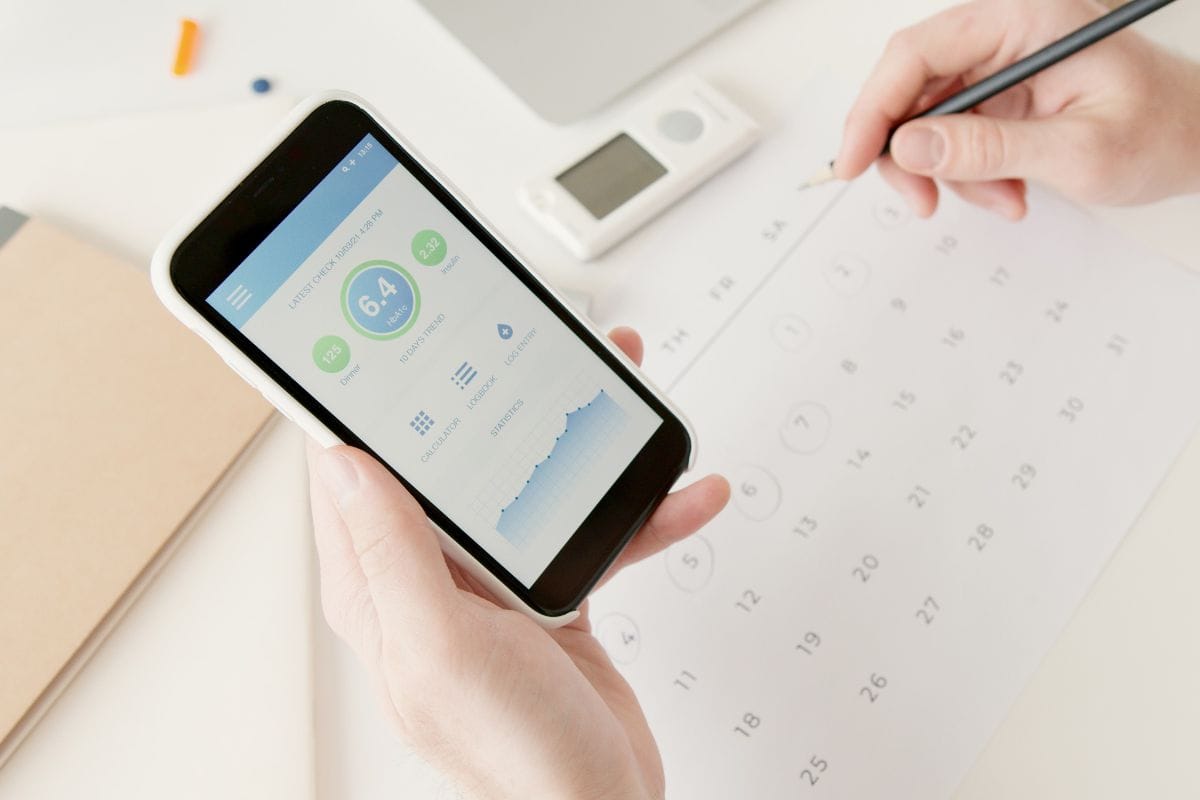
What Wearables Can Flag Before You Even Notice You're Stressed
Modern devices have become remarkably capable at picking up early warning signs across a range of physiological markers. Some of the most common signals that AI powered wearables are now trained to detect include the following.
- Elevated resting heart rate that has no obvious physical trigger, which often points to mental or emotional strain rather than exertion.
- A drop in heart rate variability over consecutive days, suggesting the nervous system is staying in a heightened state without adequate recovery.
- Changes in skin temperature and electrodermal activity, which reflect shifts in sweat gland activity linked to the body's fight or flight response.
- Fragmented or shortened deep sleep, an indicator that stress hormones are interfering with the body's natural recovery process overnight.
- Irregular breathing rate patterns, particularly shallow or rapid breathing detected during periods of rest.
- Reduced blood oxygen variability, which some newer sensors track as a supplementary marker of physiological strain.
- Behavioural shifts such as reduced activity or unusual movement patterns, which algorithms cross reference with physiological data to build a fuller picture.
Taken individually, none of these signals would mean very much. Combined and tracked consistently over time, they give AI models enough context to make a genuinely useful call about your stress state, often flagging it well before you consciously notice anything is wrong.
The Next Generation of Wearables will do More than Just Observe
The direction this technology is heading in suggests we are still in the early stages of what is possible, and some of the most exciting work is happening right now in research labs rather than on store shelves.
Cortisol, the hormone most directly tied to the body's stress response, has long been the holy grail for wearable sensing because unlike heart rate or skin temperature, it offers a far more direct biochemical read on stress rather than an indirect proxy for it. Engineers at UC Irvine recently unveiled a wireless, battery free sensor that draws its power from the wearer's own movement and body heat, and it is designed to track cortisol alongside glucose, lactate and urea in sweat, giving a single patch the ability to flag stress, metabolic strain and early markers of other health conditions all at once (UC Irvine News).
Separately, researchers working on paper based microfluidic sensors have been developing a low cost way to trace how cortisol rises and falls across the day using a colour changing assay rather than complex electronics, with early trials showing it can track circadian stress patterns and even detect the physiological toll of jet lag (Nature Sensors).
Getting cortisol sensing right has proven difficult precisely because sweat chemistry varies so much between individuals and even across a single day, which is why teams at institutions including Northwestern University have been focused on improving the thermal and temporal stability of these sensors before they are ready for everyday, long term wear rather than short controlled trials (IEEE Spectrum).
Beyond hormone sensing, artificial intelligence models embedded in wearables are also becoming better at personalisation, learning not just what a generic stress response looks like but what stress specifically looks like for you as an individual, accounting for your unique patterns, habits and health history rather than measuring everyone against the same fixed baseline. Some devices are beginning to move beyond passive observation and into active intervention, offering guided breathing exercises the moment a stress spike is detected or adjusting daily activity recommendations based on how well recovered your body actually is rather than a generic template. As this technology matures, the line between fitness tracker and genuine health companion is likely to blur even further, turning what used to be a simple step counter into something closer to a continuous, quiet conversation between your body and the data it generates.
What started as a way to count steps and track workouts has evolved into something far more significant, a genuine feedback loop between the body and the mind that most of us never had access to before. The real opportunity here is not in obsessing over every notification or treating your wearable as an oracle, but in using this steady stream of information to build a better relationship with your own physiology. The more we understand about how our bodies respond to the pressures of daily life, the better equipped we become to manage that pressure before it manages us.
Also Read:
 Ummulkiram Pardawala
 Shahba Mayyeri
 Shahba Mayyeri
 Shahba Mayyeri
 Ummulkiram Pardawala