There is a particular kind of satisfaction that comes from buying something made by someone who lives in the same city as you. You cannot always explain it, but it changes the way you feel about the thing, how you wear it, how long you keep it, and how you talk about it when someone asks.
In Dubai, more people are starting to feel that way about their clothes. Not because they have been told to, and not because it is a trend they read about somewhere. It is quieter than that. A designer they discovered through a friend. A piece they tried on that fit better than anything imported. A gradual realization that the city has been building something worth paying attention to.
The local fashion scene here has existed for years. What has changed is that people are finding it.
The Ground Shifted Quietly
The UAE's apparel and luxury market sits at approximately $8.98 billion in 2026. Within that figure, a growing share belongs to home-grown labels. This did not happen in isolation. The Dubai Economic Agenda D33, a long-term plan to double the size of Dubai's economy, identified creative industries as a priority. Fashion, design, and lifestyle sit within that category.
The practical effect has been real: designers based in Dubai now have access to retail networks, export channels, and institutional platforms that simply did not exist a decade ago. The infrastructure caught up with the talent.
Dubai Design District (d3) gave designers a home, a community of peers, a professional address, and proximity to buyers and press from outside the region. Dubai Fashion Week evolved from a regional showcase into an event that international buyers and media take seriously. Together, they gave local fashion something it previously lacked: the scaffolding of credibility.
Buying With More Intention
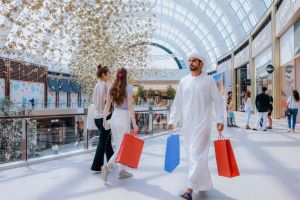
Dubai's shoppers have historically been drawn to established international names. That instinct has not disappeared, but it has become more considered. Residents who have lived here for years, who have built lives here, not just careers, have started to want things that reflect where they actually are.
A generation of Emirati and Arab designers educated in London, Paris, and New York returned home with craft training and a global perspective, choosing to apply both within the UAE. They are now the people making the clothes that their peers are choosing to wear. That circularity matters. It creates a different kind of relationship between a garment and the person buying it.
Consumers here are also buying less and expecting more. A well-made piece, worn for years, has become a more appealing proposition than a succession of affordable things that don't last. The climate, a social environment where presentation matters, and genuine purchasing power all make the economics of quality dressing make sense.
Sustainability as a Baseline Expectation
The relationship between Dubai's fashion consumers and sustainability has matured considerably. In earlier iterations of this conversation, perhaps five or six years ago, sustainability functioned primarily as a marketing differentiator. A brand could capture attention by foregrounding its ethical credentials in a market where the baseline expectation was low.
That dynamic has shifted. Sustainability, in 2026, is increasingly a baseline expectation rather than a premium feature. Consumers in Dubai are more informed about supply chains, about the environmental cost of overproduction, and about the difference between genuine circularity and surface-level claims. They are also more likely to ask direct questions of designers and retailers about where materials come from and how production is managed.
For local designers, this creates both a challenge and an opportunity. The challenge is that meeting genuine sustainability standards requires investment in materials sourcing, in production oversight, in certifications, and in transparency infrastructure. The opportunity is that designers who build these practices into their operations from the ground up are not retrofitting sustainability as an afterthought. They are building businesses whose values align with where consumer expectations are heading.
Several of Dubai's leading designers have approached this by working closely with regional textile producers, prioritising natural fibres suited to the Gulf's climate, and adopting made-to-order or small-batch production models that reduce excess inventory. Circularity, the idea that garments should be designed with their end of life in mind, is entering the design conversation here in ways that would have seemed premature just a few years ago.
Bouguessa — Faiza Bouguessa
Of all the names associated with Dubai's contemporary design scene, Faiza Bouguessa is perhaps the most frequently cited as evidence that a local label can operate at an unambiguously global standard.
Bouguessa, the label she founded in 2014, has developed a clear and consistent creative identity around tailored ready-to-wear and, most distinctively, a reimagined approach to the abaya. The traditional garment, a long outer robe worn by women across the Gulf, is, in Bouguessa's hands, not a conservative or ceremonial piece but a vehicle for contemporary dressing. Her abayas are architectural, precisely cut, and made from fabrications, duchess satin, crepe, and structured technical fabrics that behave beautifully in both the region's indoor and outdoor environments.
What Bouguessa has achieved is the translation of a culturally specific garment into a piece with genuine international design appeal. Her work is worn by women across the Gulf, the broader Arab world, and increasingly in markets where the abaya is being adopted as an elegant, modest, and functionally practical dress option rather than a culturally specific statement. The label's ready-to-wear line extends this design philosophy into suits, tailored trousers, and structured outerwear.
The brand is stocked in prominent regional retailers and has received international editorial coverage. More importantly, it has built a loyal customer base that returns season after season, evidence of the kind of brand equity that mass-produced fashion rarely generates.
Zeena Zaki — Evening Craft at the Intersection of Heritage and Modernity
Zeena Zaki occupies a specific and important space within Dubai's design landscape: the arena of formal and evening dressing, where craft, handwork, and technical precision matter enormously to the finished product.
Zaki's collections are distinguished by her integration of traditional handcraft techniques, embroidery, beadwork, and surface embellishment methods rooted in the broader region's textile heritage, with silhouettes that are unambiguously contemporary. The result is eveningwear that carries cultural memory without being costume, and that competes credibly with European ateliers whose price points are significantly higher.
The designer has built her reputation through a combination of bespoke commissions and ready-to-wear, an approach that allows her to maintain the highest standards of craft while also making her work accessible to clients who may not require custom fitting. Her work has been worn on regional red carpets and at international events, and she has developed a following among clients who are specifically looking for pieces that reflect a Middle Eastern design sensibility without sacrificing global dressing standards.
In the context of Dubai's broader fashion conversation, Zaki represents something important: the argument that the region's craft traditions are not historical artefacts but living resources that can animate contemporary design in commercially and aesthetically relevant ways.
Shabab Intl — The Architecture of Regional Streetwear
The streetwear conversation in Dubai has, for years, been dominated by American and European labels, the familiar names that globalised youth culture has elevated to near universal status. Shabab Intl is among the labels that are building a credible regional alternative within that space.
The label's approach is rooted in a specific cultural reference point: the young Arab experience, shaped by Gulf upbringing, global cultural exposure, and a generation that sees no contradiction between its regional identity and its participation in international youth culture. Shabab Intl, the name itself translates loosely as "youth international", signals this position directly.
The brand's output spans graphic tees, outerwear, accessories, and collaborative drops that engage with regional art, sport, and cultural references in ways that feel genuinely specific rather than genericised. It is not streetwear with Arab motifs applied as decoration; it is streetwear built from an Arab cultural perspective, which is a substantively different proposition.
The brand has found a strong following among younger Emiratis and regional residents who have been waiting for a streetwear label that speaks to their experience without requiring them to adopt an identity borrowed wholesale from another culture. This audience is commercially significant. It is young, digitally engaged, and willing to invest in pieces that carry the kind of cultural resonance that imported labels simply cannot deliver.
Arcadia by Amna Al Habtoor — Fragrance, Lifestyle, and the Domestic Ecosystem
Arcadia, founded by Amna Al Habtoor, represents a dimension of Dubai's design scene that is often overlooked in discussions focused on garments: the lifestyle and fragrance category, and its intersection with fashion identity.
Al Habtoor's work with Arcadia sits at the intersection of fine fragrance, interior aesthetic, and personal identity, a territory that major European luxury houses have occupied for decades but that has rarely been explored with real depth by Gulf-based creatives. The label develops fragrances and lifestyle objects that are grounded in regional sensory culture, the oud traditions, the role of incense in domestic and social life, the climate-specific relationship with scent, and translates these into a contemporary, design-forward product language.
In the broader context of Dubai's shift toward local design, Arcadia matters because it demonstrates that the conversation is not limited to garments. The lifestyle choices that surround dressing, the home environment, the scent, and the curated objects are all sites where consumers are beginning to seek out locally conceived alternatives to imported brands. Al Habtoor's work has earned genuine recognition in the luxury lifestyle media space, and Arcadia's products have found placement in retail environments that position them alongside international lifestyle houses of genuine reputation.
This is significant not just as a commercial achievement but as evidence that Dubai's creative economy is producing work across the full spectrum of personal lifestyle categories, not merely in the most obvious segments.
House Janolo — Fine Jewelry with a Contemporary Perspective
Jewelry occupies a central place in Gulf culture. It has been a vehicle for wealth preservation, social expression, and cultural continuity for centuries. House Janolo operates in this space with a contemporary design perspective that draws on the region's relationship with precious materials while articulating a distinctly modern aesthetic.
The label works primarily in 18 karat gold and natural gemstones, a material position that signals genuine fine jewelry craft rather than fashion jewelry's more accessible and more disposable price points. The design language is architectural and restrained, pieces built on geometric relationships, negative space, and the honest expression of material quality rather than decorative elaboration.
For Dubai's fine jewelry consumer, House Janolo offers something specific: the opportunity to invest in locally designed pieces that carry the technical and material credentials of the fine jewelry category without the premium associated with European heritage houses. The label has developed a following among residents who are building personal jewelry collections with a long-term perspective, people who are buying pieces to wear and potentially pass on, rather than to follow a trend.
The Role of Digital Platforms and Community Building
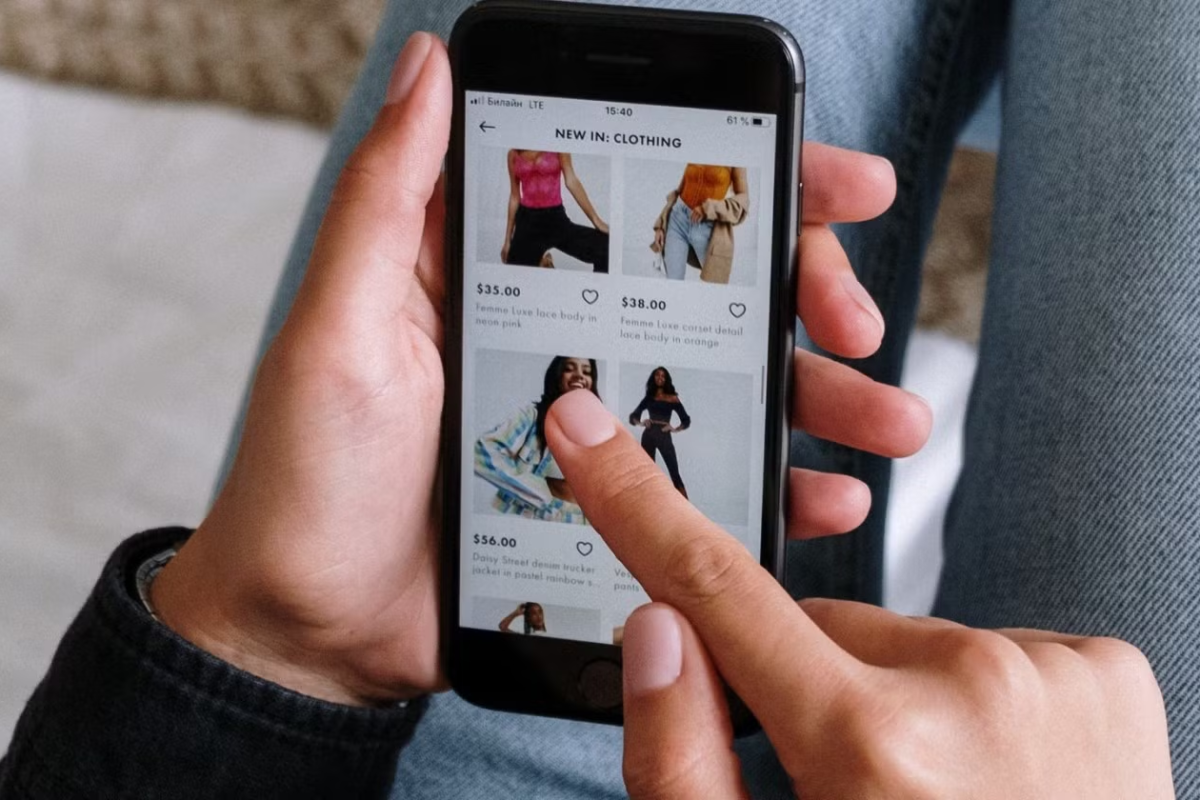
The shift toward local designers in Dubai has been enabled, in part, by the change in how discovery works. Social media, and specifically Instagram, TikTok, and a growing number of regional commerce platforms, have created direct channels between designers and their potential customers that bypass the traditional gatekeeping functions of multi-brand retail.
A designer in Dubai can now build a following, communicate a design philosophy, document a production process, and generate sales without needing to secure wholesale agreements with major department stores. This has lowered the commercial barrier to entry significantly and allowed smaller labels to develop sustainable businesses at a modest initial scale.
It has also created a feedback loop between designers and their communities that is qualitatively different from the relationship between consumers and large international brands. When a customer buys from a Dubai-based designer, the transaction often comes with access to the designer's story, their process, and their cultural perspective in a way that a purchase from an anonymous production line simply cannot replicate. This intimacy has commercial value. It builds loyalty, generates word of mouth, and creates the kind of advocacy that no marketing budget can buy directly.
Regional media has also played a role. Publications, podcasts, and digital content platforms focused on the Gulf's creative industries have grown their audiences significantly over the past several years, creating an information environment in which local designers receive coverage, analysis, and critical attention that would previously have been reserved for international names.
Challenges That Remain
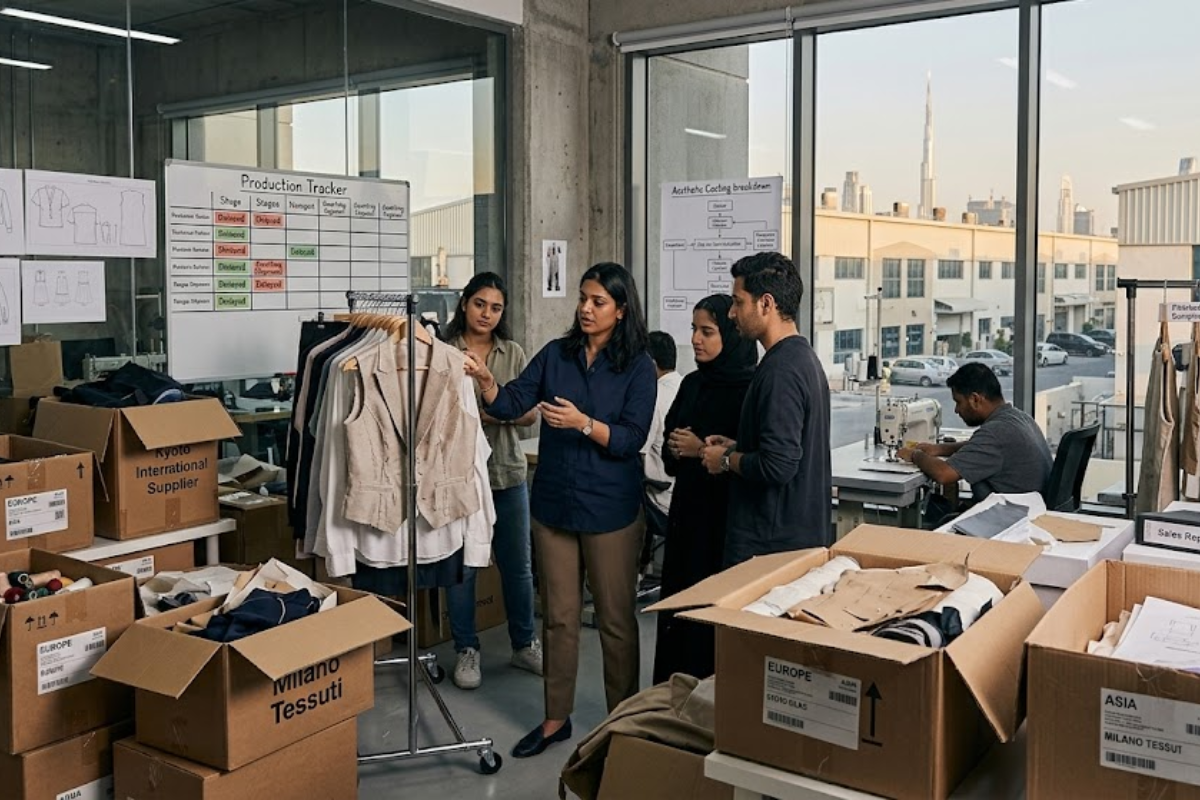
Acknowledging the genuine progress of Dubai's local fashion scene does not require overlooking the challenges that remain.
Production infrastructure is one persistent constraint. The UAE does not have a large domestic textile manufacturing base, which means that designers sourcing premium fabrics often do so from mills in Europe or Asia, and that production runs may be managed across multiple markets. This adds complexity and cost that larger international brands, with their established supply chains, do not face in the same way.
Price sensitivity remains a reality in parts of the market. A well-constructed, locally designed piece at an honest price point will always face comparison with mass-produced alternatives at lower prices. Educating consumers about the actual cost of quality production and the value it delivers over time is an ongoing task.
Retail distribution is evolving but still presents limitations for emerging designers. Securing placement in the multi-brand retail environments that drive volume requires both the commercial track record and the product consistency that takes time to build. Some of Dubai's most talented designers remain relatively inaccessible to the broader consumer market because the distribution infrastructure for their segment is still developing.
These challenges are not unique to Dubai. They are structural features of developing fashion ecosystems globally. The trajectory of cities that have successfully built domestic fashion industries, Antwerp, Copenhagen, and Melbourne, suggests that these constraints diminish as the ecosystem matures, investment increases, and consumer habits solidify.
What Holds It Together
Sustainability has moved from differentiator to expectation. Buyers in Dubai are asking more direct questions about where things come from and how they are made. Local designers who have built ethical production into their operations from the beginning are not playing catch-up. They are already where the market is heading.
Social media has also quietly reshaped discovery. A designer in Dubai can now build a following, share a process, and generate sales without a wholesale deal with a major retailer. The relationship between designer and customer is more direct than it has ever been, and that directness has real commercial value. It builds the kind of loyalty that larger brands spend significant budgets trying to approximate.
Where This Is Going
Dubai's local fashion scene is not yet a finished thing. Fabric sourcing is expensive and logistically complex without a domestic textile manufacturing base. The distribution infrastructure for emerging designers is still developing. These are real constraints, not obstacles that good intentions can dissolve.
But the trajectory is clear. The talent has been here for some time. The institutions have caught up. The consumers are paying attention. What is forming, steadily, without much fanfare, is an ecosystem with enough depth to sustain itself and grow.
The UAE apparel and luxury market of 2026 is large and internationally oriented. Local designers will not define it entirely, nor do they need to. But the portion of it that belongs to locally conceived, locally made work is growing, and the conditions that enabled that growth are not going away.
Dubai's fashion story is still being written. The names doing the writing are increasingly their own.