FIFA has announced a package of technological advancements for the 2026 FIFA World Cup, covering officiating, performance analysis, and fan engagement across the tournament spanning Canada, Mexico, and the United States from June 11 to July 19.
Johannes Holzmüller, FIFA's Director of Innovation, presented the upgrades during a virtual media briefing held at the International Broadcast Centre in Dallas.
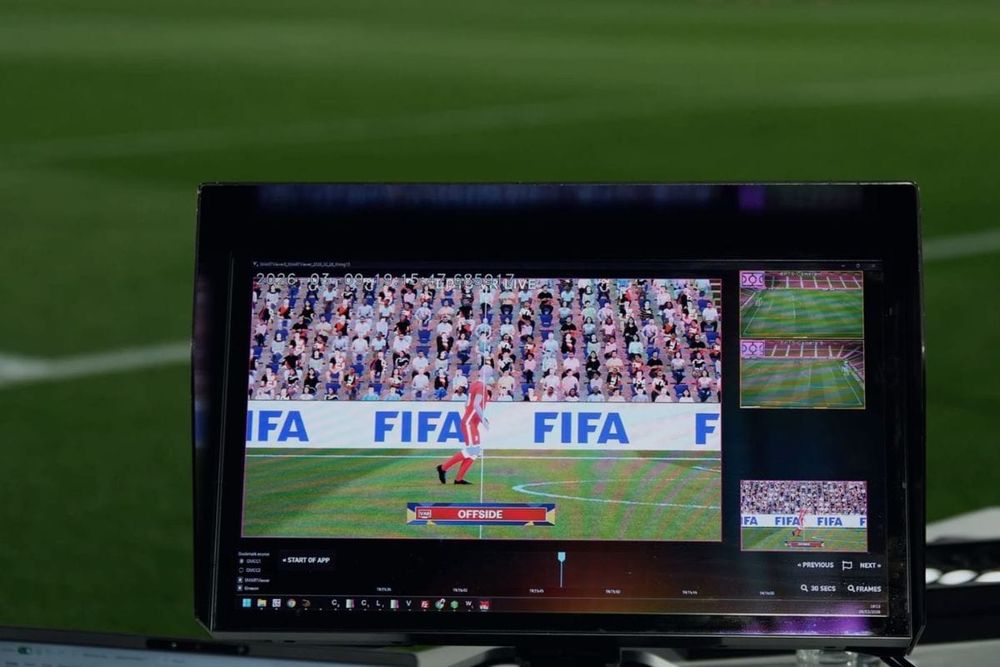
The headline officiating change is the debut of Advanced Semi-Automated Offside Technology at a World Cup. The system routes clear offside calls directly to on-pitch officials rather than through the video assistant referee, enabling faster positional offside decisions. It applies to positional offsides only and does not assess interference with play.
To support the technology, every player at the tournament will be 3D-scanned, with their digital avatars integrated into the offside system. The scans will also improve the quality of broadcast 3D replays for viewers.
FIFA is also launching Football AI Pro, a generative AI tool giving all 48 competing nations equal access to pre- and post-match analytical capabilities. Holzmüller noted the platform is designed to democratise advanced football analytics, removing barriers tied to a team's budget or staffing.
Referee body cameras, first trialled at the FIFA Club World Cup 2025, return in an upgraded form with reduced motion blur and sharper first-person footage, aimed at improving transparency and audience engagement.
Underpinning several of these developments is a network of 16 optical tracking cameras installed in each stadium. The system generates over 150 million data points per match, enabling full 3D match recreations, supporting VAR decisions, and powering Football AI Pro's analytical outputs.
FIFA has positioned the suite of innovations as a step toward more consistent officiating and broader access to elite-level football intelligence ahead of the most-watched sporting event on the planet.
News Source: Emirates News Agency