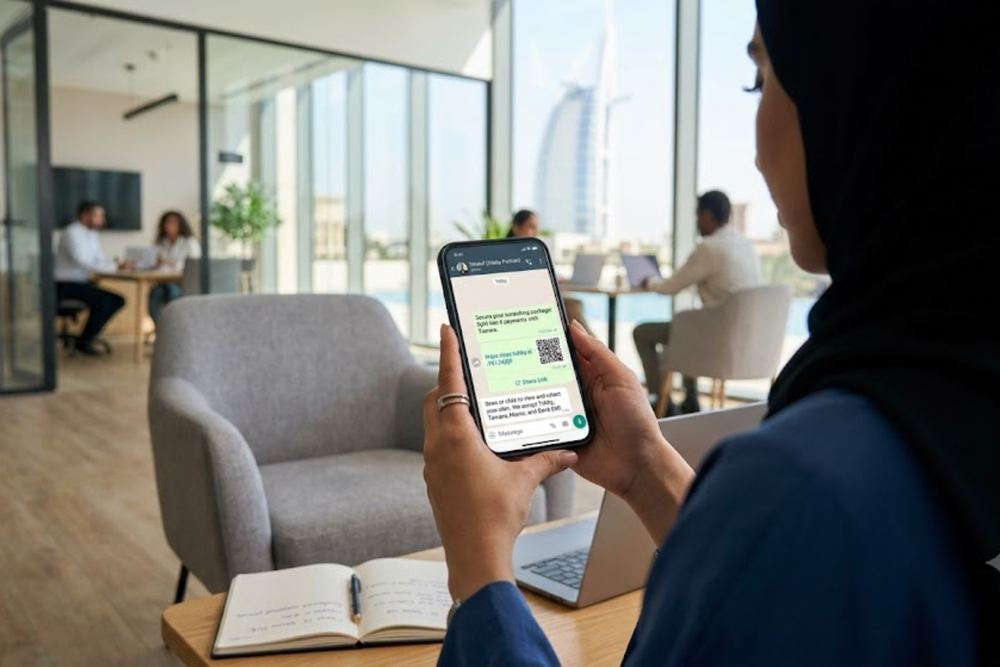
Many small businesses in the UAE sell without ever building a website. Instagram sellers, boutique owners, freelancers, and high-ticket consultants close deals through direct messages, phone calls, and WhatsApp chats. The demand for installment payments has grown alongside this, because customers increasingly expect to split a bill into smaller monthly amounts instead of paying the full price upfront.
The good news is that a website checkout cart is not required to offer this. Buy Now Pay Later (BNPL) providers, payment gateways, and banks in the UAE have built link-based and app-based tools specifically for merchants who sell outside a traditional online store. This guide walks through the exact mechanisms available, the paperwork needed to get approved, the fees to expect, and how to manage refunds and support without an automated store portal.
Mechanism 1: Direct BNPL Merchant Links (Tabby and Tamara)
Tabby and Tamara are the two dominant BNPL providers in the UAE, and both offer a manual link-generation workflow built for merchants without a website.
How Tabby's Payment Links Work
Tabby merchants operate through the Merchant Dashboard (a web portal) or the Tabby Business app on mobile. The process looks like this:
- Log in to the Merchant Dashboard or open the Tabby Business app.
- Go to the Orders section and select "Create payment link."
- Enter the order amount and the customer's phone number or email.
- Send the link. Tabby delivers it instantly by SMS, WhatsApp, or email.
- The customer opens the link and completes Tabby's own checkout flow, which includes identity verification (typically an OTP sent to their registered mobile number, and for certain amounts, Emirates ID checks).
- Once approved, the customer pays an initial installment through their debit or credit card, and Tabby automatically charges the remaining installments on the agreed schedule.
- The order status updates to "Captured" in the dashboard once payment clears.
Tabby offers two structures merchants can enable: Pay in 4, which splits the purchase into four interest-free installments, and Pay over time, which extends payments up to 12 months. The customer pays no interest under either option; Tabby earns its revenue from the merchant fee.
For the merchant, the payout arrives as a lump sum covering the full order value, minus Tabby's processing fee, on Tabby's standard settlement cycle rather than being collected installment by installment. This is one of the main appeals of BNPL for a business with no website: the business is paid upfront while the customer pays over time.
How Tamara's Payment Links Work
Tamara follows a similar structure through its own Tamara Business app, available for merchants to manage orders on the go. A merchant creates an order, generates a payment link, and shares it through the same channels: SMS, WhatsApp, or email. Tamara supports splitting a purchase into 3 installments, or, depending on the plan and merchant category, up to 12 installments. Tamara's products are structured to be Sharia-compliant, which is a relevant detail for boutique and service businesses marketing to faith-conscious customers.
As with Tabby, the merchant is settled the full sale amount upfront by Tamara, while the customer pays the balance back to Tamara directly over the agreed schedule. Onboarding happens directly through Tamara's partner registration page, after which the business receives merchant credentials and access to the Business app.
Setting Realistic Expectations on Approval
Not every business category gets automatic approval. Both providers assess risk category, average order value, and the nature of the goods or services sold. High-risk categories or unlicensed activities may be declined. This makes having a valid trade license and a clear description of the business important from the first application.
Mechanism 2: Multi-Option Gateway Links (Mamo, Ziina, Tap Payments)

A second approach uses a broader payment gateway that bundles card payments, digital wallets, and BNPL into one link, rather than sending customers to a BNPL provider's own checkout page.
Mamo Pay
Mamo lets a merchant generate a payment link in seconds through its dashboard, a WhatsApp bot, or a QR code, with no coding required. A single Mamo link can accept Visa, Mastercard, American Express, Apple Pay, Google Pay, and, when enabled, Tabby as an installment option. This means a customer opening a Mamo link chooses at checkout whether to pay in full by card or split the payment through Tabby, without the merchant needing a separate BNPL account for that specific transaction.
Mamo settles standard card payments on a same-day basis. Transactions collected through the built-in Tabby integration carry a different fee structure than standard card payments, since the merchant is paying for both payment processing and Tabby's installment risk in a single combined rate. Mamo is regulated by the Dubai Financial Services Authority.
Ziina
Ziina positions itself for small businesses and social sellers who operate through WhatsApp, Instagram, and direct messages. Merchants generate shareable payment links or QR codes from the Ziina app, and customers pay using a card, Apple Pay, or Google Pay. Ziina charges a flat percentage plus a fixed fee per transaction, with an additional surcharge for international cards or non-AED currency. Settlement typically lands in the merchant's account within one to two business days for smaller amounts. Ziina holds a Stored Value Facility license issued by the Central Bank of the UAE, which covers its wallet and payment collection activities.
Tap Payments
Tap serves merchants across the GCC and is a reasonable option for a business that sells to customers in the UAE and neighboring markets under one account. Tap's merchant tools (branded goSell and goCollect) allow link and invoice generation, along with card and wallet acceptance. BNPL availability through Tap depends on the specific product used, so a merchant wanting Tabby or Tamara through Tap should confirm which of Tap's services supports it before onboarding, since not every generation method on the platform carries BNPL support.
Mechanism 3: Bank Credit Card EMI Links for High-Ticket Services
High-ticket consultants and boutique owners selling premium items often prefer bank-backed Equal Monthly Installment (EMI) plans over BNPL, since EMI plans typically support larger transaction values and connect directly to a customer's existing credit card limit rather than a separate BNPL credit line.
Gateways such as Network International, Noon Payments, and Telr offer merchant tools to generate EMI-enabled payment links. The typical flow works like this:
- The merchant applies for EMI or "Easy Payment Plan" functionality through the gateway, since this is usually a separate approval on top of standard card acceptance.
- Once approved, the merchant generates a payment link and specifies the transaction amount.
- The customer opens the link, enters their card details, and if their card is eligible for the bank's EMI program, they are shown a choice of 3, 6, 9, or 12-month installment terms.
- Banks including Emirates NBD, Mashreq, FAB, and ADCB run their own EMI schemes for cardholders, and the gateway checks card eligibility automatically at the point of payment.
- Many of these plans carry zero interest for the customer, funded through an upfront discount the merchant absorbs, similar in spirit to BNPL but processed through the card network instead of a separate BNPL company.
- Settlement to the merchant generally follows the gateway's standard cycle, commonly within one to three business days, rather than being held back over the installment period.
Telr, for example, has an existing partnership with Tabby for four-month interest-free plans, alongside its own Quicklinks tool for sending payment requests by message. This gives a merchant on Telr a choice between BNPL-style links and bank EMI, depending on the customer's card and the ticket size involved.
Step-by-Step Onboarding and Approval Requirements for UAE Businesses
Every provider mentioned above requires a legitimate, licensed business behind the account. Expect to prepare:
- Trade License: issued by the Department of Economic Development (DED) for mainland businesses, or by the relevant free zone authority.
- Corporate Bank Account: in the same legal business name as the trade license, used for settlements.
- Passport and Emirates ID of the License Holder: required for identity verification (KYC) during onboarding.
- VAT Registration Certificate: mandatory once taxable turnover exceeds AED 375,000 annually, and available on a voluntary basis above AED 187,500.
- Business description and website or social media presence: even without a checkout page, providers usually ask to see an Instagram page, catalog, or portfolio to assess the category of goods or services sold.
Approval timelines vary. Ziina and Mamo tend to onboard quickly, often within a day or two for straightforward retail and service categories. Tabby, Tamara, and bank EMI programs generally take longer, since they involve a merchant risk assessment and, for EMI, coordination with the partner bank.
Processing Fees, Settlement Cycles, and Cash Flow Accounting
Fee structures differ by mechanism, and understanding the Merchant Discount Rate (MDR) matters for pricing decisions.
- Standard card payments through UAE gateways commonly range from about 2.3% to 3% of the transaction, plus a small fixed fee per transaction, for domestic cards.
- International cards or non-AED currency transactions typically carry an additional 1% to 1.5%.
- BNPL transactions (Tabby, Tamara, or Tabby routed through a gateway like Mamo) carry a noticeably higher combined rate, often in the range of 6% to 7% plus a fixed fee, because the provider is paying the merchant the full amount upfront and carrying the credit and collection risk on the installments.
- Bank EMI plans typically involve a merchant subvention fee that covers the interest the bank would otherwise charge the customer, structured so the plan appears interest-free to the buyer.
For cash flow planning, the practical distinction is this: BNPL and EMI providers pay merchants the full sale value (minus fees) close to the time of sale, while the customer's installments are collected by the provider or bank, not by the merchant. This means a small business does not need to chase monthly payments from customers directly, which is a meaningful operational advantage for anyone without accounting staff to track recurring collections.
Managing Customer Support, Refunds, and Invoicing Manually
Without a website order-management system, refunds and support run through each provider's dashboard rather than an automated portal.
- Refunds: Tabby and Tamara allow full or partial refunds directly from the Merchant Dashboard or Business app by entering the order and the refund amount. The refunded amount is deducted from a future payout.
- Disputes: Providers typically include a disputes section in the dashboard where a merchant can respond with supporting evidence, such as delivery confirmation or a signed agreement, if a customer disputes a charge.
- Invoicing: Mamo and Ziina both support generating professional invoices directly from their dashboards, which can be sent by email alongside or instead of a payment link. This is useful for consultants and service providers who need a paper trail for accounting and VAT purposes.
- Record-keeping: since there is no website order history, merchants should export monthly reports from each provider's dashboard and reconcile them against their bank statements and VAT filings.
Provider Comparison Matrix
| Platform | Settlement Time | Supported Installment Method | Best Use Case |
|---|---|---|---|
| Tabby | Standard payout cycle, lump sum minus fees | Pay in 4 (interest-free) and Pay over time (up to 12 months) | Boutique, fashion, and retail sellers on social media |
| Tamara | Standard payout cycle, full amount upfront | Split in 3, up to 12 installments (Sharia-compliant) | Retail and lifestyle merchants targeting faith-conscious buyers |
| Mamo Pay | Same-day settlement | Card, wallets, plus Tabby built in | Freelancers and consultants who want one link for everything |
| Ziina | 1–2 business days | Card and wallet payments; BNPL via linked providers | Social sellers and small service businesses needing quick setup |
| Tap Payments | Varies by product | Card, wallets, BNPL depending on integration | Businesses selling across multiple GCC countries |
| Telr | Standard gateway cycle (T+1 to T+3) | Tabby partnership plus Quicklinks for messaging-based sales | Businesses wanting both BNPL and bank EMI in one account |
| Network International / Noon / bank EMI | 1–3 business days | Bank-backed EMI, 3/6/9/12 months on eligible cards | High-ticket consultants and boutique owners with premium pricing |
A business does not need a website checkout cart to offer installment payments in the UAE. Tabby and Tamara provide direct, link-based BNPL through their own merchant dashboards and business apps. Gateways like Mamo Pay, Ziina, and Tap Payments bundle card acceptance and BNPL into a single shareable link. Bank-backed EMI through Network International, Noon Payments, or Telr suits higher-ticket sales where a customer's existing credit card can be split into equal installments.
Choosing the right combination depends on the average order value, the customer base, and how quickly the business needs funds. A boutique owner selling AED 300 items through Instagram will likely find Tabby or Mamo sufficient. A consultant closing AED 15,000 packages may lean toward bank EMI for the larger ticket size it supports. In either case, the operational requirements stay the same: a valid trade license, a corporate bank account, and consistent record-keeping through each provider's dashboard. With those in place, a business selling entirely through direct messages and phone calls can offer the same installment flexibility as a fully built e-commerce store.
Please note: This article is for general informational purposes only. Fees, features, onboarding requirements, and regulations change over time, and provider terms can vary by business category and case. Please verify current details directly on each provider's official website, or consult a licensed advisor, before making any business or financial decision.
Also read:
 Ummulkiram Pardawala
 Umema Arsiwala
 Shahba Mayyeri