Dubai's business environment has shifted noticeably over the past few years. The city is still a hub for commerce and innovation, but the way companies reach and retain customers looks different now. Much of this comes down to demographics. Millennials and Gen Z have become the dominant spending force in the UAE, and they engage with brands differently than previous generations did.
In a market where social media penetration has crossed 99%, the polished, impersonal corporate voice is losing ground. Not because it's wrong, but because it no longer holds attention the way it once did.
From Production Value to Presence
For a long time, Dubai brands competed on the quality of their advertising, glossy visuals, high production budgets, and carefully managed messaging. That still has its place, but the 2026 Ogilvy Social Trends report points to a clear shift in what consumers actually respond to. People have grown accustomed to scrolling past perfect content. What catches their eye now is something that feels more real.
Gen Z in the UAE spends an average of 4.5 hours a day on social media, and for about 41% of them, platforms like TikTok and Instagram have replaced Google as the starting point for discovery. When someone wants to find a café in Al Quoz or a fashion brand in Dubai Design District, they're looking for a short video, not a website. That's a meaningful change in behavior, and businesses are adjusting to it.
Groups like Al Tayer and Al Futtaim have started hiring what they call Viral Growth Specialists, people whose job is to create content that feels personal rather than corporate. A video with imperfect lighting shot in a real office often outperforms a studio production, not because the quality is better, but because it reads as more trustworthy.
How Younger Consumers Make Decisions

Researchers describe today's UAE consumer as operating within an "Intention Economy," where two things matter most: purpose and speed.
Millennials, many of whom are now established professionally and managing households, tend to value efficiency and transparency. They want to know where their food comes from, who made their product, and whether a brand's values hold up under scrutiny. Gen Z takes a similar position, though they're often quicker to disengage if something feels like performance rather than substance.
The spending data supports this. In UAE airports, Gen Z and Millennial travelers spend 3.5 times more than Gen X and Boomers combined. They're four times more likely to buy electronics and 2.5 times more likely to purchase luxury goods — but mainly when the experience feels worth it, not just the product.
Speed matters too. The UAE has an 85% daily usage rate for messaging apps, and WhatsApp Business has become a primary channel for customer communication. A delayed response of even a few hours can be enough for a consumer to move on. Younger employees tend to handle this naturally; they're already used to real-time communication, and they bring that pace into how they manage brand interactions.
The In-House Creator Model
As AI-generated content has become more common, a paradox has emerged. The more automated and "perfect" a social feed looks, the less people engage with it. Dubai's smaller businesses have quietly benefited from this. While larger corporations produce polished content at scale, local SMEs are staying visible by staying human.
This has led to a growing preference for in-house creators over traditional agency relationships. An agency understands a brand's guidelines. An in-house creator understands the office, the team, the daily rhythm, and can post in the moment, without a lengthy approval chain. By the time a formal marketing process signs off on a trend, the moment has usually passed.
These creators tend to serve a few distinct functions: spotting emerging content formats early, managing community spaces like WhatsApp groups or Discord servers, and translating business goals into content that actually gets watched. In retail, a simple "get ready with me" video using new arrivals regularly outperforms a professional shoot. TikTok engagement rates run about 73% higher for that kind of content.
Practical Steps for Dubai Businesses
Shifting toward a more human-led strategy doesn't mean abandoning brand identity or ignoring older customers. It's more about making a few deliberate adjustments.
The first is deciding who the human face of the brand will be. It doesn't have to be the founder. It could be a rotating group of staff, or even a recurring personality created by the content team. The point is to move away from a logo as the primary touchpoint.
The second is thinking about social platforms as search engines. Content needs to be findable, not just shareable. That means using language people actually search with "best date night spot in Dubai Marina" rather than "premium dining experience."
The third is changing which metrics matter. In 2026, saves carry more weight than likes. A saved post means someone found it useful enough to return to. Similarly, content shared in a private WhatsApp group among friends or family is a stronger signal of trust than a public like.
Sector Notes
Retail has been the most visible example of this shift, but other sectors are catching up.
In agribusiness, Millennial consumers are pushing for more transparency around where food comes from and how it's produced. Short-form video has become an effective way for agtech companies to explain vertical farming or supply chain logistics in accessible terms, turning a technical process into a straightforward story about food security.
In tech, more founders and developers are choosing to build publicly rather than in stealth mode, sharing progress and setbacks openly. This approach tends to attract both early customers and investors, partly because it signals confidence, and partly because transparency is something younger audiences actively look for.
Knowing Your Audience: Nationals, Expats, and the Language Between Them
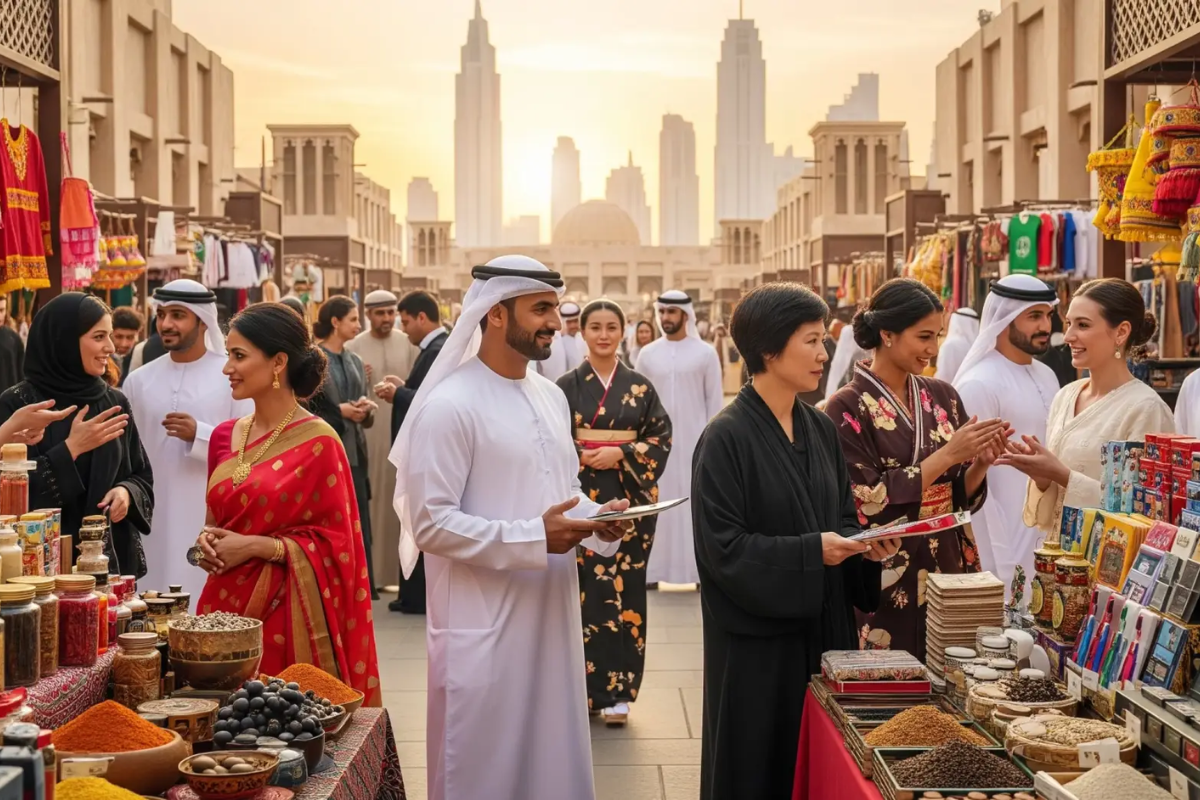
One detail that often gets overlooked in conversations about authentic content is that Dubai's audience is not a single group. The UAE has one of the most diverse populations in the world, and the way UAE nationals engage online looks quite different from how expat communities behave, even on the same platform.
Nationals tend to respond to content that reflects cultural pride, family values, and local identity. Arabic-language content, even when the brand primarily operates in English, signals respect and belonging. It doesn't have to be every post, but brands that never communicate in Arabic are quietly signaling that they're not really speaking to that community.
Expat audiences, which make up the majority of Dubai's population, are themselves fragmented, South Asian, Arab, Western, and East African, each with different references and humor. The common thread is that they're all navigating life in a city that isn't their home country, which creates its own kind of shared identity. Content that acknowledges the Dubai experience, the heat, the traffic, the mix of cultures, and the ambition tends to land across communities in a way that generic lifestyle content doesn't.
The practical approach for most Dubai businesses is a primary feed in English with consistent Arabic touchpoints, rather than trying to maintain two completely separate content strategies. Captions that include a line in Arabic, or stories that alternate between both, tend to perform better than full translation of every post.
The cultural calendar is also worth building around deliberately. Ramadan, Eid, National Day, and DSF are not just holidays; they're moments when community sentiment is high, and people are more receptive to brands that participate meaningfully rather than just changing their logo color. A behind-the-scenes video of how the team prepares for Ramadan, or a genuine message from a founder on National Day, carries more weight than a promotional banner. The keyword here is meaningfully. Audiences in the UAE are experienced enough to tell the difference between a brand that understands the moment and one that's simply using it.
When Things Go Wrong, and When to Bring in Outside Help
Giving creators autonomy is the right move for most Dubai brands in 2026. But autonomy without a basic framework is how a well-meaning post becomes a two-day problem.
The most common risk isn't a dramatic scandal. It's a joke that didn't land, a trend that was misread, or a response to a customer complaint that felt defensive in writing. These things happen faster than any approval process can catch them, which is exactly why the framework needs to exist before the mistake, not after.
A simple version of this looks like three things: a short list of topics the brand never touches publicly, a clear escalation contact for anything that gets unexpected negative attention, and an agreed tone for responding to criticism, which in most cases is calm, direct, and human, not corporate and defensive. Brands that respond to criticism the same way a reasonable person would tend to recover quickly. Brands that go quiet or issue formal statements usually make it worse.
Consistency is a related concern. When multiple people are creating content under the same brand, there's a real risk of the voice drifting. The solution isn't rigid scripts that defeat the purpose. It's a brief brand reference document that covers the core values, the words the brand uses and avoids, and two or three examples of content that felt right. Most good in-house creators only need to read it once.
Finally, it's worth saying clearly: the agency model isn't obsolete. For campaign launches, high-production brand films, regional media buying, or moments that require legal and regulatory review, an experienced agency still brings something an in-house team of two or three people cannot. The shift happening in Dubai isn't about replacing agencies entirely; it's about not outsourcing the everyday voice of the brand. That part works best when it stays internal. Everything else is a judgment call based on budget, scale, and what the moment requires.
A Note on Regulation
Dubai's regulatory environment adds a layer of context worth mentioning. The UAE National Media Council and updated 2026 guidelines mean that content still needs to be respectful and transparent, regardless of how informal it looks. Professionals who've grown up creating content here tend to understand these boundaries well. That local familiarity is often what makes a Dubai-based creator more practical for a local business than a remote hire who doesn't know the cultural or legal landscape.
Dubai's marketing landscape is shifting not abruptly, but steadily. The businesses finding their footing are the ones that have stopped treating communication as something to be managed and started treating it as something to be felt. They are giving younger voices space to speak, responding in the moment, and showing up in ways that feel genuinely human. That, more than any strategy document, is what seems to be working.