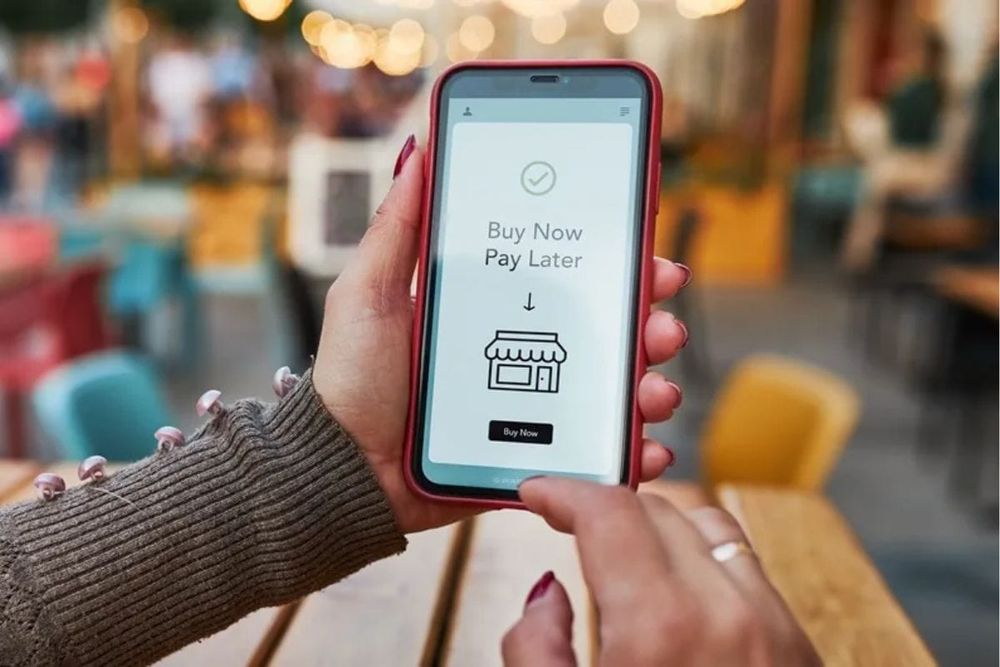
For years, the dominant narrative around Buy Now, Pay Later in the UAE was simple: give customers a way to spread payments and they'll spend more. Merchants signed up for BNPL platforms the way they signed up for loyalty programs, treating it as a nice-to-have that lived somewhere between a payment option and a promotional gimmick. But something has shifted.
The businesses seeing the strongest returns from BNPL today are not the ones using it as a last-resort affordability tool. They're the ones that have woven it into the actual architecture of how they sell. And the distinction between those two approaches is where the real commercial story begins.
The Difference Between Offering BNPL and Using It Strategically
Most retailers who offer BNPL do it passively. They integrate a platform like tabby or Tamara at checkout, add a badge to their website, and wait for it to do something. That's not a strategy but a feature listing. The businesses pulling ahead are treating BNPL as a decision-making tool, something that influences the customer's journey long before they ever reach a checkout page.
Strategic BNPL integration starts with understanding why customers hesitate. In the UAE market, hesitation rarely comes from an inability to pay outright. The customer browsing a AED 3,500 sofa or a AED 1,800 skincare kit at a premium retailer is not struggling financially. What stops them is the psychological weight of a large one-time outflow, the friction of committing a significant chunk of their account balance in a single transaction. BNPL, when positioned correctly, dissolves that friction before it becomes a barrier. That's a fundamentally different role than simply being a payment method.
How BNPL Changes the Psychology of the Purchase Decision
There's a concept in consumer psychology called "pain of paying," the cognitive discomfort people feel when they part with money. It peaks when the payment is large, immediate and salient. BNPL works by reducing all three of those dimensions simultaneously. The amount feels smaller, the timing is deferred and the mental weight of the transaction drops.
In the UAE, where consumer spending skews heavily toward aspirational categories like electronics, fashion, home décor and wellness, this psychological shift has a disproportionate effect. A customer who has been researching a AED 2,400 coffee machine for three weeks might convert in minutes once they see they can split it into four interest-free payments of AED 600. The product did not become more affordable, it became more psychologically accessible.
Businesses that understand this don't bury BNPL in the payment step. They surface it early, on product pages, in ad creatives, even in push notifications, because the persuasion happens upstream of the checkout. By the time the customer reaches the cart, the decision has already been shaped.
Where UAE Retailers Are Embedding BNPL in the Sales Funnel
The shift from reactive to proactive BNPL placement is visible across several verticals in the UAE, and the mechanics look different depending on the business model.
In e-commerce and D2C brands, BNPL messaging is appearing at the product listing level, showing the per-instalment price alongside the full price as a standard part of the display. This is no longer a checkout surprise, it's part of how the product is priced in the customer's mind from the first click.
In physical retail, particularly in mall-based stores across Dubai, sales associates are now trained to raise BNPL as a natural part of the conversation, not as a closing trick, but as context-setting. Telling a customer early in the interaction that the item they're looking at is available in four zero-interest payments reframes how they evaluate value from that moment onward.
In B2B and SME-facing services, BNPL-adjacent structures are emerging in the form of deferred payment terms for professional services, software subscriptions and equipment purchases. While not always branded as BNPL, the underlying mechanism serves the same conversion function.
The Role of AOV: Why BNPL Drives Basket Size, Not Just Conversions
One of the clearest signals that BNPL is functioning as a sales architecture tool rather than just a payment convenience is what it does to average order value. When customers are no longer anchored to a single lump sum, their ceiling for what feels reasonable shifts upward. A customer who came to buy one item leaves having added two. A customer who was considering the standard version upgrades to the premium.
UAE merchants across categories have reported meaningful increases in AOV since integrating BNPL, and the pattern makes intuitive sense. If you're already splitting a AED 1,500 purchase into four payments, adding another AED 400 item only changes your immediate outflow by AED 100. That mental math works in the merchant's favour every time.
This is why smart retailers are not just enabling BNPL at checkout but are actively training their merchandising and upsell logic around it. Bundled products, accessories and complementary categories get positioned with the instalment price as the primary anchor, which makes the cross-sell feel low-commitment even when the combined cart total is substantial.
What BNPL Platforms Are Offering UAE Merchants Beyond the Payment Rails
The conversation has moved well beyond which platform has the best consumer-facing UX. The BNPL providers operating in the UAE have evolved their merchant offerings significantly, and the value they deliver now extends into data, marketing and conversion optimisation.
Here's what leading BNPL platforms are now giving UAE merchants access to:
- Shopper intent data and behavioural insights drawn from their wider merchant networks, which help businesses understand how BNPL users browse, compare and decide differently from standard payment customers.
- Co-marketing and promotional placement within the BNPL app's own discovery surfaces, giving merchants visibility to an engaged consumer base that is already primed to spend.
- Conversion rate analytics broken down by product category, payment method and session source, making it possible to test BNPL placement and messaging with real data rather than guesswork.
- Merchant dashboards that surface refund rates, return behaviour and repeat purchase patterns among BNPL customers specifically, helping retailers understand lifetime value differentials.
- Integration APIs that allow BNPL instalments to be reflected dynamically in product pages, ad copy and email campaigns without requiring a manual update every time a threshold or offer changes.
For a business owner running a growing retail operation, this moves BNPL from a cost of doing business into an actual commercial partnership.

The Regulatory Context in the UAE: Why It Matters for Merchant Strategy
The UAE's regulatory environment around BNPL has been evolving, and that evolution has direct implications for how businesses should be thinking about their BNPL strategy. The Central Bank of the UAE has been progressively bringing BNPL operators under a clearer regulatory framework, which signals that this is not a transient payment trend but a permanent and maturing segment of the financial services landscape.
For merchants, this matters for a few reasons. First, the platforms they partner with are increasingly subject to licensing requirements, which raises the baseline of operational reliability and consumer protection standards.
Second, regulatory clarity tends to accelerate adoption, because consumers who might have been hesitant about using newer fintech products feel more confident when those products operate within a known framework.
Third, the compliance obligations around BNPL, including credit assessments and affordability checks on the consumer side, reduce the merchant's exposure to return and default risk compared to in-house instalment schemes.
Businesses that understand this regulatory momentum are treating BNPL not as a short-term tactic but as a long-term infrastructure decision, choosing their platform partners with the same deliberateness they would apply to selecting a logistics provider or a CRM.
Building a BNPL Strategy That Converts: Key Principles for UAE Businesses
Moving from passive integration to active conversion strategy requires some clear thinking about how BNPL fits into the broader commercial framework of the business. The following principles are what separate merchants who see incremental gains from those who see structural improvement in conversion and revenue:
- Lead with the instalment number, not the total price, particularly in advertising and product discovery contexts, because the instalment figure is the psychologically relevant number for a BNPL-oriented shopper and should be the one doing the persuasion work.
- Segment your product range by BNPL conversion potential, since not every category benefits equally and understanding which price points and product types show the biggest conversion lift from BNPL messaging allows for more targeted placement.
- Train your customer-facing teams, both in-store and in digital support, to introduce BNPL as a natural part of the value conversation rather than as a fallback when a customer hesitates at price.
- Use BNPL data to inform your product assortment, because patterns in which items get purchased via instalment can reveal latent demand for higher-value SKUs that customers want but wouldn't commit to under a full payment model.
- Integrate BNPL messaging into your email and retargeting flows, particularly for abandoned carts where a reminder that the item is available in instalments has a measurably higher recovery rate than a standard discount offer.
- Evaluate platform partners on merchant services, not just consumer UX, because the data, co-marketing access and conversion tools that come with the right BNPL partner compound significantly over time.
BNPL vs Discounting: The Strategic Case for Choosing Conversion Over Margin Erosion
This is perhaps the most important reframe for UAE business owners to internalise. When a merchant offers a 15% discount to close a hesitating customer, they are permanently surrendering margin on that transaction and training the customer to wait for discounts in the future. When they offer BNPL instead, they close at full price, preserve their margin, and give the customer a payment structure that feels genuinely better for them, because spreading payments is not the same as paying less.
The economics of this comparison are stark. A AED 2,000 product sold at a 15% discount nets AED 1,700. The same product sold at full price via BNPL, where the merchant pays a platform fee that typically ranges between 1.5% and 4%, nets somewhere between AED 1,920 and AED 1,970. That gap, compounded across hundreds or thousands of transactions, is the commercial argument for BNPL as a sales tool in its clearest form.
Beyond the per-transaction numbers, discounting has a brand cost. It signals that the stated price is negotiable, which over time undermines price integrity and anchors customer expectations in the wrong direction. BNPL, by contrast, reinforces the full price as the real price while making the commitment feel manageable. That's a very different relationship to build with a customer base.
The Businesses Getting This Right in the UAE
The verticals where BNPL-as-sales-architecture is most visible in the UAE right now include consumer electronics, furniture and home décor, fashion and accessories, health and wellness products, and travel and experiences. In each of these categories, the common thread among businesses performing well is that BNPL is not an afterthought. It's considered at the point of product pricing, factored into marketing budgets, built into the sales training curriculum and measured as part of the conversion and revenue reporting stack.
The businesses that are still treating BNPL as a payment option they happen to offer are leaving a meaningful amount of commercial leverage on the table. As consumer familiarity with BNPL continues to grow across the UAE and as the platforms offering these services become more embedded in everyday shopping behaviour, the gap between businesses that use BNPL strategically and those that use it passively will only widen. The architecture of a sale has always mattered. The tools available to shape it have just gotten considerably more powerful.