There is a reason why entrepreneurs from South Asia, Africa, Europe, and beyond make the deliberate choice to register their businesses in Dubai rather than their home countries, and it goes deeper than tax efficiency or lifestyle appeal. At its core, it is about something more quietly powerful: the ability to borrow credibility from a geography. Reputation arbitrage is the practice of using your business location to access a level of institutional trust and global legitimacy that would take far longer to build from scratch elsewhere.
Dubai has become one of the most effective stages in the world for this kind of leverage, and understanding exactly how and why it works reveals a great deal about how modern businesses compete for trust across borders.
What Reputation Arbitrage Actually Means
The term arbitrage belongs to finance, where it describes exploiting price differences across markets to generate profit. In business, reputation arbitrage works on the same principle but trades in perception rather than price. You position yourself in a market where ambient credibility is higher than where you started, and you capture the gap.
For a business owner from Lagos or Karachi, a Dubai address on a pitch deck or contract header changes the conversation before a word is spoken. It signals stability, international orientation, and access. For a European entrepreneur targeting Middle Eastern markets, that same address signals regional commitment and cultural fluency. The location does different work depending on where you are coming from and where you are going, but the underlying mechanism is consistent: geography as a shortcut to trust.
Why Dubai Works as a Trust Anchor
Not every city can pull off this kind of reputational leverage. The source has to have genuinely earned its standing, because borrowed credibility only holds if there is real credibility worth borrowing.
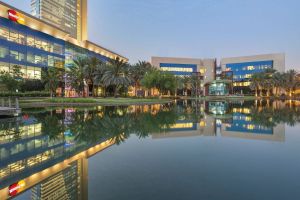
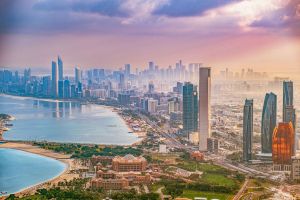
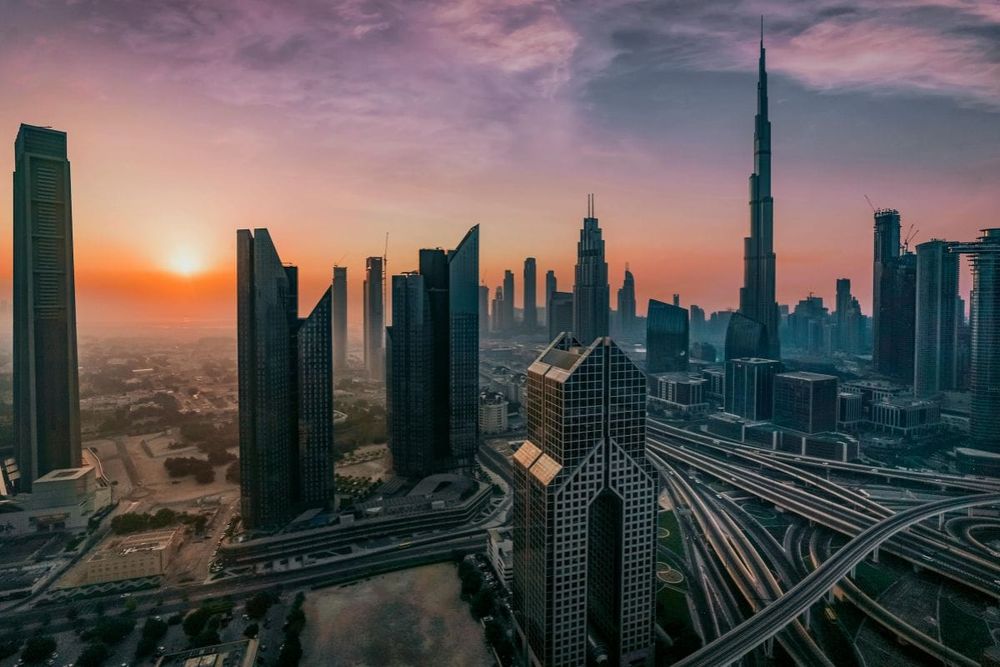
Dubai has built that standing through political stability, world-class infrastructure, and a regulatory environment that has grown increasingly sophisticated over time. In a region that carries significant geopolitical risk in the global imagination, Dubai has positioned itself as a reliable exception, with clear legal frameworks, international arbitration courts, and free zone structures that provide contractual predictability. Its airport ranks among the busiest globally by international passenger traffic, and its physical and digital connectivity makes it easy to believe that a company operating here is operating at a global standard.
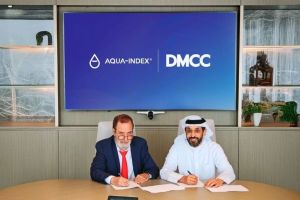
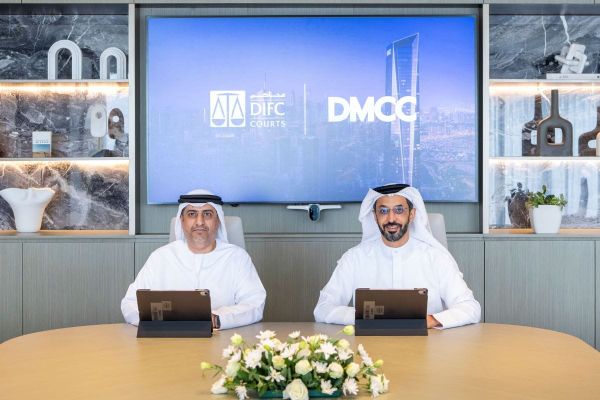
The free zone system deserves particular attention. Zones like DIFC, DMCC, and Dubai Internet City come with their own regulatory frameworks and, in some cases, their own court systems. A DIFC-registered company operates under English common law and has access to courts that counterparts in London, New York, and Singapore recognise and respect. That is not a minor commercial detail but a trust infrastructure that businesses can directly plug into.
The Industries Where This Leverage Concentrates

Reputation arbitrage is not equally useful across all sectors. It concentrates most powerfully where trust is the primary currency and where the gap between a Dubai presence and the alternative is most commercially significant.
- Financial services and wealth management: Private wealth managers and fintech companies operating out of the DIFC benefit from a regulatory framework that clients across Africa and South Asia perceive as more stable and transparent than many home-market alternatives, making it easier to attract mandates and build long-term relationships.
- Consulting and professional services: A management consulting firm based in Dubai walks into regional conversations with a legitimacy that signals both international standards and local market fluency, a combination that clients in Saudi Arabia, Kenya, and India find genuinely compelling.
- Trading and commodities: The DMCC's standing in global gold, diamond, and commodity trading gives businesses access to a provenance story that matters enormously to international buyers, where regulatory oversight and institutional backing function as real commercial differentiators.
- Technology and e-commerce: Dubai Internet City's concentration of tech companies produces a self-reinforcing credibility effect, and UAE-registered e-commerce businesses also benefit from stronger banking relationships and broader payment gateway access across regional markets.
How the Dubai Address Changes Conversations
The practical effects of reputation arbitrage show up across the entire business cycle in ways that are specific and measurable.
In client acquisition, sales conversations that might begin with scepticism in other markets open more smoothly when the company is Dubai-registered, because international clients carry a mental map of global business credibility in which Dubai sits in a recognisable and trusted position. In banking, successfully opening a corporate account with a major UAE bank functions as an implicit endorsement, since it signals that the business has passed a level of institutional due diligence that clients and partners can infer. In investor relations, a UAE holding structure is often a prerequisite for regional family offices and international funds, because the legal familiarity and contract enforceability reduce perceived risk in ways that registrations elsewhere in the region simply cannot match.
The Limits of Location-Based Credibility
A Dubai address is a door opener, not a business model, and it is worth being clear about what reputation arbitrage cannot do. The credibility borrowed from location has to be backed by genuine operational quality, because the shortcut only works once. A client who engages on the strength of a company's location and then encounters poor delivery or weak governance will not return, and in tightly networked business communities that experience spreads quickly.
The UAE's commitment to FATF compliance, stricter beneficial ownership disclosure, and tighter AML standards has also raised the bar on what it takes to establish a credible Dubai presence. That is ultimately a healthy development for legitimate businesses, since it raises the floor on what a Dubai registration signals to the world, but it does mean the process requires genuine commitment rather than a surface-level setup.
What the Businesses That Use This Well Have in Common
- They treat their Dubai presence as a launchpad rather than a shortcut, investing in real local relationships and operational infrastructure that justifies the credibility they are borrowing from the location.
- They choose their free zone and licence structure deliberately based on what their specific clients will find most credible, rather than defaulting to whatever is cheapest or most convenient at the time of setup.
- They build their Dubai presence in parallel with substantive business activity, so that the reputation signal is backed by operational evidence that clients can actually verify.
- They stay current with regulatory changes, recognising that operating within a tighter and more credible framework is itself a competitive advantage over less disciplined competitors using the same geography.
Dubai's role as a global trust anchor is not an accident. It is the result of deliberate investment in the conditions that make credibility transferable: rule of law, infrastructure, international connectivity, and a consistent brand narrative sustained over decades.
For businesses that understand how to use this environment, the city offers something genuinely rare, which is the ability to enter a global market conversation at a level that would otherwise take years of independent reputation-building to reach.
Reputation arbitrage, at its best, is not about pretending to be something you are not. It is about placing yourself within an ecosystem that amplifies what you already have, and in that regard, very few cities in the world do it better than Dubai right now.
Also Read:
 Ummulkiram Pardawala
 Umema Arsiwala
 Shahba Mayyeri
 Shahba Mayyeri