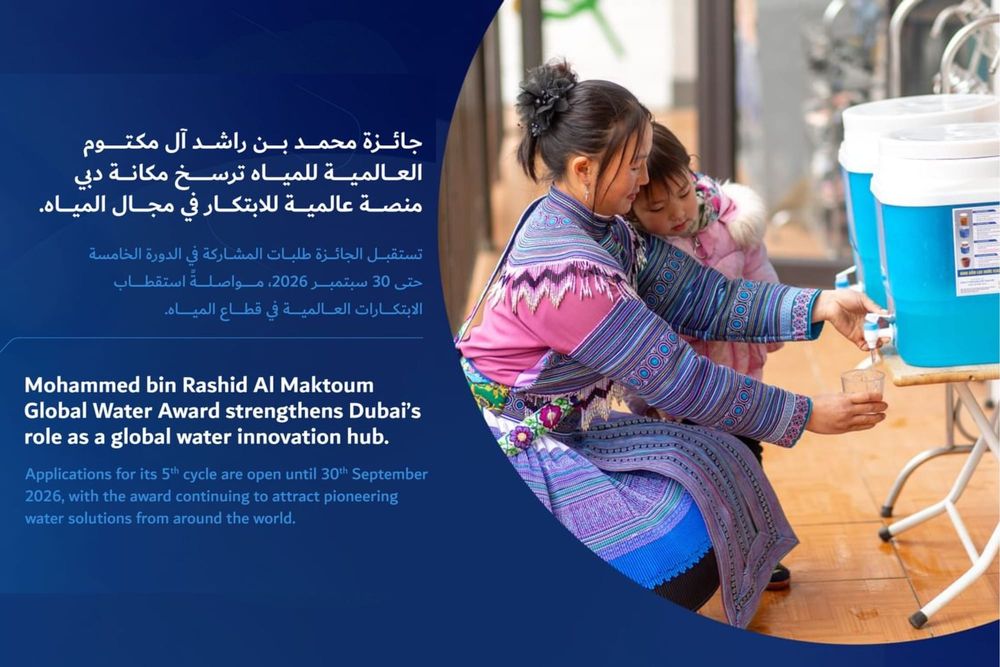
The Mohammed bin Rashid Al Maktoum Global Water Award is offering US$1 million in prizes for innovative solutions addressing water scarcity and improving access to safe drinking water worldwide.
Supervised by the UAE Water Aid Foundation (Suqia) under the Mohammed bin Rashid Al Maktoum Global Initiatives, the award encourages innovations in water production, desalination and purification using renewable energy.
The fifth cycle comes as communities around the world face growing challenges related to water security and climate change. It seeks practical and sustainable technologies that can improve access to clean water while strengthening the resilience of communities affected by water scarcity.
The US$1 million prize fund is divided across four categories: the Innovative Projects Award, Innovative Research and Development Award, Innovative Individual Award and Innovative Crisis Solutions Award.
Applications are open until 30th September 2026. Universities, research centres, companies, institutions, innovators and individuals worldwide can submit projects and solutions focused on improving water security and quality of life.
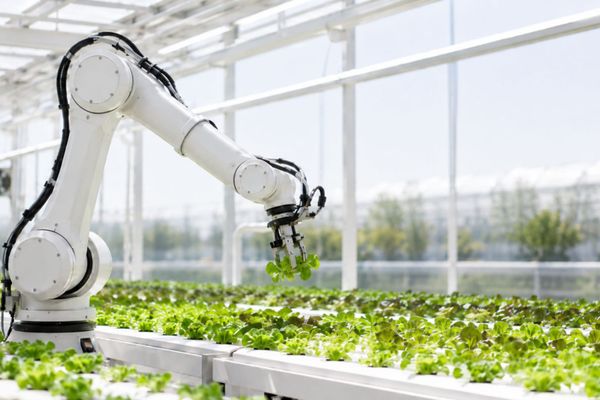
This year’s cycle places greater emphasis on digital technologies, including artificial intelligence and machine learning. The award is encouraging their use in water production, desalination and purification to improve operational efficiency, strengthen monitoring and accelerate the development of practical solutions.
Renewable energy also remains a central focus, with research and development encouraged to create sustainable approaches to addressing global water challenges.
Saeed Mohammed Al Tayer, Chairman of the Board of Trustees at Suqia UAE, said the award supports research, innovation and international partnerships while encouraging solutions capable of delivering measurable humanitarian impact.
Across its first four cycles, the award recognised 43 winners representing 26 countries for innovations in water production, purification and desalination. These projects have helped improve access to safe water and living conditions for millions of people worldwide.
The fifth cycle aims to build on this progress by supporting technologies that address one of the world’s most significant humanitarian and development challenges.