
Running a business by yourself means the business only moves when you move it. That's the trade-off nobody warns you about when you go solo. There's no one to cover for you, no team Slack channel where someone else picks up the thread, no deputy who can make a call while you're offline. So the idea of a full weekend off can feel less like rest and more like risk.
But a weekend off is not a luxury. It's maintenance. Burnout doesn't announce itself with a dramatic collapse; it shows up as slower thinking, shorter patience with clients, and mistakes you wouldn't normally make. If you want your business to last years instead of months, you need to build systems that let you disappear for 48 hours without anything falling apart.
This isn't about discipline or willpower. It's about setting up a handful of concrete systems once, so the weekend runs itself while you're gone.
Start With the Real Problem: You Are the Bottleneck
In a one-person business, every client message, every invoice, every "quick question" routes through you. That's fine on a Tuesday. On a Saturday, it becomes the reason you're checking your phone at a family lunch instead of being present.
The fix isn't to work harder during the week so you "deserve" the weekend. The fix is to reduce how many things actually need you in real time. Most of what feels urgent on a weekend isn't urgent; it just hasn't been told otherwise.
Set Client Expectations Before You Need Them
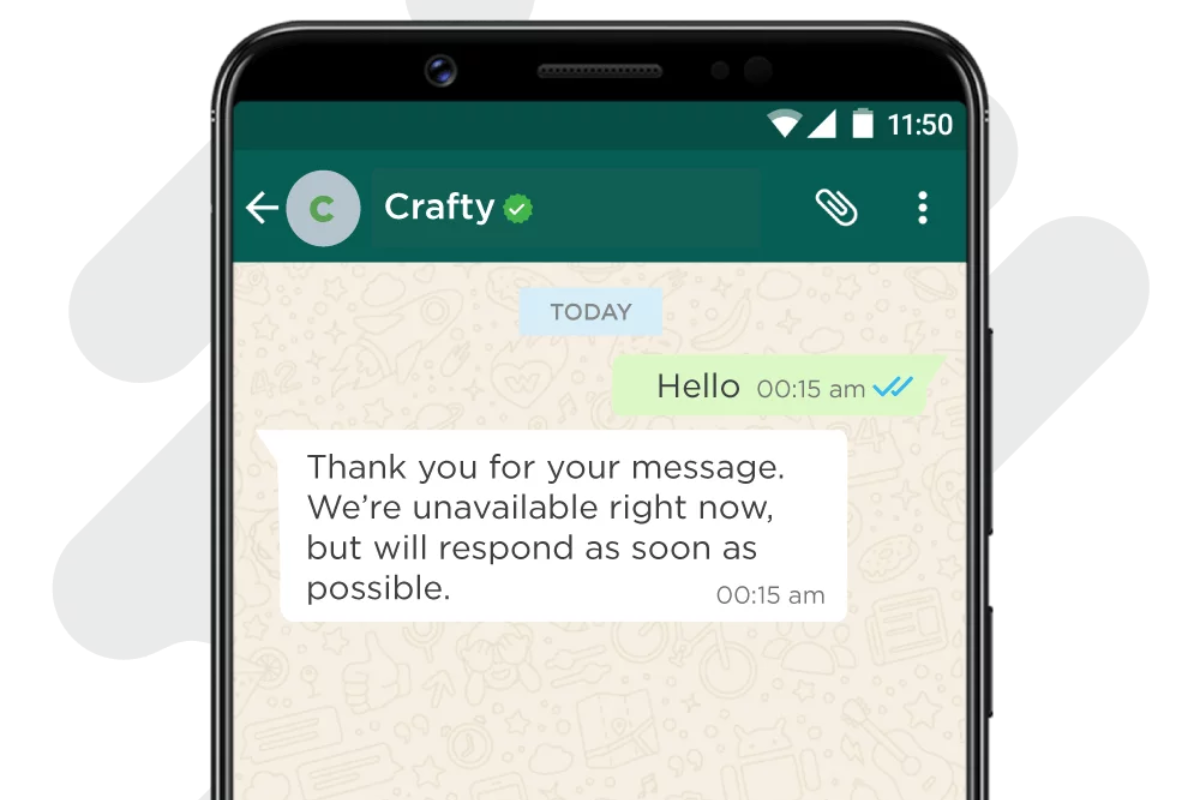
Clients don't know your working hours unless you tell them. If you've replied to a WhatsApp message at 9 pm on a Thursday once, that becomes the expectation forever. You trained that behavior, even if you didn't mean to.
The fix is simple and needs to happen once, not every week:
- Put your working hours in your email signature, your invoice footer, and your WhatsApp Business "About" section: something like "I reply Sunday to Thursday, 9 am–6 pm. Messages sent outside these hours are answered the next working day."
- Say it out loud on new client calls. A single sentence like "I keep weekends fully off so I can give clients my full attention during the week" sets the tone before any bad habits form.
- Repeat it gently the first time someone messages you on a Friday evening. A short reply like "Got it, I'll pick this up first thing Sunday" does more to train expectations than any signature line.
Most clients respect boundaries when they're stated plainly and applied consistently. What erodes trust isn't having boundaries, it's having boundaries you don't actually keep.
Build an Automated Triage System
You don't need to answer every message the moment it arrives. You need a system that tells the sender you've seen it and roughly when they'll hear back, without you touching your phone.
Here's what that looks like in practice:
Turn on an autoresponder for Friday evening through Sunday (or whichever two days you're off). Keep it short: "Thanks for your email. I'm away from my desk until [day] and will reply within one working day." This single automation removes the anxiety of an unanswered inbox; the client knows you're not ignoring them, and you know nothing needs an instant response.
WhatsApp Business
If clients message you here, set up the automated away message under Business Tools. It works the same way as an email autoresponder, but reaches people where they actually expect a fast reply, which is usually the biggest source of weekend pressure.
Booking and Payments
If you take bookings or deposits, use a scheduling tool (Calendly or similar) that only shows availability during your working days. If someone tries to book a Saturday call, they simply won't see the slot. No back-and-forth negotiation is needed; the calendar does the boundary-setting for you.
A Single Triage Channel
Instead of watching five different apps, funnel everything into one inbox or one number. If a client can reach you through email, Instagram DMs, and WhatsApp, you're triple-checking three different apps all weekend. Pick one channel as the "official" one and redirect the rest with a saved reply: "For anything urgent, please email me. I check that channel first when I'm back."
The goal isn't to be unreachable. It's to make sure nothing requires you to be reachable.
Separate "Urgent" From "Feels Urgent"
Almost nothing in a service business is a genuine emergency. A genuine emergency is something like a live website going down, a payment failing during a client's own launch, or a legal deadline. Everything else, a client wanting feedback on a draft, a supplier asking about next month's order, a new lead filling out your contact form, can wait one or two days without real damage.
Write down, once, what actually counts as urgent for your business. Keep the list short, three or four items, maximum. Anything outside that list gets the "I'll handle this Sunday" treatment, even if it feels pressing in the moment. This list matters because in the absence of one, your brain will treat everything as equally urgent, and you'll end up working through your time off anyway.
If you do have a genuine emergency category (say, a website host outage, or a payment gateway failure), set up a direct alert for just that a monitoring tool like UptimeRobot for your website, or a dedicated "URGENT" label your best clients know to use if something truly can't wait. That way, you can switch your phone to silent for everything else and trust the one channel that would actually need your attention.
The Friday Wind-Down Routine
The hardest part of taking a weekend off isn't the weekend itself, it's the twenty minutes before it starts. If you close your laptop with three unanswered messages and a half-finished proposal, your brain won't let go of work just because the calendar says Friday.
Build a short, repeatable Friday routine, ten to fifteen minutes, no more:
- Clear the inbox to zero, or close to it. Not by answering everything, but by sorting: reply to anything genuinely two-minute-quick, flag anything that needs real work for Sunday morning, and archive the rest.
- Write a one-line Monday-you note. Something like "Follow up with [client] about the contract, send [invoice] by Tuesday." This does more for your peace of mind than checking your phone twice on Saturday; you know exactly where things stand without having to keep it all in your head.
- Turn on your autoresponders. Do this physically, at your desk, as a signal to yourself that the workweek has ended, not automatically at midnight while you're still half-working.
- Close every work tab and app. If your invoicing software, your project board, and your email are all one tap away on your phone, you'll open them "just to check." Log out, or at a minimum, move the icons off your home screen for two days.
This routine takes less time than most people spend deciding whether to check their phone one more time before bed. Do it every Friday, and it stops being effort; it becomes the signal that tells your brain the week is over.
Handle Money Before It Becomes a Weekend Task
A lot of weekend work isn't client communication, it's admin that piled up because there was no fixed time for it. Invoicing, chasing late payments, and reconciling receipts. These feel like they can be squeezed in "quickly" on a Saturday morning, and that's exactly how a day off disappears.
Pick one fixed slot each week, Thursday afternoon works well since it's usually the last working day before a Friday-Saturday weekend, and do all your admin then. Invoices go out, payment reminders get sent, and receipts get filed. If it doesn't get done by that slot, it waits until the following week starts, not the weekend.
The Mental Shift: Rest Isn't a Reward, It's Infrastructure

Even with every system in place, a lot of solo owners still struggle to actually switch off. The autoresponder is on, the inbox is clear, and they're still refreshing email at 11 am on a Saturday. That's not a systems problem anymore, that's a mindset one.
The belief worth challenging is that your business needs you every single hour to survive. It doesn't. It needs you to be sharp, decisive, and present during the hours you're actually working. A founder running on no rest makes worse decisions, writes sloppier proposals, and takes longer to solve problems than one who takes a real two days off. Rest isn't the thing you do after the business is running well; it's part of what keeps it running well.
There's also a smaller, quieter fear behind the phone-checking: the fear that stepping away proves you're not essential, or that the business could survive without you glued to it. It's worth sitting with that thought instead of running from it. A business that can survive 48 hours without you isn't a business that doesn't need you; it's a business that's actually built to last, instead of one held together by your constant presence.
None of this requires new software, a bigger budget, or a business partner. It requires deciding, once, what your working hours actually are, setting up a handful of automations that communicate those hours for you, and building a ten-minute Friday habit that closes the loop properly.
The first weekend you try this, you'll probably still feel the pull to check your phone. That's normal; it took time to build the habit of being always-on, and it'll take a few tries to unbuild it. But each weekend you follow the system and nothing breaks, the pull gets weaker. Eventually, you'll get to Monday morning, look at your Monday note from Friday, and realize the business ran itself for two days — because you finally let it.
Also read:
 Umema Arsiwala
 Umema Arsiwala
 Ummulkiram Pardawala